Artwork
Virgin and Child
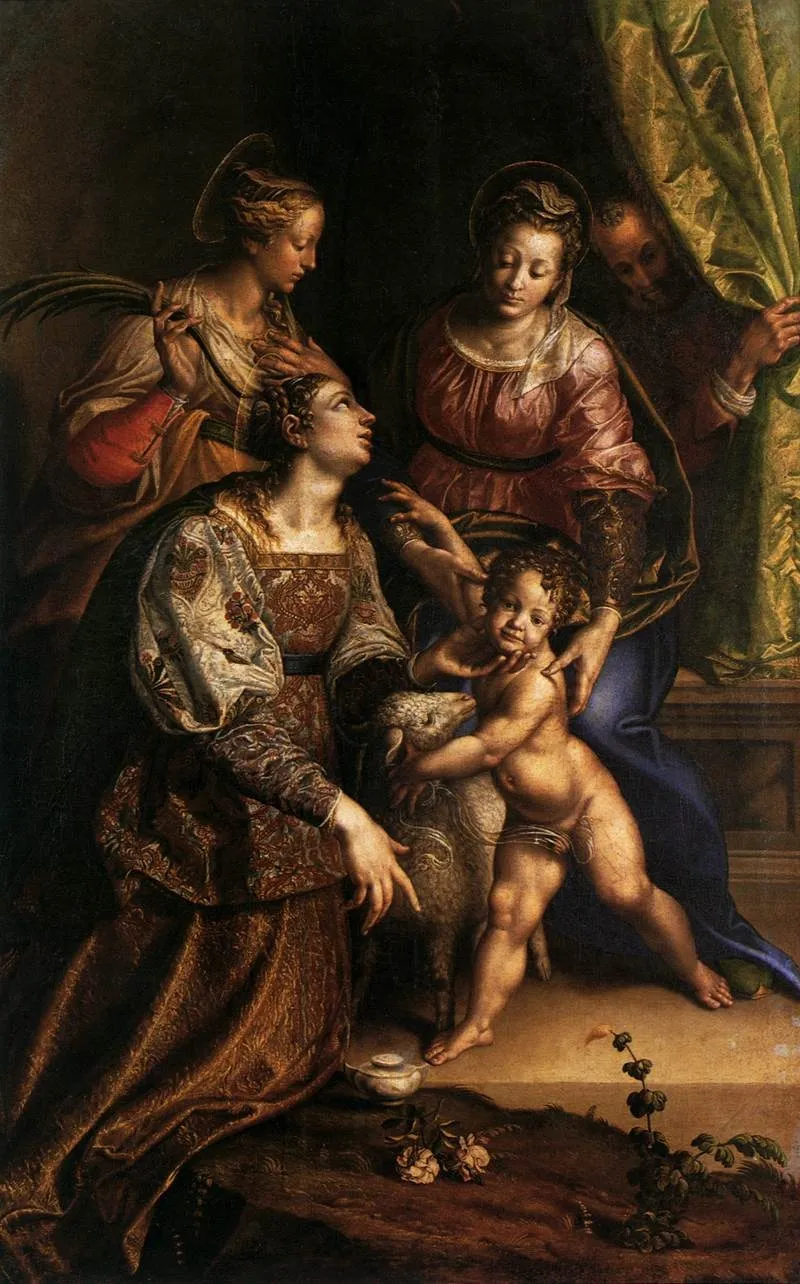
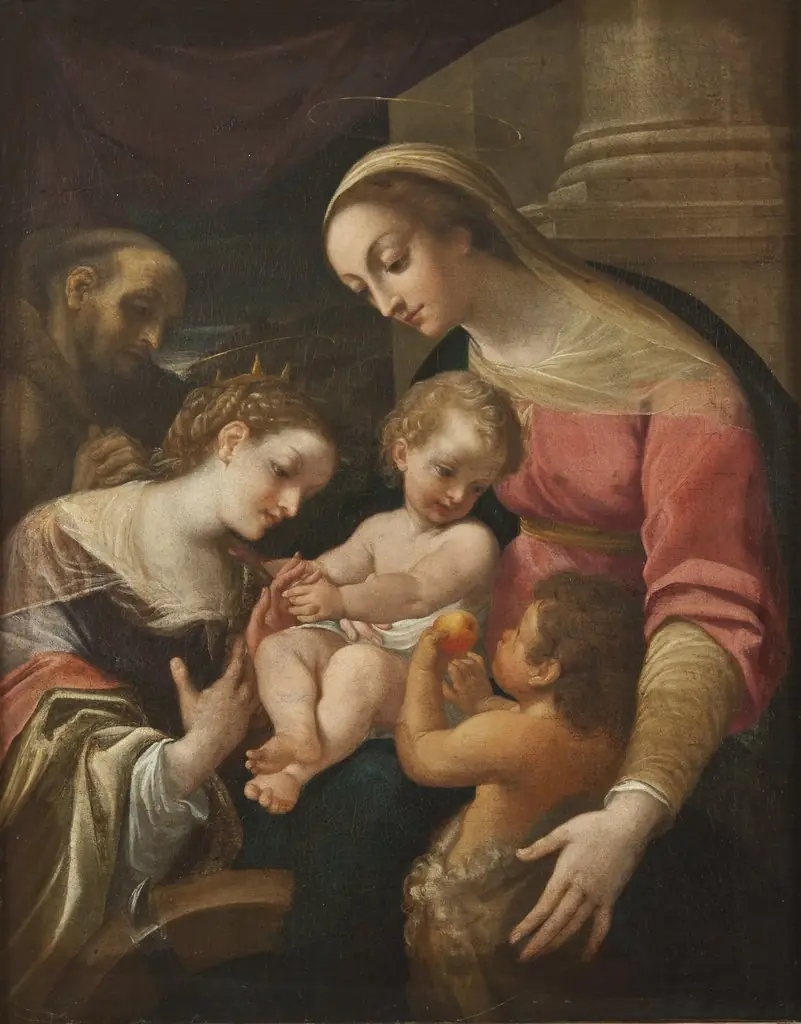
Virgin and Child is an oil painting by the Mannerist artist Antonio Campi. It dates from 1550 and is held in the collection of the Pinacoteca di Brera.
About this work
Overview
Antonio Campi’s mid‑sixteenth‑century oil work, titled *Virgin and Child*, presents a modestly sized group portrait set against a sombre backdrop.
Antonio Campi’s mid‑sixteenth‑century oil work, titled *Virgin and Child*, presents a modestly sized group portrait set against a sombre backdrop. Central to the composition is a nude infant cradled by a woman in a pink garment, while a lamb rests nearby. Two additional women flank the scene, one drawing back a green drapery and the other gently touching the child’s head, with a man partially concealed behind the curtain.
Subject & Meaning
The painting depicts the traditional Christian theme of the Virgin with the infant Jesus, enriched by symbolic elements such as the lamb, a common reference to Christ’s sacrificial role. The presence of multiple female figures and the partially hidden male figure may allude to the broader community of believers or to saints associated with the Virgin’s narrative, inviting contemplation of devotion and protection.
Technique & Style
Executed in oil on canvas, Campi employs a restrained palette of muted tones contrasted with the vivid pink of the mother’s dress and the green of the curtain. The chiaroscuro treatment deepens the darkness behind the figures, allowing the illuminated forms to emerge with a tactile sense of volume. Fine brushwork renders delicate details in the infant’s skin and the scattered floor flowers.
History & Provenance
Created around 1550, the work entered the collection of Milan’s Pinacoteca di Brera, where it remains on display. Documentation traces its acquisition to the museum’s 19th‑century efforts to assemble representative works of Lombard painters, situating it among other regional masterpieces from the same period.
Context
Antonio Campi, a member of the prominent Campi family of Cremona, was active during the transition from High Renaissance ideals to early Mannerist experimentation. This painting reflects his engagement with religious commissions, integrating conventional iconography with a personalized, intimate arrangement that aligns with contemporary devotional practices in northern Italy.
Artist & collection

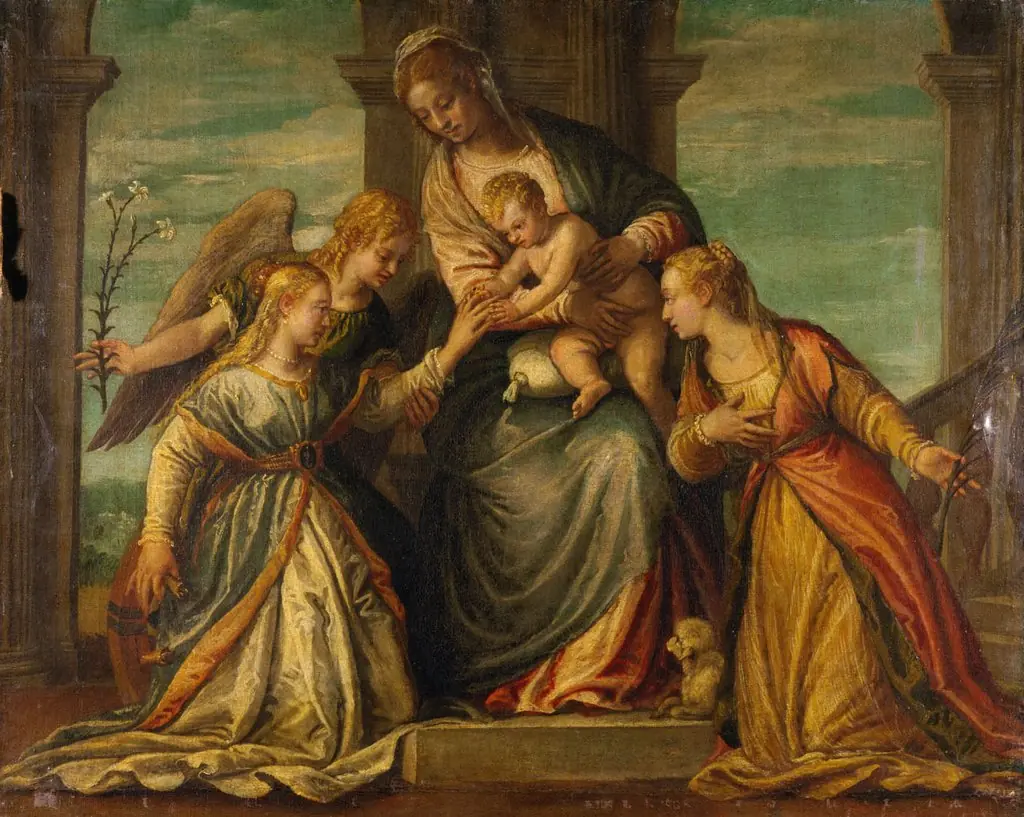 Mystic Marriage of St. Catherine
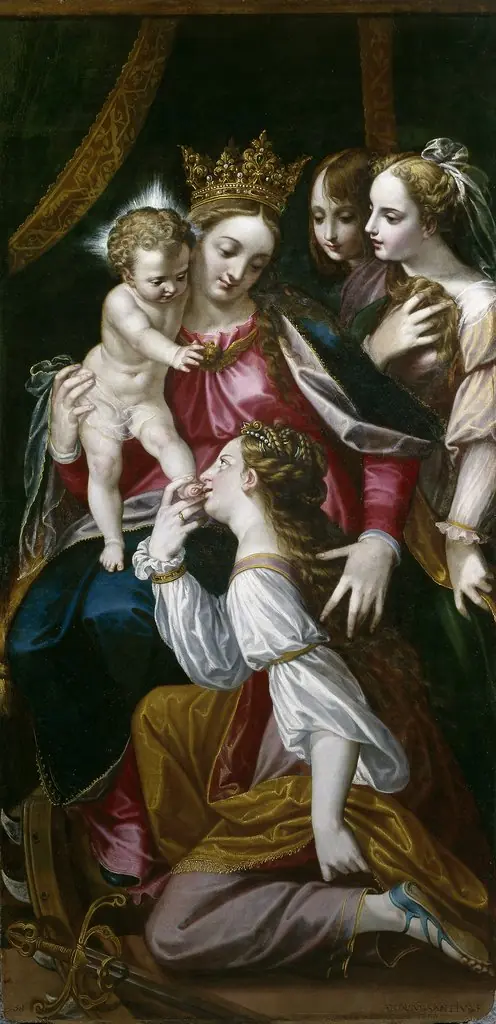 The Mystic Marriage of Saint Catherine
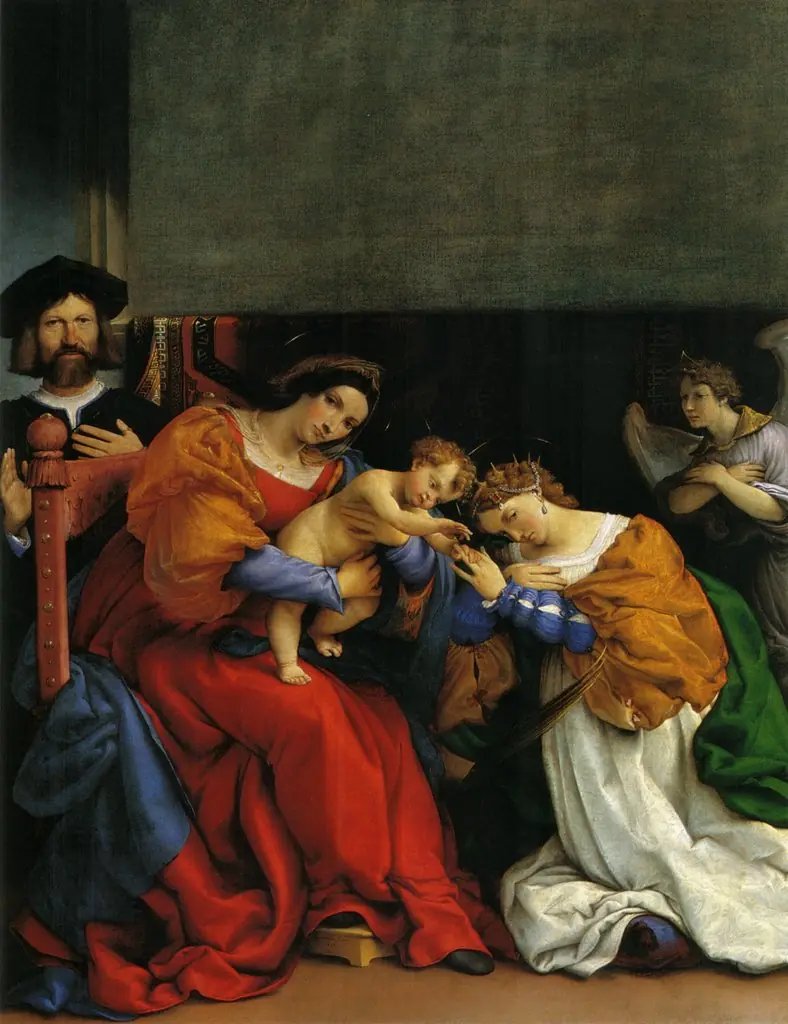 Mystical Marriage of St Catherine of Alexandria with Niccoló Bonghi
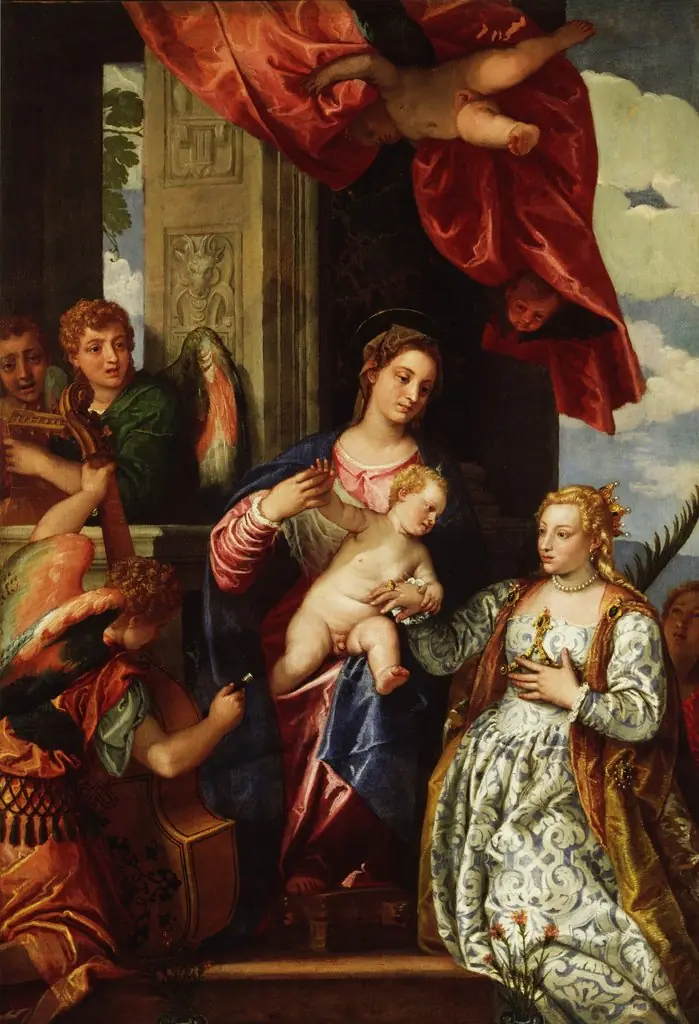 The Mystic Marriage of St. Catherine
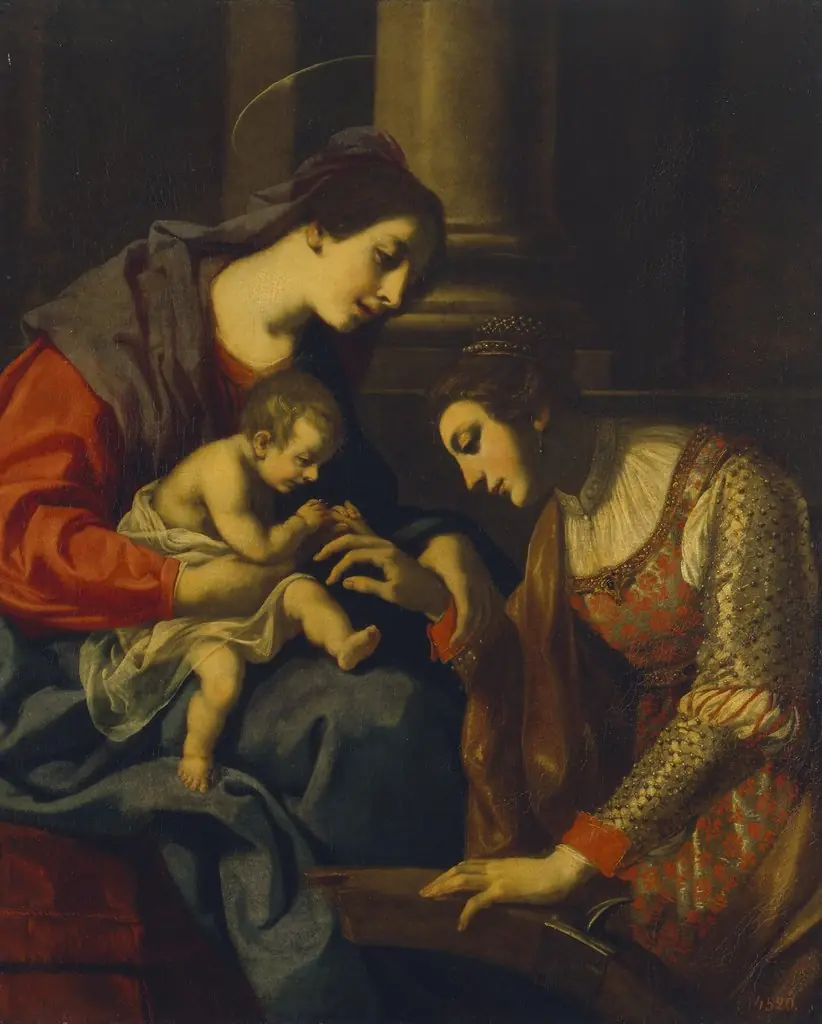 Mystic Marriage of St Catherine
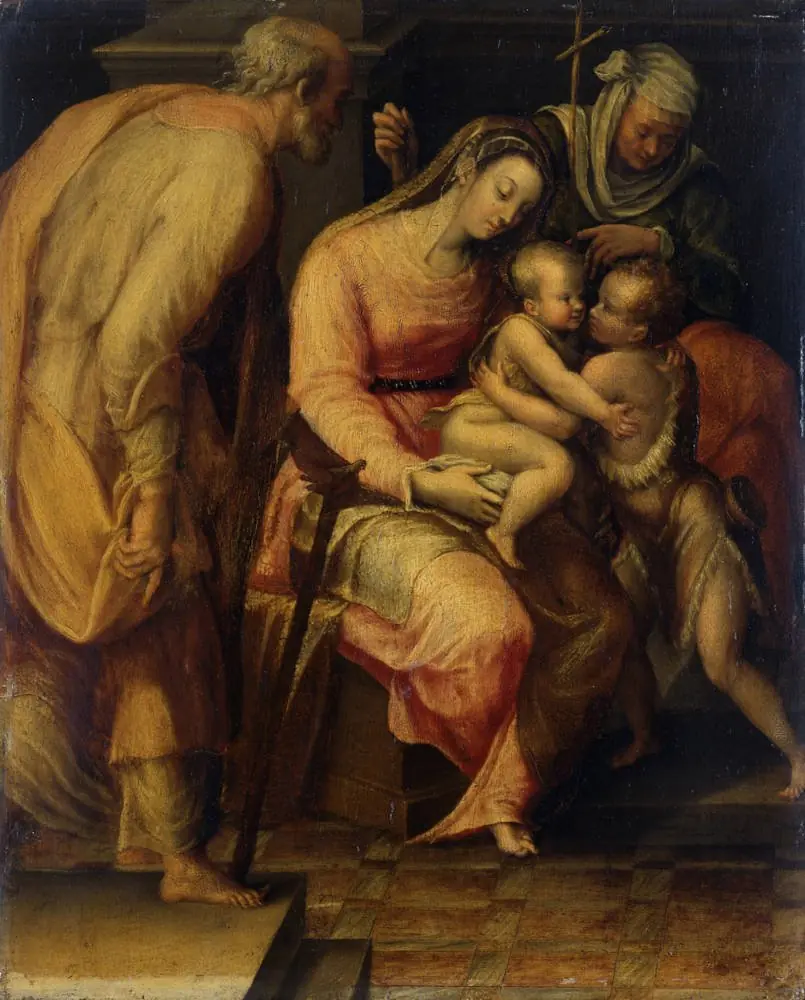 The Holy Family
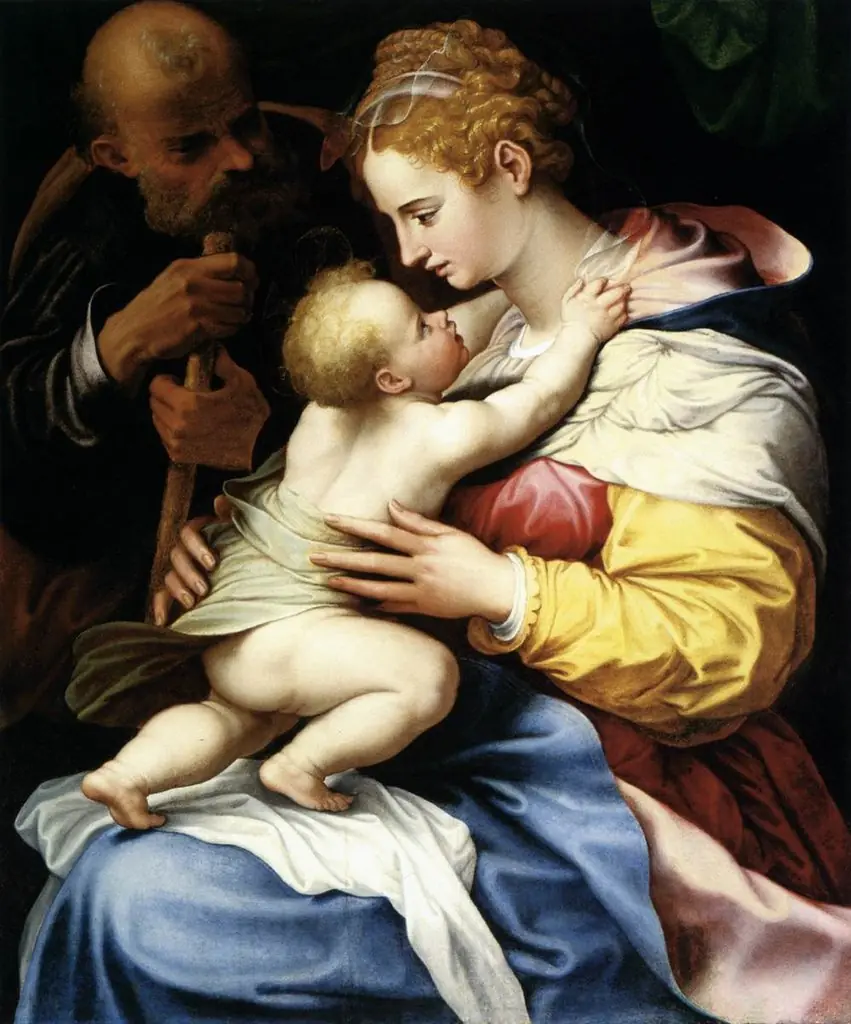 The Holy Family
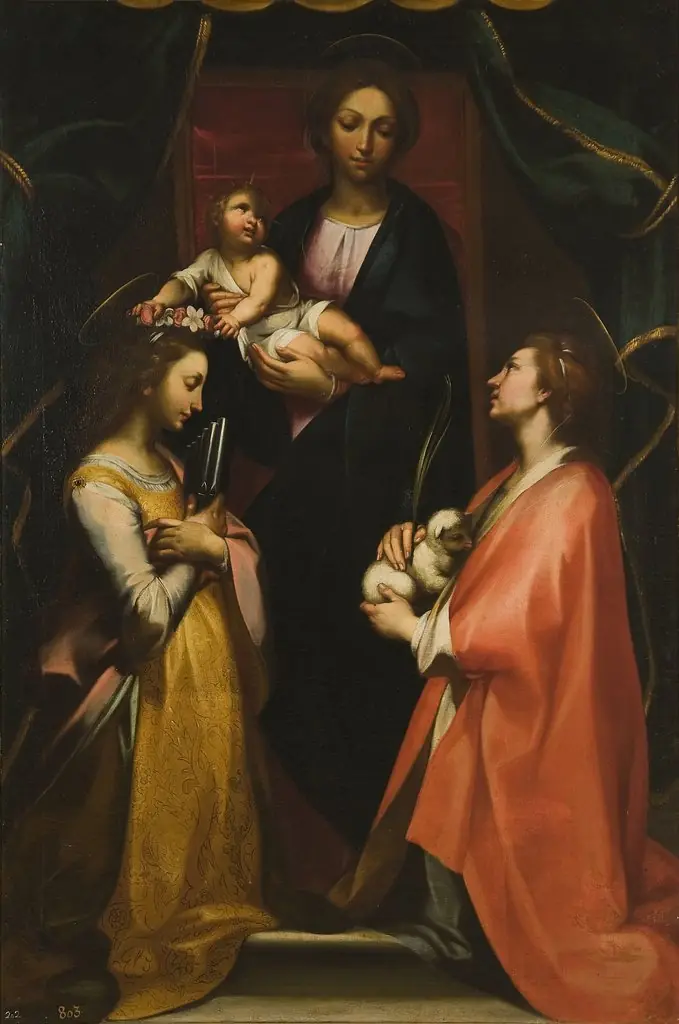 The Virgin and Child with Saints Cecilia and Inez
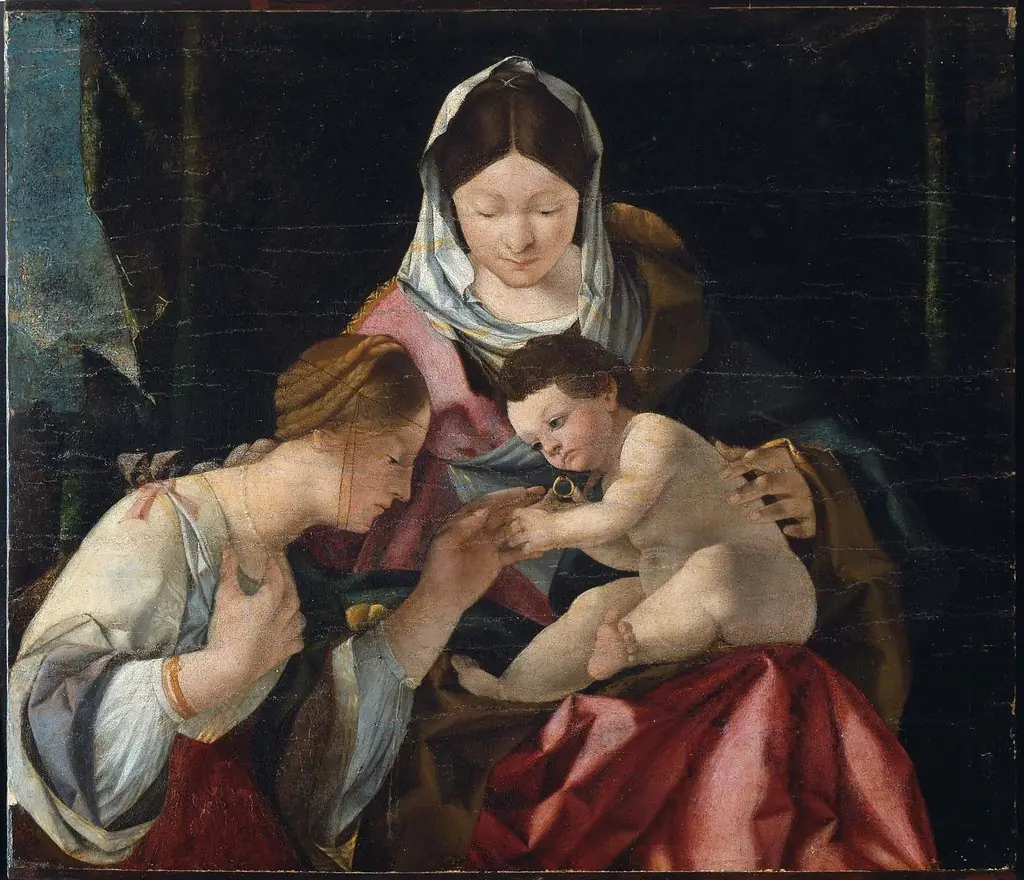 The Mystic Marriage of Saint Catherine
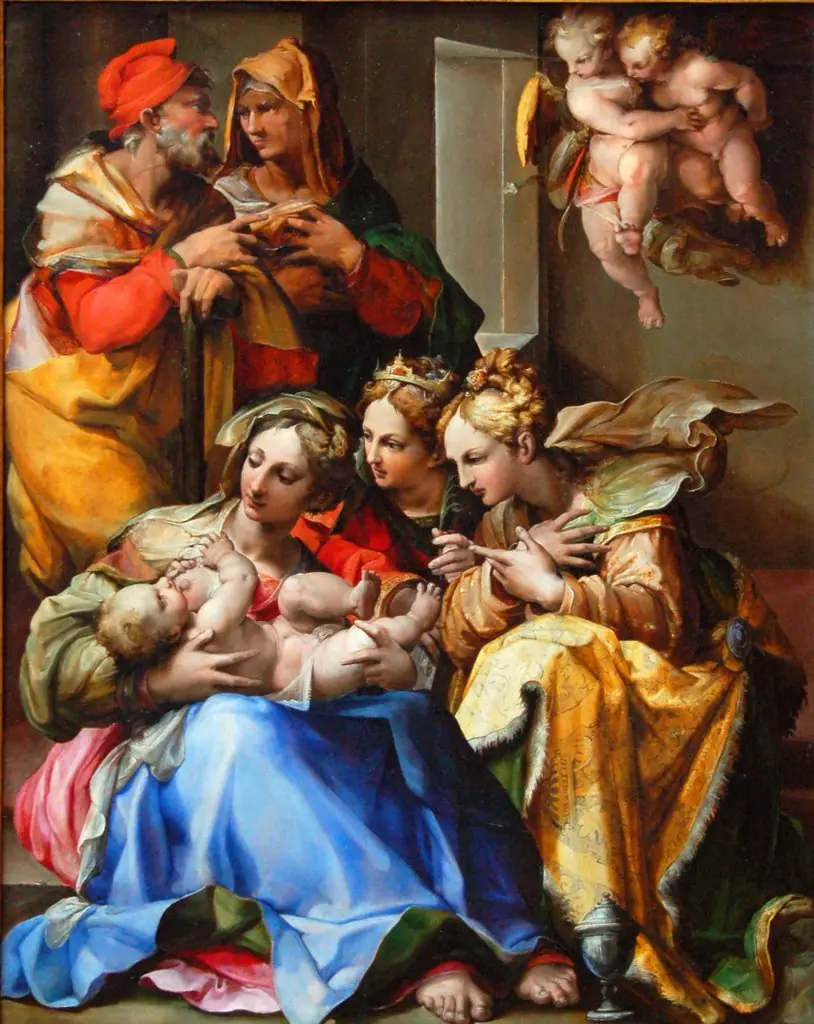 Holy Family with Saints Anne, Catherine of Alexandria, and Mary Magdalene
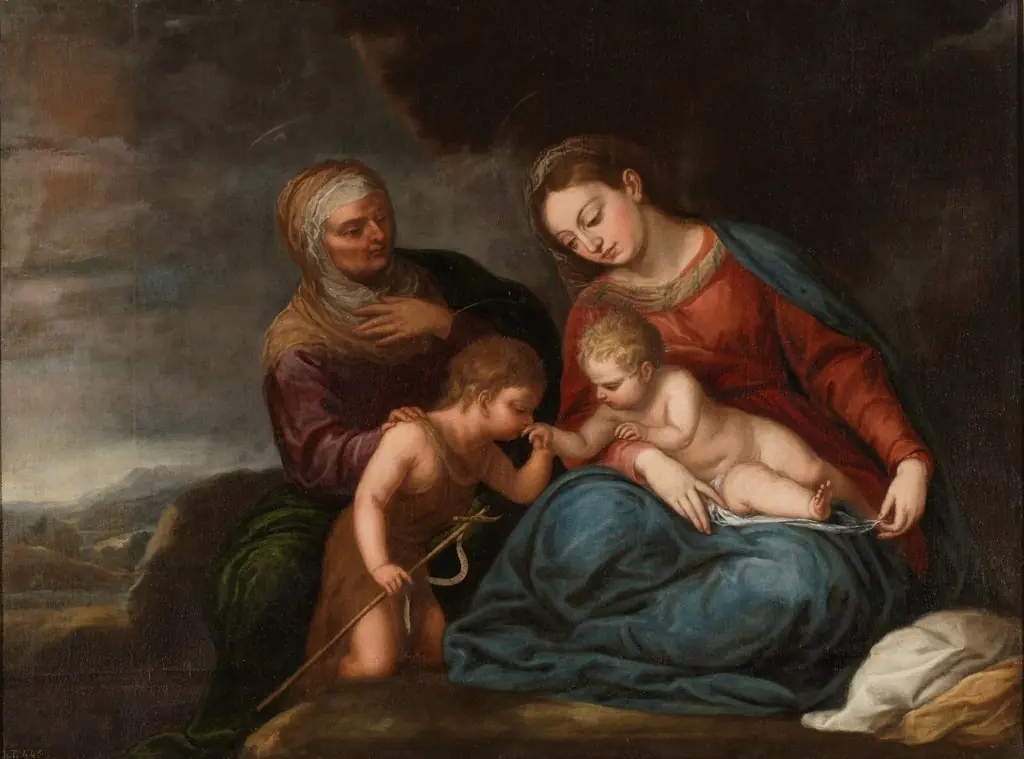 The Virgin and Child with Saints Elizabeth and John
 The Mystic Marriage of St Catherine