Artwork
Miss Louisa Oakley
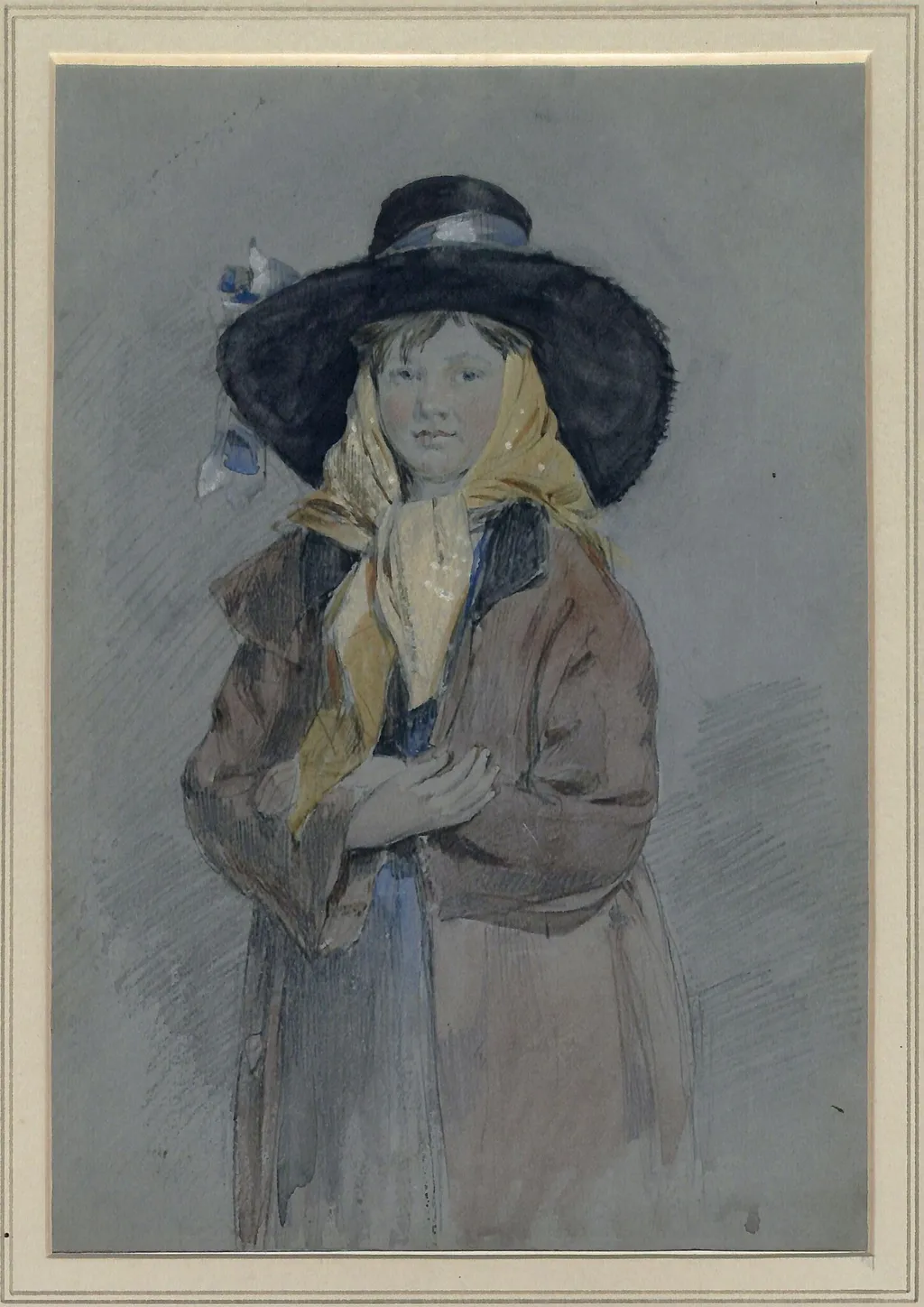
Miss Louisa Oakley is a watercolor work on paper by the British Romanticist artist Octavius Oakley. It dates from 1844 and is held in the collection of the Victoria and Albert Museum.
About this work
If you like this painting, you might want to learn more about the Romanticism movement, which was popular during the same time period.
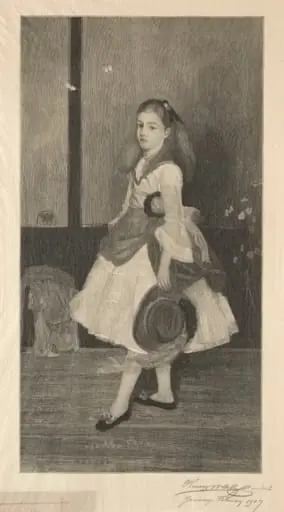
This painting shows a young girl, Miss Louisa Oakley, wearing a large black hat with a yellow scarf wrapped around her head and neck. She has her arms crossed in front of her, and she's dressed in a long brown coat. The background is a plain grey color.
The girl's clothing and the style of the painting suggest that it was made in the 19th century. The artist used watercolor to create a soft, delicate look.
If you like this painting, you might want to learn more about the Romanticism movement, which was popular during the same time period.
Overview
A watercolour portrait from 1844 depicts Miss Louisa Oakley, the daughter of the artist Octavius Oakley. Executed in delicate washes, the work is signed by the artist and includes a later-added inscription. The composition is restrained, focusing on the sitter’s quiet presence against a neutral grey background, characteristic of intimate domestic portraiture in mid-19th-century Britain.
Subject & Meaning
Louisa Oakley, a young girl at the time of the portrait, is shown in a composed, inward posture with arms crossed. Her attire—a long brown coat, large black hat, and yellow scarf—suggests modesty and seasonal dress rather than formal finery. The absence of elaborate setting or symbolism points to a personal, familial record rather than a public statement, reflecting the quiet dignity often assigned to children in Victorian domestic life.
Technique & Style
The artist employed transparent watercolour to achieve a soft, luminous effect, with subtle gradations in tone defining the folds of fabric and the contours of the face. Pencil underdrawing is visible in places, guiding the application of washes. The restrained palette and lack of detail in the background emphasize the sitter’s form, aligning with a tradition of intimate, lightly rendered portraiture common among amateur and professional artists of the period.
History & Provenance
Created in 1844 by Octavius Oakley, the portrait remained within the family, as suggested by the later inscription. Its survival without significant alteration or public exhibition indicates it was valued as a private keepsake. The work’s modest scale and medium suggest it was never intended for public display, preserving its character as a personal memento rather than a commissioned piece.
Context
In the 1840s, watercolour portraiture flourished among British middle- and upper-class families as an accessible and refined medium. While Romanticism influenced broader artistic themes, this work reflects a quieter, domestic realism—more aligned with the growing emphasis on familial intimacy and individual character than with grand historical or emotional narratives of the movement.
Legacy
The portrait endures as a quiet example of 19th-century familial portraiture, illustrating the role of watercolour in capturing private moments. Though not widely exhibited, it contributes to the understanding of how artists within families documented personal relationships, offering insight into the visual culture of domestic life beyond formal academic traditions.
Artist & collection
Artist
Octavius Oakley painted small watercolor portraits in the 1800s. He captured people close-up with delicate brushwork, like *Miss Louisa Oakley* in the late 1840s and a tiny portrait of artist Frederick Cruickshank from…

 A Suffolk Child: sketch for 'The Valley Farm'
 Figure of a Woman
 Jean in a Black Hat
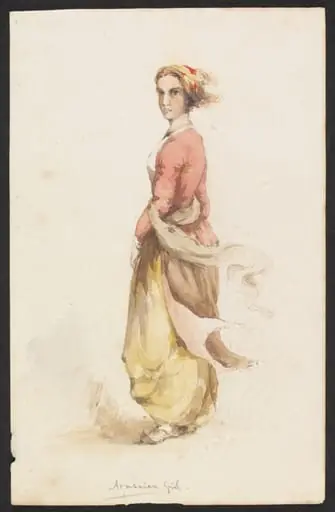 Armenian Girl
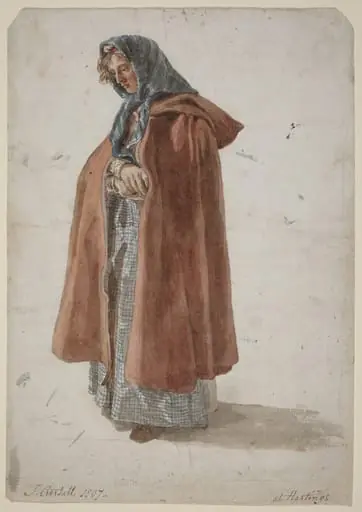 Young Woman in a Kerchief and Cloak at Hastings
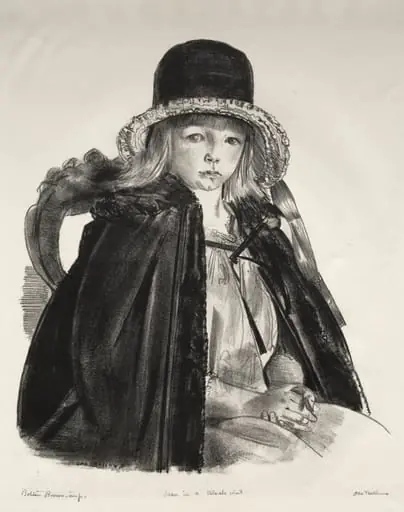 Jean in a Black Hat
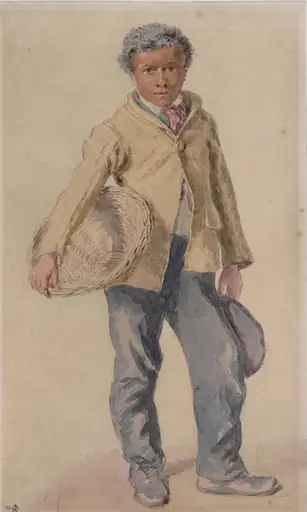 Mulatto Boy
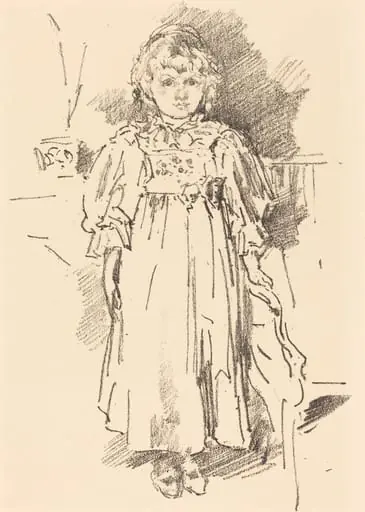 Little Evelyn
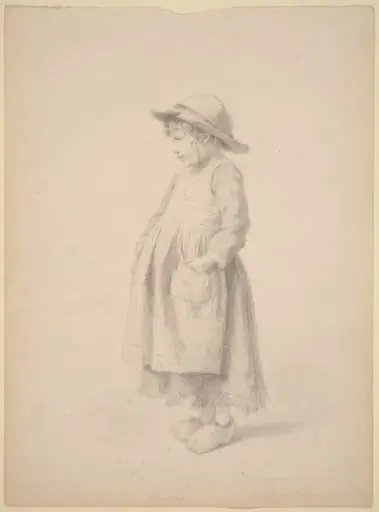 Francois
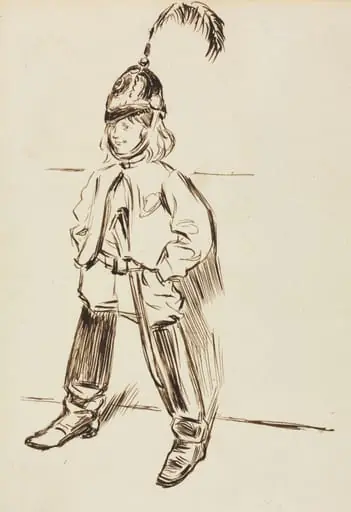 Study of a Child in Helmet and Boots
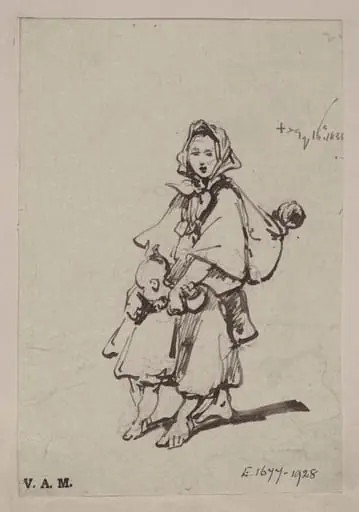 A boatwoman with two children, one of them strapped to her back
 Miss Alexander