Artwork
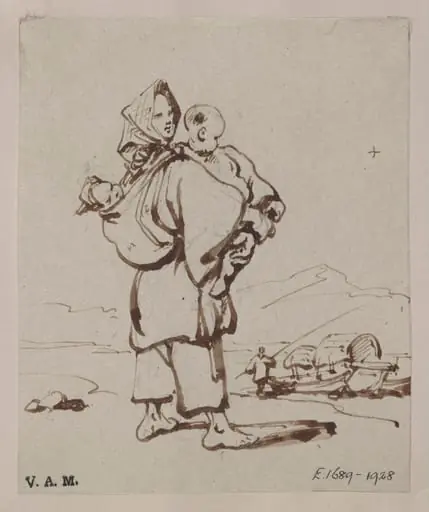
A boatwoman with two children, one of them strapped to her back
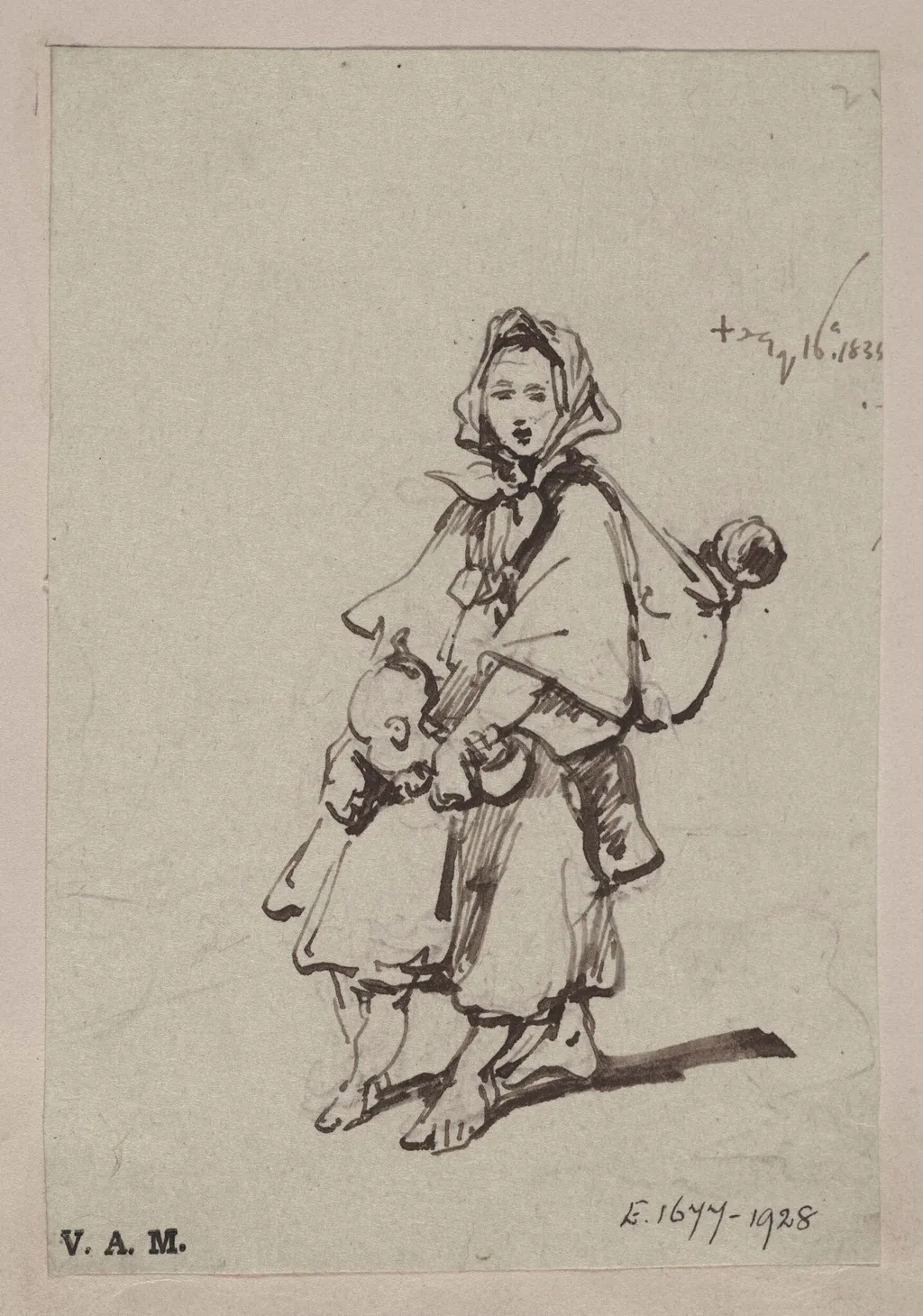
A boatwoman with two children, one of them strapped to her back is a drawing by the Romanticist artist George Chinnery. It dates from 1834 and is held in the collection of the Victoria and Albert Museum. A delicate ink drawing depicts a woman engaged in daily labor, rowing a boat while caring for two young children.
About this work
Overview
A delicate ink drawing depicts a woman engaged in daily labor, rowing a boat while caring for two young children. She is barefoot and dressed in simple garments, her head covered by a scarf. The composition centers on her physical endurance, capturing a quiet moment of domestic responsibility amid a waterborne setting.
Subject & Meaning
The figure represents a working mother navigating the demands of survival and childcare simultaneously. The children, one held before her and the other secured to her back, suggest the physical weight of maternal duty. There is no idealization—her posture and expression convey exhaustion and resolve, reflecting the unremarkable yet essential labor of women in riverine communities.
Technique & Style
Executed in fine ink lines, the drawing emphasizes contour and subtle shading to define form without embellishment. The brushwork is economical, with minimal detail in the background, focusing attention on the woman’s posture and the spatial relationship between her body and the children. The absence of color heightens the sense of immediacy and intimacy.
History & Provenance
The work is part of a small group of sketches attributed to an anonymous 19th-century artist who documented everyday life along regional waterways. Its origin is likely tied to travel journals or ethnographic studies of rural laborers. It entered a public collection in the early 20th century, with no record of prior ownership.
Context
In the 1800s, women in many riverine societies performed the bulk of transport and domestic labor, often without formal recognition. This drawing aligns with a broader tradition of observational sketches made by travelers and local artists, capturing unvarnished scenes of working-class life that were rarely the subject of formal art.
Legacy
Though unsigned and undated, the drawing endures as a quiet testament to unseen labor. It contributes to historical records of gendered work and domestic resilience, offering a visual counterpoint to grander narratives of the period. Its simplicity invites reflection on the dignity embedded in routine acts of care.
Own this work as a print
Artist & collection
Artist
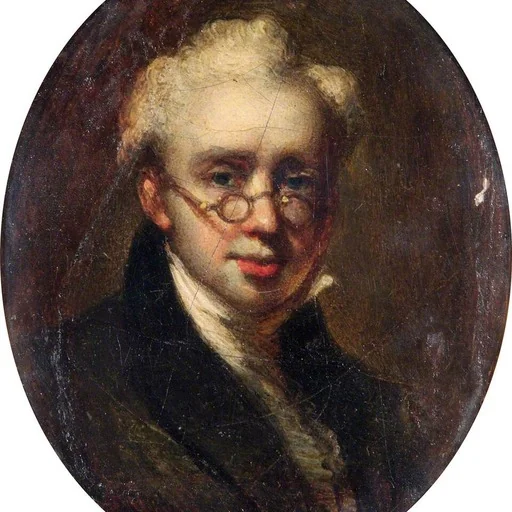
George Chinnery (Chinese: 錢納利; 5 January 1774 – 30 May 1852) was an English painter who spent most of his life in Asia, especially India and southern China.

 A boatwoman holding two children
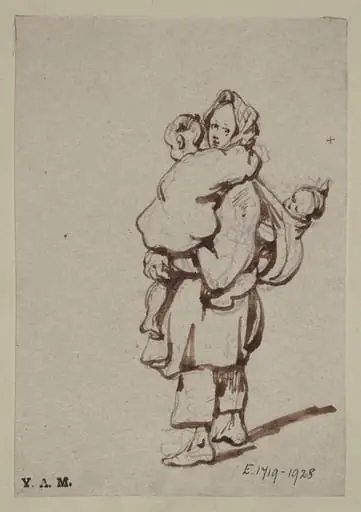 A boatwoman with two children
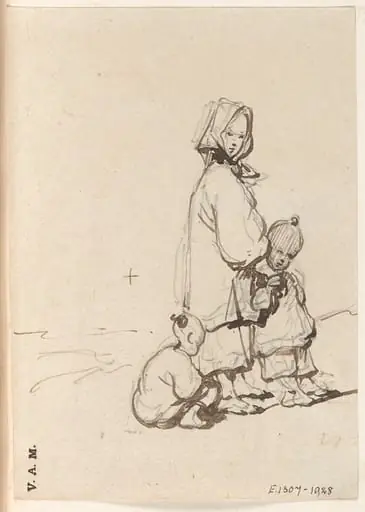 A Macau boatwoman with two children
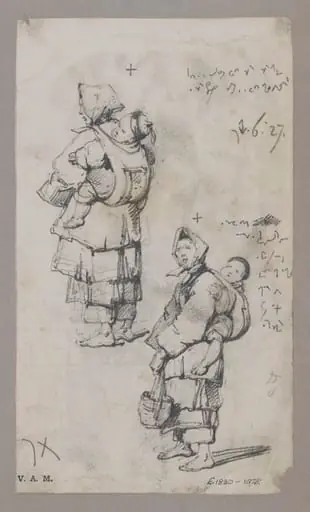 Two drawings of a boatwoman with a child on her back
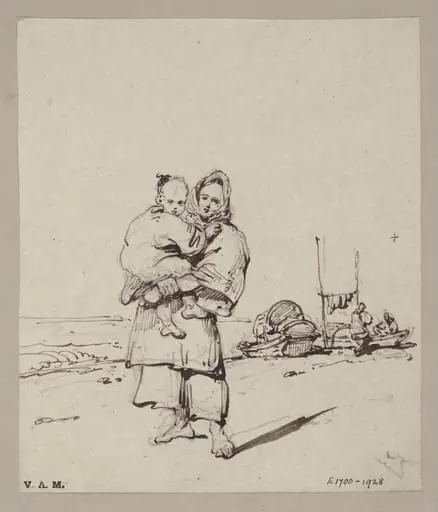 A Chinese boatwoman carrying a child
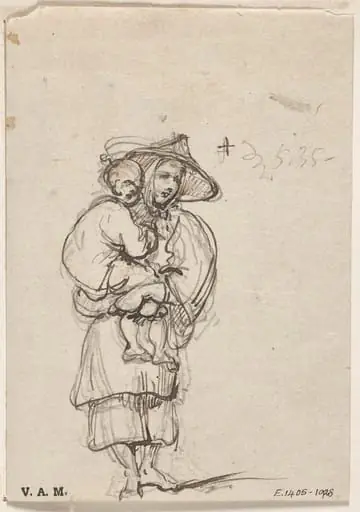 A boatwoman holding a child
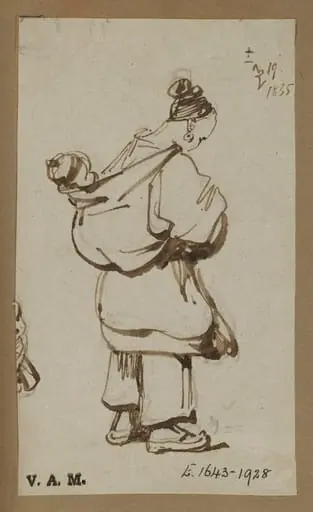 A Chinese boatwoman with a child in a sling on her back
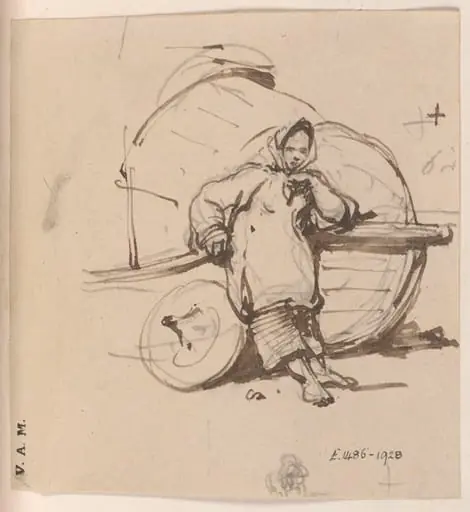 A boatwoman leaning against a beached Tanka boat
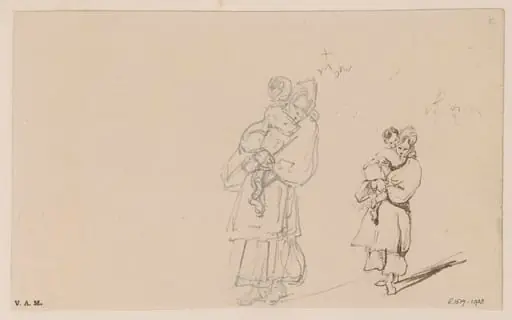 Two drawings of a boatwoman holding a child
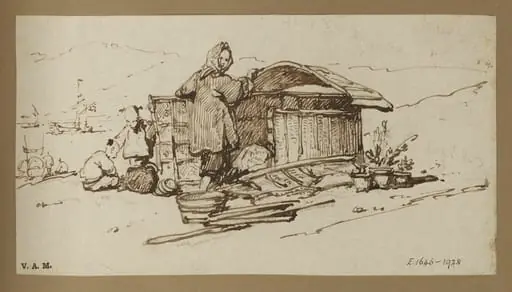 Chinese boatpeople by a makeshift dwelling on the shore
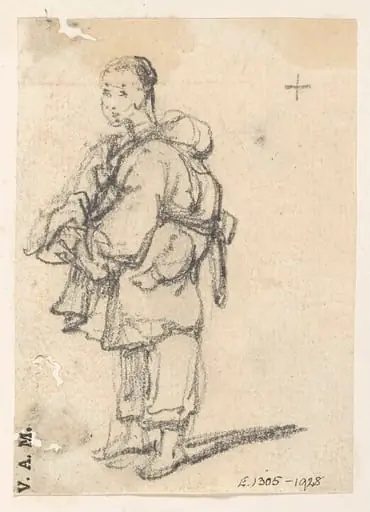 A boatwoman with a child on her back
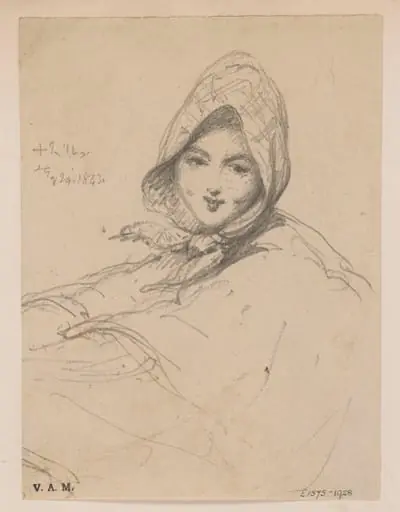 A boatwoman