Artwork
A Strange Juggler
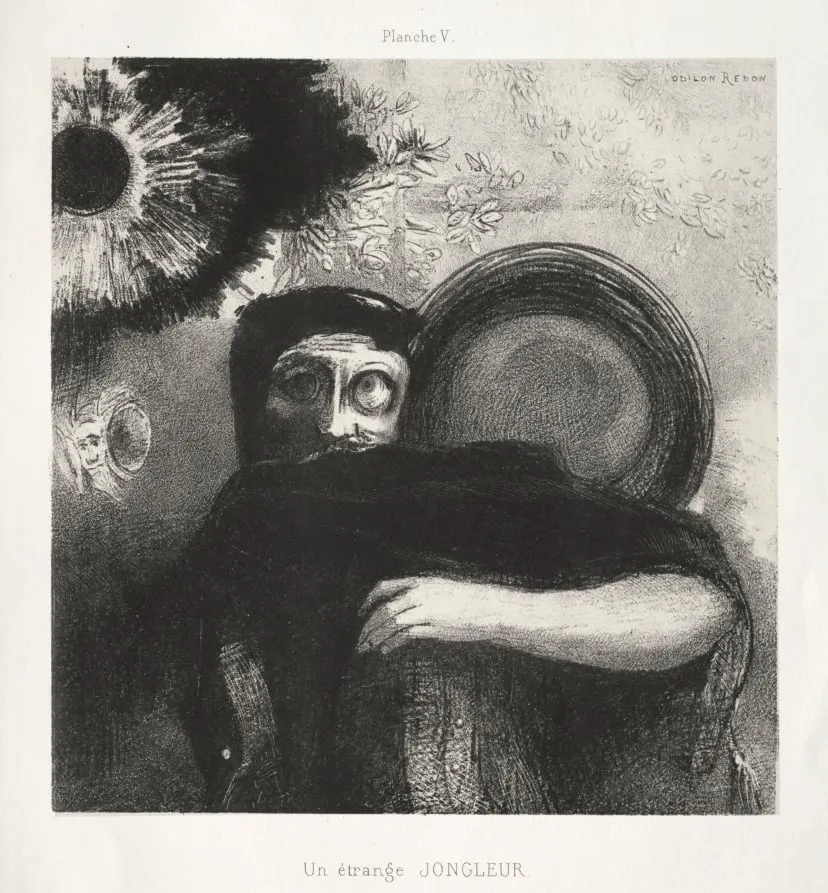
A Strange Juggler is a print by the Impressionist artist Odilon Redon. It dates from 1885 and is held in the collection of the Cleveland Museum of Art.
About this work
If you like this eerie, floating world, look up the technique called *sfumato*—it’s how artists soften edges to make things look hazy and mysterious.
You see a floating head with huge eyes, juggling three glowing balls against a dark, empty background.
Redon made this in 1885, part of a set of prints called *Homage to Goya*. He was trying out lithography—a way to draw on stone and print the image—and wanted to honor Goya’s weird, dreamy style. The juggler feels like a ghost from a half-remembered dream.
If you like this eerie, floating world, look up the technique called *sfumato*—it’s how artists soften edges to make things look hazy and mysterious.
Overview
Created in 1885, this lithograph belongs to Odilon Redon’s series *Homage to Goya*, a group of six prints that explore the enigmatic qualities of the Spanish painter’s work. The image shows a disembodied head with oversized eyes, suspended in a dark void while three luminous spheres are tossed in the air, evoking a spectral, dream‑like atmosphere.
Subject & Meaning
The floating figure functions as a solitary juggler, its exaggerated gaze suggesting a heightened awareness of the act. The three glowing balls, rendered as soft, ethereal orbs, may symbolize the fleeting ideas or creative impulses that the artist balances. Together the elements convey a sense of introspection and isolation inherent in the artistic process.
Technique & Style
Redon employed lithography, drawing directly on limestone to produce multiple impressions. The print’s muted tones and blurred edges recall the sfumato effect, softening transitions between light and darkness and reinforcing the work’s hazy, otherworldly quality. This approach aligns with Redon’s broader interest in the subconscious and the uncanny.
History & Provenance
The *Homage to Goya* series represents an early phase of Redon’s experimentation with the lithographic medium. While many of his portfolio sets were later separated, the Cleveland Museum acquired several complete sets, including original covers, during the 1920s, preserving the intended narrative cohesion of the group.
Context
Redon’s tribute reflects the influence of Francisco de Goya, whose own investigations of nightmarish and visionary subjects resonated with the French Symbolist. By echoing Goya’s ambiguous visual language, Redon situates his work within a lineage of artists probing the boundaries between reality and the imagination.
Artist & collection
Artist
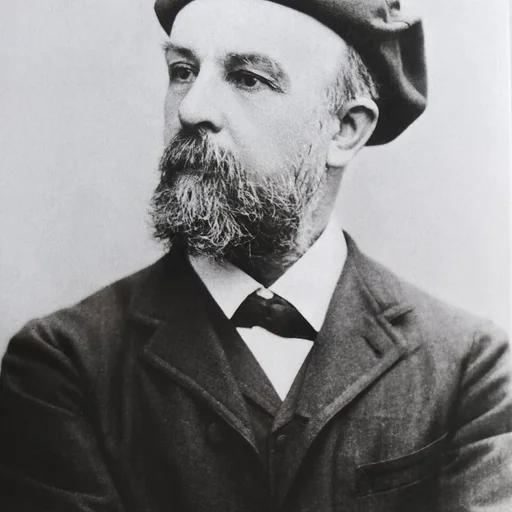
Born Bertrand-Jean Redon on 20 April 1840 in Bordeaux, the artist adopted the name Odilon from his mother, Marie-Odile.

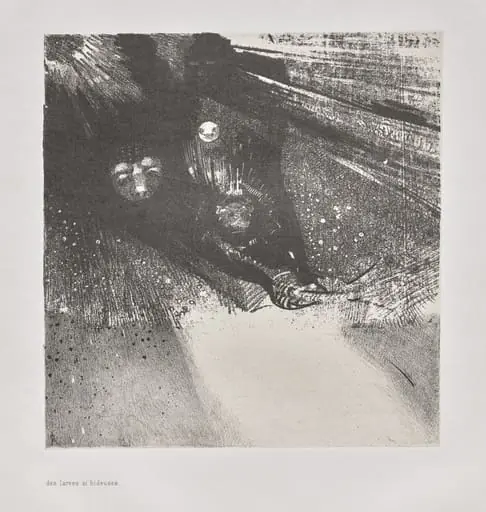 Hideous Larvae
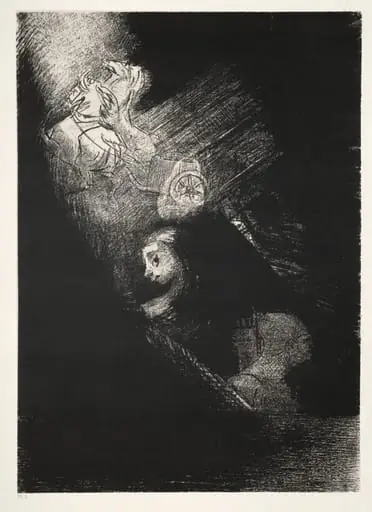 First a Pool of Water, Then a Prostitute, the Corner of a Temple, a Soldier's Face, a Chariot with Two White, Rearing Horses
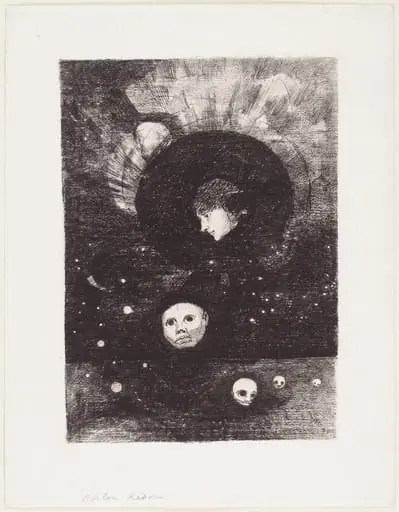 Untitled
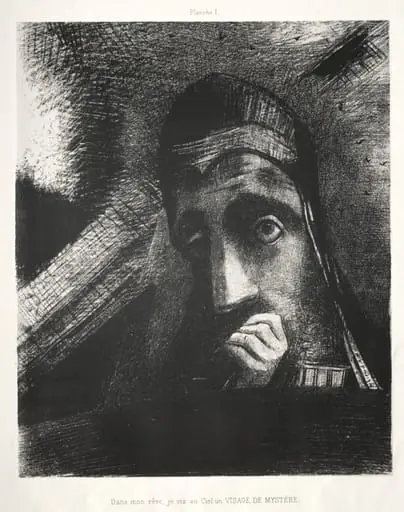 In My Dream I Saw in the Sky a Face of Mystery
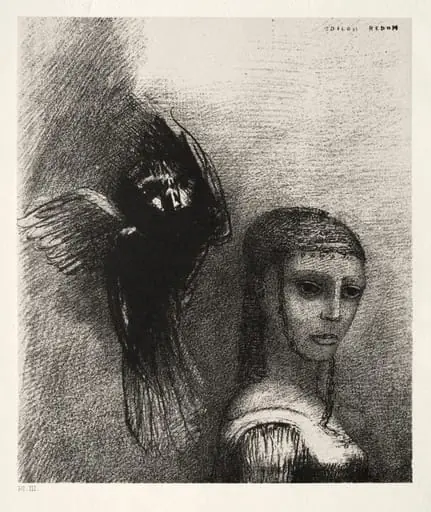 And a Large Bird, Descending from the Sky, Hurls Itself against the Topmost Point of Her Hair
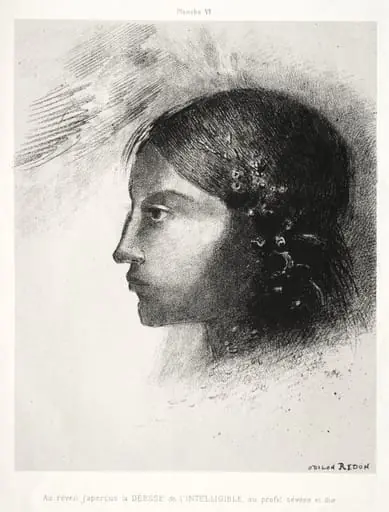 Upon Awakening I Saw the Goddess of the Intelligible with Her Severe and Hard Profile
 Untitled
 The Marsh Flower, a Sad Human Head
 The Chimera with Green Eyes Turns, Bays
 Untitled