Artwork
Brünnhilde in Twilight of the Gods
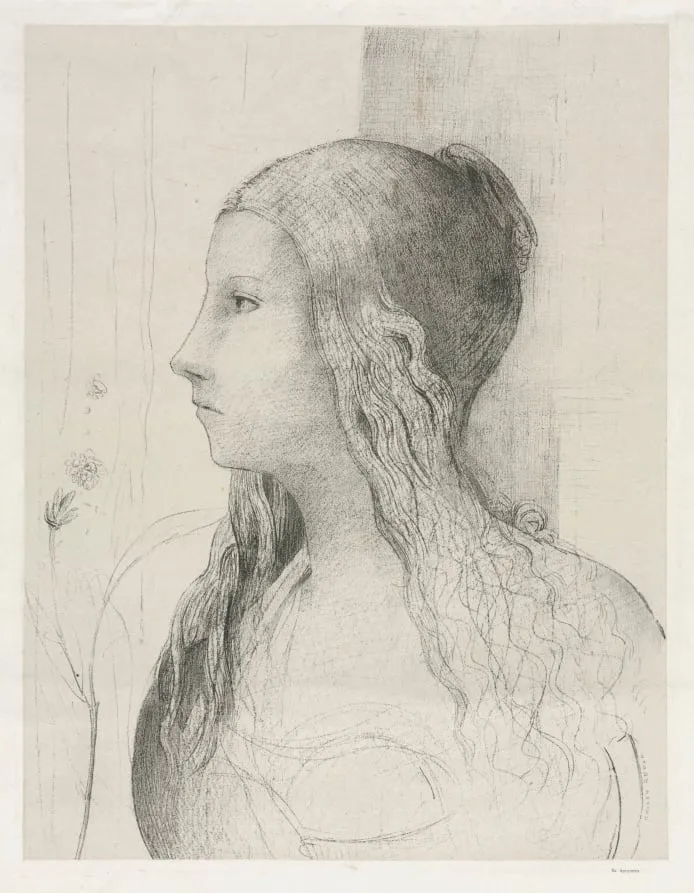
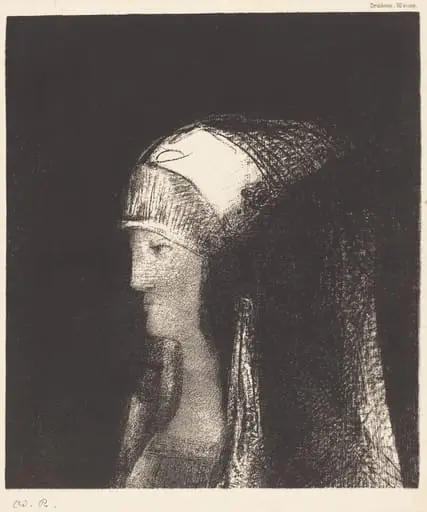
Brünnhilde in Twilight of the Gods is a print by the Impressionist artist Odilon Redon. It dates from 1894 and is held in the collection of the Cleveland Museum of Art.
About this work
Overview
Created after Redon had fully embraced lithography, the work reflects his transition from dark, symbolic imagery to more ethereal, atmospheric compositions.
This lithograph by Odilon Redon depicts Brünnhilde, a central figure from Richard Wagner’s opera cycle The Ring of the Nibelung. Created after Redon had fully embraced lithography, the work reflects his transition from dark, symbolic imagery to more ethereal, atmospheric compositions. The print captures a moment of transcendence, blending figuration with abstraction through delicate tonal shifts and fluid line work.
Subject & Meaning
Brünnhilde, the Valkyrie who chooses self-sacrifice over divine order, is shown in a state of dissolution—her armored form dissolving into swirling lines as she hovers above a field of blossoms. The imagery evokes her final act in Wagner’s opera, where she immolates herself to purify the world. Redon translates this mythic climax not as drama, but as quiet transformation, aligning the visual with the emotional resonance of music.
Technique & Style
Redon exploited lithography’s capacity for subtle gradations, using fine outlines for the flowers, crosshatching to model Brünnhilde’s face, and the side of the crayon to deepen the contours of her hair and chest. The technique mimics the spontaneity of drawing, allowing soft transitions between form and atmosphere. The result is a surface that feels both meticulously rendered and dreamily unresolved.
History & Provenance
The print was made in the late 1890s, following Redon’s immersion in Wagner’s operas and his mature period in lithography. It emerged from a phase in which he increasingly sought to visualize inner states rather than external reality. Though not part of a formal series, it stands as one of his most direct responses to musical narrative, reflecting his personal engagement with Wagner’s mythic universe.
Context
In late 19th-century France, Wagner’s music inspired artists beyond the realm of sound, influencing Symbolist painters who sought to translate emotion and myth into visual form. Redon, aligned with this movement, rejected literal illustration in favor of suggestive imagery. His Brünnhilde reflects a broader cultural fascination with Germanic legend as a vehicle for psychological and spiritual expression.
Legacy
The print exemplifies Redon’s contribution to the Symbolist aesthetic—where form dissolves into mood, and narrative is implied rather than stated. It influenced later artists exploring the boundaries between drawing, printmaking, and emotional abstraction. While not widely reproduced, it remains a key example of how music and myth were reimagined through the quiet language of lithography.
Artist & collection
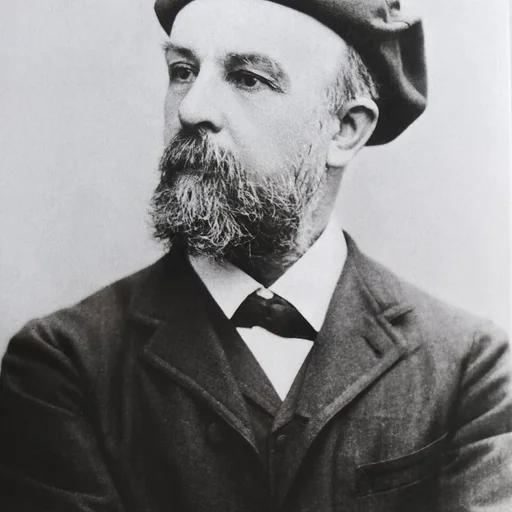
Artist
Born Bertrand-Jean Redon on 20 April 1840 in Bordeaux, the artist adopted the name Odilon from his mother, Marie-Odile.