Artwork
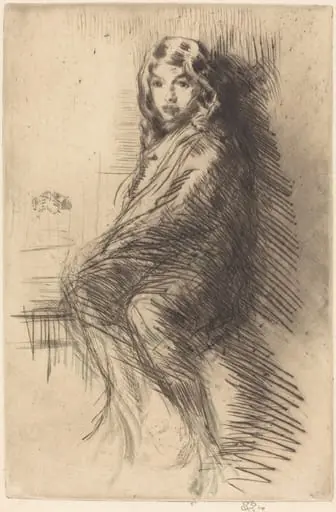
Weary
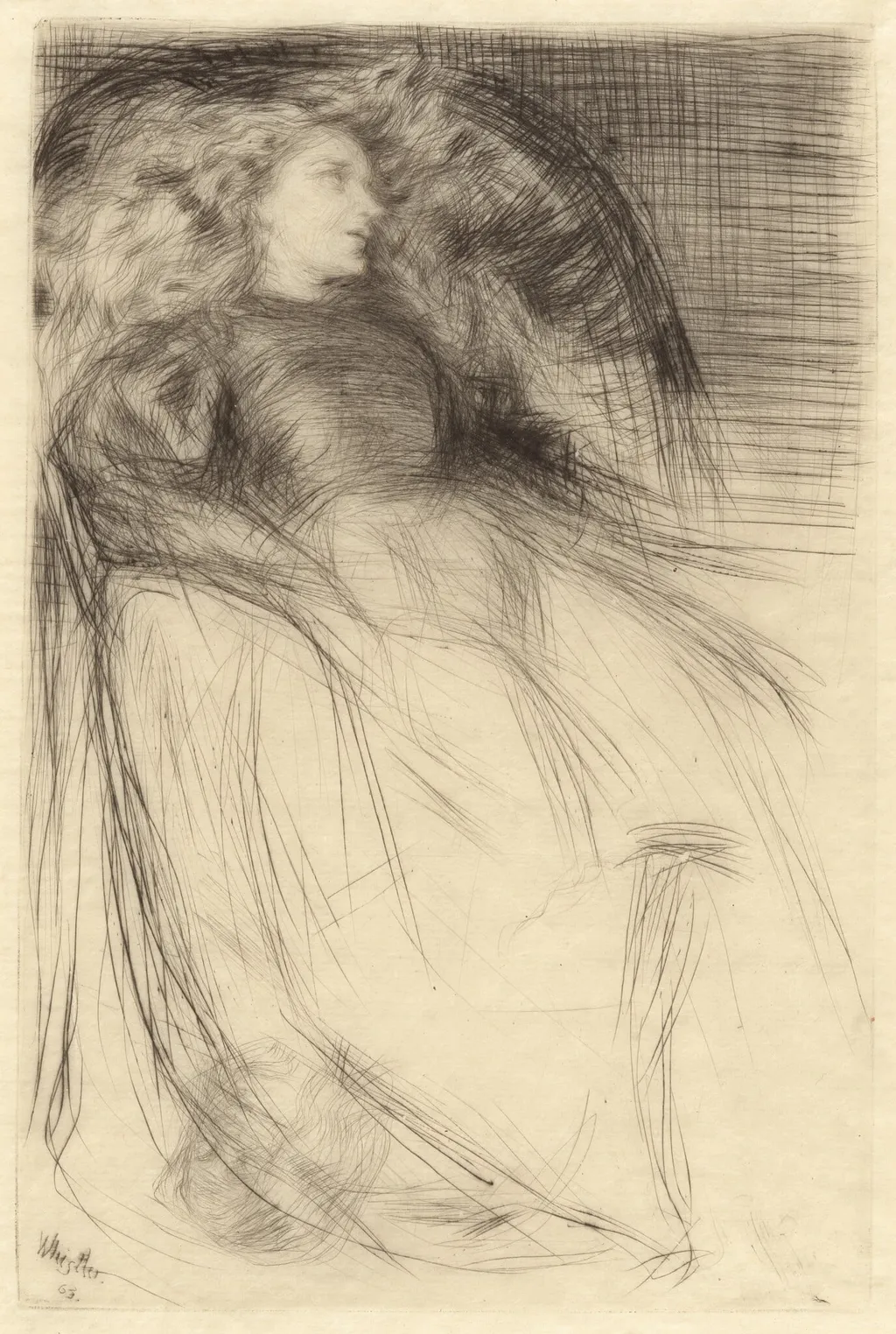
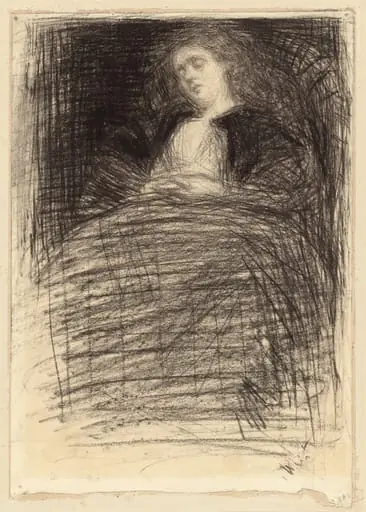
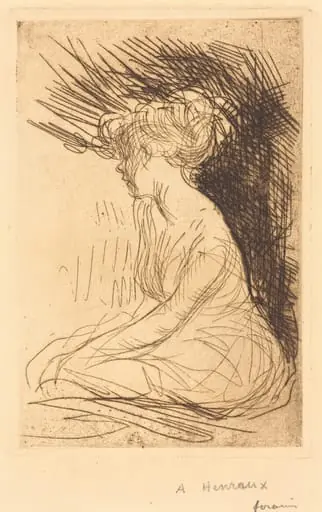
Weary is an ink print by the Impressionist artist James McNeill Whistler. It dates from 1863 and is held in the collection of the National Gallery of Art.
About this work
Overview
Created in 1863, *Weary* is a drypoint print executed on Japanese paper by James McNeill Whistler. The image presents a solitary female figure, her hair flowing in undulating lines, her gaze turned away, and her form draped in a loosely hanging garment. The background is rendered with intersecting strokes that dissolve into a darker mass, giving the composition a sense of atmospheric depth.
Subject & Meaning
The work portrays a contemplative woman whose relaxed posture and turned profile suggest introspection rather than narrative. Whistler’s avoidance of overt sentiment aligns with his belief that art should exist independently of moral or emotional instruction, allowing the viewer to engage with the visual qualities rather than a prescribed story.
Technique & Style
Whistler employed the drypoint method, incising lines directly into a metal plate to produce a characteristic burr that yields a soft, velvety line quality. The choice of Japanese paper enhances the delicate texture, while the loose, gestural strokes convey a sense of immediacy and movement, echoing the artist’s interest in tonal harmony over detailed representation.
History & Provenance
The print was produced during Whistler’s residence in the United Kingdom, a period when he was establishing his reputation amid the cultural currents of the American Gilded Age. Throughout his career he frequently marked his works with a stylized butterfly, a personal emblem that appears on many of his prints from this era.
Artist & collection
Artist
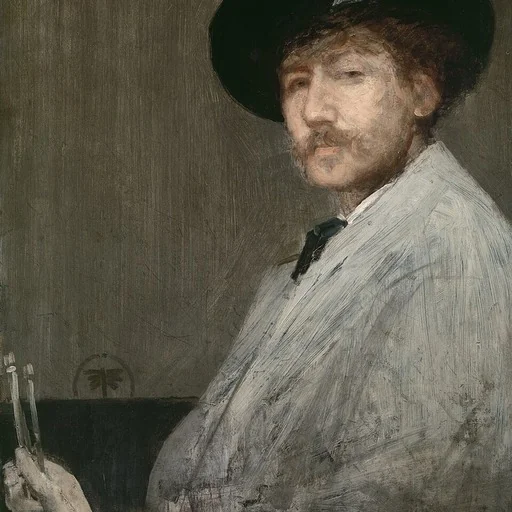
James Abbott McNeill Whistler was an American painter in oils and watercolor, and printmaker, active during the American Gilded Age and based primarily in the United Kingdom.

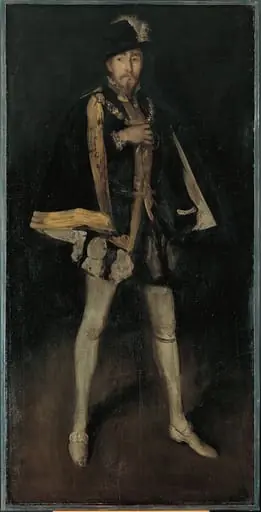 Arrangement in Black, No. 3: Sir Henry Irving as Philip II of Spain
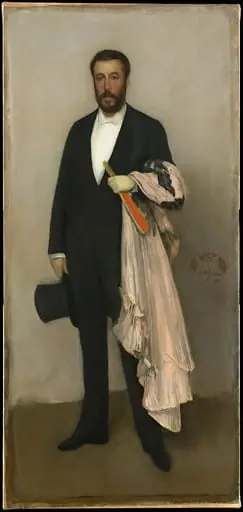 Arrangement in Flesh Colour and Black: Portrait of Theodore Duret
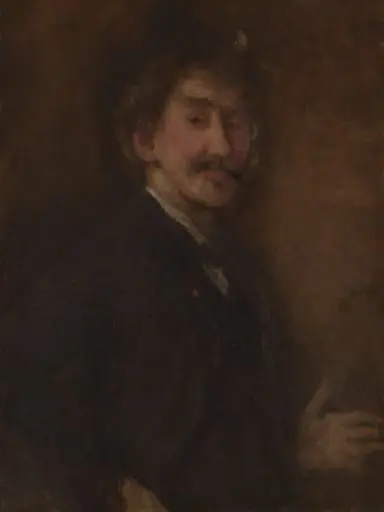 Gold and Brown: Self-Portrait
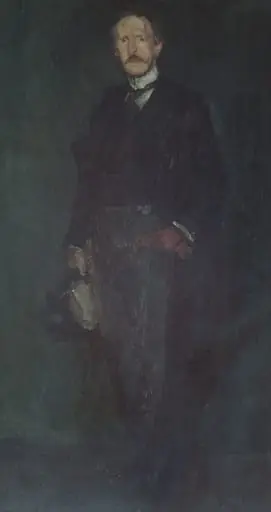 Edward Guthrie Kennedy
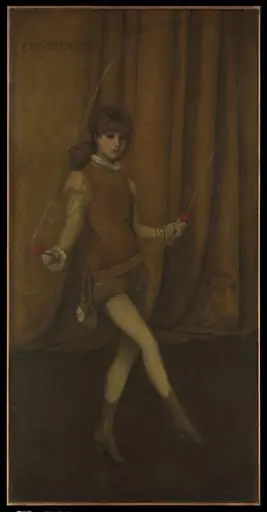 Harmony in Yellow and Gold: The Gold Girl—Connie Gilchrist
 George W. Vanderbilt
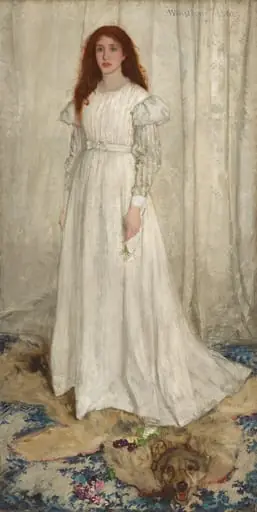 Symphony in White, No. 1: The White Girl
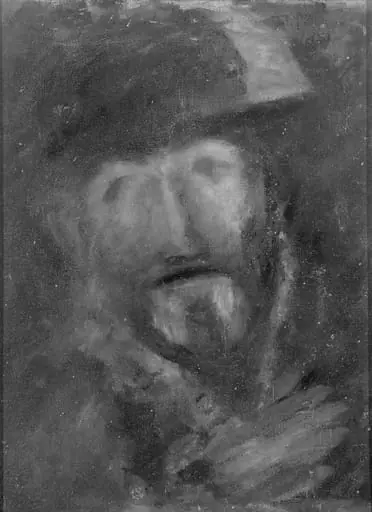 Henry Irving as Philip II of Spain