Artwork
He Fixed His Eyes on Me with an Expression That Was So Strange
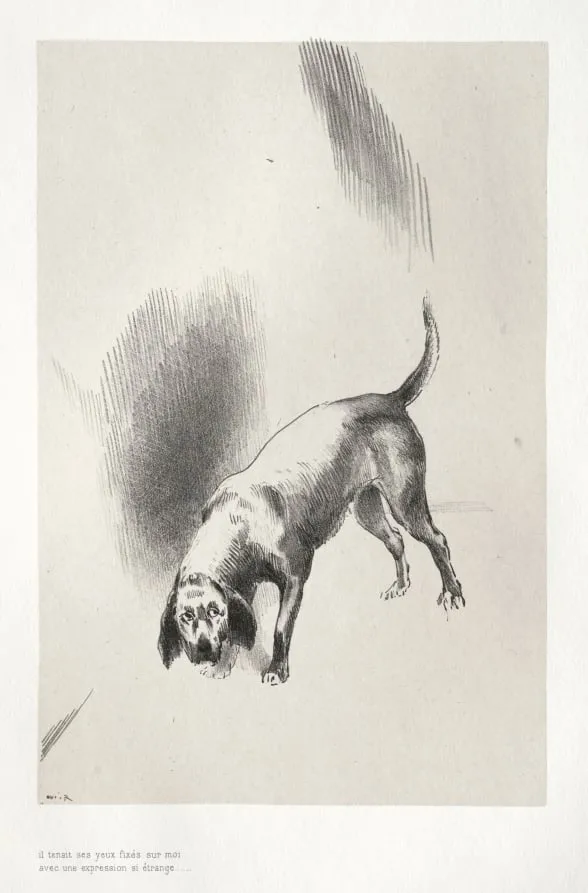
He Fixed His Eyes on Me with an Expression That Was So Strange is a print by the Impressionist artist Odilon Redon. It dates from 1896 and is held in the collection of the Cleveland Museum of Art.
About this work
Overview
Rather than illustrating a literal scene, Redon translated the narrative’s atmospheric unease into a solitary, enigmatic face suspended in darkness.
This lithograph is part of a series by Odilon Redon inspired by Edward Bulwer-Lytton’s 1859 ghost story, The Haunted and the Haunters. Rather than illustrating a literal scene, Redon translated the narrative’s atmospheric unease into a solitary, enigmatic face suspended in darkness. The work reflects his shift from figurative symbolism toward psychological suggestion, using the medium of lithography to evoke mood over narrative.
Subject & Meaning
The image presents a pale, featureless face with wide, unblinking eyes and a faint, closed mouth, emerging from an indeterminate void. There is no indication of body, context, or source—only presence. The effect is not one of terror, but of quiet disquiet, as if the viewer has been observed by something neither human nor fully other. The face resists interpretation, inviting contemplation rather than fear.
Technique & Style
Redon, working with master printer Auguste Clot, exploited lithography’s tonal range through varied pressure, directional strokes, and surface manipulation. By turning the crayon on its side and scratching into the stone, he achieved subtle gradations of gray, blurring edges to dissolve form into shadow. The result is a haunting ambiguity, where the figure seems to emerge from and dissolve back into the dark.
History & Provenance
Created in the late 1870s or early 1880s, this print belongs to Redon’s early period of graphic work, preceding his more colorful Symbolist paintings. It was produced during a time when he was deeply engaged with literary sources and refining his lithographic technique. The collaboration with Clot was instrumental in realizing the nuanced tonal effects that define the series, distinguishing it from more conventional illustrative prints of the era.
Context
Redon’s engagement with Gothic literature reflected broader fin-de-siècle interests in the unseen and the subconscious. While contemporaries like Goya or Blake depicted supernatural figures explicitly, Redon avoided literalism. His approach aligned with emerging psychological and aesthetic currents that valued suggestion over spectacle, anticipating later developments in Surrealism and modernist abstraction.
Legacy
This print exemplifies Redon’s influence on 20th-century visual language, particularly in how emotion is conveyed through ambiguity and texture rather than narrative. His use of lithography to evoke psychological states expanded the medium’s expressive potential. Artists and writers drawn to the ineffable—such as André Breton or Rilke—cited his work as a touchstone for evoking the unseen through quiet, resonant form.
Artist & collection
Artist
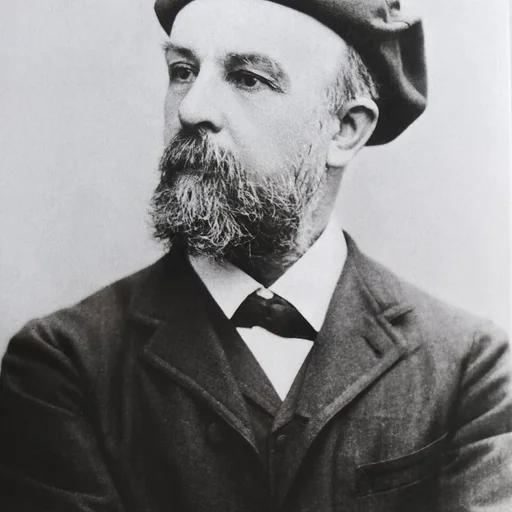
Born Bertrand-Jean Redon on 20 April 1840 in Bordeaux, the artist adopted the name Odilon from his mother, Marie-Odile.

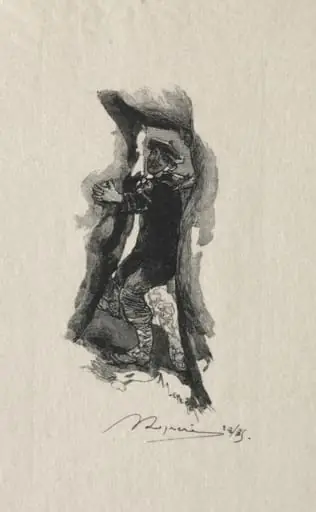 Au defile de Sept-Cavernes
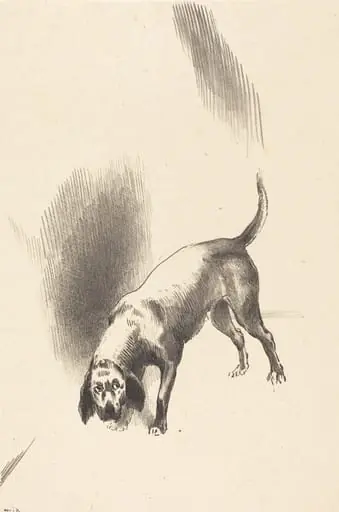 The Dog
 Aldrich's Dog
 Drawing of a foxhound
 Löwe (Lion) from Deutsche Graphiker der Gegenwart (German Printmakers of Our Time)
 Hond van de heilige Hubertus
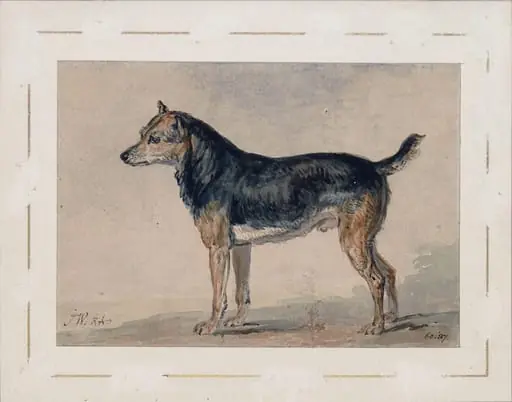 Sketch of a dog
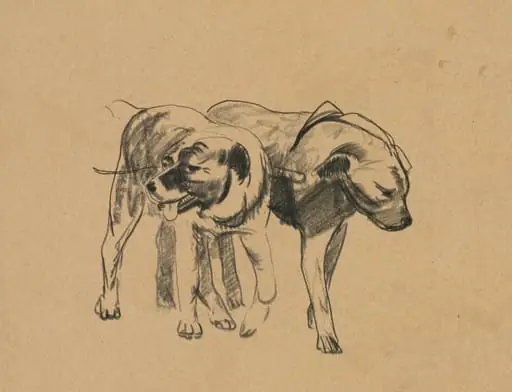 Two Dogs
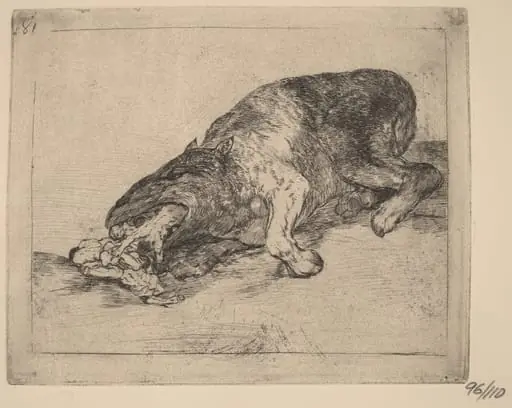 Fiero monstruo! (Fierce Monster!)
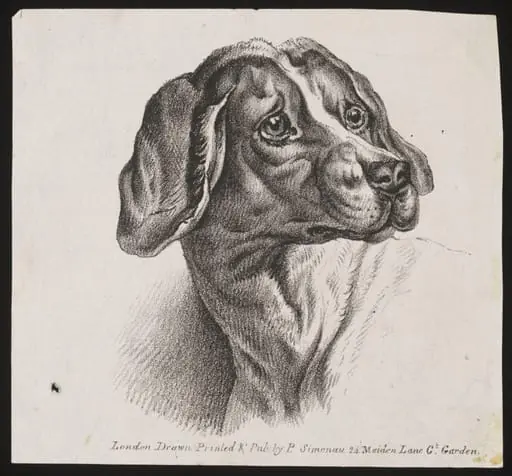 Untitled
 Et par hunde som opgraver et muldvarpeskud
 The Chimera with Green Eyes Turns, Bays