Artwork
Hond van de heilige Hubertus
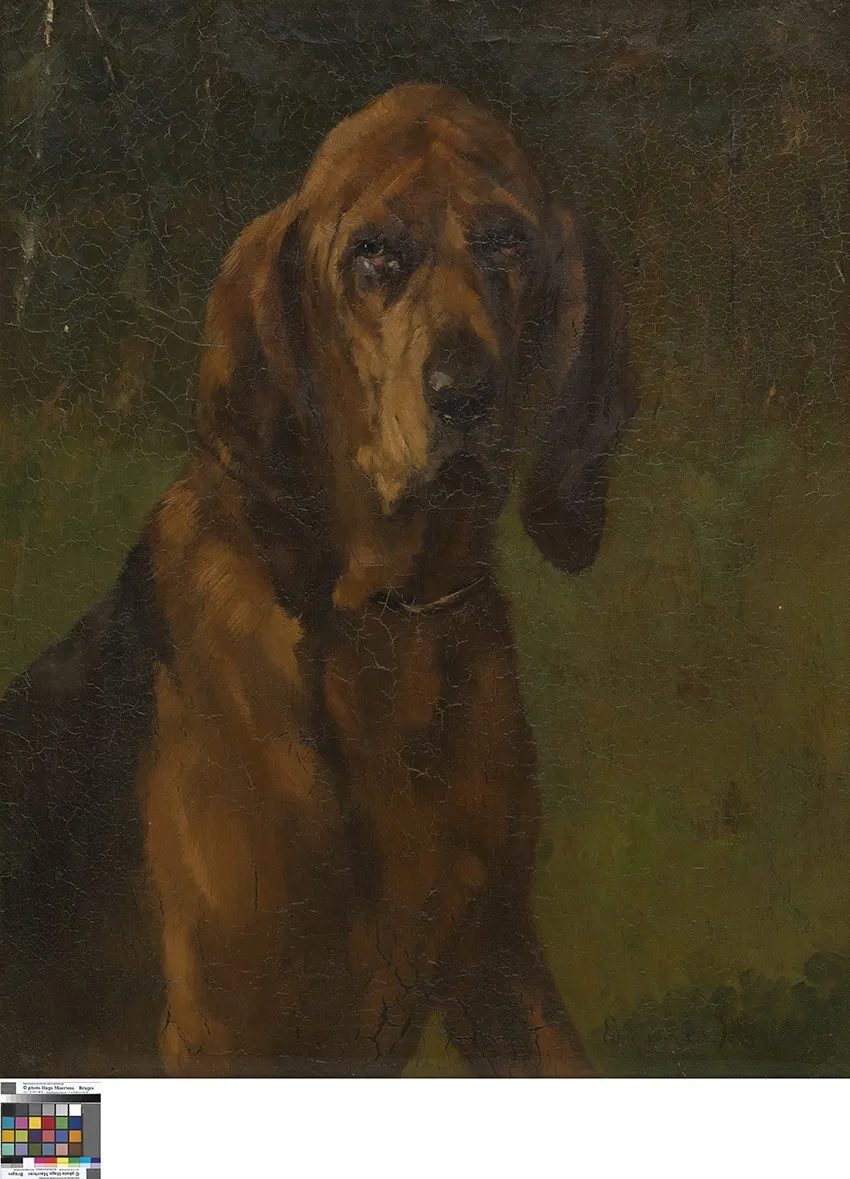
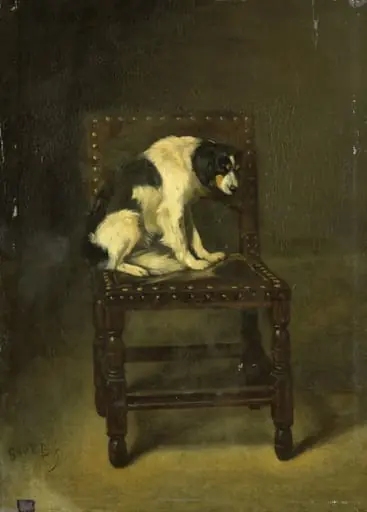
Hond van de heilige Hubertus is an oil painting by the Realist artist Edmond Van der Meulen. It dates from 1841 and is held in the collection of the Groeningemuseum.
About this work
Overview
Painted in 1841 by Edmond Van der Meulen, this oil work portrays a dog, identified as the hound of Saint Hubertus. The painting resides in the Groeningemuseum in Bruges. Its composition centers on the animal, rendered with careful attention to texture and light, against a dim, gradually brightening backdrop that enhances the figure’s presence without distracting detail.
Subject & Meaning
The dog is traditionally associated with Saint Hubertus, the patron saint of hunters, whose conversion story involves a vision of a crucifix between a stag’s antlers. While the painting does not depict the saint or the hunt, the hound’s solemn posture and collar suggest a symbolic link to devotion and the transition from worldly pursuits to spiritual reflection.
Technique & Style
Van der Meulen employs chiaroscuro to model the dog’s form, using deep shadows and subtle gradations of brown to define its fur and musculature. The lighting shifts from left to right, softening as it moves across the background, directing focus to the animal’s face. The downward gaze and relaxed ears convey stillness, reinforcing a quiet, introspective mood.
History & Provenance
The painting entered the Groeningemuseum’s collection in the 19th century, likely through acquisition or donation following its completion. Its attribution to Van der Meulen is consistent with his known works from the period, though little documentation exists regarding its early ownership or exhibition history beyond its presence in the museum’s holdings.
Context
In mid-19th-century Belgium, religious and symbolic animal imagery retained cultural resonance, even as realism gained prominence. Van der Meulen’s focus on a single animal, stripped of narrative context, reflects a broader trend toward intimate, emotionally charged portraiture—whether of humans or animals—within a predominantly Christian visual tradition.
Legacy
The painting remains a quiet example of 19th-century Belgian realism, valued for its restrained emotion and technical precision. It contributes to the Groeningemuseum’s collection of works that bridge devotional themes and naturalistic observation, offering insight into how symbolic subjects were rendered with psychological depth outside grand historical scenes.
Artist & collection

 Un cavaler - Porthos
 Garryowen (1876-1887), Champion Irish Red Setter
 Study of a bloodhound
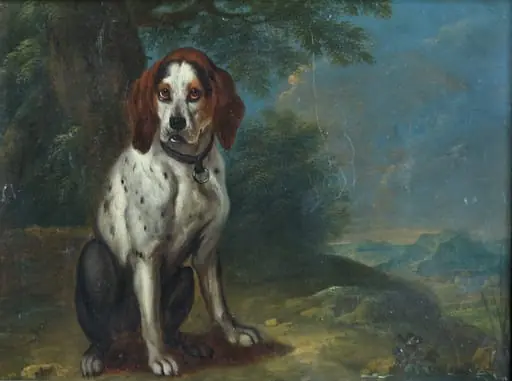 Prepelicar șezând
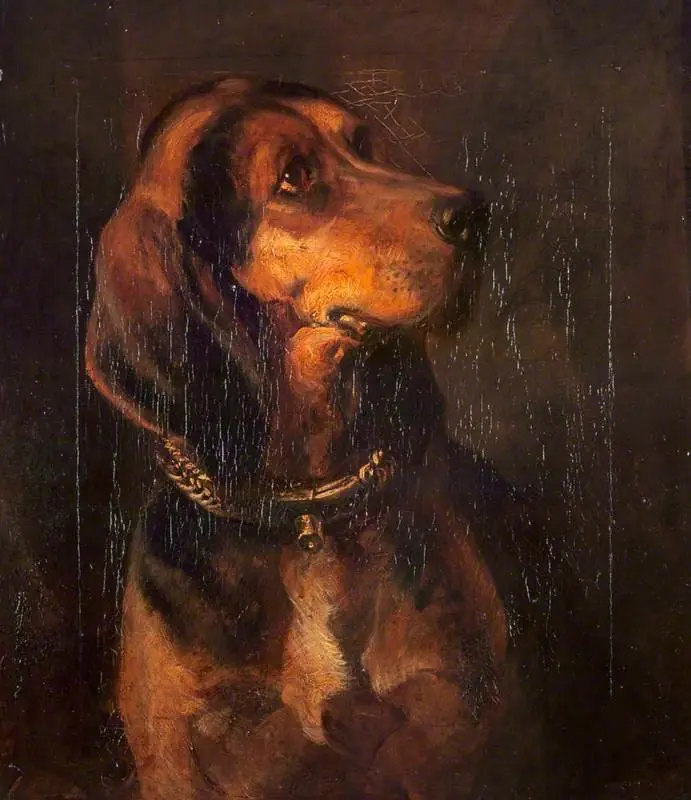 A Dog's Head
 Aldrich's Dog
 Cal
Cal The Artist's Dog Flèche
 He Fixed His Eyes on Me with an Expression That Was So Strange
 The Dog
 Left side addition (since removed) of 'Meleager and Atalante'
 A Dog on a Chair