Artwork
Quasimodo
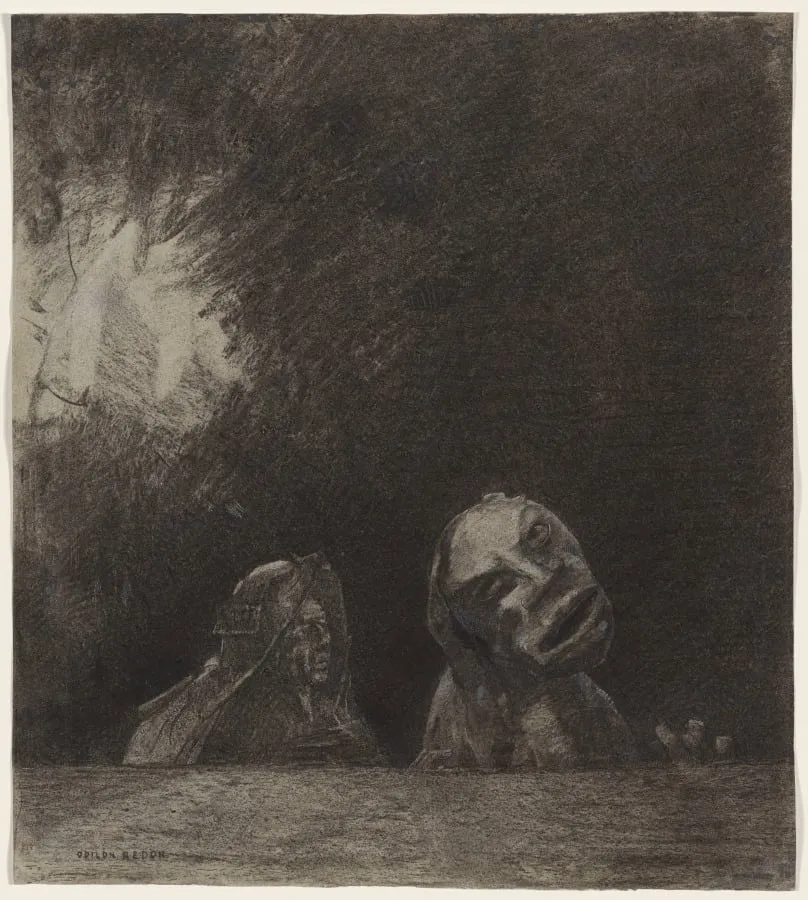
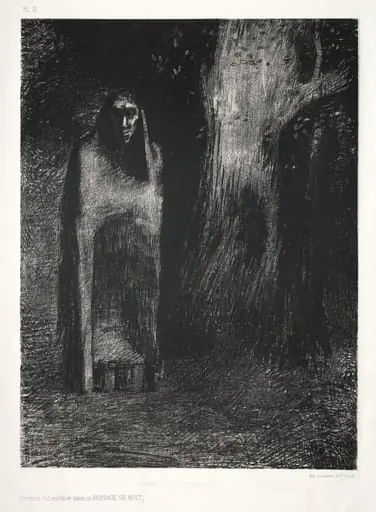
Quasimodo is a drawing by the Impressionist artist Odilon Redon. It dates from 1878 and is held in the collection of the Cleveland Museum of Art.
About this work
Overview
Odilon Redon's 'Quasimodo' is a charcoal drawing that embodies the artist's affinity for somber, fantastical themes. Created in the 19th century, it depicts the titular character from Victor Hugo's 'The Hunchback of Notre Dame' in a non-illustrative, interpretive manner.
Subject & Meaning
The drawing features a hunched figure, identifiable as Quasimodo by title, accompanied by a smaller, ambiguous form that could be a child or spectral presence. The composition conveys a sense of isolation and mystery.
Technique & Style
Redon employed layered and rubbed charcoal marks, achieving an indeterminate, dreamlike space. This technique, akin to sfumato, blurs edges, immersing the figures in an dark, ethereal atmosphere.
History & Provenance
Executed years after the publication of Hugo's 1831 novel, Redon's work is not an illustration but a independent artistic interpretation. Specific provenance details are not provided.
Context
Situated within Redon's broader oeuvre, 'Quasimodo' reflects his exploration of the subconscious and the emotional potential of chiaroscuro. It aligns with the period's interest in literary inspirations reimagined through visual arts.
Legacy
This drawing contributes to Redon's legacy as a pioneer of Symbolism, influencing subsequent artists in their use of suggestive, psychologically complex imagery. Its dreamlike quality has resonated with audiences beyond direct associations with Hugo's novel.
Artist & collection
Artist
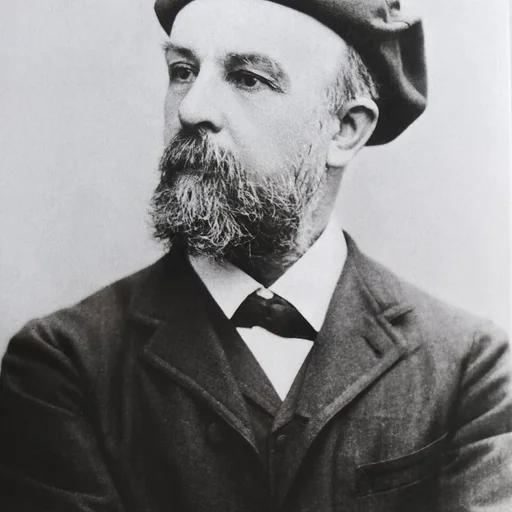
Born Bertrand-Jean Redon on 20 April 1840 in Bordeaux, the artist adopted the name Odilon from his mother, Marie-Odile.

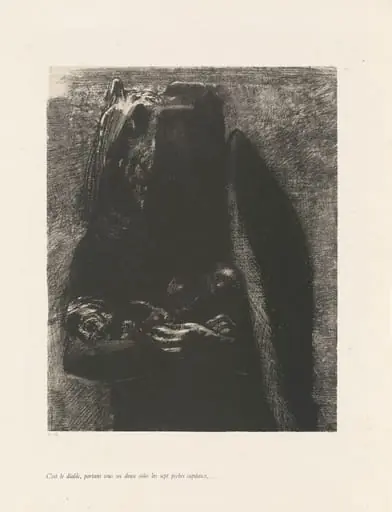 C'est le Diable
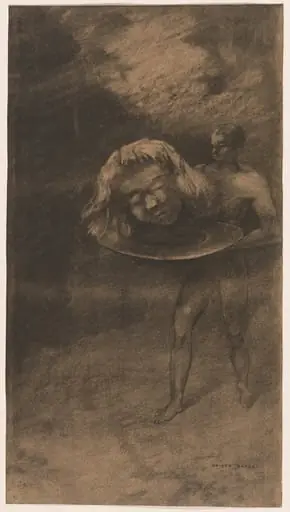 Untitled
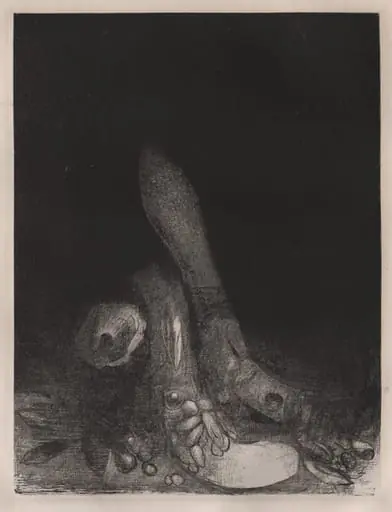 Flowers Fall and the Head of a Python Appears
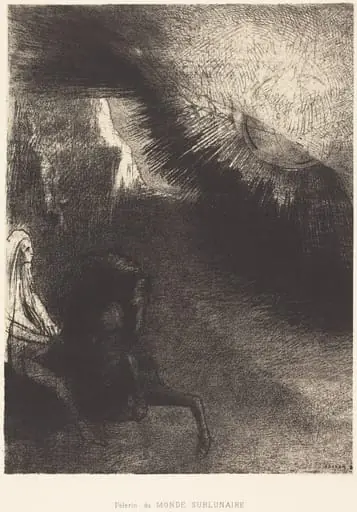 Pélerin du monde sublunaire (Pilgrim of the sublunary world)
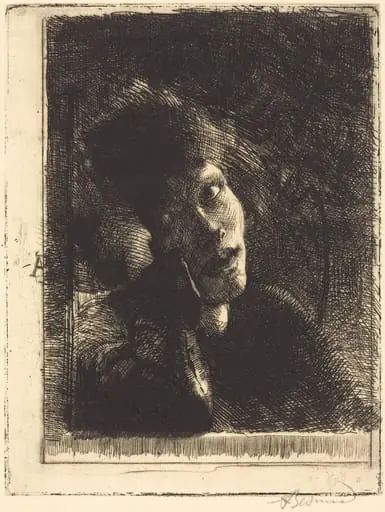 La Muse Accoudée
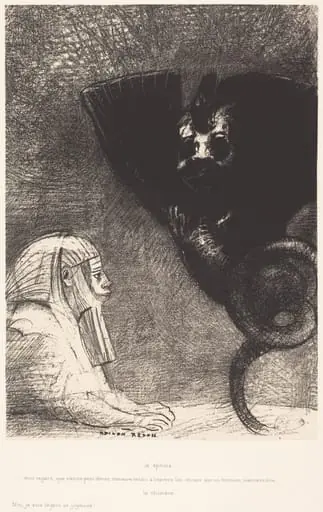 Le Sphynx...mon regard que rien ne peut devier, demeure tendu a travers les choses sur un horizon inaccessible. La Chimere: Moi,Je suis legere et joyeuse (The Sphinx: "My gaze, which nothing can deflect, passes through the things and remains fixed on an inaccessible horizon." The Chimera: "I am weightless and joyful")
 The Man Was Alone in a Night Landscape