Artwork
Le Sphynx...mon regard que rien ne peut devier, demeure tendu a travers les choses sur un horizon inaccessible. La Chimere: Moi,Je suis legere et joyeuse (The Sphinx: "My gaze, which nothing can deflect, passes through the things and remains fixed on an inaccessible horizon." The Chimera: "I am weightless and joyful")
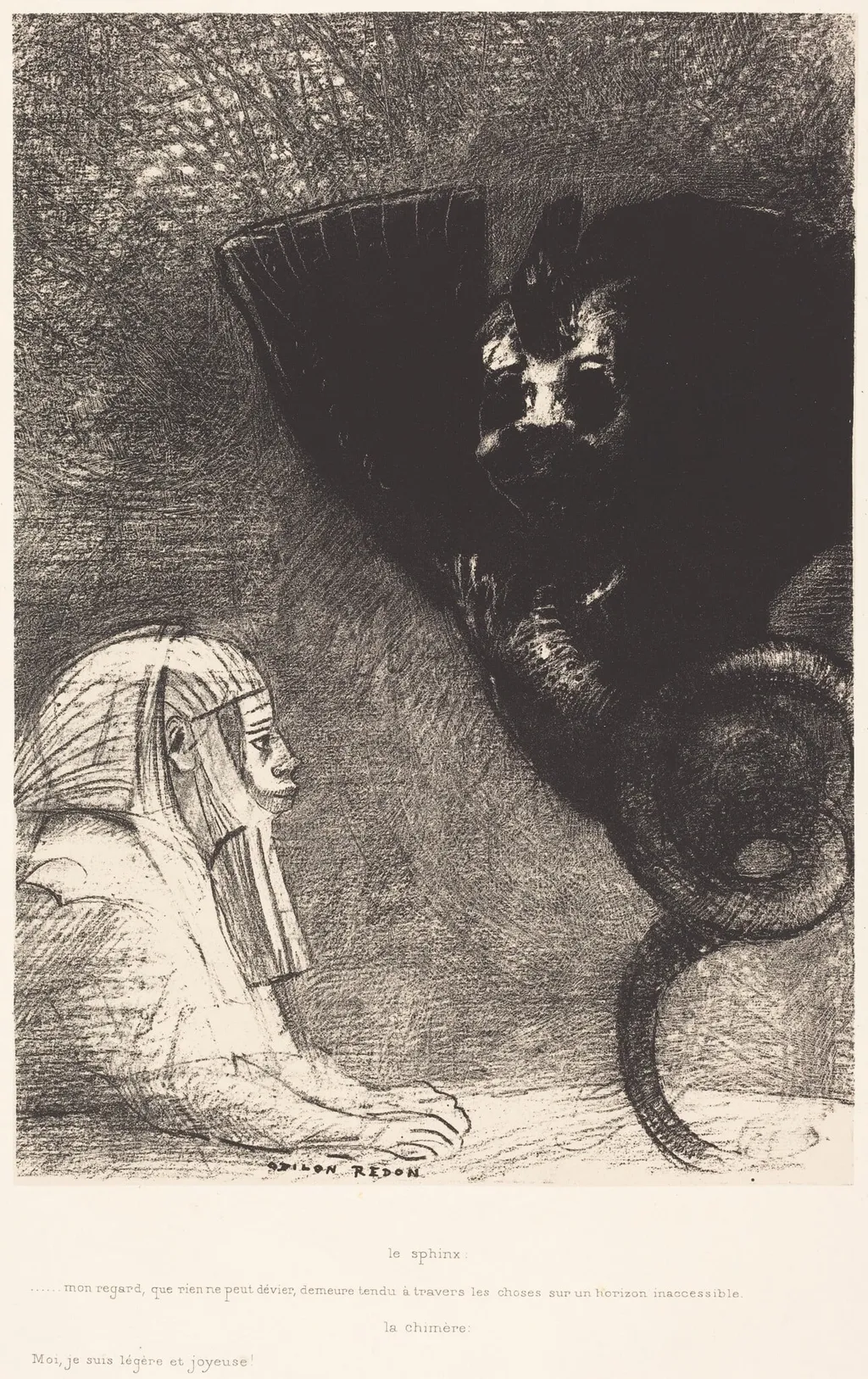
Le Sphynx...mon regard que rien ne peut devier, demeure tendu a travers les choses sur un horizon inaccessible. La Chimere: Moi,Je suis legere et joyeuse (The Sphinx: "My gaze, which nothing can deflect, passes through the things and remains fixed on an inaccessible horizon." The Chimera: "I am weightless and joyful") is an ink print by the Impressionist artist Odilon Redon. It dates from 1889 and is held in the collection of the National Gallery of Art.
About this work
Overview
The work’s title, drawn from poetic phrases, frames the imagery as an internal dialogue between two symbolic entities: one contemplative, the other ethereal.
Created in 1889, this lithograph by Odilon Redon pairs two enigmatic figures in a near-total void. The work’s title, drawn from poetic phrases, frames the imagery as an internal dialogue between two symbolic entities: one contemplative, the other ethereal. Rendered in stark monochrome, the composition relies on contrast rather than detail to evoke mood. The National Gallery of Art in Washington holds the print as part of its collection of Symbolist works.
Subject & Meaning
The left figure, hooded and leaning, suggests introspection or submission, its face partially illuminated as if caught in thought. Opposite, a massive hybrid creature—lion-bodied with a human visage—dominates the space, its features obscured, amplifying its otherworldliness. Together, they embody contrasting states: one bound by an unattainable vision, the other free of earthly weight. The pairing reflects Symbolist interests in inner states over external reality.
Technique & Style
Redon employed lithography to achieve deep blacks and delicate grays, using the stone’s surface to build texture through tonal gradations. The figures emerge from near-total darkness through selective ink application, creating dramatic chiaroscuro. Lines are minimal; form is suggested through shadow and silhouette. This restrained technique enhances the dreamlike ambiguity, aligning with Symbolist aesthetics that favored suggestion over literal representation.
History & Provenance
Produced in 1889, the print was part of Redon’s series exploring mythic and psychological themes during his mature period. It entered the National Gallery of Art’s collection through the Chester Dale bequest in 1963, a major acquisition that strengthened the museum’s holdings of 19th-century French prints. No earlier exhibition history is widely documented, but the work aligns with Redon’s broader shift from dark, fantastical imagery to more lyrical symbolism.
Context
Emerging in the late 19th century, Symbolism rejected realism in favor of emotional and spiritual expression. Redon, influenced by Baudelaire and Wagner, sought to visualize the unseen—dreams, fears, metaphysical states. This print reflects a broader cultural turn toward interiority, where mythic creatures and ambiguous figures became vessels for psychological exploration, distinct from the naturalism of Impressionism or the social critique of Realism.
Legacy
Redon’s use of shadow and ambiguity in this print influenced later Surrealists, who admired his ability to evoke the subconscious without narrative clarity. While not widely reproduced in his lifetime, the work’s quiet intensity has secured its place in discussions of Symbolist printmaking. It remains a touchstone for artists exploring the limits of visual suggestion and the emotional power of the unseen.
Artist & collection
Artist
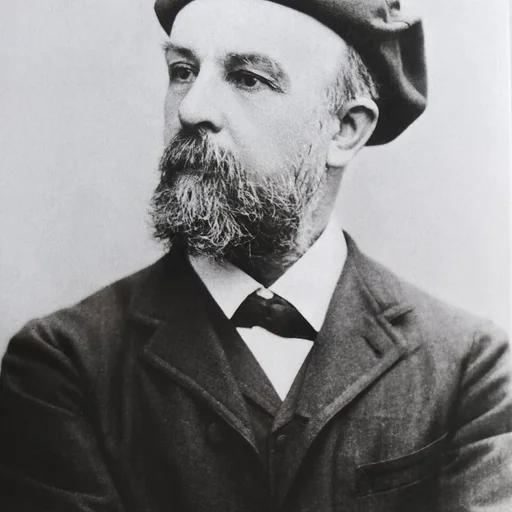
Born Bertrand-Jean Redon on 20 April 1840 in Bordeaux, the artist adopted the name Odilon from his mother, Marie-Odile.

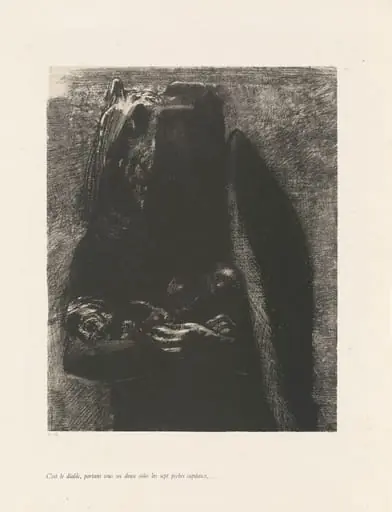 C'est le Diable
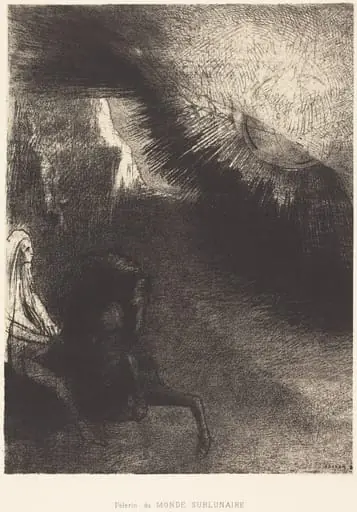 Pélerin du monde sublunaire (Pilgrim of the sublunary world)
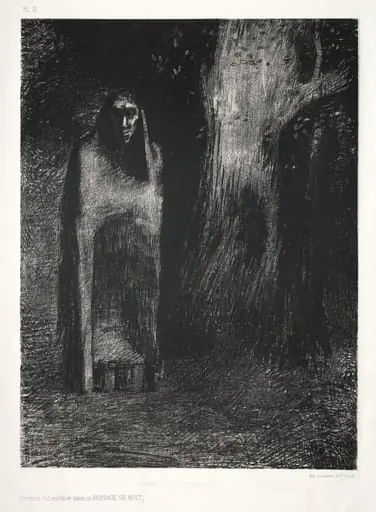 The Man Was Alone in a Night Landscape
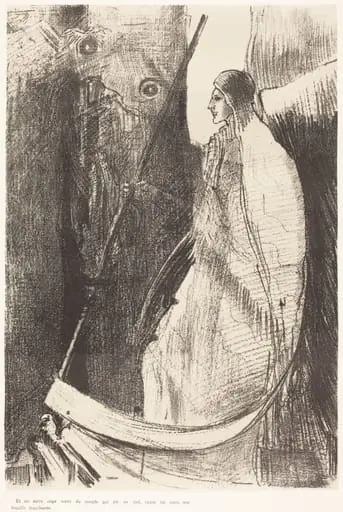 Et un autre ange sortit du temple qui est au ciel, ayant lui aussi une faucille tranchante (And another angel came out of the temple which is in heaven, and he also having a sharp sickle)
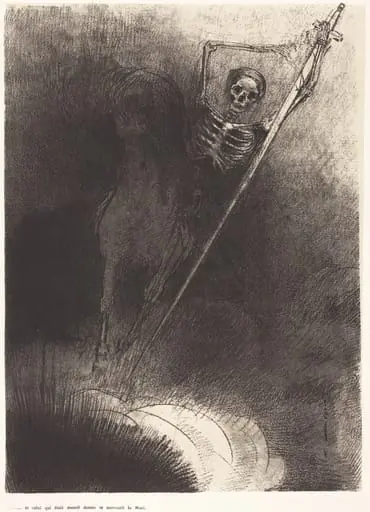 Et celui qui était monté dessus se nommait la Mort (And his name that sat on him was Death)
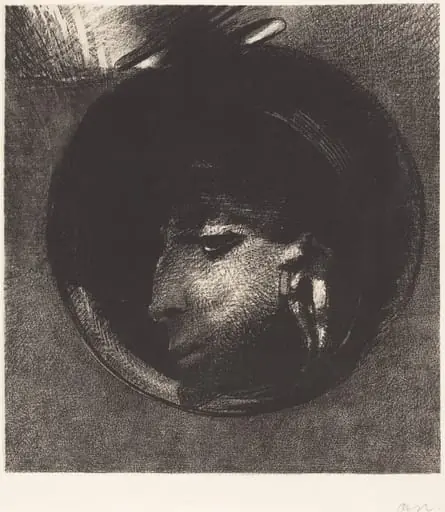 Cellule Auriculaire
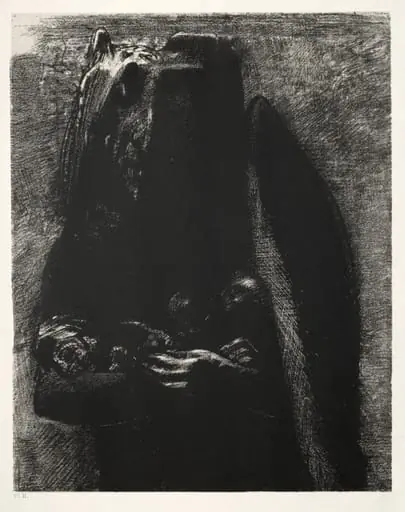 It Is the Devil, Bearing Beneath His Two Wings the Seven Deadly Sins
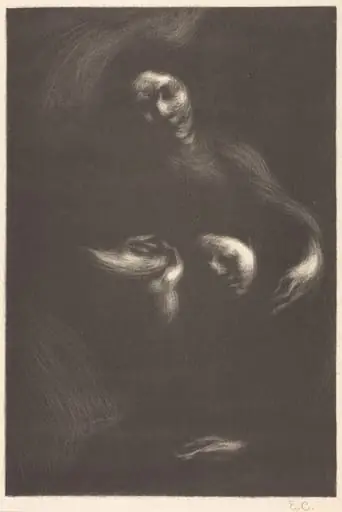 Hommage à Tolstoï