Artwork
The Apocalypse of Saint John
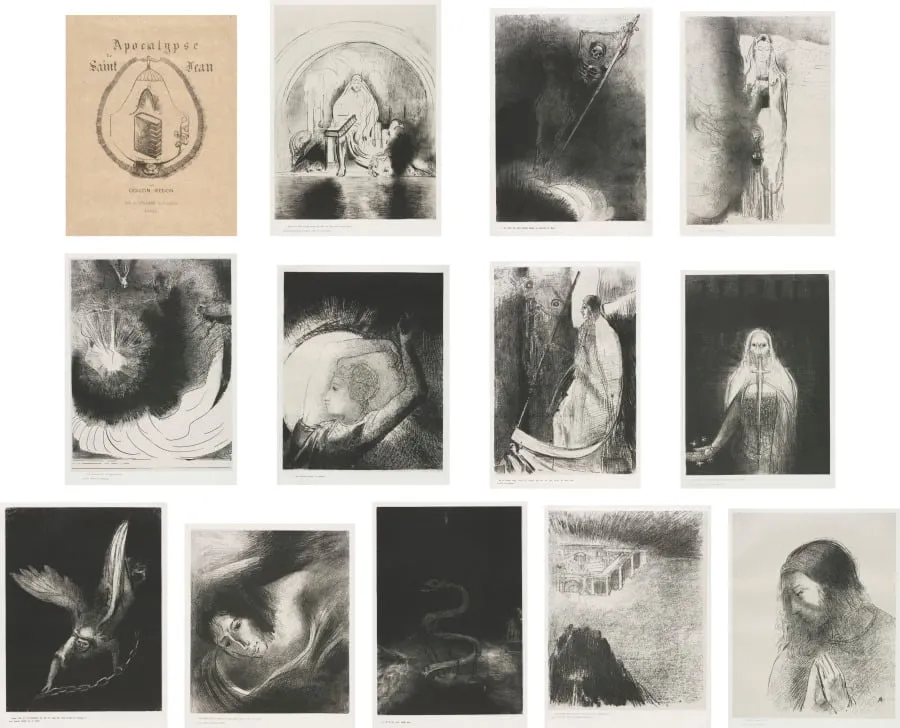
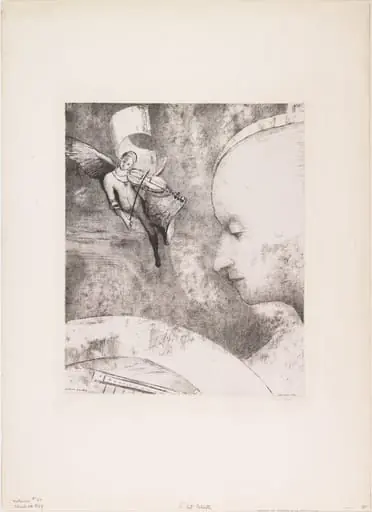
The Apocalypse of Saint John is a print by the Impressionist artist Odilon Redon. It dates from 1899 and is held in the collection of the Cleveland Museum of Art.
About this work
Overview
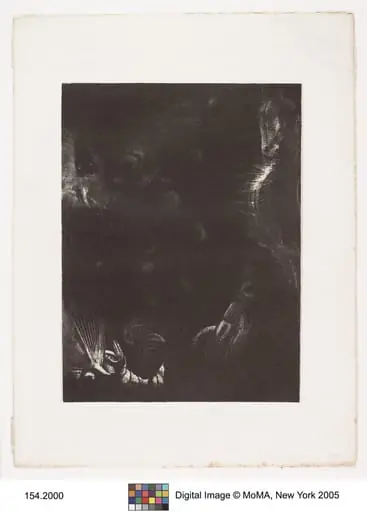
The Apocalypse of Saint John is the final lithographic portfolio by Odilon Redon, comprising 12 prints inspired by specific passages from the Book of Revelation. This work marks the artist's conclusion to printmaking.
Subject & Meaning
The series directly illustrates key biblical scenes, including a sun-clothed woman and a falling star, transforming ancient apocalyptic visions into haunting, dreamlike imagery that blends the eerie with the familiar.
Technique & Style
Redon employed techniques akin to sfumato, characterized by soft, blurred edges and hazy light, to create an otherworldly atmosphere in prints featuring surreal elements like floating eyes and multi-headed dragons.
History & Provenance
Published by Ambroise Vollard, who had recently begun promoting Redon's work, the portfolio leveraged the artist's established reputation to reach Parisian and international markets.
Context
By engaging with the Book of Revelation, Redon aligned his work with that of predecessors like Albrecht Dürer, while his interpretive approach distinguished his contribution to the long tradition of illustrating this subject.
Legacy
The Apocalypse of Saint John serves as a culmination of Redon's printmaking career, leaving a lasting example of how mythological and biblical themes can be reimagined through innovative, expressive print techniques.
Artist & collection

Artist
Born Bertrand-Jean Redon on 20 April 1840 in Bordeaux, the artist adopted the name Odilon from his mother, Marie-Odile.