Artwork
Prometheus
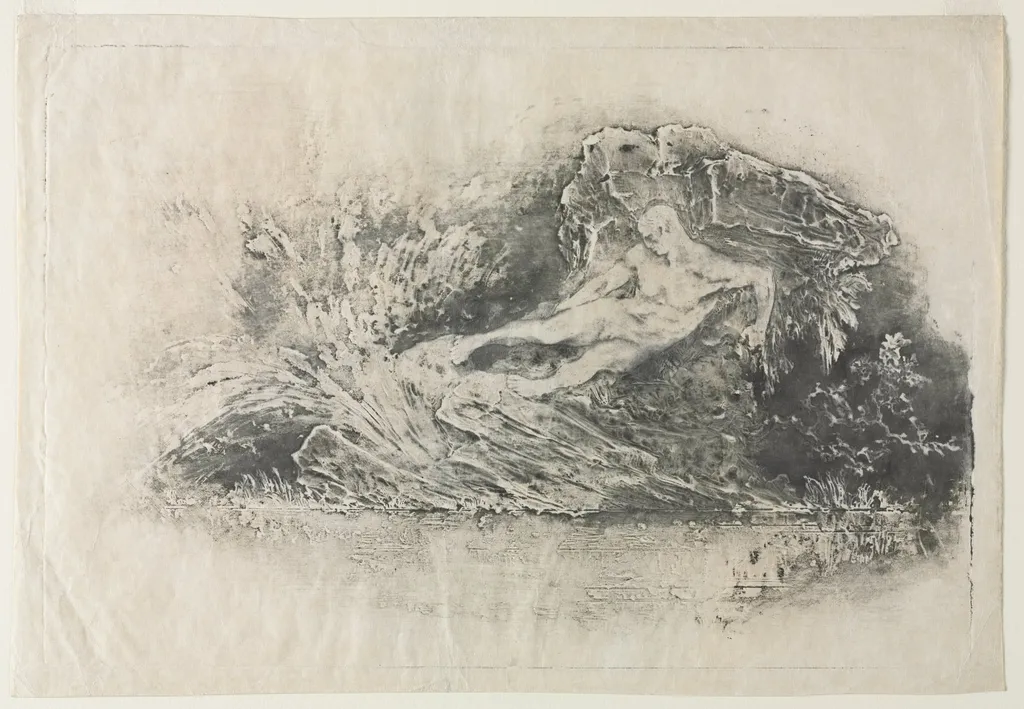
Prometheus is a print by the Impressionist artist Pierre Roche. It dates from 1904 and is held in the collection of the Cleveland Museum of Art.
About this work
Overview
Pierre Roche’s print titled *Prometheus* presents a figure bound to a craggy cliff, with a shimmering water surface below. Executed in a relief technique, the work combines the solidity of carved stone with the fluidity of inked water, creating a striking contrast between the tactile and the pictorial.
Subject & Meaning
The composition references the Greek myth of Prometheus, the titan condemned by Zeus to endure perpetual punishment. By depicting the titan chained to a rugged outcrop, Roche emphasizes the themes of suffering and endurance inherent in the ancient story.
Technique & Style
Roche, primarily a sculptor and ceramist, employed the gypsograph process—a relief printing method that involves carving a matrix and applying ink to produce a three‑dimensional effect. The carved rock appears tactile, while the lower area uses ink washes to simulate transparent water and its reflections.
History & Provenance
Created during Roche’s exploration of printmaking beyond his usual media, the work entered the collection of the Cleveland Museum of Art, where it remains on view. Its acquisition reflects the museum’s interest in mid‑20th‑century experimental prints.
Context
*Prometheus* belongs to a period when artists were expanding the boundaries of print media, integrating sculptural techniques into two‑dimensional formats. Roche’s experiment aligns with broader modernist investigations into materiality and the interplay of surface and depth.
Artist & collection

Artist
Pierre Roche (Paris, 2 August 1855 – Paris, 18 January 1922), pseudonym of Pierre Henry Ferdinand Massignon, was a French sculptor, painter, ceramist and medallist.

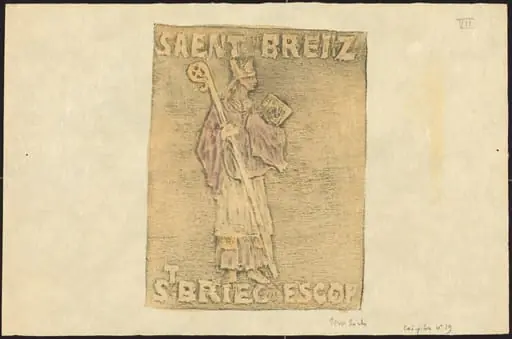
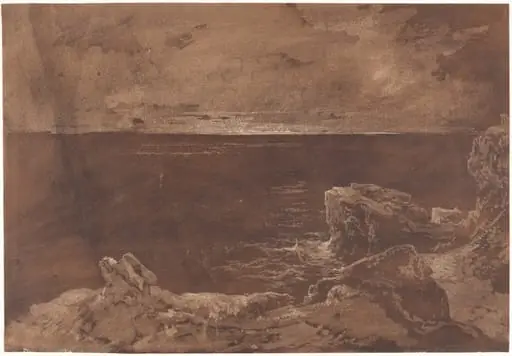 A Rocky Coast by Moonlight
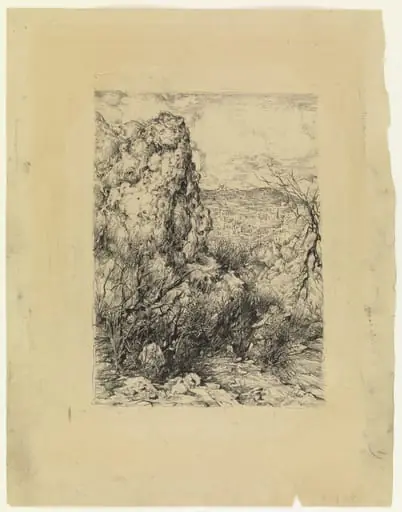 Untitled
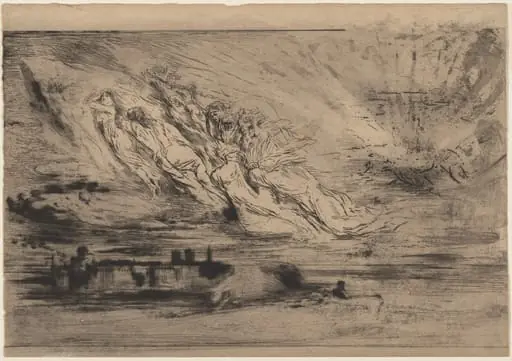 Les Esprits des Villes-Mortes (Spirits from the Cities of the Dead)
 Mer de Glace
 Centaur Carrying Off a Woman
 Untitled
 Tiger Sleeping at the Entrance to its Lair (Tigre couché à l'entrée de son antre)
 The Water Genius
 Untitled
 The Circle of the Lustful: Paolo and Francesca
 Study of Puget's "Milo of Crotona"
 Young Girl under a Tree