Artwork
H Beard Print Collection
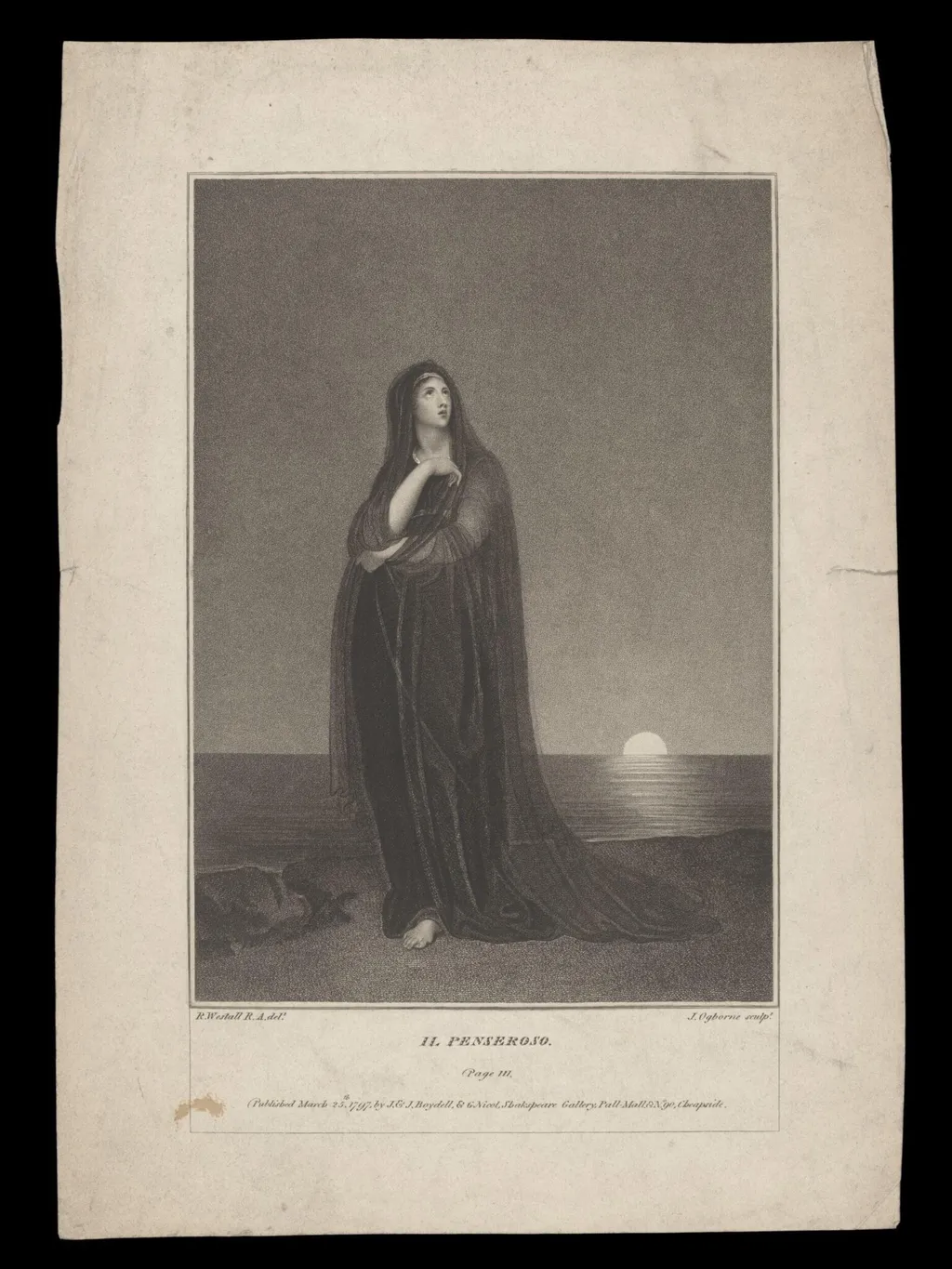
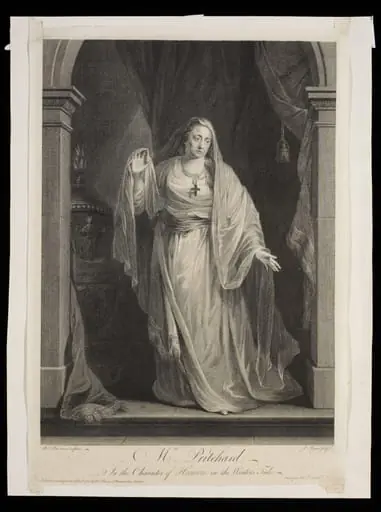
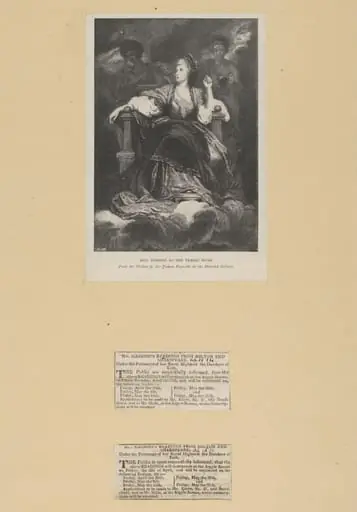
H Beard Print Collection is a print by the Romanticist artist J. Ogborne. It dates from 25 and is held in the collection of the Victoria and Albert Museum. This print, titled 'Il Penseroso', was published in London on 25 March 1797 by the firm of J.
About this work
This print shows Mary Magdalene in a quiet, thoughtful pose. It’s part of the Romantic movement, made in London in 1797.
The work was published by J. & J. Boydell and G. Nicol, a detail that hints at the print trade’s role in spreading images then.
Look up the Victoria and Albert Museum to see more prints from this era.
Overview
The image presents a solitary female figure in contemplation, aligned with Romantic sensibilities of introspection and emotional depth.
This print, titled 'Il Penseroso', was published in London on 25 March 1797 by the firm of J. & J. Boydell and G. Nicol. It belongs to the H. Beard Print Collection and reflects the late 18th-century British print trade’s engagement with literary and devotional themes. The image presents a solitary female figure in contemplation, aligned with Romantic sensibilities of introspection and emotional depth.
Subject & Meaning
The figure depicted is Mary Magdalene, portrayed not in moments of dramatic revelation but in quiet solitude. Her stillness evokes the melancholic ideal of 'Il Penseroso'—the thoughtful, withdrawn soul from Milton’s poem. This interpretation shifts focus from her traditional narrative roles to an internal, spiritual state, inviting viewers to consider contemplation as a form of devotion.
Technique & Style
Executed as a print, likely an engraving or etching, the work employs fine linear detail to suggest texture and mood. The composition is restrained, with soft shadows and minimal background elements to emphasize the figure’s introspection. The style aligns with the Romantic preference for emotional resonance over theatricality, using subtlety to convey psychological depth.
History & Provenance
Published by Boydell and Nicol, prominent figures in London’s print industry, this work was part of a broader effort to make literary and religious imagery accessible to a middle-class audience. Its inclusion in the H. Beard Collection suggests it was valued as a representative example of late 18th-century reproductive prints, circulating beyond elite circles into domestic spaces.
Context
In 1797, Britain saw a surge in illustrated publications tied to poetry and religious themes, fueled by growing literacy and print technology. Boydell’s ventures, including his Shakespeare Gallery, positioned prints as cultural artifacts. This image reflects how literary ideals like Milton’s 'Penseroso' were visually adapted to resonate with contemporary spiritual and aesthetic values.
Legacy
Though not widely known today, this print exemplifies how reproductive prints mediated literary and religious ideas for the public. It contributes to understanding the visual culture of late Georgian Britain, where printmakers played a key role in shaping public engagement with art, poetry, and personal reflection.
Artist & collection
Artist
J. Ogborne kept a sharp eye on the streets of late-1700s London, turning everyday sights into prints you could hang on your wall. Notice how the ink outlines pop against blank air—he carved the lines so cleanly you can…