Artwork
H Beard Print Collection
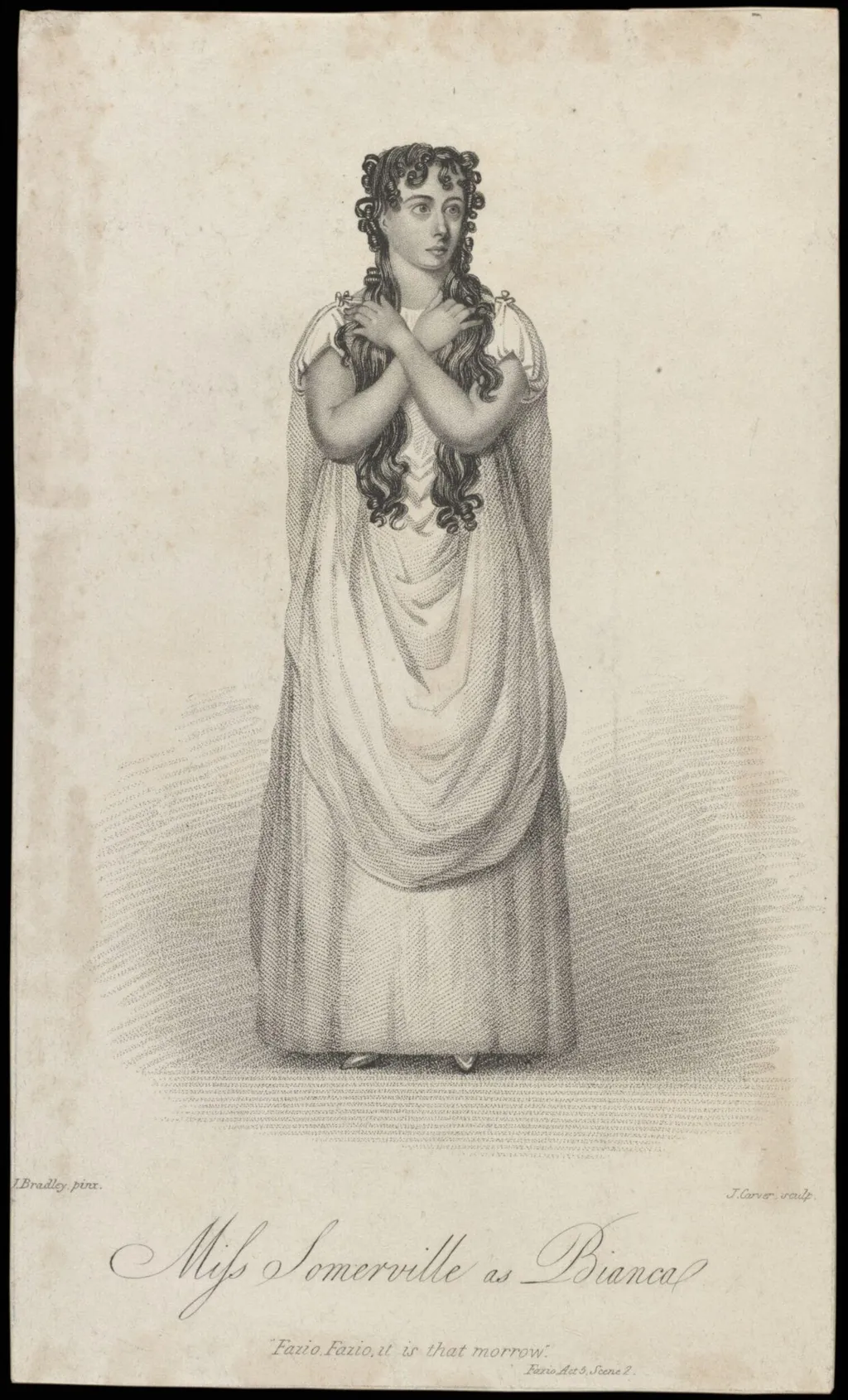
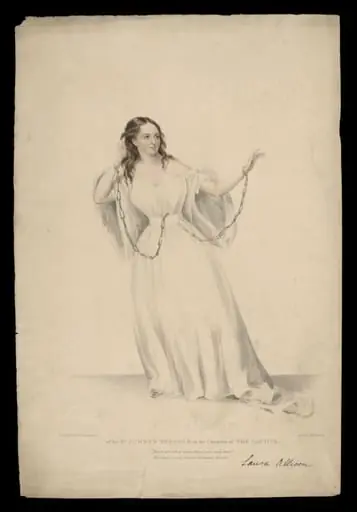
H Beard Print Collection is a print by the Romanticist artist J. Carver. It dates from 1819 and is held in the collection of the Victoria and Albert Museum. This 1819 print, attributed to J.
About this work
The title of this print is H Beard Print Collection, created by Carver, J. in 1819.
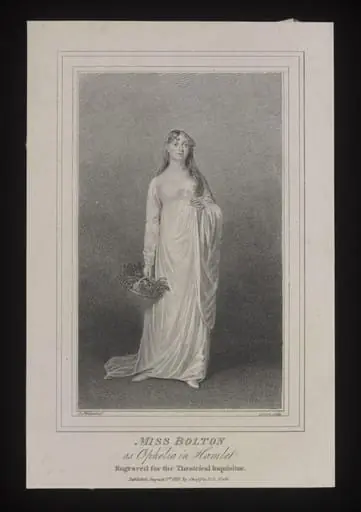
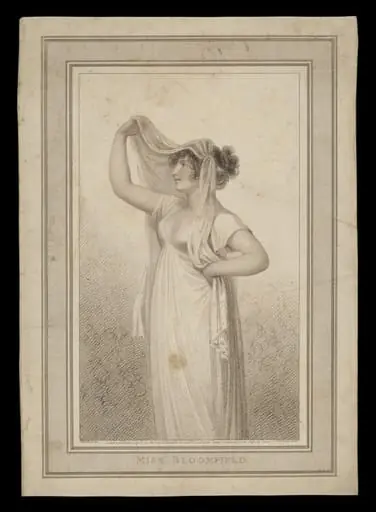
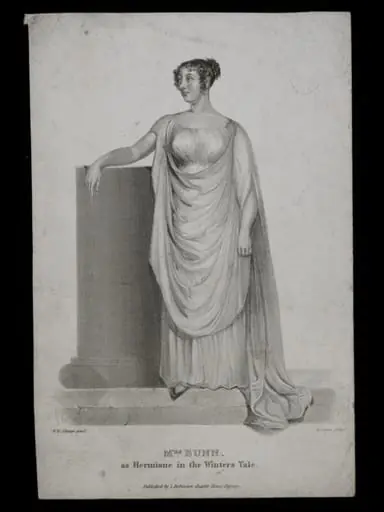
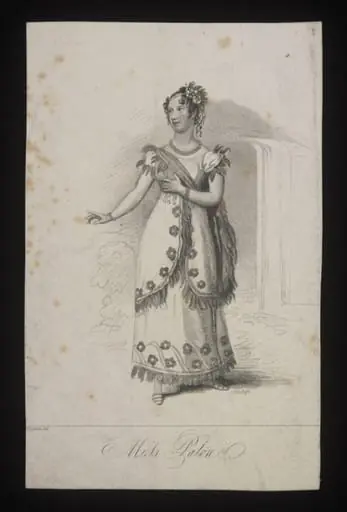
This print is a full-length portrait of Miss Somerville as Bianca. The fact that it's a portrait of someone dressed as a character suggests that it might be related to theater or literature.
You can learn more about this style by looking into the movement: Romanticism.
Overview
This 1819 print, attributed to J. Carver, belongs to the H. Beard Print Collection and depicts a full-length figure in theatrical costume. It captures an actress portraying Bianca, a character likely drawn from literary or dramatic sources of the period. The work exemplifies the era’s interest in documenting stage performances through printed imagery, serving as both record and cultural artifact.
Subject & Meaning
The subject is Miss Somerville, portrayed in character as Bianca, suggesting a performance in a contemporary play or adaptation. The choice of costume and pose implies a narrative moment, possibly drawn from Shakespearean or Romantic-era drama. The image emphasizes theatrical identity over personal likeness, reflecting the period’s fascination with performance as a form of cultural expression.
Technique & Style
Executed as a printed engraving, the work employs fine linear detail to render fabric, posture, and facial features. The composition adheres to formal portraiture conventions but adapts them for stage representation, with attention to costume texture and spatial depth. The style aligns with early 19th-century printmaking practices, prioritizing clarity and reproduction over expressive brushwork.
History & Provenance
The print originates from the H. Beard Collection, a 19th-century assemblage focused on theatrical imagery. Its creation in 1819 coincides with a surge in demand for theatrical portraits among middle-class audiences. The print likely circulated as a keepsake or promotional item tied to a specific performance, though the exact production context remains undocumented.
Context
Produced during the height of Romanticism, the image reflects broader cultural interests in emotion, individuality, and performance.
Produced during the height of Romanticism, the image reflects broader cultural interests in emotion, individuality, and performance. Theatrical subjects were frequently reproduced in prints, bridging elite stage culture and public taste. Bianca, as a character, may have been drawn from popular adaptations of classical or literary sources, reinforcing the era’s blending of high art and popular entertainment.
Legacy
As part of the Beard Collection, this print contributes to the historical record of British theater in the early 1800s. While not widely known today, such works preserve the visual language of performance and the roles women played on stage. They remain valuable for scholars studying the intersection of print culture, gender, and theatrical representation in the Romantic period.
Artist & collection
Artist
This artist made hand-colored prints in the early 1800s. They produced the H Beard Print Collection in 1819, a set of finely detailed portraits and scenes. These prints belong to the Regency era style, when bold lines…