Artwork
Untitled
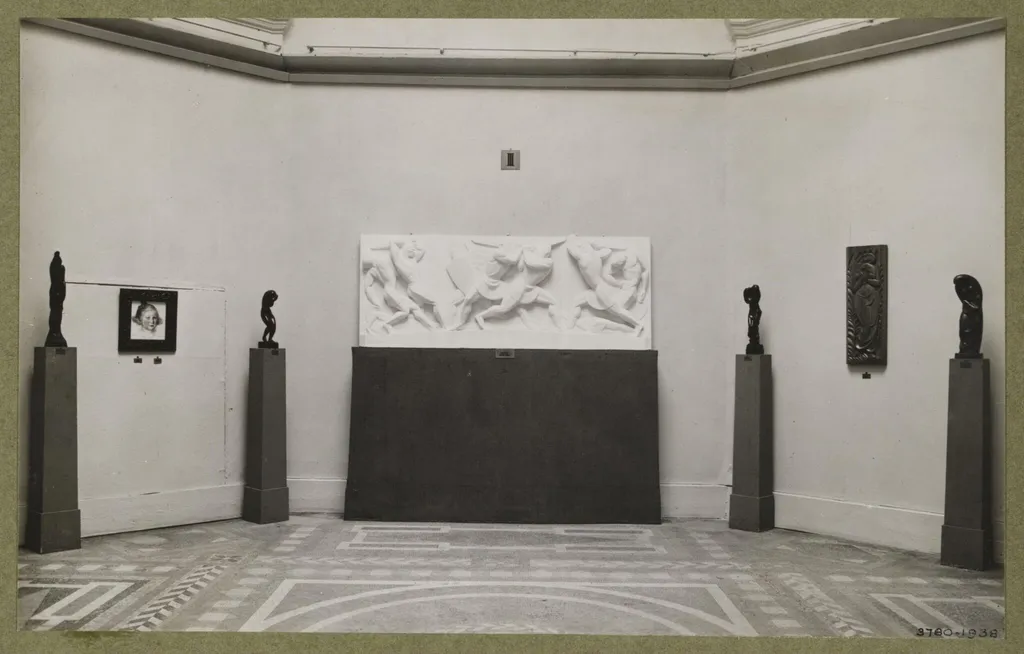
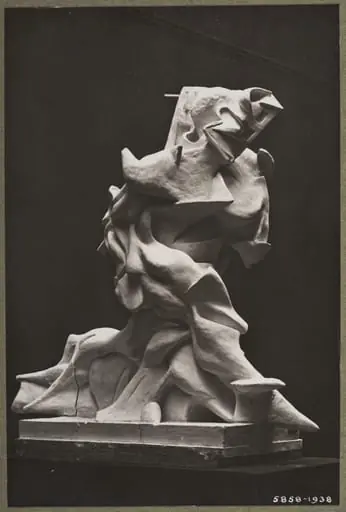
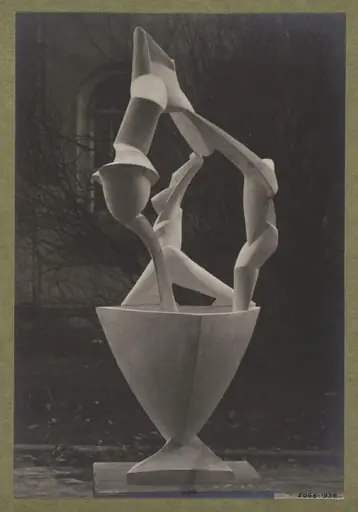
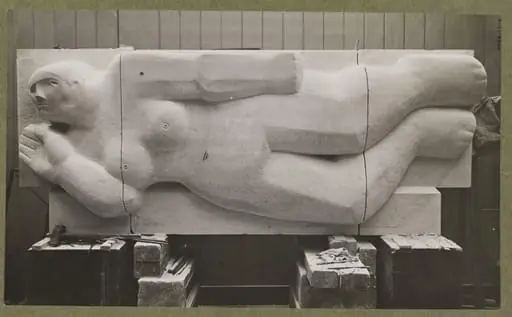
Untitled is a photographic photography by Ferdinand Opitz. It dates from 1927 and is held in the collection of the Victoria and Albert Museum. A black-and-white photograph from 1927, mounted on a green card, forms part of the Archive of Art and Design.
About this work
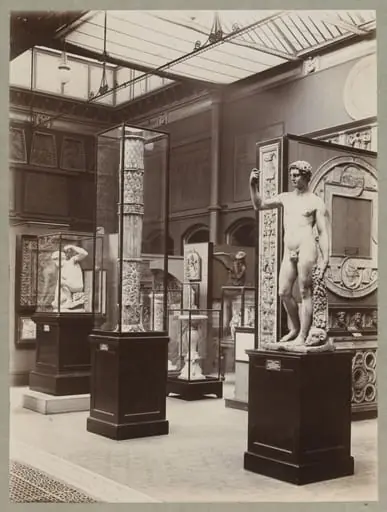
Around it are four small sculptures—two look like simple human shapes, one is a face in a frame, and another is a carved panel with a pattern.
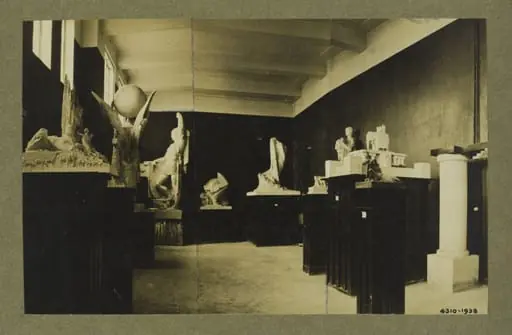
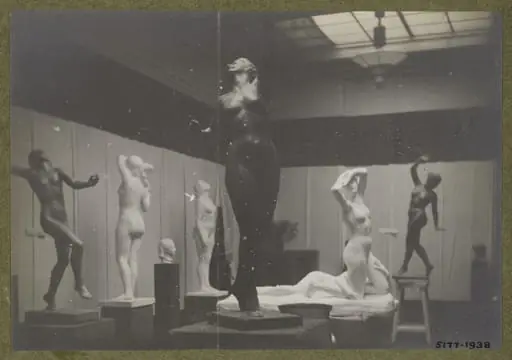
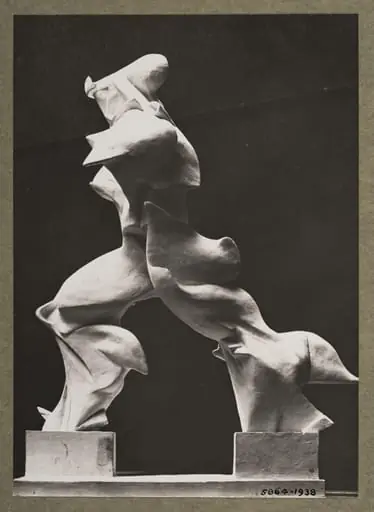
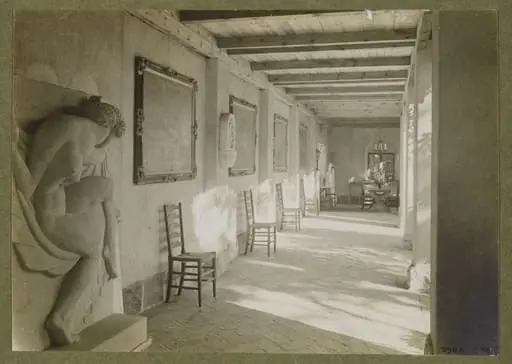
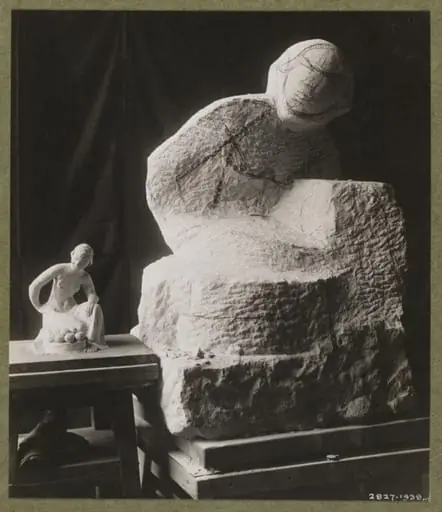
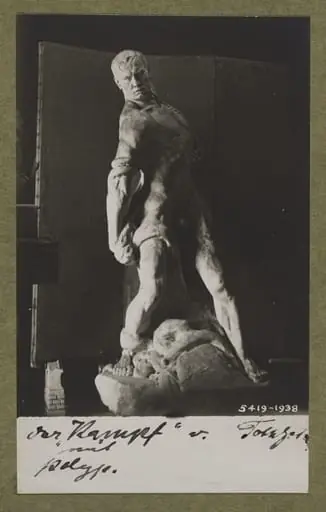
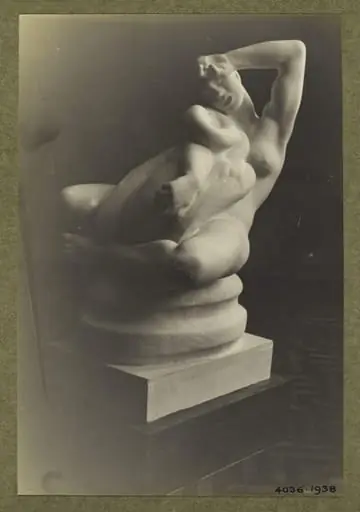
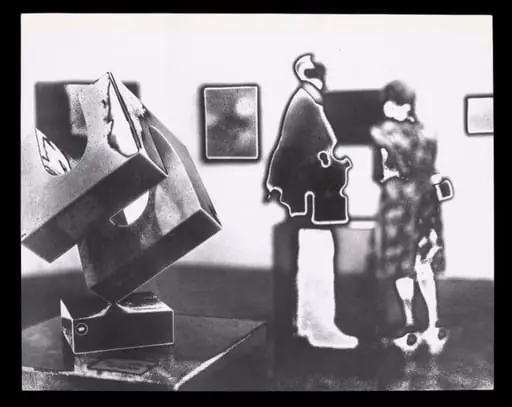
This room shows a simple setup with a few objects on display. There’s a large relief sculpture in the center, carved with flowing, abstract figures. Around it are four small sculptures—two look like simple human shapes, one is a face in a frame, and another is a carved panel with a pattern. The floor has a geometric tile design, and the walls are plain.
The photo itself is from 1927, showing how art was arranged in galleries back then. The setup feels clean and uncluttered, with lots of space between the pieces.
Look up the Victoria and Albert Museum to see more of their collection.
Overview
A black-and-white photograph from 1927, mounted on a green card, forms part of the Archive of Art and Design. It was collected by William Kineton Parkes, a writer and art historian, as part of a survey he conducted among sculptors during the 1920s. The image documents a gallery installation and was submitted in response to Parkes’s questionnaire, offering insight into how artists wished their work to be presented.
Subject & Meaning
The photograph captures a central relief sculpture with abstract, flowing forms, surrounded by four smaller works: two stylized human figures, a framed facial carving, and a patterned panel. The arrangement suggests an intentional spatial dialogue between pieces, reflecting the sculptor’s vision of harmony and balance. The minimal setting emphasizes the works themselves, avoiding decorative distraction.
Technique & Style
The photograph is rendered in sharp monochrome, with careful lighting that defines the textures of carved stone and the contours of the relief. The composition is formal and balanced, with ample negative space around each object. The plain walls and geometric floor tiles reinforce a restrained aesthetic, typical of early 20th-century gallery practices focused on clarity and object-focused display.
History & Provenance
The image was collected by William Kineton Parkes in 1927 as part of a systematic inquiry into sculptural presentation. He sent questionnaires to artists seeking their preferred display methods. After his death in 1938, his collection, including this photograph, was bequeathed to what is now the Victoria and Albert Museum’s Archive of Art and Design, where it remains as a record of artist-curated exhibition practices.
Context
In the 1920s, museums and galleries were refining how sculpture was exhibited, moving away from crowded Victorian displays toward more deliberate, spatial arrangements. Parkes’s survey captured this transition, documenting artists’ preferences for lighting, spacing, and context. This photograph reflects a broader shift toward modernist ideals of simplicity and structural clarity in exhibition design.
Legacy
The photograph endures as a primary source for understanding how sculptors of the era envisioned their work in public space. It contributes to ongoing research into exhibition history and artist agency in display. Its inclusion in the Archive of Art and Design ensures its continued use by scholars examining the relationship between creation and presentation in modern sculpture.
Artist & collection

Artist
Ferdinand Opitz was an Austrian sculptor. His work was included in the art competitions Summer Olympics 1928, 1936, and 1948.