Artwork
Muscles in Motion
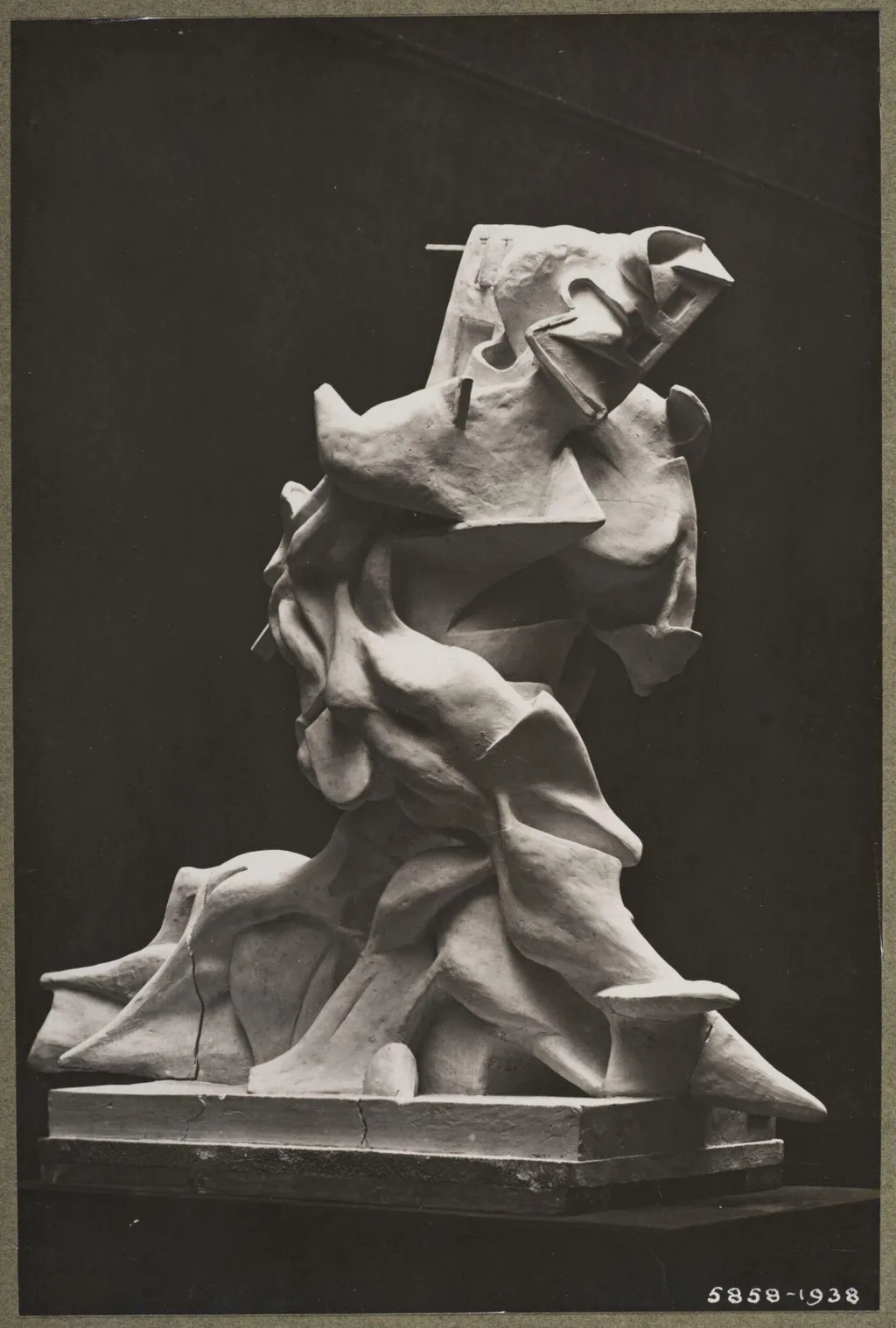
Muscles in Motion is a photographic photography by Umberto Boccioni. It is held in the collection of the Victoria and Albert Museum.
About this work
Overview
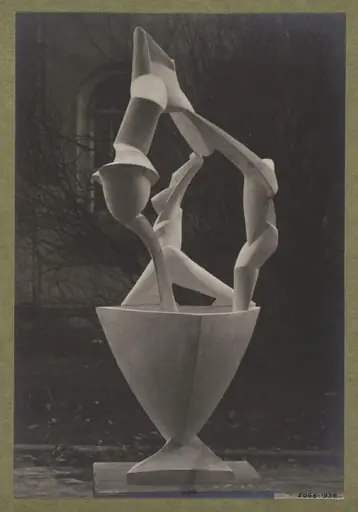
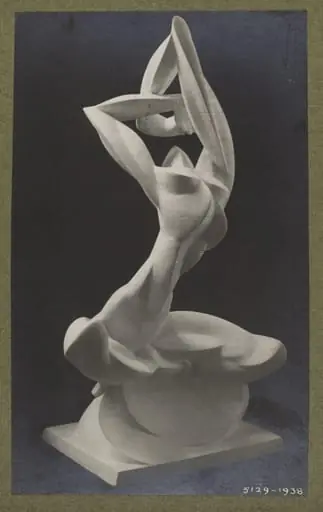
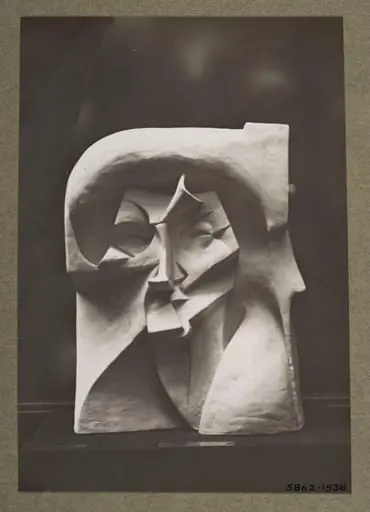
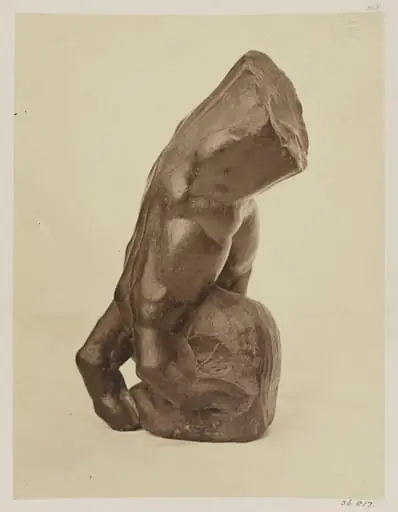
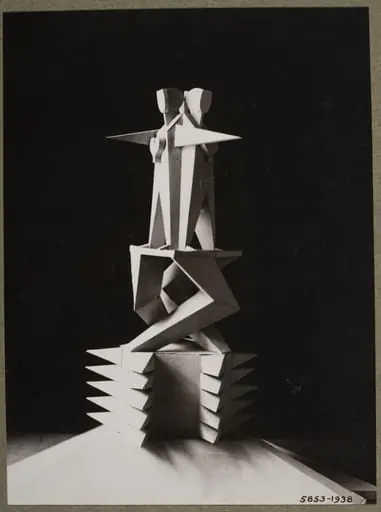
This 1920 photograph by Umberto Boccioni captures a sculptural form mounted on green card. It was submitted in response to questionnaires distributed by William Kineton Parkes, a writer and art historian with a focus on sculpture. The image entered a private collection upon receipt and was later bequeathed to an institution in 1938 as part of Parkes’s broader archive of sculptural documentation.
Subject & Meaning
The depicted form is an abstracted human figure in violent motion, its limbs and torso fractured into angular planes. Traditional anatomical harmony is abandoned in favor of tension and rupture, suggesting the force of movement rather than its stillness. The sculpture embodies Futurist ideals—celebrating dynamism, speed, and the disintegration of stable form as expressions of modern experience.
Technique & Style
The sculpture’s surface is aggressively textured, with deep incisions and sharp edges that cast pronounced shadows. Carving techniques emphasize fragmentation, as if the figure is being torn apart by its own motion. The absence of smooth contours and the emphasis on geometric distortion reflect a deliberate rejection of classical modeling in favor of expressive, kinetic abstraction.
History & Provenance
The photograph was among materials collected by William Kineton Parkes during his 1920s survey of sculptors’ practices. He requested visual responses from artists to understand their methods and philosophies. Boccioni’s submission, though photographic, functioned as a record of a three-dimensional work, preserving its form for study and archival purposes within Parkes’s personal collection.
Context
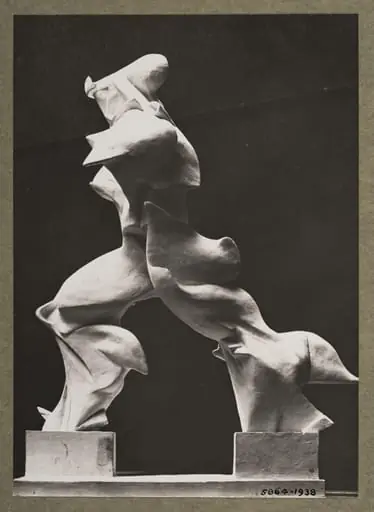
Created during the later years of Italian Futurism, the work aligns with Boccioni’s earlier sculptural experiments, such as Unique Forms of Continuity in Space.
Created during the later years of Italian Futurism, the work aligns with Boccioni’s earlier sculptural experiments, such as Unique Forms of Continuity in Space. Though the original sculpture may no longer exist, this photograph preserves its radical approach. The image reflects a broader cultural shift toward representing motion and energy as central to modern identity, moving beyond static representation.
Legacy
The photograph serves as a critical artifact of early 20th-century sculptural inquiry, documenting how artists challenged conventional forms. While Boccioni’s three-dimensional works are better known, this image illustrates the role of photography in preserving ephemeral or lost pieces. It remains a testament to the experimental spirit of Futurist art and its influence on later modernist practices.
Artist & collection

Artist
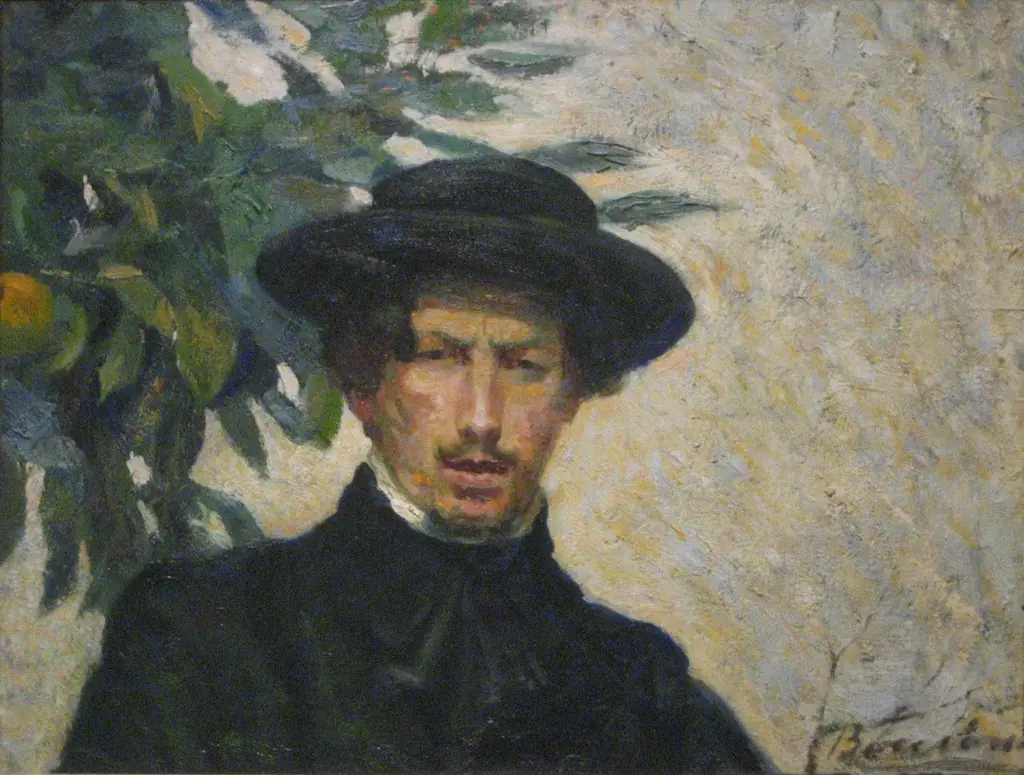
Umberto Boccioni was an influential Italian painter and sculptor. He helped shape the revolutionary aesthetic of the Futurism movement as one of its principal figures. Despite his short life, his approach to the…

![Mia madre che lavora [My Mother Working], by Umberto Boccioni](https://artifactworldgallery.com/img/umberto-boccioni--mia-madre-che-lavora-my-mother-working--ce84f1205dd9eec1-w320.webp)
![Woman Reading [Donna che legge], by Umberto Boccioni](https://artifactworldgallery.com/img/umberto-boccioni--woman-reading-donna-che-legge--d9496ecdedc4f414-w320.webp)
![Periphery [Periferia], by Umberto Boccioni](https://artifactworldgallery.com/img/umberto-boccioni--periphery-periferia--ea91379039261e85-w320.webp)