Artwork
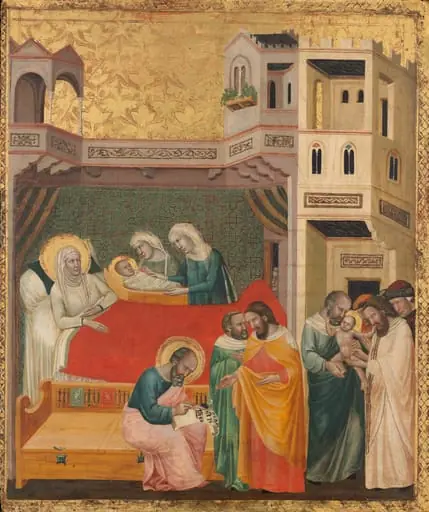
The Calling of St. Matthew
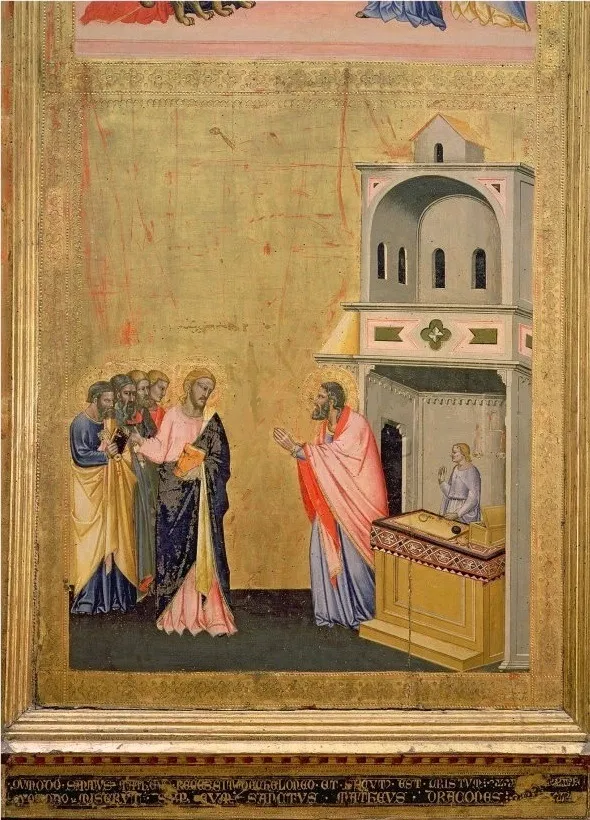
The Calling of St. Matthew is a tempera painting by the Byzantine icon painting artist Orcagna. It dates from 1367 and is held in the collection of the Uffizi Gallery.
About this work
Overview
Created in 1367 by the Florentine artist Andrea di Cione, known as Orcanna, this wooden panel illustrates the biblical episode of the calling of the apostle Matthew. The work is part of the Uffizi Gallery’s collection and exemplifies the devotional imagery prevalent in mid‑fourteenth‑century Italy.
Subject & Meaning
The composition gathers five figures within a modest interior. A man in a vivid red robe, marked by a halo, gestures toward the group, indicating the divine summons. Beside him, a kneeling figure holds an open book, a visual cue to the scriptural context. The scene references the Gospel narrative in which Jesus selects Matthew, a tax collector, to become an apostle.
Technique & Style
Executed on a wooden support, the panel employs the stylized forms and gold‑leaf accents characteristic of Byzantine‑influenced iconography. Orcanna’s handling of line and color reflects the transitional aesthetic of Florentine painting before the full emergence of naturalism, with flattened space and hieratic poses.
History & Provenance
Orcanna, active as a painter, sculptor, and architect, contributed to major projects such as the Florence Cathedral and the façade of Orvieto Cathedral. The panel entered the Uffizi’s holdings as part of the Medici collection, where it has remained on display, providing insight into the artist’s workshop output.
Artist & collection

Artist
Andrea di Cione di Arcangelo (c. 1308 – 25 August 1368), better known as Orcagna, was an Italian painter, sculptor, and architect active in Florence. He worked as a consultant at the Florence Cathedral and supervised…