Artwork
Untitled
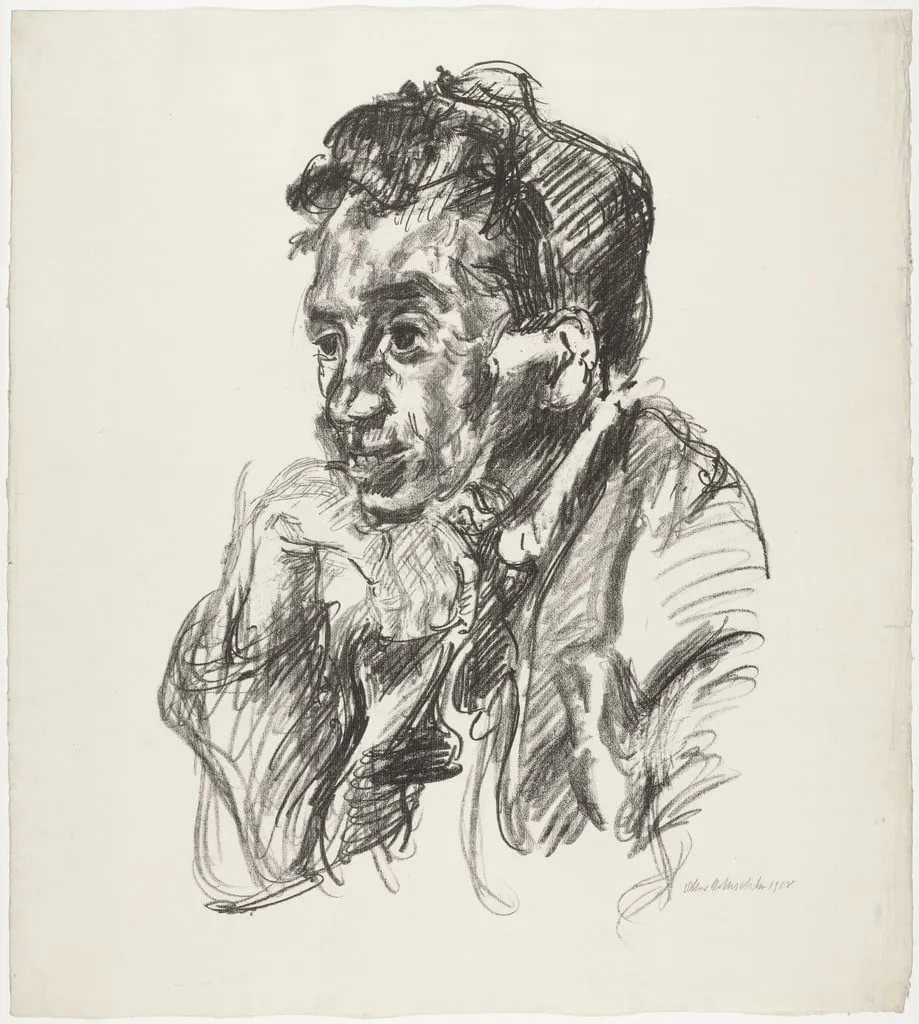
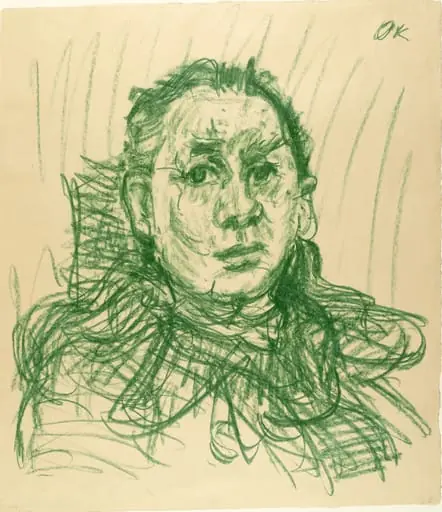
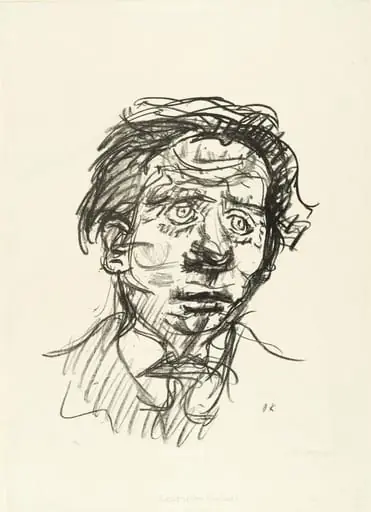
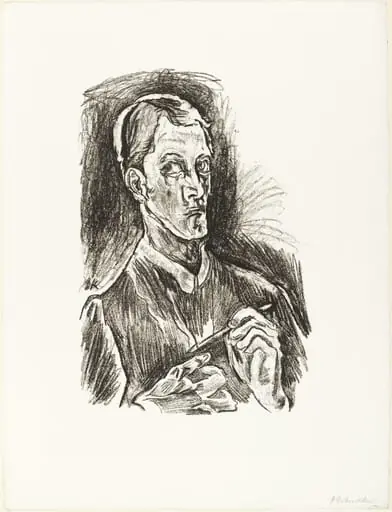
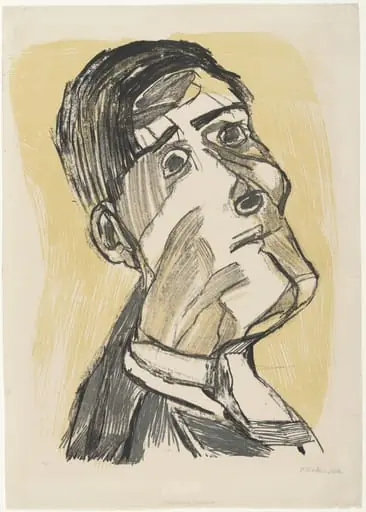
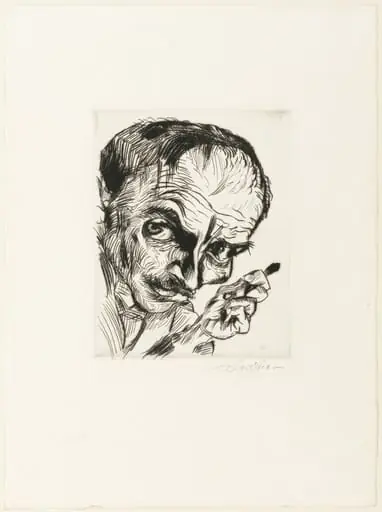
Untitled is an ink print by Oskar Kokoschka. It dates from 1918 and is held in the collection of the Museum of Modern Art.
About this work
Overview
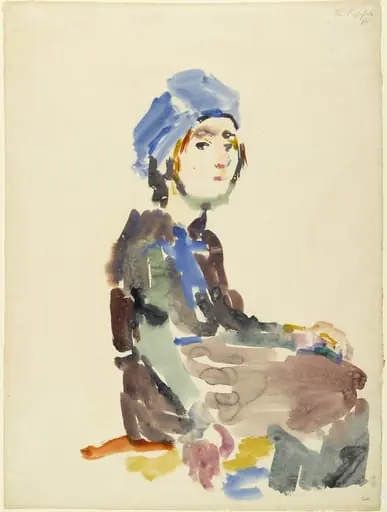
Oskar Kokoschka’s untitled lithograph, executed in 1918, presents a solitary figure rendered in a stark, gestural manner. The portrait occupies the central space of a plain sheet, the subject’s face and hair enveloped in dense, dark shading, while the hands rest calmly on the lap. The overall effect is one of immediacy, the lines appearing almost scribbled, conveying a raw, unfinished quality.
Subject & Meaning
The posture—hands placed on the lap—adds a sense of stillness, while the heavy chiaroscuro around the facial features emphasizes inner tension.
The work depicts an individual with a solemn expression, suggesting introspection or emotional restraint. The posture—hands placed on the lap—adds a sense of stillness, while the heavy chiaroscuro around the facial features emphasizes inner tension. Though untitled, the portrait invites viewers to contemplate the psychological state of the sitter, a common concern in Kokoschka’s early expressionist practice.
Technique & Style
Created by lithography, the image was produced by drawing with greasy ink on a flat limestone surface, then chemically treating the stone so that ink adheres only to the drawn areas. Kokoschka’s handling is loose and rapid, the lines resembling quick sketches rather than refined drawing. The heavy tonal contrasts and spontaneous strokes reflect his expressionist approach, prioritising emotional impact over polished finish.
History & Provenance
The lithograph was completed in the aftermath of World War I, a period marked by Kokoschka’s intense personal and artistic upheaval. It entered the collection of the Museum of Modern Art, where it remains part of the institution’s holdings of early 20th‑century prints, representing the artist’s exploration of portraiture through print media.
Artist & collection

Artist
Oskar Kokoschka was an Austrian artist, poet, playwright and teacher, best known for his intense expressionistic portraits and landscapes, as well as his theories on vision that influenced the Viennese Expressionist movement.