Artwork
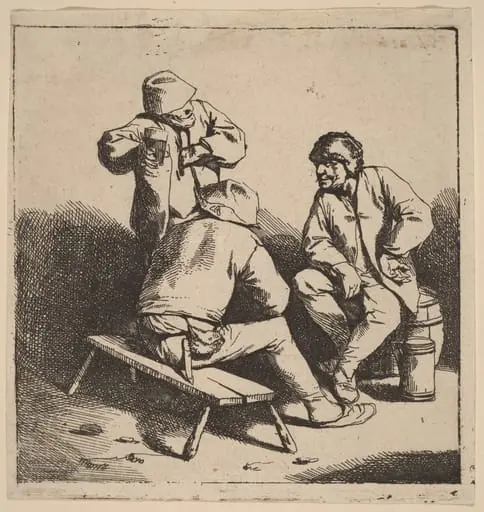
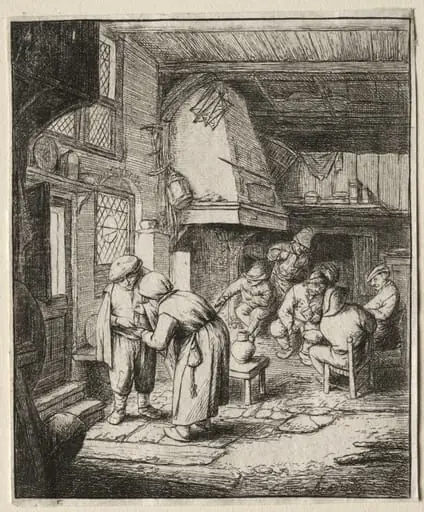
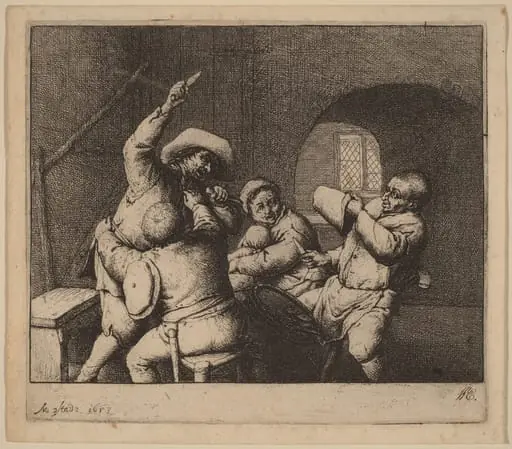
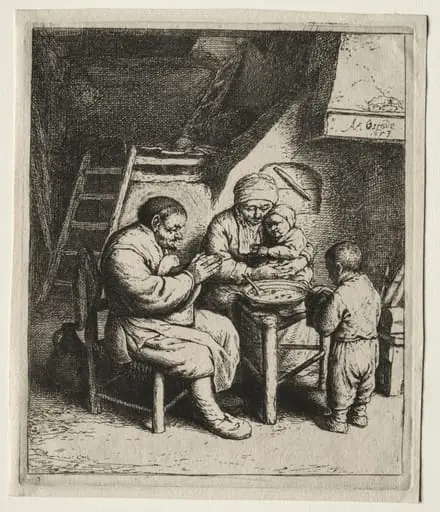
Three Peasants at an Inn, One Looking Down a Jug
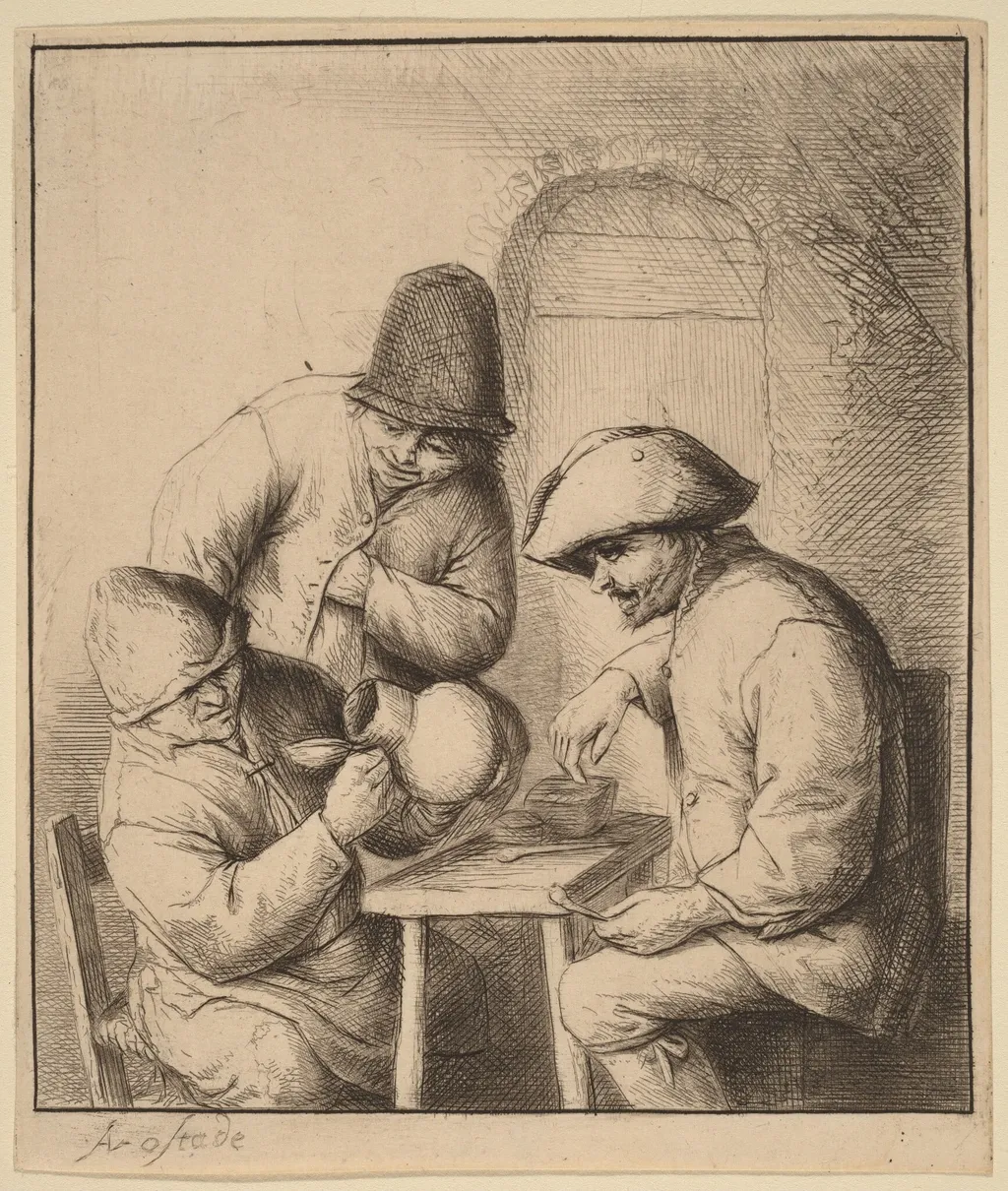
Three Peasants at an Inn, One Looking Down a Jug is an ink print by the Baroque artist Adriaen van Ostade. It dates from 1648 and is held in the collection of the National Gallery of Art.
About this work
Overview
Created around 1648 by Adriaen van Ostade, this print captures a quiet moment in a rural inn. Executed in etching with drypoint on laid paper, it portrays three laborers in a modest interior, their postures and attire suggesting exhaustion or respite. The composition is spare, focused on the figures and their immediate surroundings, with minimal detail to emphasize atmosphere over narrative.
Subject & Meaning
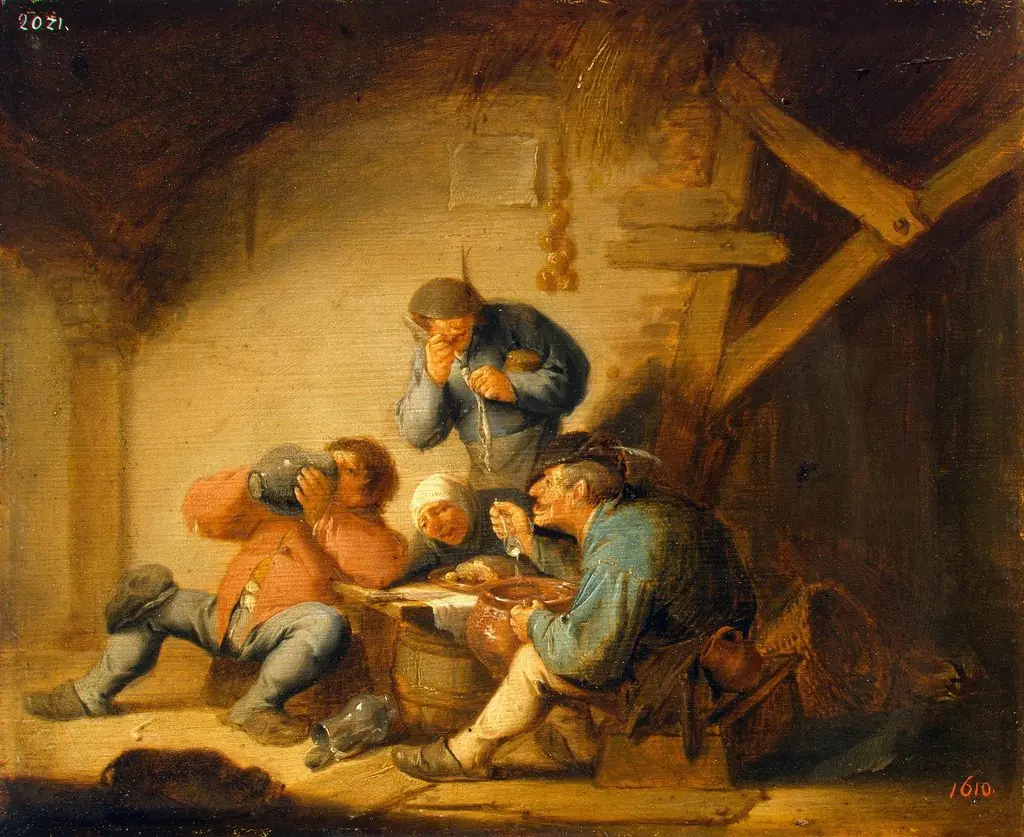
The three figures—two seated in slumped stillness, one leaning forward to inspect a jug—convey a sense of weariness or contemplation. The jug, possibly containing drink or sustenance, hints at the small comforts of peasant life. Their worn clothing and hunched forms reflect the physical toll of labor, while the lack of interaction suggests isolation within shared hardship.
Technique & Style
Van Ostade employed etching for broad tonal areas and drypoint for dense, scratchy lines that enhance texture in fabric, skin, and wood. The sketchy, urgent strokes convey immediacy, capturing the roughness of the setting and the figures’ fatigue. The paper’s laid texture subtly reinforces the work’s earthy, unrefined character.
History & Provenance
The print belongs to a series of genre scenes van Ostade produced in the mid-17th century, during the height of Dutch interest in everyday life. Few records detail its early ownership, but it was likely circulated among collectors who valued his depictions of rural labor. Its survival in good condition reflects its modest scale and enduring appeal among print enthusiasts.
Context
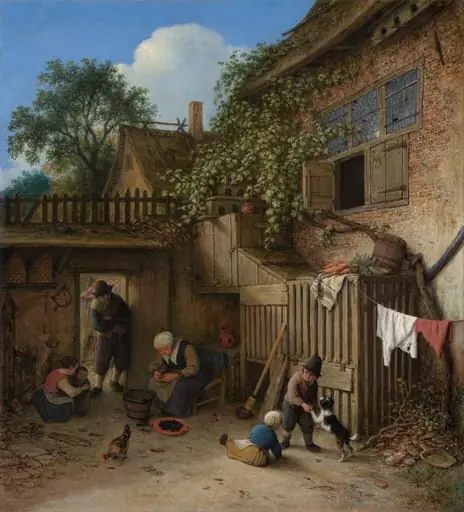
In 1640s Holland, genre painting flourished as urban audiences sought representations of rural life, often idealized or moralized. Van Ostade’s work stood apart for its unvarnished observation, avoiding sentimentality. This print aligns with broader trends in Dutch printmaking, where intimate, low-status scenes gained legitimacy as subjects worthy of artistic attention.
Legacy
Though less celebrated than his paintings, van Ostade’s prints influenced later artists interested in naturalistic detail and social observation. This etching exemplifies his ability to distill human condition into minimal form. Its quiet realism contributed to the enduring value of Dutch graphic art as a record of ordinary existence.
Artist & collection
Artist
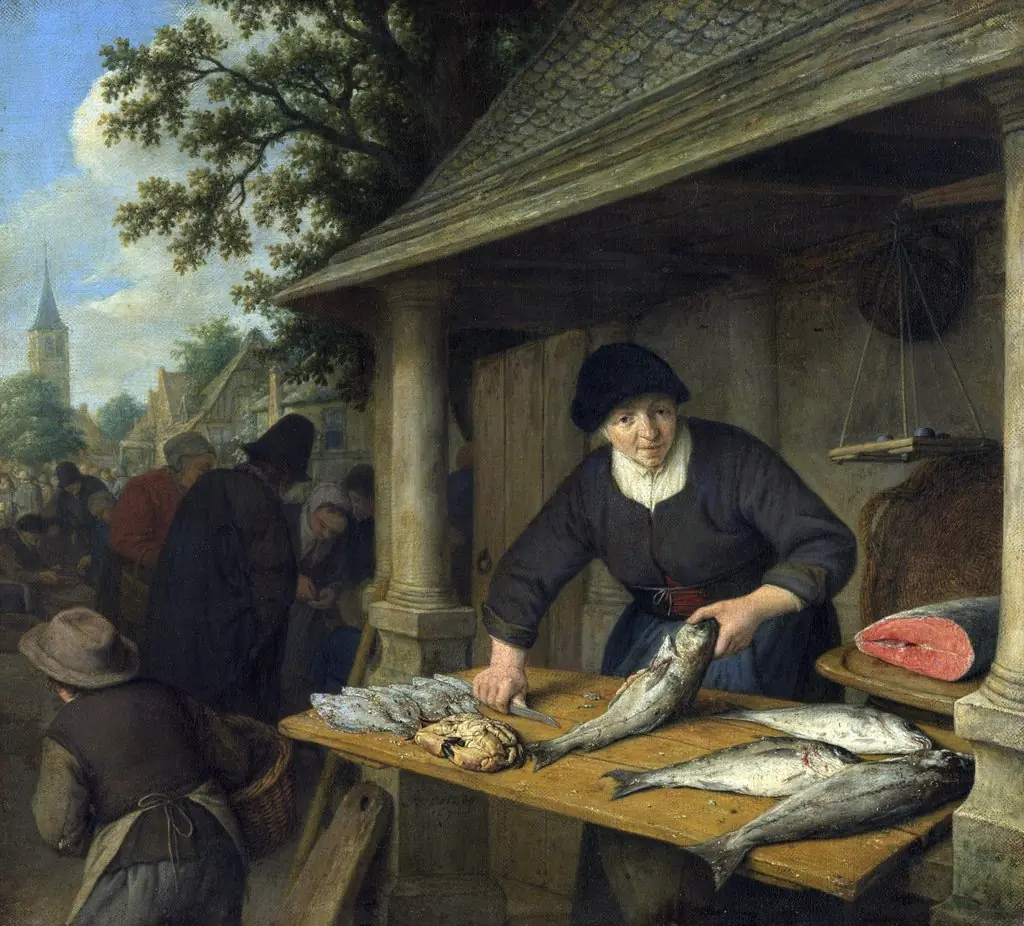
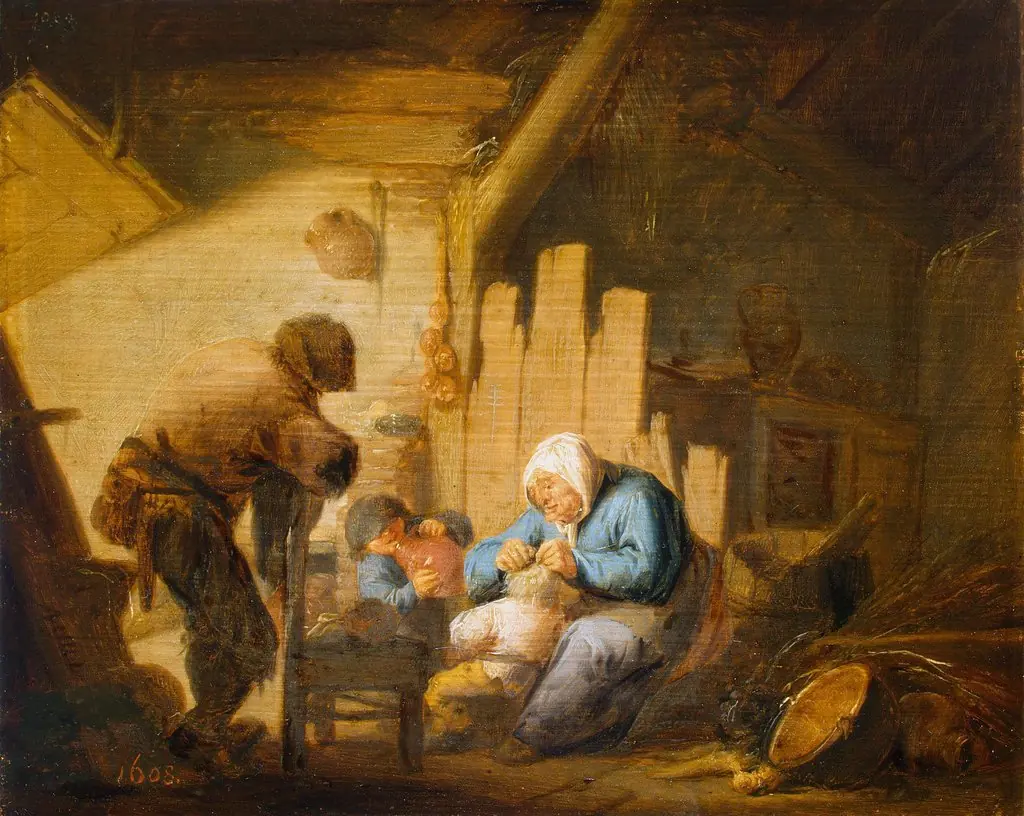
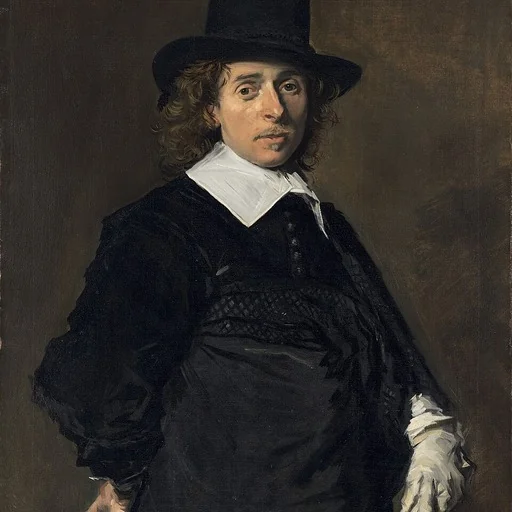
Adriaen van Ostade (baptized as Adriaen Jansz Hendricx 10 December 1610 – buried 2 May 1685) was a Dutch Golden Age painter of genre works, showing the everyday life of ordinary men and women.