Artwork
The Harbour of Le Havre
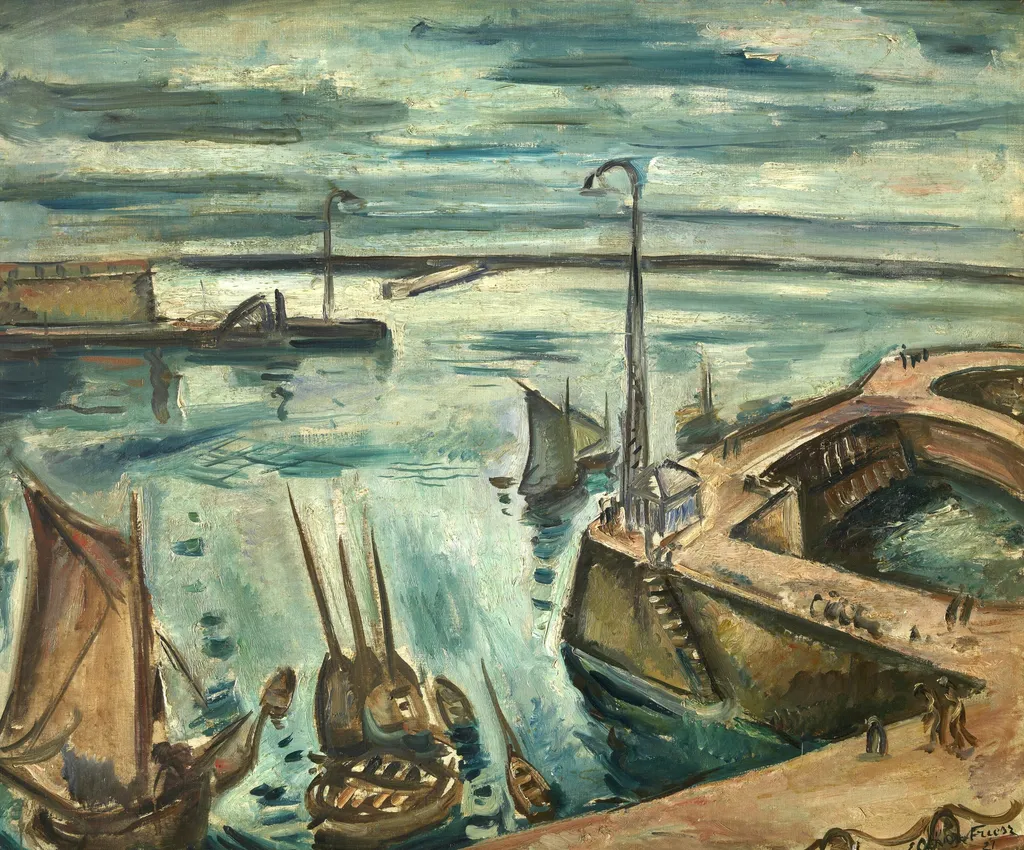
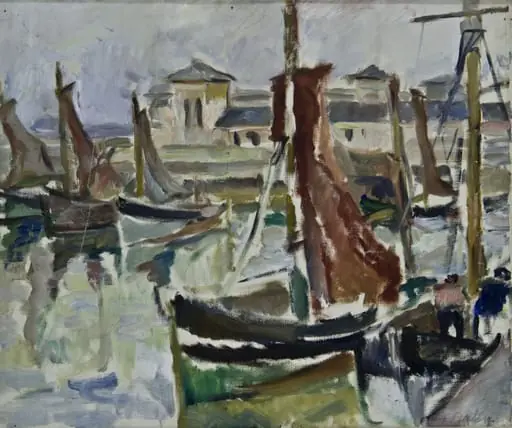
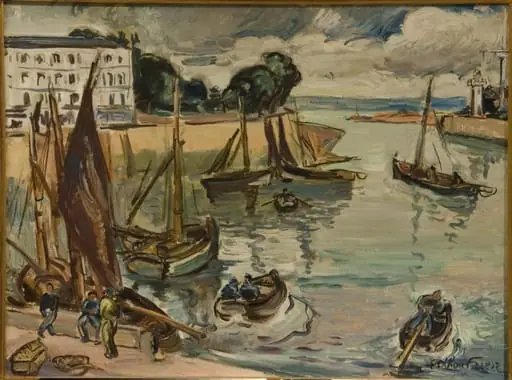
The Harbour of Le Havre is an oil painting by the Post-Impressionist artist Othon Friesz. It dates from 1921 and is held in the collection of the Royal Museum of Fine Arts Antwerp.
About this work
If you're interested in learning more about Othon Friesz's work, you might want to explore his other paintings, which often feature similar themes and styles.
The Harbour of Le Havre is a painting by Othon Friesz, created in 1921. The artwork depicts a serene harbor scene, with boats gently floating on the water. The artist's use of oil paint brings a sense of depth and texture to the piece. In the foreground, the harbor's edge is visible, with people standing along it. The painting's color palette is muted, with shades of blue and green dominating the scene. The overall atmosphere is one of calmness and tranquility. If you're interested in learning more about Othon Friesz's work, you might want to explore his other paintings, which often feature similar themes and styles.
Overview
Othon Friesz painted *The Harbour of Le Havre* in 1921 using oil on canvas. The work captures the quiet activity of his birthplace’s waterfront, reflecting a mature phase in his career after his early association with Fauvism. Unlike his earlier vibrant experiments, this piece embraces a restrained tonality and deliberate structure, signaling a shift toward classical composition while retaining a sense of place.
Subject & Meaning
The painting presents a tranquil harbor scene with moored vessels, a low seawall, and figures standing along the edge. There is no dramatic action—only the stillness of daily life. Friesz, deeply connected to Le Havre, portrays the harbor not as a bustling port but as a contemplative space, suggesting personal nostalgia and an enduring bond with his hometown’s rhythms and light.
Technique & Style
Friesz applied oil paint with controlled brushwork, building subtle layers to suggest the reflective surface of water and the solidity of stone and wood. The palette is dominated by muted blues, greens, and grays, avoiding the bold hues of his Fauvist period. Forms are softened yet defined, balancing atmospheric effect with structural clarity, indicative of his evolving interest in order and harmony.
History & Provenance
Created in 1921, the painting remained in private hands until it entered the collection of the Royal Museum of Fine Arts Antwerp. Its acquisition reflects broader institutional interest in early 20th-century French painters who bridged modernist experimentation and traditional representation. The work’s provenance is well-documented, with no significant gaps in its ownership history since the 1920s.
Context
In the early 1920s, many French artists moved away from the emotional intensity of Fauvism toward more disciplined forms. Friesz, like his contemporaries, sought stability after the upheavals of war and artistic revolution. *The Harbour of Le Havre* aligns with this trend, echoing the quiet realism of post-war landscape painting while retaining a personal, intimate perspective.
Legacy
The painting stands as a quiet testament to Friesz’s artistic evolution—from radical colorist to thoughtful observer of place. While less celebrated than his Fauvist works, *The Harbour of Le Havre* illustrates his sustained engagement with light, memory, and local identity. It contributes to a broader understanding of how modern artists reconciled innovation with tradition in the interwar years.
Own this work as a print
Artist & collection
Artist
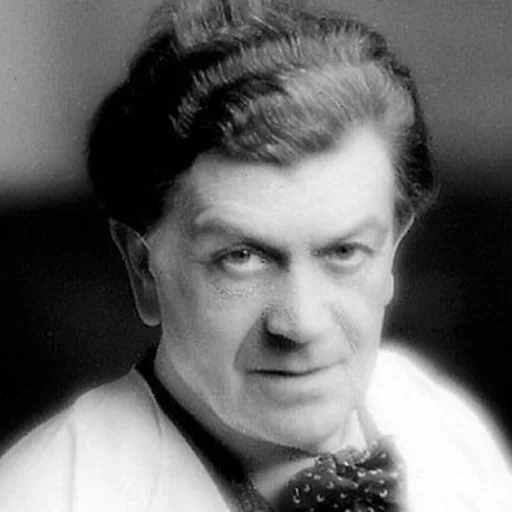
Achille-Émile Othon Friesz (6 February 1879 – 10 January 1949), who later called himself Othon Friesz, a native of Le Havre, was a French artist of the Fauvist movement.