Artwork
The Lock, Schleissheim
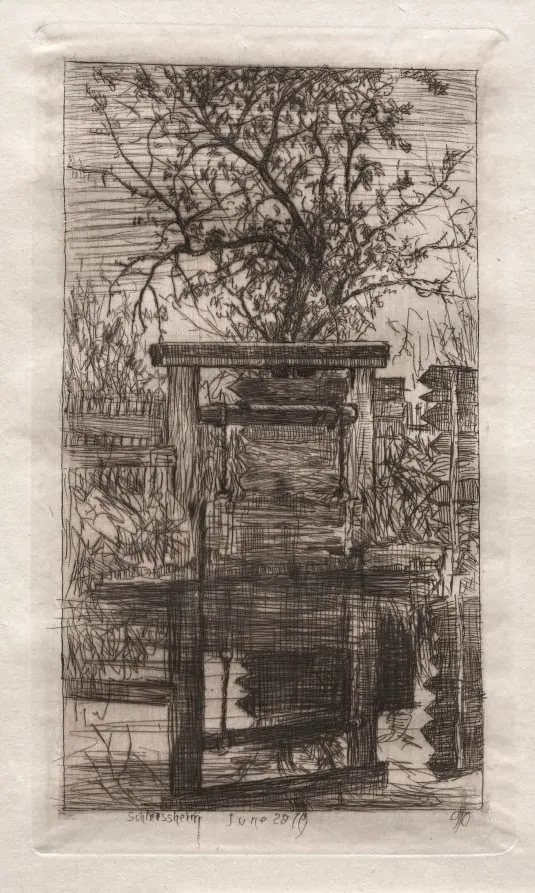
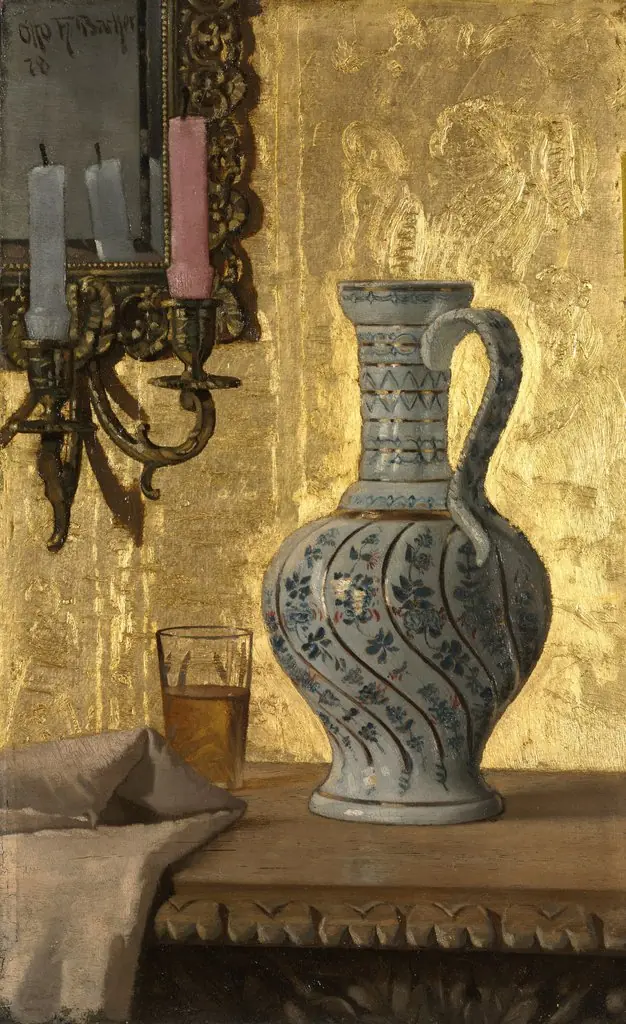
The Lock, Schleissheim is a print by the Impressionist artist Otto Henry Bacher. It dates from 1879 and is held in the collection of the Cleveland Museum of Art. Created in 1879 by American artist Otto H.
About this work
Overview
Though Bacher is better known for his etchings, this work demonstrates his engagement with oil painting and observational realism.
Created in 1879 by American artist Otto H. Bacher, *The Lock, Schleissheim* is a painted depiction of a secluded garden gate in Schleissheim, Germany. Though Bacher is better known for his etchings, this work demonstrates his engagement with oil painting and observational realism. The piece resides in the collection of The Cleveland Museum of Art, reflecting the artist’s ties to his hometown and his interest in European landscapes during his time abroad.
Subject & Meaning
The painting centers on a weathered wooden gate, its planks scarred by time, secured by a heavy iron lock and dangling chain. Behind it, a bare tree rises against a pale sky, its sparse branches framing the scene with quiet restraint. The absence of figures and the stillness of the composition suggest isolation or abandonment, evoking a contemplative mood rather than narrative action. The gate functions as both barrier and threshold, inviting reflection on passage and preservation.
Technique & Style
Bacher rendered the scene with careful attention to texture and light, using layered brushwork to convey the roughness of aged wood and the softness of atmospheric haze. While the composition shows a clear interest in naturalistic detail—hallmarks of Realism—the loose handling of the sky and foliage aligns with early Impressionist tendencies. The palette is muted, dominated by earth tones and pale grays, reinforcing the scene’s subdued, introspective character.
History & Provenance
Bacher painted *The Lock, Schleissheim* during a period of travel in Europe, likely while studying or working in Germany. The work remained in private hands until it entered the collection of The Cleveland Museum of Art, where it has been held since the early 20th century. Its acquisition reflects the museum’s early interest in American artists who engaged with European subjects, particularly those trained in academic and realist traditions.
Context
In the late 1870s, American artists increasingly traveled to Europe to study and sketch, often returning with works that blended European techniques with domestic sensibilities. Bacher’s focus on a modest, unpopulated gate aligns with a broader trend among his peers to find poetic value in ordinary, overlooked scenes. His approach diverged from grand historical or romantic themes, favoring quiet observation over dramatic effect.
Legacy
Though not widely exhibited, *The Lock, Schleissheim* remains a representative example of Bacher’s transition from illustration to fine painting. It illustrates how American artists of the period absorbed European visual languages without fully adopting their conventions. The work endures as a quiet testament to the aesthetic value of decay and stillness, contributing to a lesser-known strand of 19th-century American realism.
Artist & collection
Artist
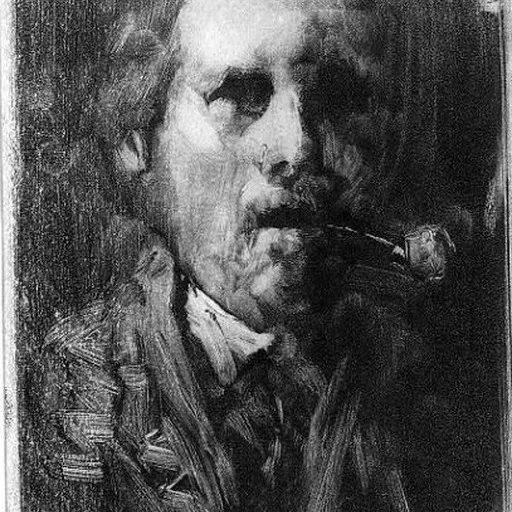
Otto Henry Bacher (May 31, 1856, Cleveland - August 16, 1909, Bronxville, New York) was an American artist; primarily known for his etchings and illustrations. He also painted oils in a variety of genres.