Artwork
Alonso de Idiáquez duque de Ciudad Real (Cittá-Reale en Nápoles)
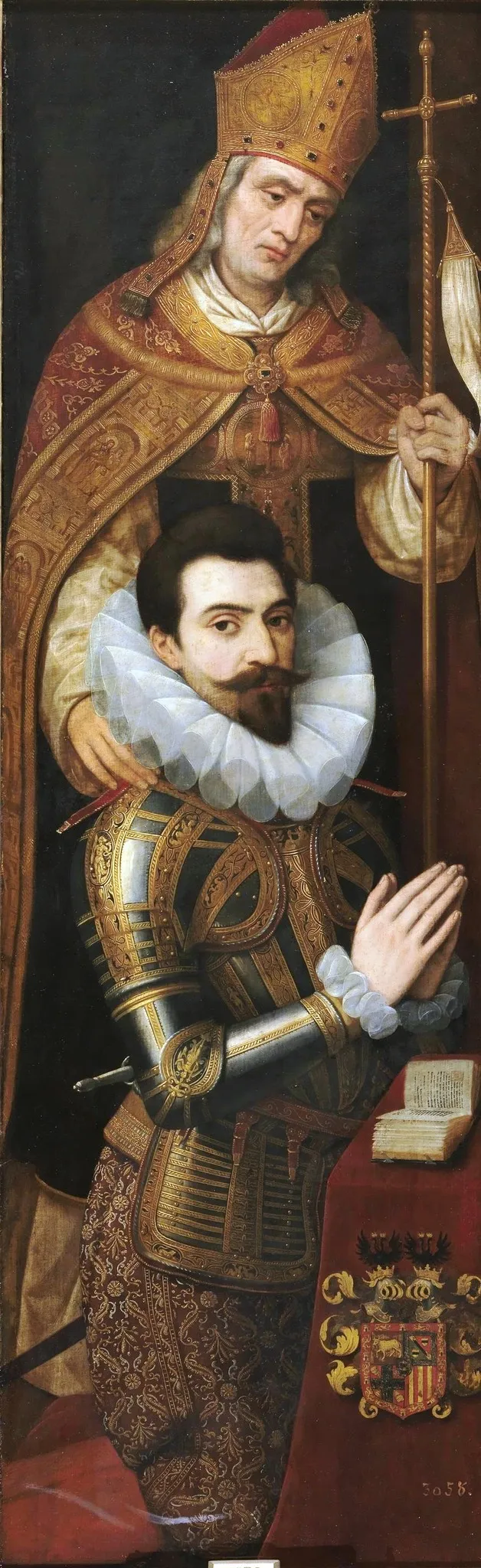
Alonso de Idiáquez duque de Ciudad Real (Cittá-Reale en Nápoles) is an oil painting by the Northern Renaissance artist Otto van Veen. It dates from 1551 and is held in the collection of the Museo del Prado.
About this work
Overview
Otto van Veen’s oil portrait, painted in 1551, presents the Spanish nobleman Alonso de Idiáquez, duque de Ciudad Real. The work is part of the Museo del Prado’s collection and exemplifies the late‑Renaissance approach to portraiture, combining individual likeness with symbolic accoutrements.
Subject & Meaning
Alonso de Idiáquez is shown in three‑quarter view, dressed in a black and gold breastplate with a flowing red cape. An open book rests on a nearby table, while a heraldic shield hangs on the wall, underscoring his status and learned background. A bishop in red vestments, complete with mitre and staff, stands behind him, suggesting a patronage or ecclesiastical connection.
Technique & Style
Van Veen employs chiaroscuro to model the figures, creating a pronounced contrast between illuminated fabrics and the darker background. The gold‑trimmed attire and intricate patterns on the bishop’s robes are rendered with fine brushwork, while the overall composition balances realism with the decorative flair typical of court portraiture.
History & Provenance
The painting was executed in the mid‑16th century, likely commissioned to commemorate Idiáquez’s ducal title. It entered the Spanish royal collection before being transferred to the Museo del Prado, where it remains on display as part of the museum’s representation of Netherlandish artists working in Spain.
Artist & collection

Artist
Otto van Veen, was a painter, draughtsman, and humanist active primarily in Antwerp and Brussels in the late 16th and early 17th centuries.