Artwork
La Mare au diable
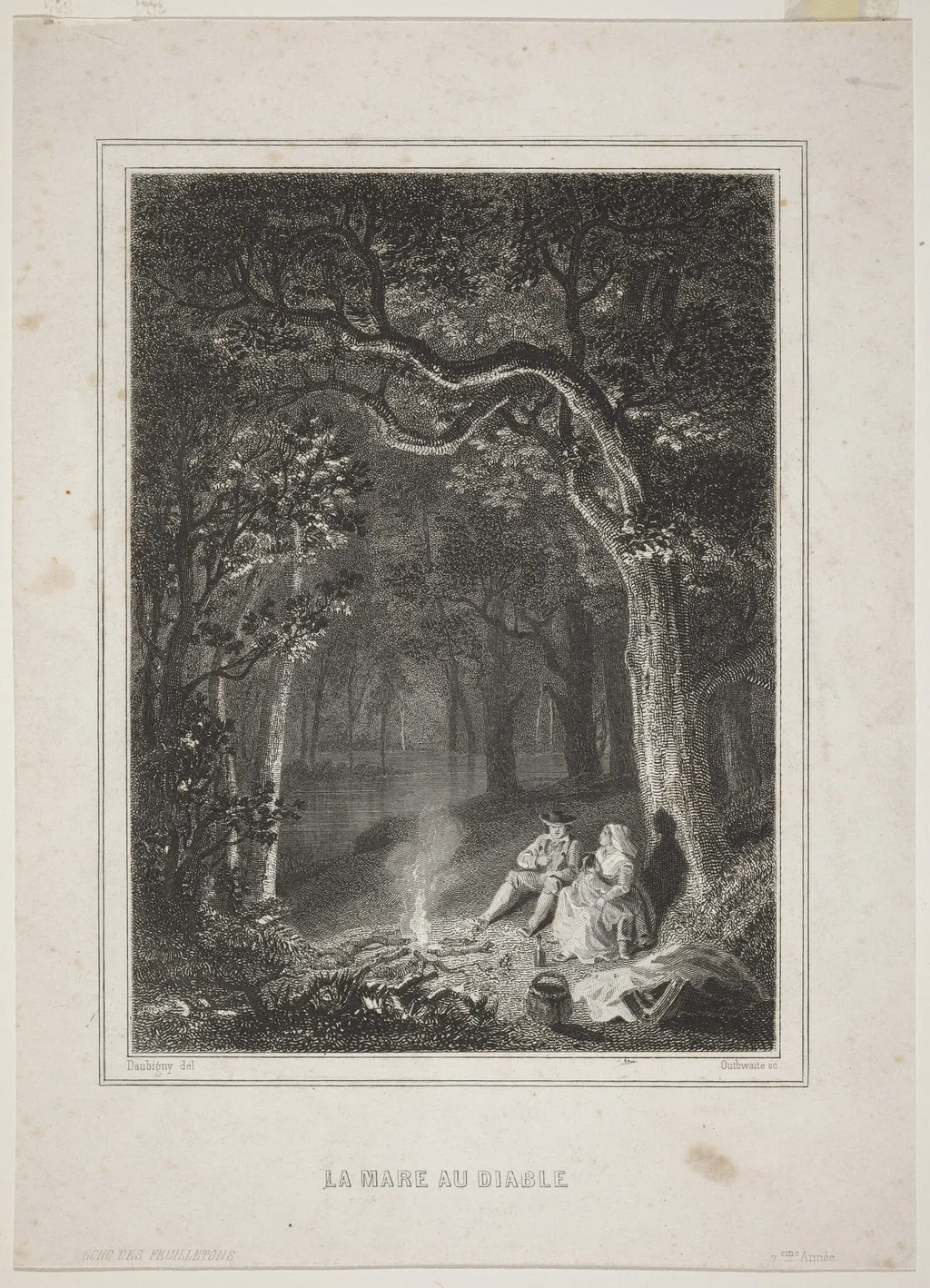
La Mare au diable is an ink print by the Renaissance artist Jean Jacques Outhwaite. It dates from 1640 and is held in the collection of the National Gallery of Art.
About this work
Overview
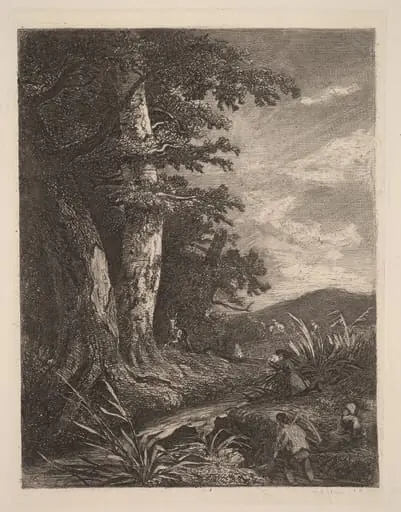
Tall, gnarled trees enclose the scene, while a faint trail or bridge recedes into the distance, suggesting a path beyond the immediate space.
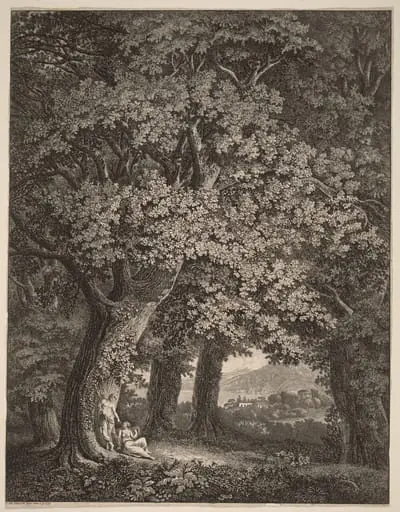
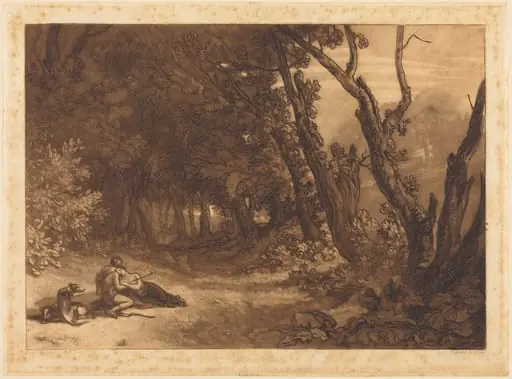
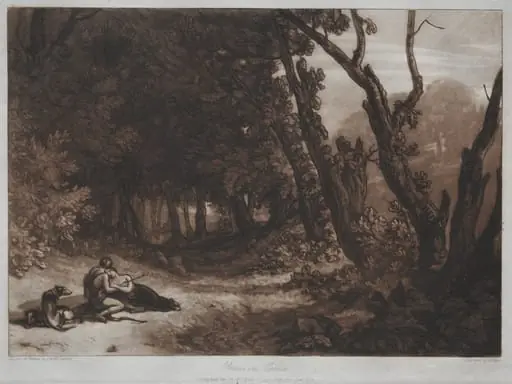
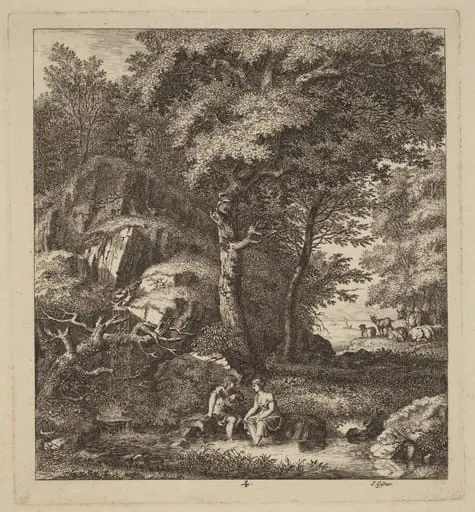
La Mare au diable is a black-and-white etching produced in 1640 by Jean Jacques Outhwaite on wove paper. The composition depicts two figures seated near a small fire within a dense, shadowed woodland. Tall, gnarled trees enclose the scene, while a faint trail or bridge recedes into the distance, suggesting a path beyond the immediate space. The work conveys a sense of stillness and enigma, anchored by its evocative title.
Subject & Meaning
The title, meaning 'The Devil’s Pond,' alludes to folkloric associations with hidden waters and supernatural encounters. The figures, small and contemplative, appear absorbed in their surroundings rather than interacting, reinforcing an atmosphere of quiet unease. The glowing path may imply a threshold between the known and the unknown, inviting interpretation rooted in regional legends of spirits or moral warnings tied to isolated natural sites.
Technique & Style
Outhwaite employed fine, incised lines typical of etching to build depth and texture. The contrast between dense shadows and faintly etched highlights gives the forest a palpable presence, with tree trunks and foliage rendered through layered cross-hatching. The absence of tone or wash emphasizes the precision of the plate work, allowing the naturalism of the scene to emerge through line alone, enhancing its atmospheric tension.
History & Provenance
The print dates to the mid-seventeenth century, a period when etching was widely used for both artistic and reproductive purposes in Europe. Outhwaite’s work remains relatively obscure, with few known impressions. Its survival suggests it may have circulated among collectors or served as a study piece, though no documented ownership chain or exhibition history is recorded prior to modern archival references.
Context
Created during a time when Northern European artists increasingly turned to landscape and folk themes, this print reflects a growing interest in the mystical qualities of nature. Similar imagery appears in contemporary prints by Dutch and Flemish engravers, who used dark, wooded scenes to evoke moral or supernatural narratives. Outhwaite’s work aligns with this trend, though his personal background and influences remain undocumented.
Legacy
La Mare au diable stands as a quiet example of early modern printmaking’s capacity to convey psychological depth through minimal means. While not widely reproduced or studied, it contributes to the broader understanding of how etchers used shadow and line to evoke narrative ambiguity. Its endurance in collections underscores its value as a specimen of intimate, atmospheric printmaking from a lesser-known artist.
Artist & collection