Artwork
The Forest Maiden
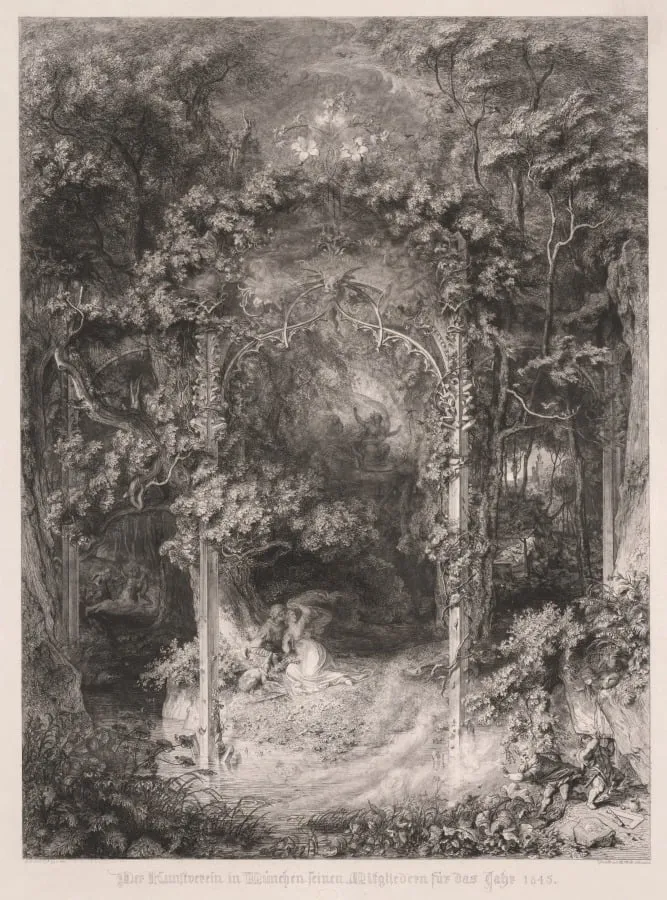
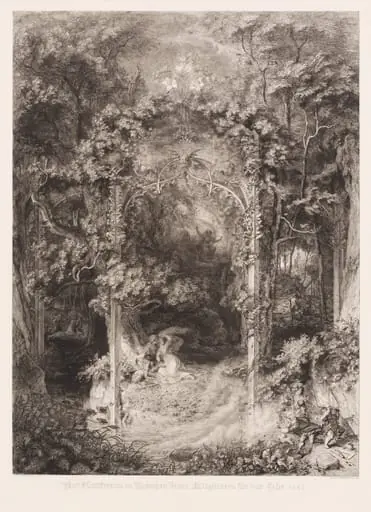
The Forest Maiden is a print by the Romanticist artist Wendelin Wick. It dates from 1845 and is held in the collection of the Cleveland Museum of Art.
About this work
A woman with long hair stands in a dark forest, her arms outstretched toward tiny men who wander between the trees.
A woman with long hair stands in a dark forest, her arms outstretched toward tiny men who wander between the trees. Around her, small scenes show her luring them deeper into the woods.
This painting illustrates an old German folktale about a forest spirit who tricks men with her beauty. It was made during a time when people in Germany were rediscovering these stories, turning them into art.
To see more eerie folk tales like this, look up *germany, 19th century*.
Overview
Eugen Neureuther’s print, titled The Forest Maiden, presents a multi‑scene composition set within a dense woodland. A central female figure, rendered with flowing hair and outstretched arms, dominates the scene as diminutive male figures wander among the trees, drawn into various vignettes of allure and danger. The work visualises a German legend in which a forest spirit uses beauty to ensnare unsuspecting travelers.
Subject & Meaning
The image interprets a traditional German folktale about a female forest demon who appears as an enchanting woman. By juxtaposing the seductive central figure with smaller episodes of men being led deeper into the woods, the print conveys themes of temptation, deception, and the peril of straying from the known path, reflecting moral warnings embedded in folk narratives.
Technique & Style
Executed as an elaborate etching, the work employs fine line work to delineate the intricate canopy and the multitude of narrative panels. Neureuther’s handling of light and shadow creates a chiaroscuro effect that emphasizes the darkness of the forest while highlighting the luminous, almost ethereal quality of the maiden’s form, characteristic of early‑19th‑century German printmaking.
Context
Created during the early 1800s, the print aligns with a broader German resurgence of interest in folk legends and mythic subjects. Artists and writers of the period sought to reclaim regional stories as cultural heritage, and Neureuther’s illustration exemplifies this movement by translating oral tradition into a visual medium for a contemporary audience.
Artist & collection

 In the Forest (Lisiere de foret)
 The Good Samaritan (Le Bon Samaritain)
 An Offering to Pan
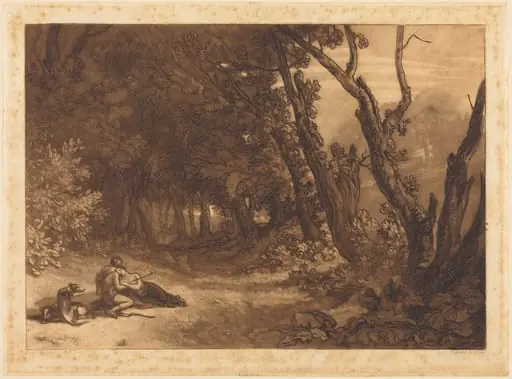 Procris and Cephalus
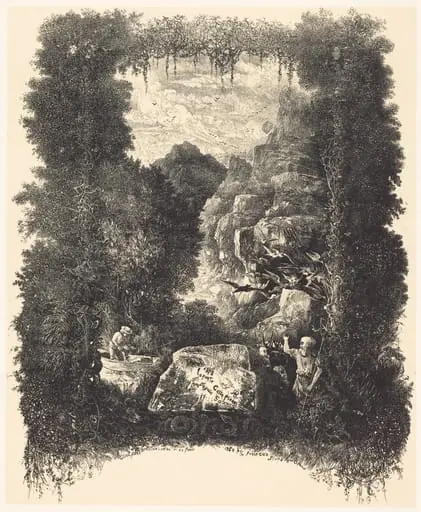 Frontispiece
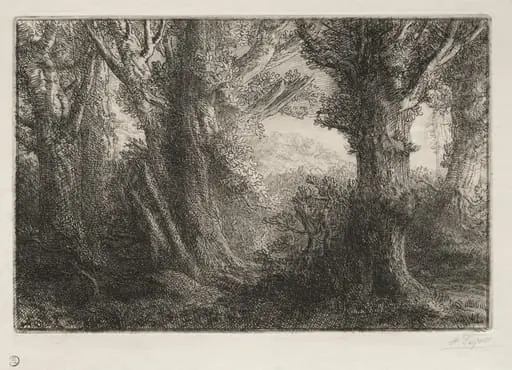 In the Forest at Conteville
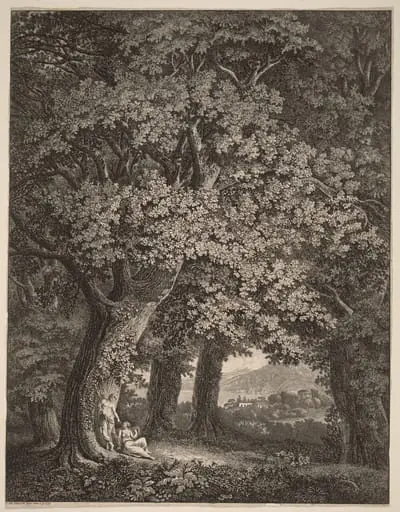 Italian Landscape with a Pair of Shepherds
 Liber Studiorum: Procris and Cephalus
 First frontispiece for Fables and Fairy-Tales by Thierry-Faletans
 Les Faisans
 A Monk with a Bagpipe Player
 Das Waldfräulein (The Lady of the Forest)