Artwork
Bust of a Man
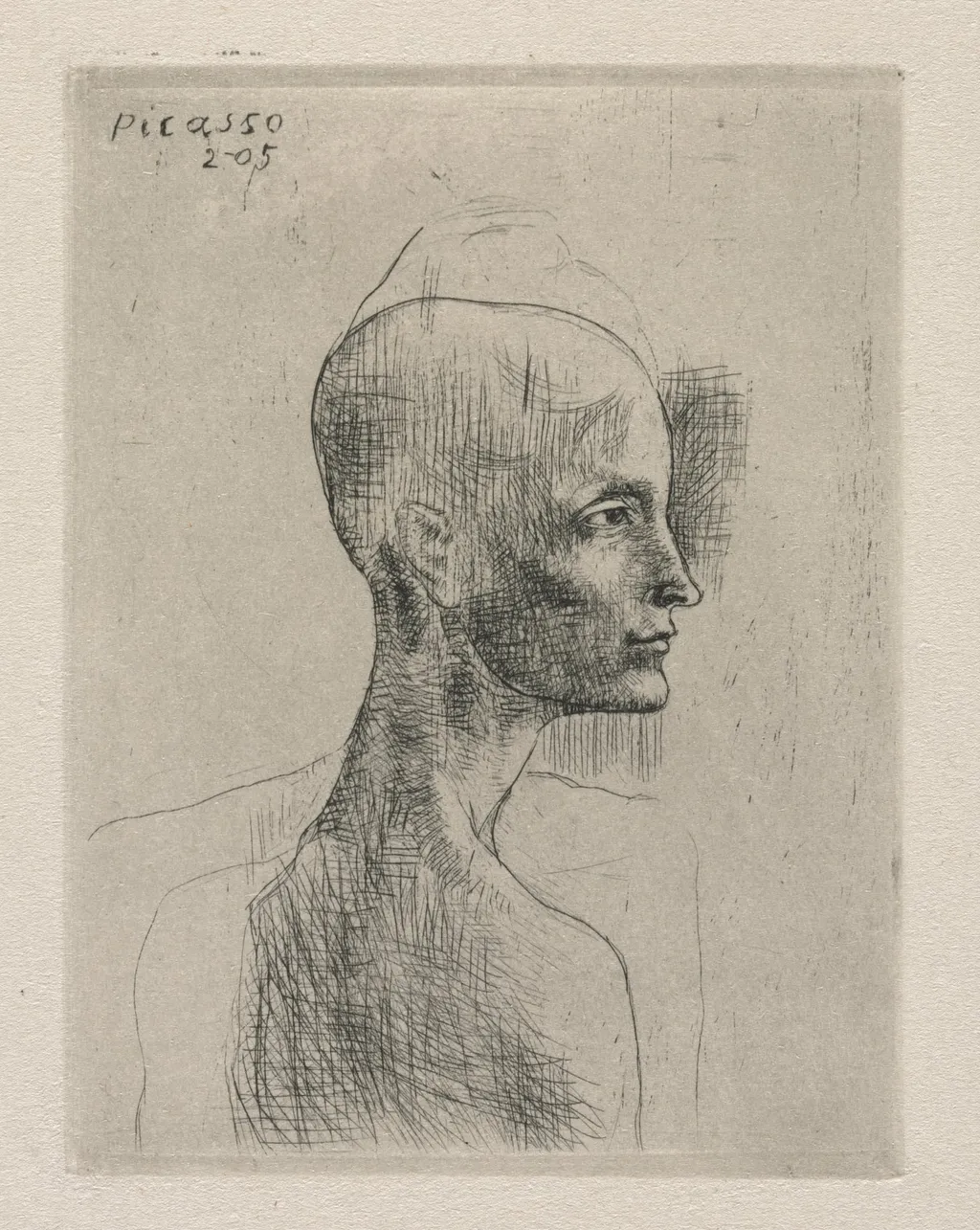
Bust of a Man is a print by Pablo Picasso. It dates from 1905 and is held in the collection of the Cleveland Museum of Art.
About this work
The lines are loose and busy, especially around the hair and neck, making the face look almost three-dimensional.
This sketch shows a man’s head and shoulders turned slightly to the side. The lines are loose and busy, especially around the hair and neck, making the face look almost three-dimensional. The paper is light, and the drawing is in black ink or pencil.
The top left corner has the name *Picasso* and the date *2-05*, which might mean February 1905. The artist seems to be working fast, with quick strokes instead of careful details.
Check out Pablo Picasso for more sketches like this.
Overview
Created in February 1905, *Bust of a Man* is a pencil or ink drawing by Pablo Picasso during his early career in Paris. Executed on lightweight paper, the work captures a male figure in profile with minimal detail and rapid, energetic strokes. It reflects Picasso’s exploratory phase before the emergence of Cubism, emphasizing form through suggestion rather than refinement. The signature and date in the upper left confirm its origin and timing.
Subject & Meaning
The subject is a generic male figure, likely a model or passerby observed in daily life. There is no indication of identity or narrative; the focus lies in the act of observation and translation into line. The slight turn of the head and simplified features suggest an interest in volume and posture rather than individual character. The work functions as a study in perception, not portraiture.
Technique & Style
Picasso used loose, overlapping strokes to define the contours of the head, neck, and hair, creating a sense of depth without shading. The ink or pencil lines are hurried and unpolished, revealing the immediacy of the drawing process. Areas around the hair and collar are densely worked, contrasting with the sparse rendering of the face. This approach prioritizes movement and structure over finish.
History & Provenance
The drawing originates from Picasso’s formative years in Paris, when he was experimenting with figuration amid the influence of Iberian sculpture and early modernist trends. It is part of a broader body of sketches from 1904–1906, many of which were kept as personal studies rather than intended for public display. Its survival reflects its role as a working document in his artistic development.
Context
In 1905, Picasso was transitioning from his Blue Period toward a more optimistic palette and form, soon to be known as the Rose Period. This drawing aligns with his growing interest in classical simplicity and structural clarity, foreshadowing his later innovations. It exists alongside other rapid studies from this time, revealing how he built his visual language through repeated, spontaneous observation.
Legacy
Though not a finished work, *Bust of a Man* exemplifies Picasso’s method of learning through drawing. Its immediacy and economy of line influenced later artists who valued process over polish. As a precursor to Cubist abstraction, it demonstrates how reduction and gesture could serve as tools for reimagining form, laying groundwork for modernist approaches to representation.
Artist & collection
Artist
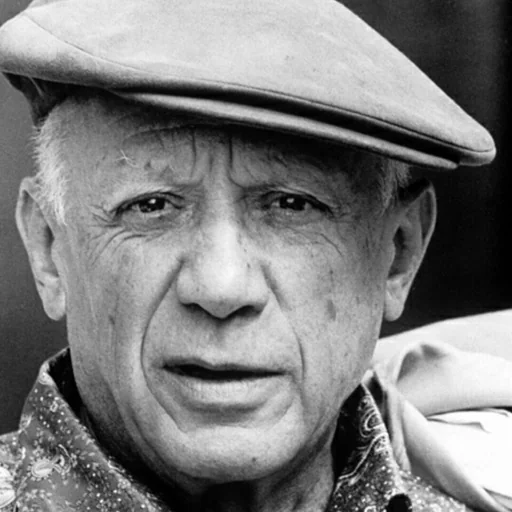
Pablo Ruiz Picasso (25 October 1881 – 8 April 1973) was a Spanish painter and sculptor who spent most of his adult life in France.


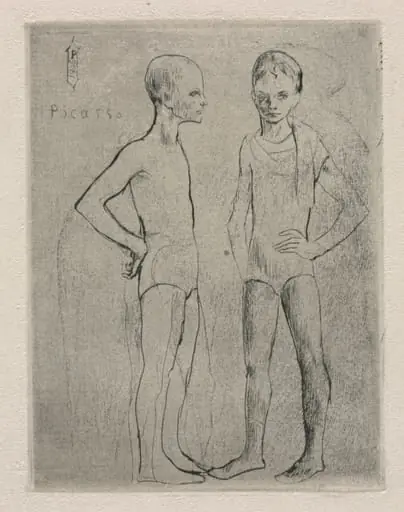 The Two Saltimbanques
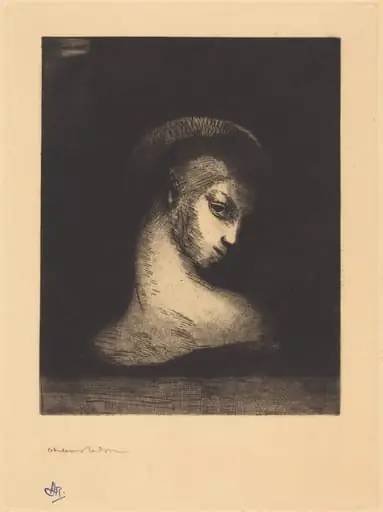 Perversité
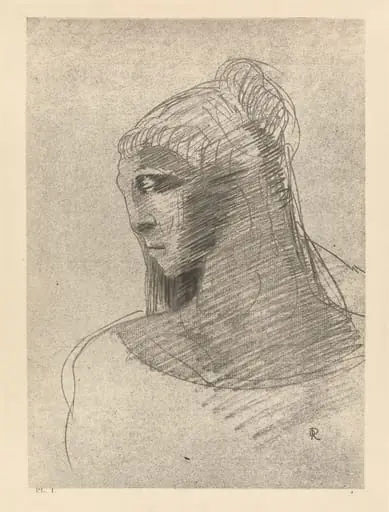 Je t'adore a l'egal de la voute nocturne. O vase de tristesse, o grande taciturne (I adore you as I adore the vault of the night sky, O vessel of sadness, O tall silent woman)
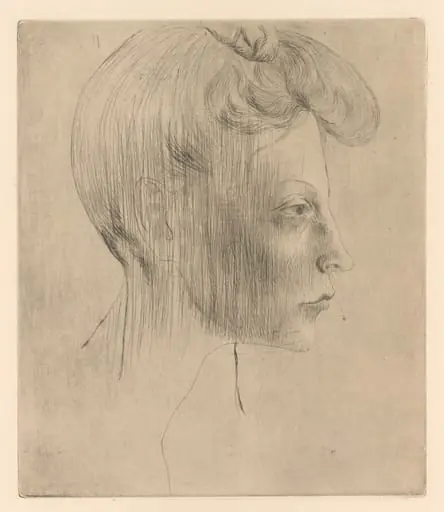 Head of a Woman in Profile
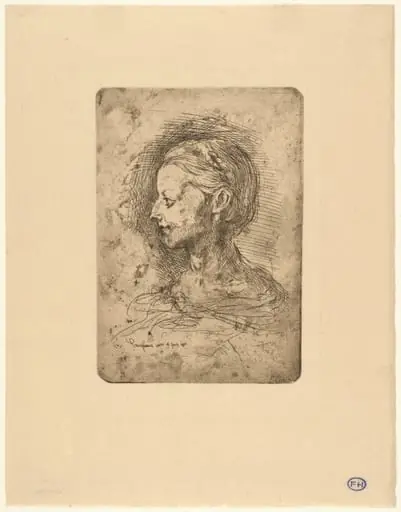 Bust of a Young Girl
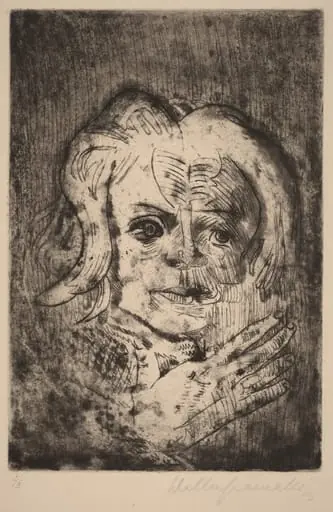 Girl with Hand
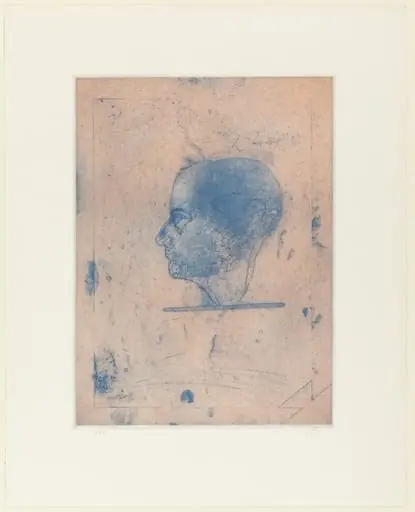 Untitled
 Untitled
 Untitled
 Untitled
 Untitled
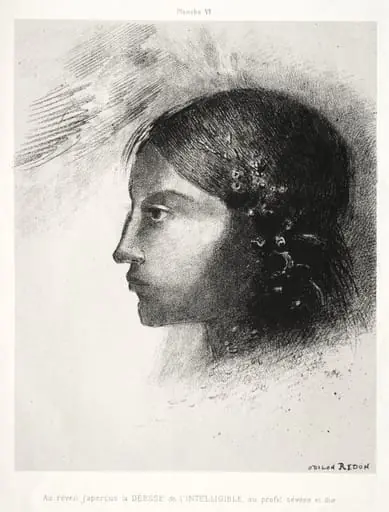 Upon Awakening I Saw the Goddess of the Intelligible with Her Severe and Hard Profile