Artwork
Untitled
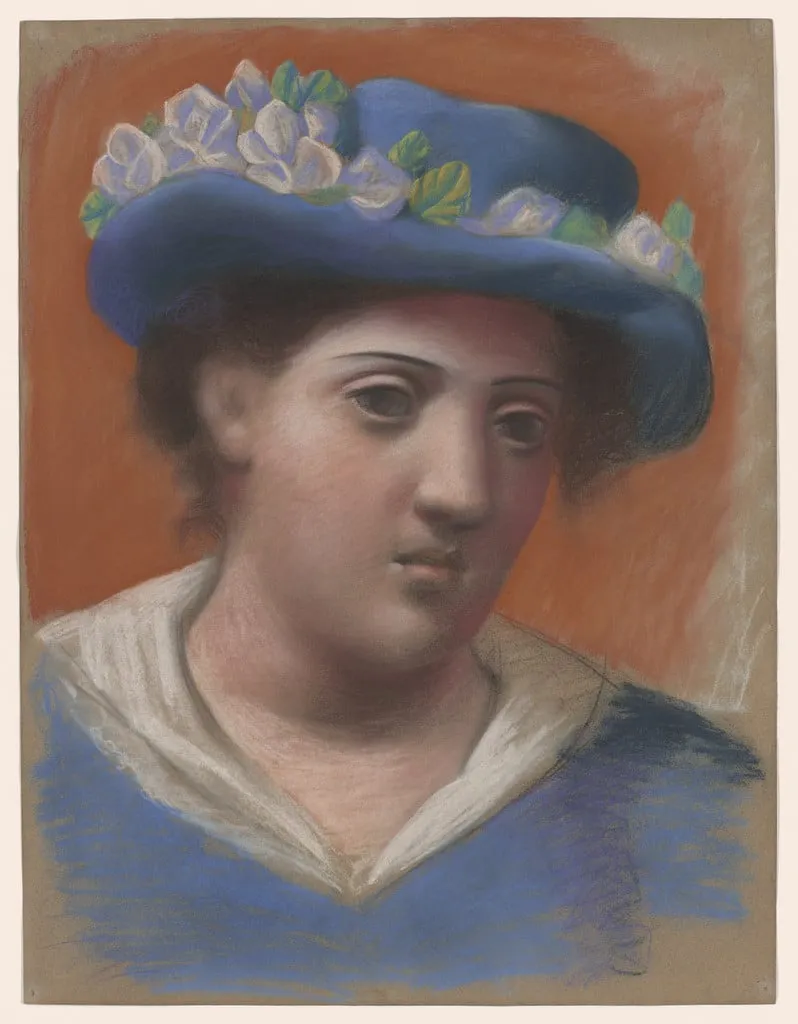
Untitled is a pastel drawing by Pablo Picasso. It dates from 1921 and is held in the collection of the Museum of Modern Art.
About this work
Overview
It is part of The Museum of Modern Art’s permanent collection, acquired as part of a broader effort to document Picasso’s evolving practice across media.
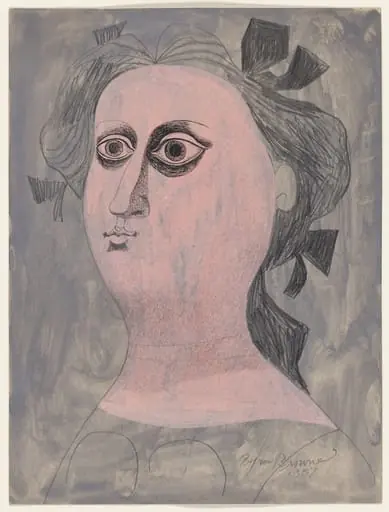
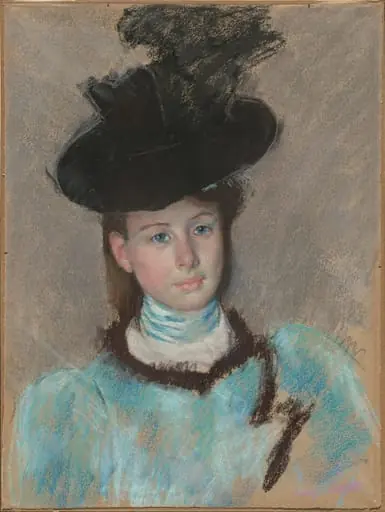
Created in 1921, this drawing by Pablo Picasso combines pastel and charcoal on paper, reflecting his continued engagement with figuration after the fragmentation of Cubism. Though untitled, the work belongs to a series of intimate portraits from this period, emphasizing expressive line and tonal contrast. It is part of The Museum of Modern Art’s permanent collection, acquired as part of a broader effort to document Picasso’s evolving practice across media.
Subject & Meaning
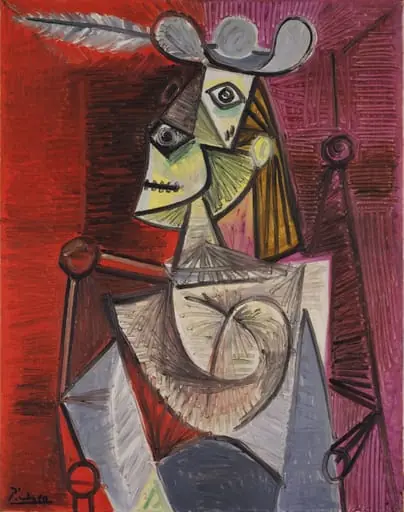
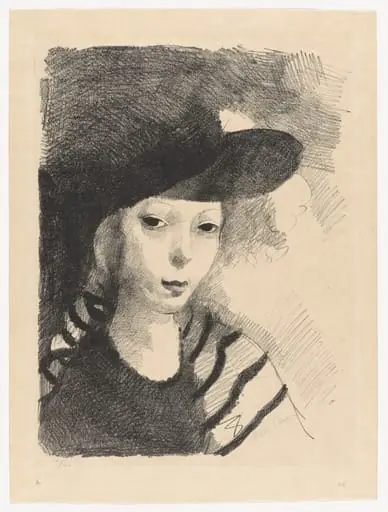
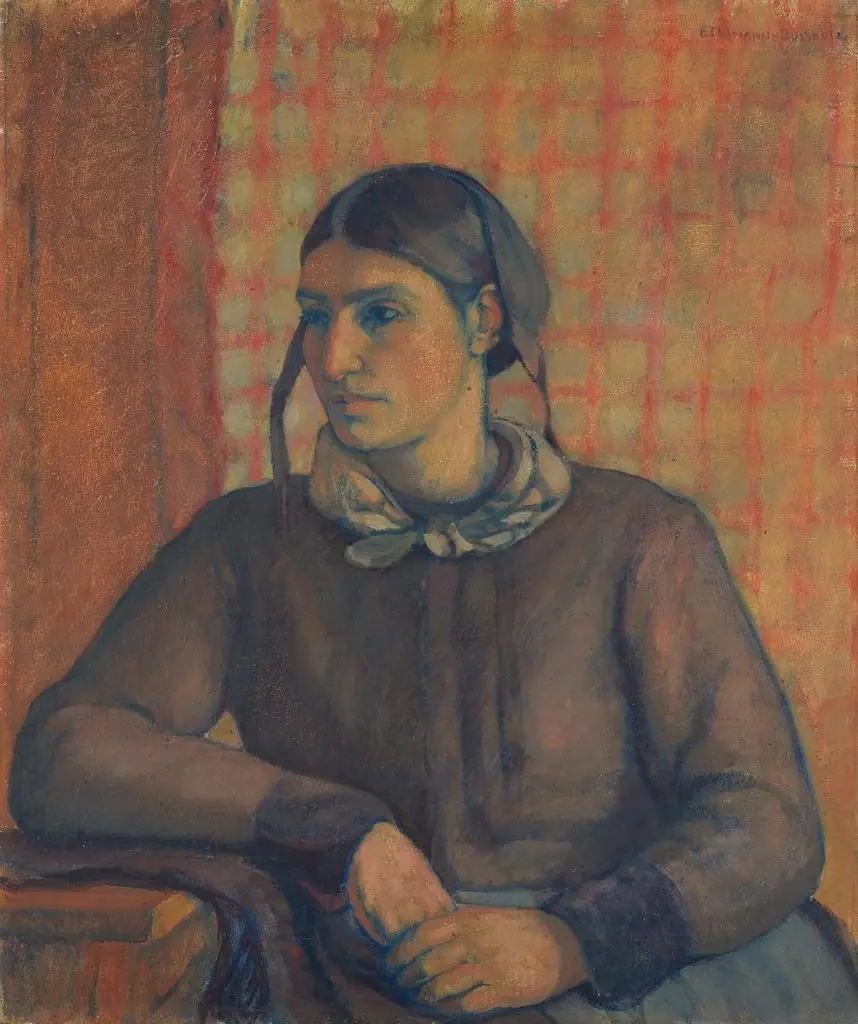
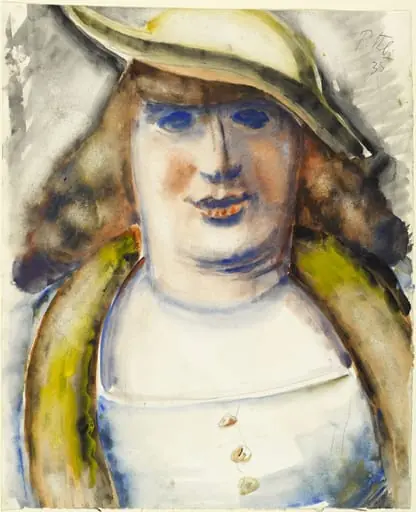
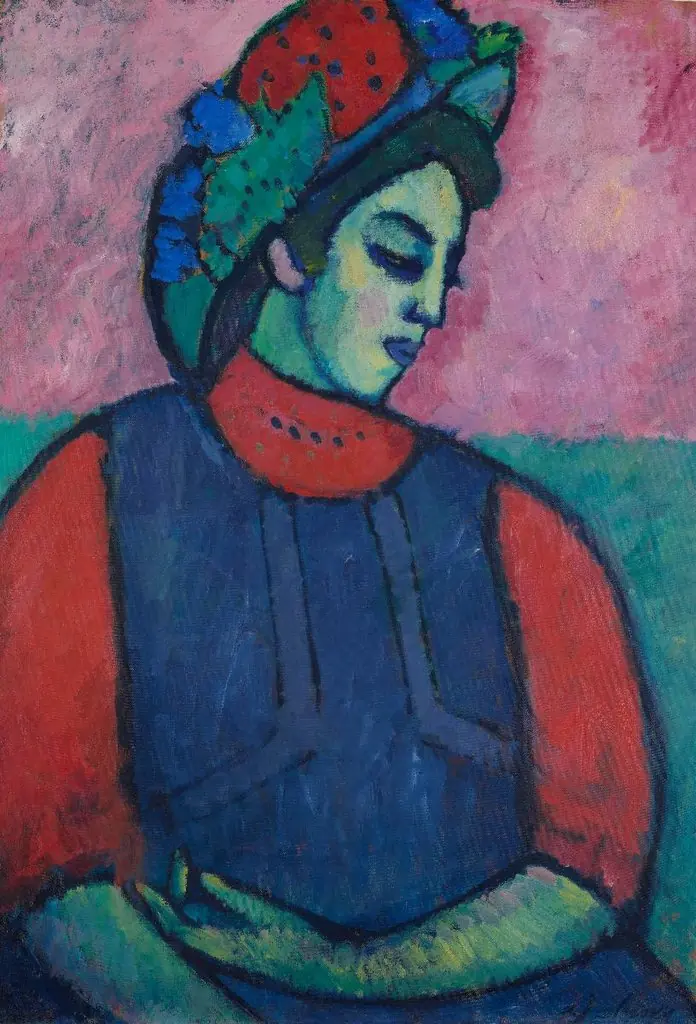
The subject is a woman depicted frontally, her gaze direct and composed. Her attire—a blue hat adorned with white flowers and green leaves, paired with a white-collared blue top—suggests a stylized, perhaps ceremonial, presence. The focus on facial expression and costume, rather than narrative context, invites contemplation of identity and stillness. The absence of a named subject or setting underscores Picasso’s interest in universal forms over specific biography.
Technique & Style
Picasso employs charcoal for strong, fluid outlines and pastel for soft, layered color, creating a tension between definition and ambiguity. The face is rendered with precise, controlled strokes, while the background dissolves into broad washes of orange and brown, pushing the figure forward. This selective detail—sharp in the figure, vague in the surroundings—demonstrates his command of atmospheric depth without perspective.
History & Provenance
The work entered The Museum of Modern Art’s collection in the mid-20th century, likely through donations or acquisitions tied to the museum’s early focus on modern European art. Its provenance prior to institutional ownership is not publicly documented, but its date and materials align with Picasso’s Paris-based output during the early 1920s, a time when he frequently returned to drawing as a means of formal inquiry.
Context
In 1921, Picasso was navigating a transitional phase between Cubist abstraction and a renewed interest in classical form. While his contemporaries were exploring surrealism or neoclassicism, he maintained a personal language of simplified structure and emotional restraint. This drawing reflects that balance—neither fully figurative nor abstract, but a quiet meditation on presence through line and color.
Legacy
This drawing exemplifies Picasso’s enduring ability to reinvent representation through minimal means. Its inclusion in MoMA’s collection has ensured its visibility within narratives of modern portraiture, influencing later artists who sought emotional resonance in stripped-down forms. Though not widely exhibited, it remains a quiet testament to his mastery of drawing as a primary mode of artistic thought.
Artist & collection
Artist
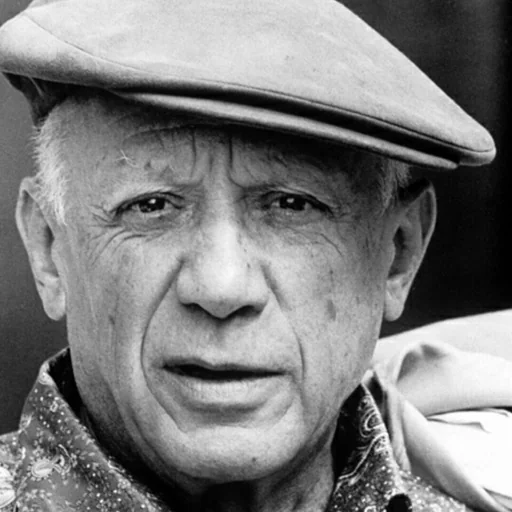
Pablo Ruiz Picasso (25 October 1881 – 8 April 1973) was a Spanish painter and sculptor who spent most of his adult life in France.