Artwork
Untitled
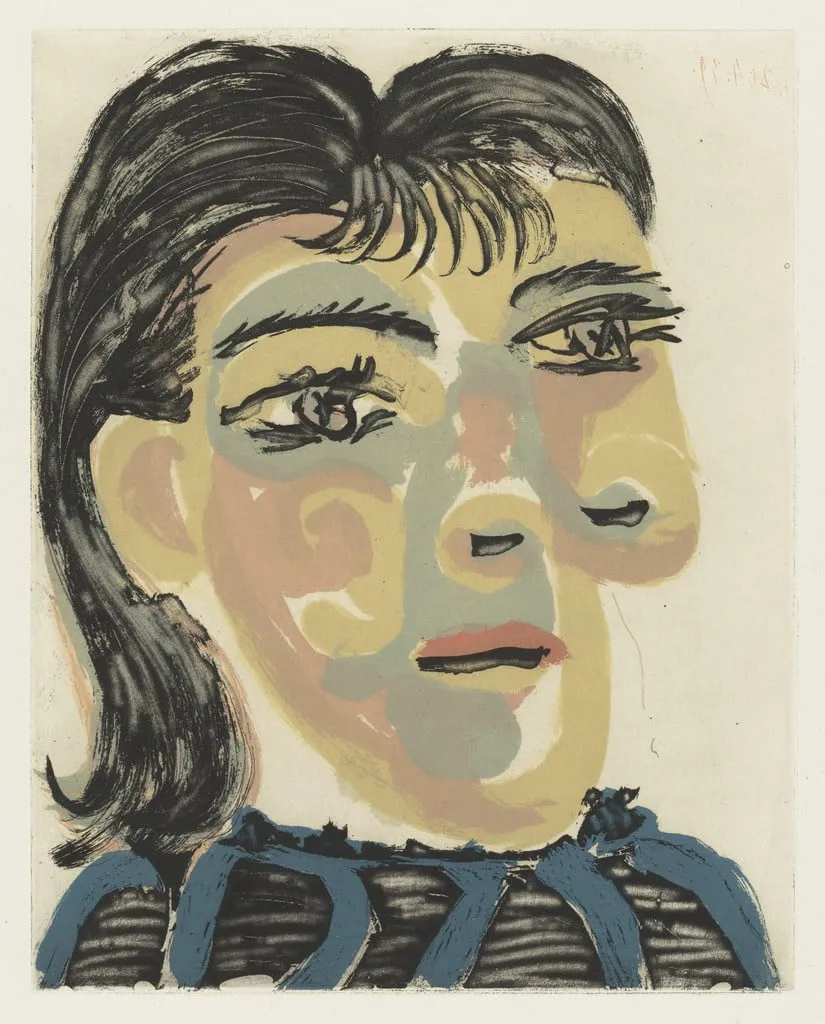
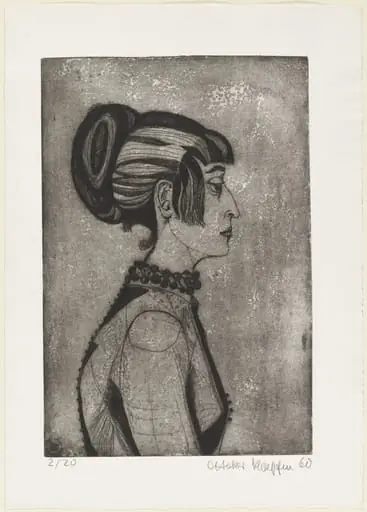
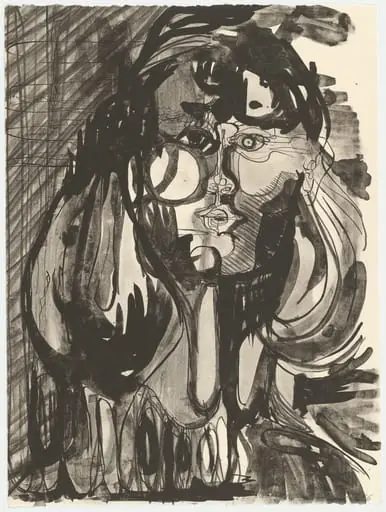
Untitled is an ink print by Pablo Picasso. It dates from 1939 and is held in the collection of the Museum of Modern Art.
About this work
Overview
Created in 1939, this print by Pablo Picasso combines aquatint and drypoint to produce a delicate yet expressive portrait. Executed during a period of intense artistic output, the work reflects Picasso’s ongoing engagement with printmaking. It is held in the collection of The Museum of Modern Art, where it contributes to the institution’s broader representation of modernist graphic work.
Subject & Meaning
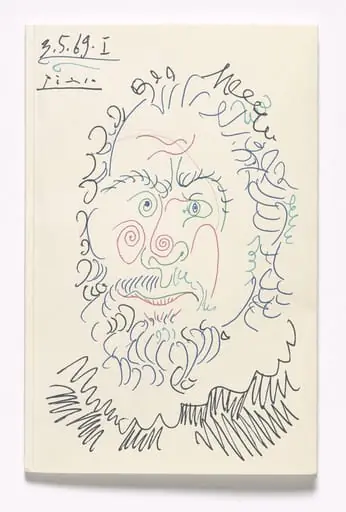
The image depicts a woman with simplified facial features: large eyes, thin lips, and a high-collared dark top.
The image depicts a woman with simplified facial features: large eyes, thin lips, and a high-collared dark top. Her hair is drawn in loose, flowing lines, pulled back to emphasize the structure of her face. The absence of contextual detail and the flattened rendering suggest an introspective focus on form rather than narrative, aligning with Picasso’s interest in psychological presence over literal representation.
Technique & Style
Picasso employed aquatint for subtle tonal gradations and drypoint for sharp, incised lines, creating a contrast between soft shadows and bold contours. The surface is marked by rapid, gestural strokes that reject smooth modeling in favor of energetic, almost spontaneous mark-making. This approach prioritizes emotional immediacy over polished finish, characteristic of his experimental phase in the late 1930s.
History & Provenance
The print was made in 1939, during Picasso’s years in France, a time when his work increasingly turned toward intimate, personal subjects amid rising political tensions in Europe. It entered the collection of The Museum of Modern Art in the decades following its creation, where it has remained part of the permanent holdings, often displayed in exhibitions focused on modern printmaking.
Context
In 1939, Picasso was deeply immersed in printmaking while also responding to the upheavals of the Spanish Civil War and the approach of World War II. Though this work lacks overt political symbolism, its restrained intensity reflects a broader shift in his art toward psychological depth and formal economy, moving away from the fragmentation of Cubism toward more direct, emotive imagery.
Legacy
This print exemplifies Picasso’s enduring influence on 20th-century printmaking, demonstrating how traditional techniques could be reimagined through expressive, non-naturalistic means. Its inclusion in major museum collections underscores its role in expanding the possibilities of the graphic medium, influencing generations of artists who valued emotional resonance over technical perfection.
Artist & collection
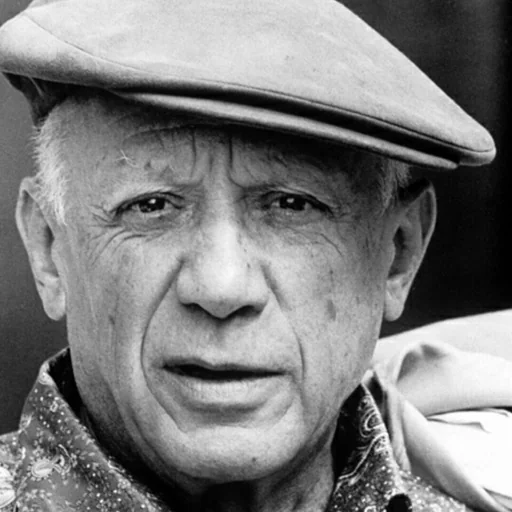
Artist
Pablo Ruiz Picasso (25 October 1881 – 8 April 1973) was a Spanish painter and sculptor who spent most of his adult life in France.