Artwork
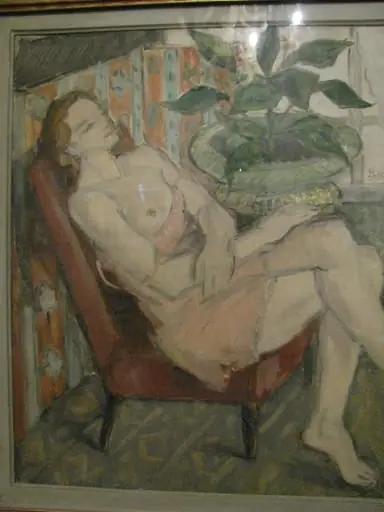
Nud în fotoliu oranj
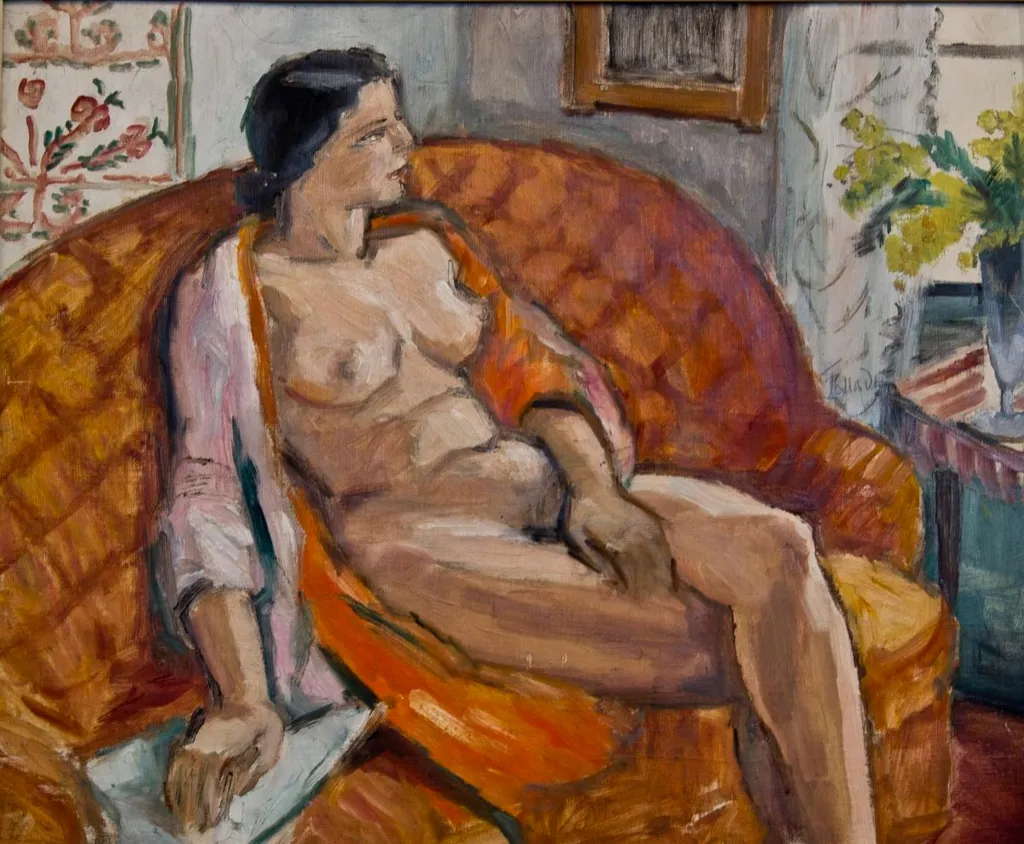
Nud în fotoliu oranj is a print by Theodor Pallady. It dates from 1921 and is held in the collection of the National Museum of Art of Romania.
About this work
Overview
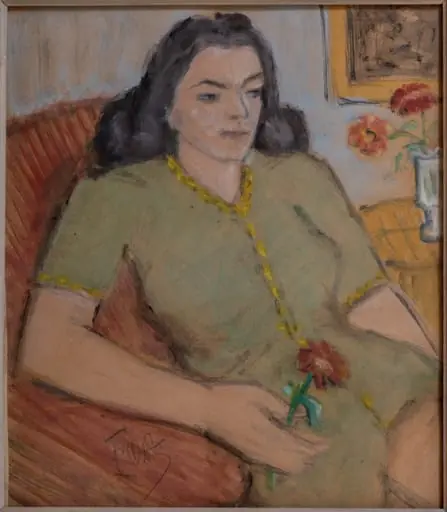
The composition centers on the subject’s relaxed posture against a vividly colored armchair, with natural light filtering through a nearby window.
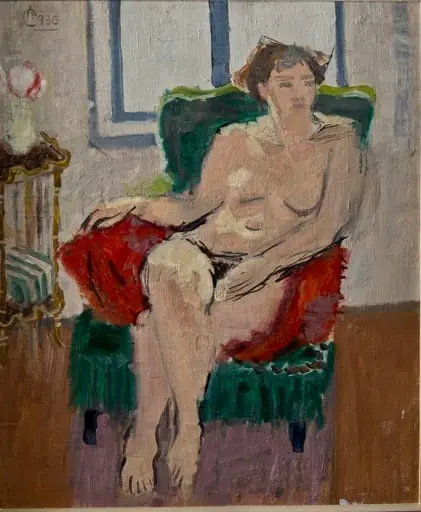
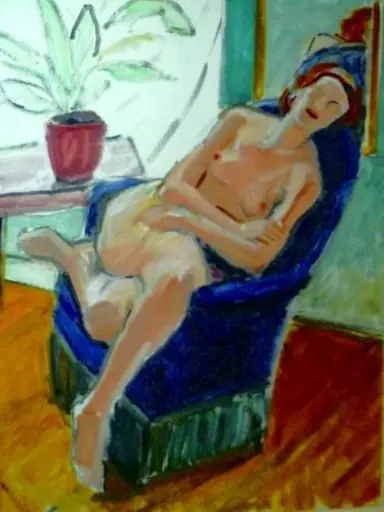
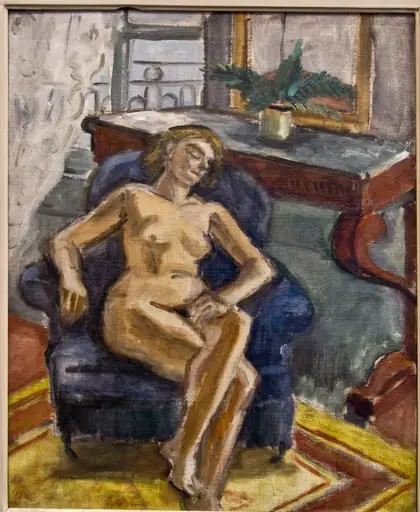
Painted around 1921 by Theodor Pallady, Nud în fotoliu oranj depicts a reclining female figure in an interior setting. The composition centers on the subject’s relaxed posture against a vividly colored armchair, with natural light filtering through a nearby window. The work exemplifies Pallady’s engagement with post-impressionist sensibilities, blending observed reality with expressive color and texture.
Subject & Meaning
The figure, partially clothed and at ease, conveys intimacy rather than overt sensuality. Her pose suggests quiet contemplation, framed by domestic elements like the window and floral arrangement. The absence of narrative context invites focus on the human form in repose, emphasizing presence over story. The lighting and arrangement imply a private, unguarded moment, typical of Pallady’s interest in personal, interior worlds.
Technique & Style
Pallady employed thick, textured brushwork to build form and atmosphere, particularly in the chair’s saturated orange surface. The contrast between the warm tones of the upholstery and the cooler light on the skin creates a tactile sense of volume. Subtle chiaroscuro defines the figure’s contours without harsh outlines, relying instead on gradations of tone to suggest depth and softness.
History & Provenance
Created during Pallady’s mature period in Paris, the painting reflects his synthesis of Romanian sensibility with French modernist trends. It remained in private collections for much of the 20th century before entering institutional holdings. Documentation is limited, but its date aligns with a phase in which Pallady increasingly explored figure studies within domestic interiors.
Context
In early 20th-century European art, depictions of the nude often moved away from classical idealism toward psychological and atmospheric realism. Pallady’s work fits within this shift, paralleling contemporaries like Matisse and Bonnard in their focus on interior light and personal space. The painting avoids overt symbolism, instead grounding its impact in sensory observation and quiet composition.
Legacy
Nud în fotoliu oranj stands as a representative example of Pallady’s contribution to Romanian modernism, bridging Eastern European traditions with Western avant-garde approaches. Its emphasis on color, texture, and intimate subject matter influenced later generations of Romanian painters seeking to articulate personal experience through modernist means, without resorting to overt political or narrative content.
Artist & collection