Artwork
Peisaj
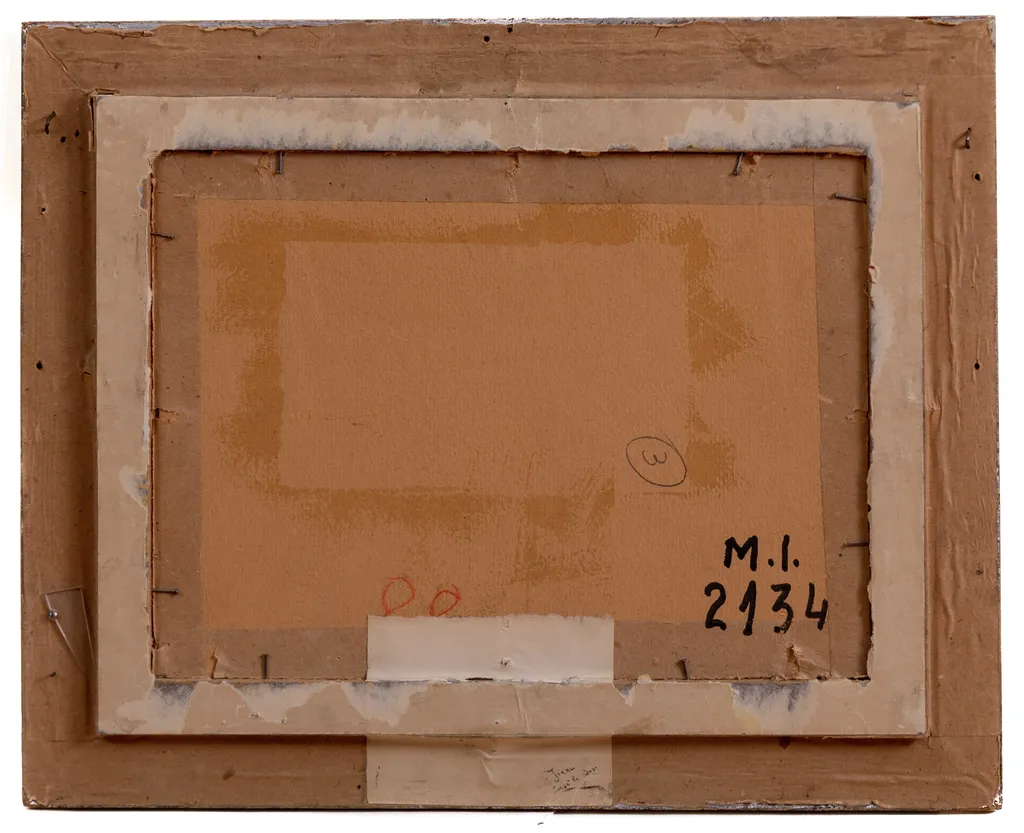
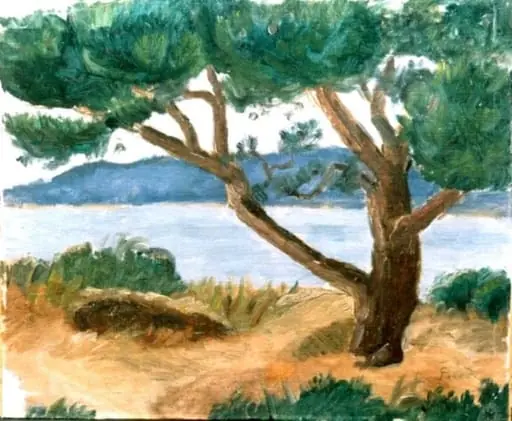
Peisaj is an unspecified painting by Theodor Pallady. It dates from 1850 and is held in the collection of the Moldova National Museum Complex.
About this work
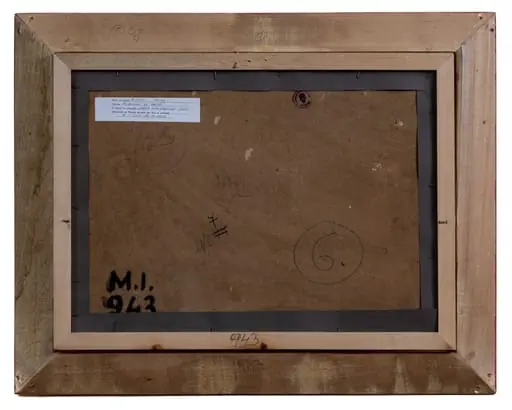
There’s a small white strip of paper taped near the bottom, and a few handwritten marks like "M.
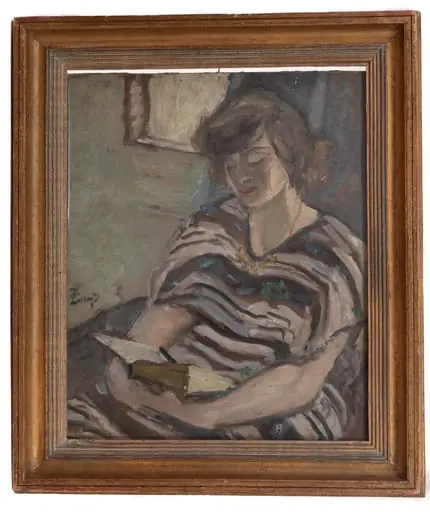
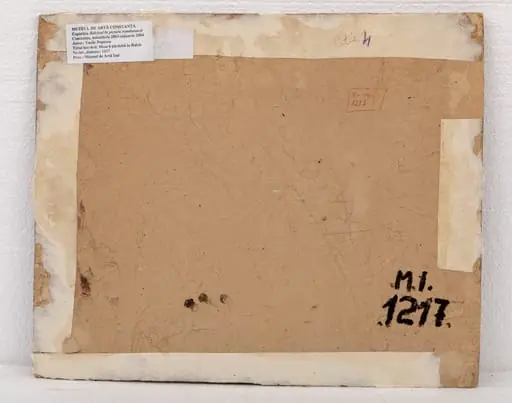
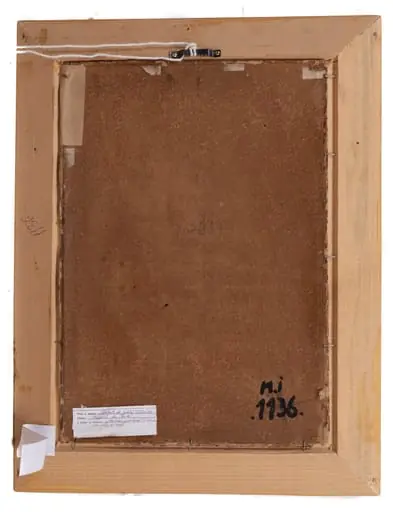
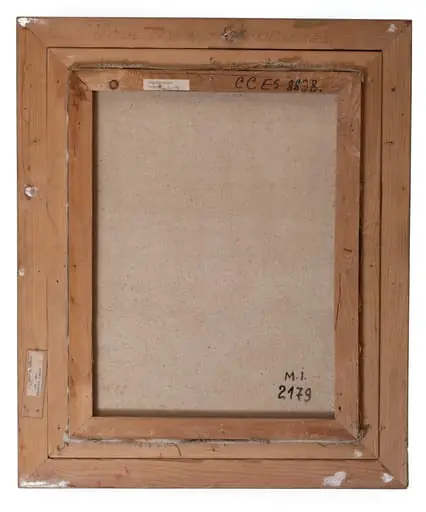
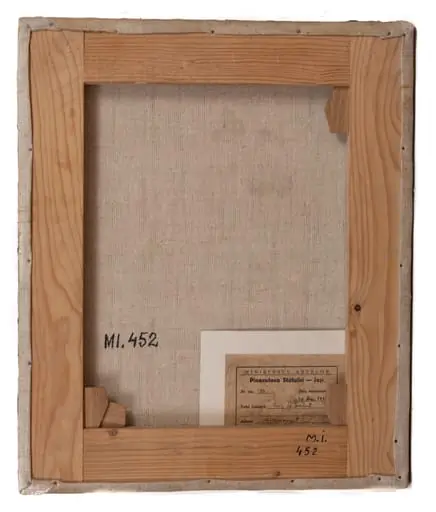
This is an empty painting frame with a faded brown border. The canvas inside is blank, showing only a light beige color. There’s a small white strip of paper taped near the bottom, and a few handwritten marks like "M.I. 2134" and a circled number 3.
The painting is titled *Peisaj*, which means "landscape" in Romanian. The artist, Theodor Pallady, often worked with simple, muted tones.
Look up Pallady, Theodor to see how he used empty spaces in his work.
Overview
Peisaj, attributed to Theodor Pallady and dated around 1850, presents an unconventional visual field: a frame with a faded brown border encloses a canvas of uniform light beige. The surface is essentially empty, punctuated only by a small white paper strip affixed near the bottom, bearing faint handwritten annotations such as “M.I. 2134” and a circled numeral three.
Subject & Meaning
The Romanian title translates to “landscape,” yet the work offers no representational scenery. By foregrounding absence, Pallady invites contemplation of the notion of landscape as an imagined or internal space, suggesting that the essence of a view can reside in the viewer’s mind rather than in depicted forms.
Technique & Style
Executed with muted, restrained tones, the piece relies on the subtle contrast between the beige ground and the darker border. The minimal intervention—a taped paper fragment and faint markings—highlights Pallady’s interest in the poetics of emptiness and the deliberate use of negative space as a compositional element.
History & Provenance
The work is catalogued under the reference “M.I. 2134,” indicating its inclusion in a museum inventory system. The circled number three may denote a series or a specific entry within that collection, though further archival details remain limited.
Context
Pallady’s broader oeuvre frequently explores simplicity and tonal restraint, often employing sparse compositions that foreground the materiality of the canvas. Peisaj aligns with this trajectory, reflecting early 20th‑century Romanian artistic currents that emphasized introspection over overt representation.
Legacy
While unconventional, Peisaj contributes to ongoing discussions about the role of void in visual art, resonating with later minimalist practices that treat the absence of image as a deliberate statement about perception and the boundaries of painting.
Artist & collection