Artwork
Odaliscă
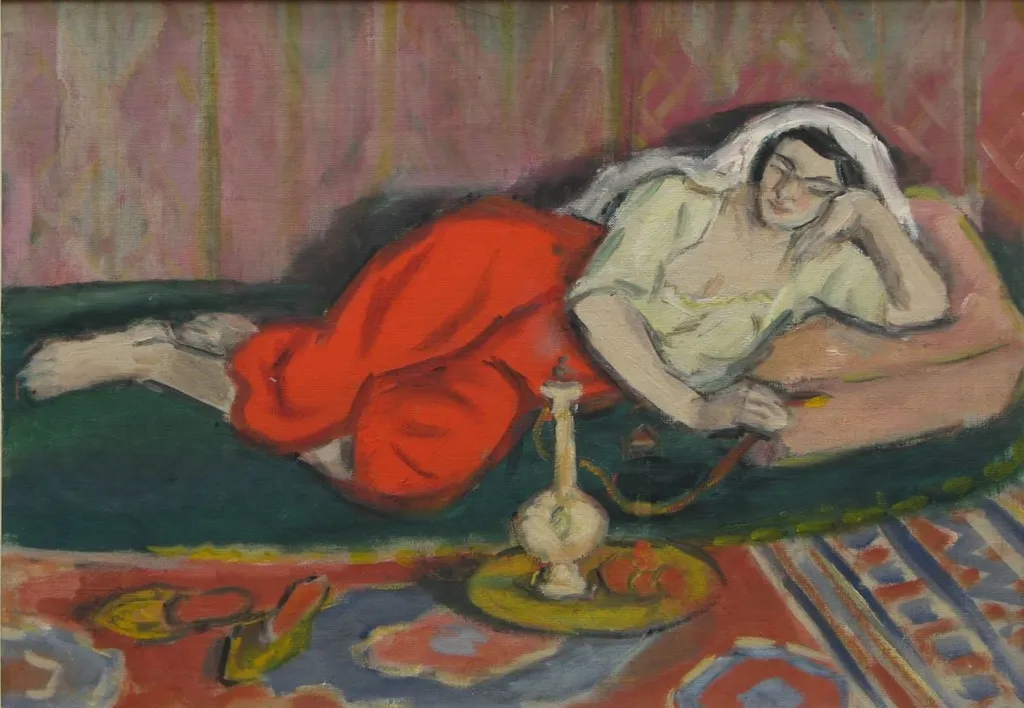
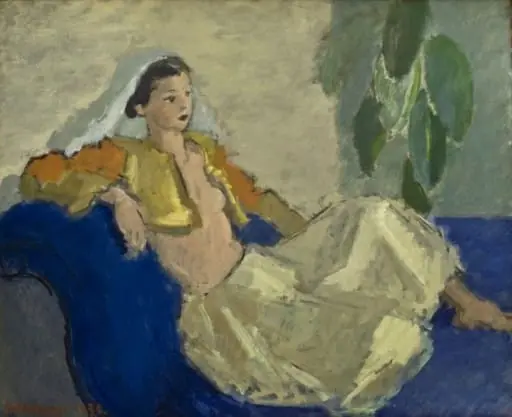
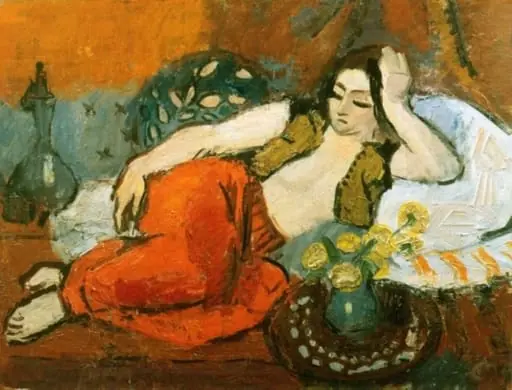
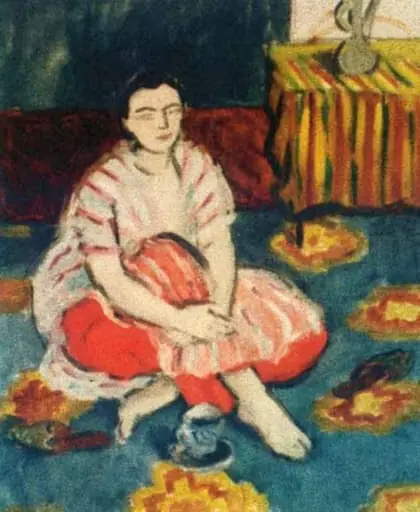
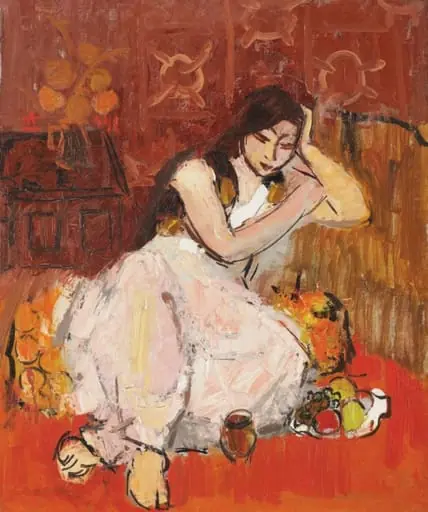
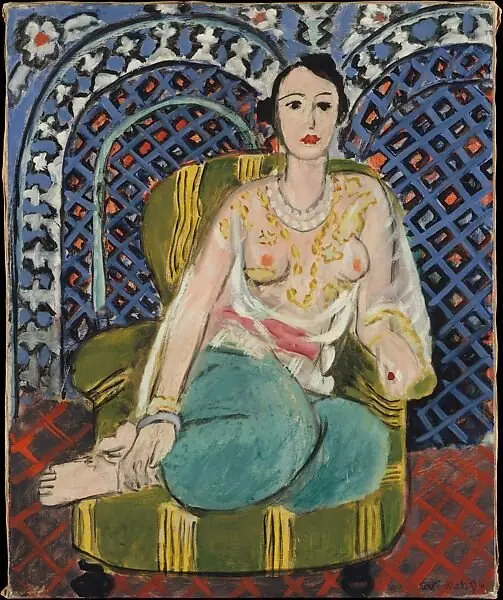
Odaliscă is a print by Theodor Pallady. It dates from 1921 and is held in the collection of the Brukenthal National Museum.
About this work
Overview
Pallady’s focus on domestic intimacy reflects his interest in personal, contemplative moments rather than grand narratives.
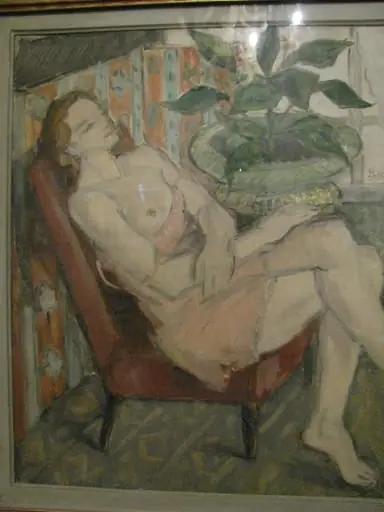
Odaliscă, painted by Theodor Pallady around 1921, is a quiet interior scene centered on a reclining woman. The composition is restrained yet deliberate, emphasizing stillness and subtle color harmonies. Pallady’s focus on domestic intimacy reflects his interest in personal, contemplative moments rather than grand narratives. The work belongs to a series of interior studies he developed during his time in Paris, where he absorbed influences from both Eastern European traditions and French modernism.
Subject & Meaning
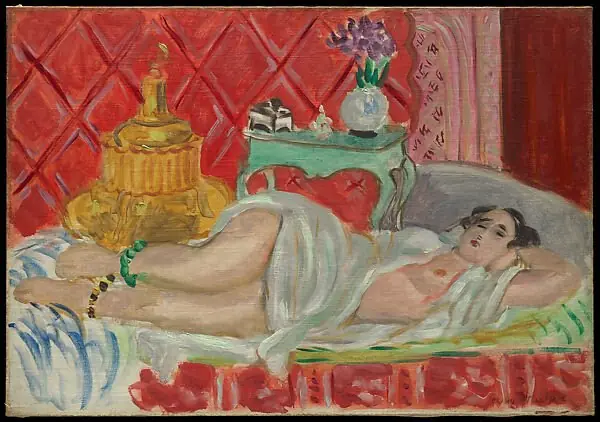
The figure, dressed in a red skirt and white blouse, rests with calm composure on a low couch, her head supported by her right hand and partially veiled in white fabric. Her posture suggests repose, not theatricality, avoiding the exoticized tropes common in Orientalist depictions. The absence of narrative context invites quiet reflection rather than storytelling. The painting conveys a sense of private serenity, rooted in the artist’s sensitivity to personal space and the dignity of everyday presence.
Technique & Style
Pallady employs soft brushwork and muted tonal transitions to render form and texture. The woman’s clothing and the rug’s patterns are suggested rather than sharply defined, creating a sense of atmospheric cohesion. Color is used expressively but sparingly: the red skirt and vibrant rug contrast gently with the white veil and background. The vase, a minimal detail, anchors the foreground with quiet elegance. The style bridges Impressionist lightness with a more structured, almost architectural sense of composition.
History & Provenance
Created during Pallady’s mature period in Paris, Odaliscă emerged from his engagement with post-Impressionist and Symbolist currents. It remained in private collections in Romania and France before entering a public institution. The work is not widely exhibited, contributing to its understated reputation. Its survival in relatively intact condition reflects careful stewardship, though detailed documentation of its early ownership remains limited.
Context
In early 20th-century Romania, artists like Pallady sought to reconcile national identity with European modernism. Odaliscă reflects this tension: its subject evokes Eastern motifs, yet its treatment is distinctly Western in its formal restraint. Unlike Orientalist paintings that emphasized spectacle, Pallady’s approach is introspective, aligning with broader trends in interwar European art that valued psychological nuance over exoticism.
Legacy
Odaliscă exemplifies Pallady’s contribution to Romanian modernism through its quiet innovation. While not widely reproduced, it is recognized in scholarly circles as a refined example of his interior studies. The work influenced later Romanian painters who favored intimate, contemplative scenes over monumental themes. Its enduring value lies in its restraint — a testament to Pallady’s belief in the expressive power of simplicity.
Artist & collection