Artwork
Peisaj la Marsilia
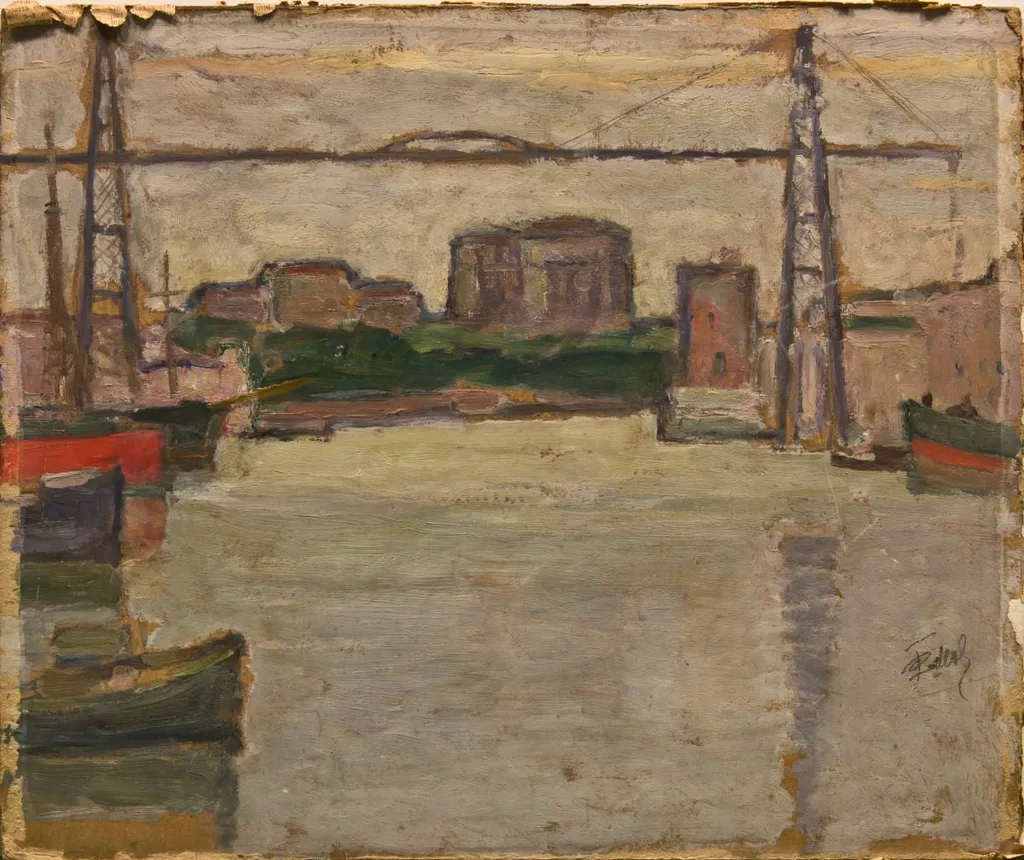
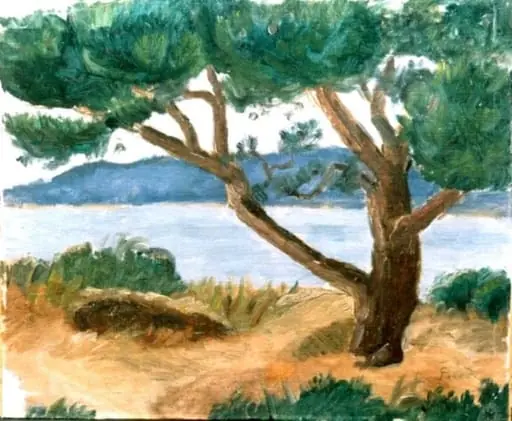
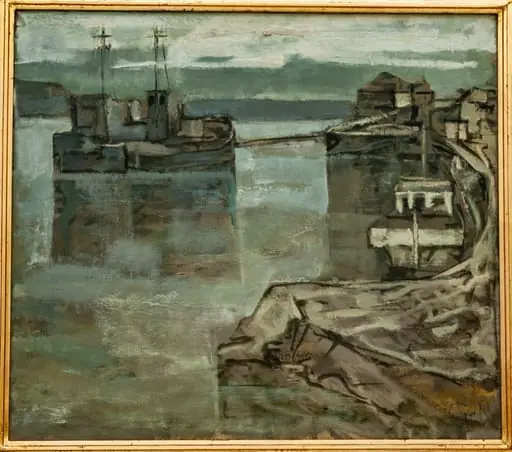
Peisaj la Marsilia is a print by Theodor Pallady. It dates from 1921 and is held in the collection of the National Museum of Art of Romania.
About this work
Overview
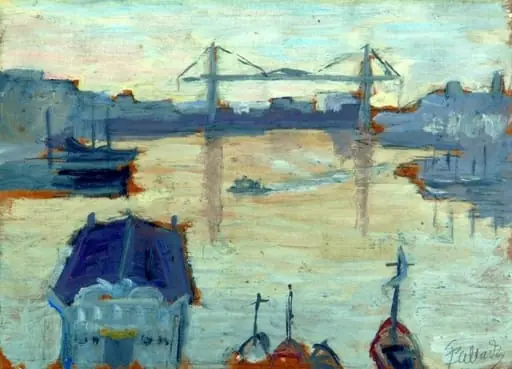
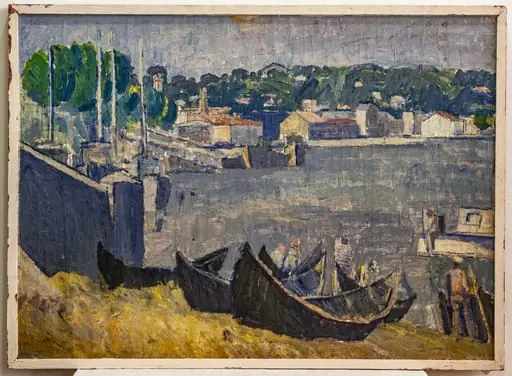
Painted around 1921 by Theodor Pallady, this work depicts a quiet harbor scene near Marseille. The composition is dominated by the water’s surface and two moored vessels, rendered with deliberate roughness. There is no idealized calm here—instead, the atmosphere feels grounded, almost weathered, as if the scene has been worn by time and sea spray.
Subject & Meaning
The painting captures a working harbor, not a tourist view. Two boats, their hulls in muted red and dark tones, rest on choppy, earth-toned waves. Behind them, sparse architecture and a slender tower suggest a modest coastal settlement. The absence of human figures and bright colors shifts focus to the quiet endurance of the place, emphasizing labor and isolation over spectacle.
Technique & Style
Pallady applied paint thickly and unevenly, using impasto to build texture across the surface. Brushstrokes are visible and unrefined, rejecting smooth finishes in favor of tactile immediacy. The palette is restrained—ochres, browns, and muted reds—creating a somber, atmospheric tone. The lack of highlights or glossy detail reinforces the scene’s raw, unvarnished character.
History & Provenance
Created during Pallady’s time in France, this work reflects his engagement with post-impressionist and early modernist tendencies. Though not widely exhibited at the time, it aligns with his broader interest in Mediterranean landscapes and the materiality of paint. Its survival suggests private ownership, likely within Romanian or French collector circles, though public records remain sparse.
Context
In the early 1920s, European artists were moving away from academic precision toward expressive, material-focused techniques. Pallady’s approach here echoes contemporaries like Cézanne and the Fauves, who valued emotional resonance over realism. Marseille, as a port city, offered a subject rich in industrial grit—fitting for an artist exploring the physicality of paint and place.
Legacy
This painting contributes to Pallady’s reputation as a bridge between Romanian modernism and French avant-garde practices. Its unpolished aesthetic anticipates later post-war tendencies that valued gesture and texture over polish. While not widely reproduced, it remains a quiet example of how Mediterranean subjects were reimagined through a distinctly personal, tactile lens.
Artist & collection