Artwork
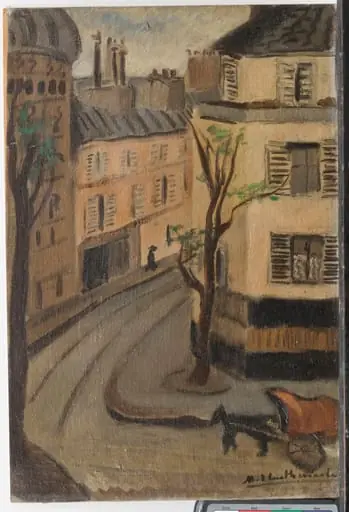
Peisaj la Paris – Place Dauphine
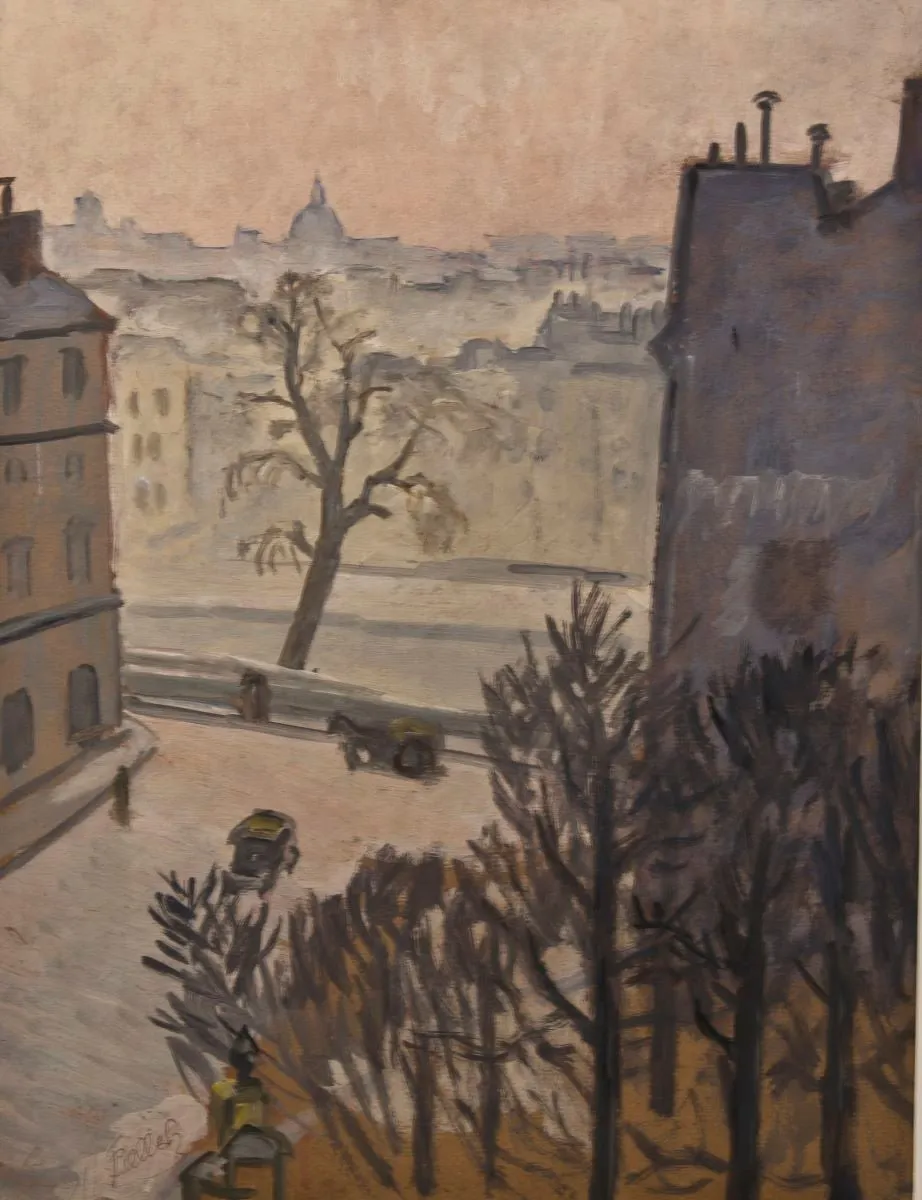
Peisaj la Paris – Place Dauphine is a print by Theodor Pallady. It dates from 1921 and is held in the collection of the National Museum of Art of Romania.
About this work
Overview
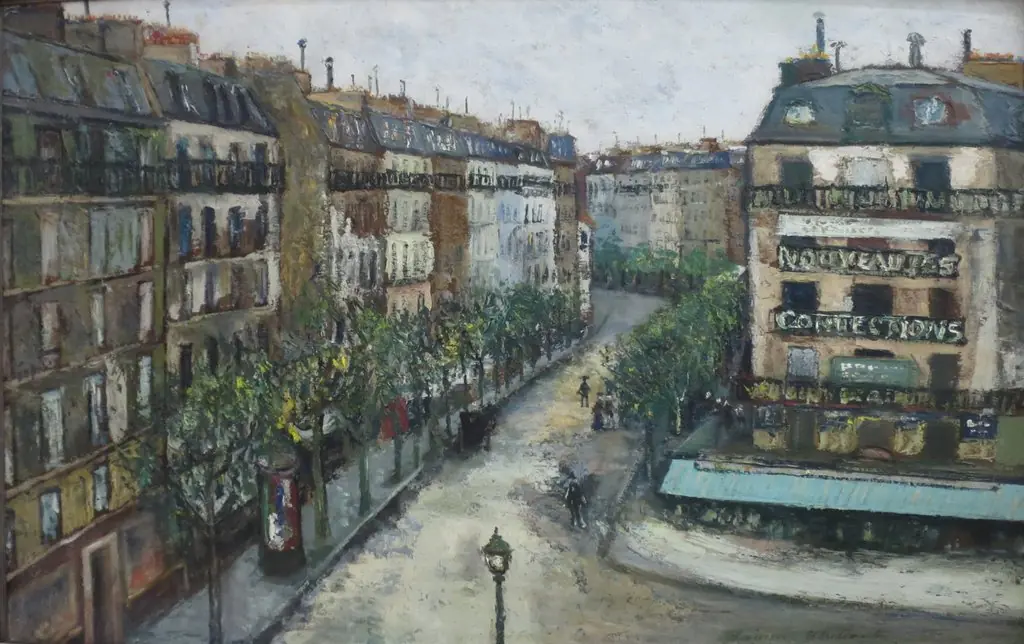
Painted around 1921 by Theodor Pallady, this work captures a quiet stretch of Paris’s Place Dauphine from an elevated viewpoint. The composition emphasizes stillness and spatial depth, with buildings framing the scene and a distant river anchoring the horizon. The muted palette and loose brushwork convey a sense of early spring or late autumn, when the city feels suspended between seasons.
Subject & Meaning
The scene depicts a modest urban corridor, devoid of human figures, where a single horse-drawn cart moves along a gentle incline. The absence of activity invites contemplation rather than narrative. Leafless trees and uniform rooftops suggest order and quiet endurance, reflecting a moment of pause in the rhythm of city life, perhaps evoking the lingering calm after wartime upheaval.
Technique & Style
Pallady employed swift, fluid brushstrokes to suggest the motion of the cart and the texture of bare branches, while the buildings and sky are rendered with softer, more blended touches. The limited color range—soft grays, muted browns, and pale blues—enhances the atmospheric stillness. The technique balances spontaneity with restraint, avoiding detail in favor of mood and spatial harmony.
History & Provenance
Created during Pallady’s mature period in Paris, the painting reflects his engagement with the city’s evolving urban fabric after his return from studies abroad. Though specific ownership history is not widely documented, the work aligns with his broader interest in capturing everyday Parisian landscapes with emotional subtlety rather than grandeur.
Context
In the early 1920s, Paris was recovering from the First World War, and artists increasingly turned to quiet, unheroic scenes as a counterpoint to earlier romanticized views of the city. Pallady’s depiction of Place Dauphine fits within this trend, offering a restrained, almost meditative perspective on urban life that contrasts with the dynamism of contemporary modernist movements.
Legacy
The painting contributes to Pallady’s reputation as a painter of subtle, introspective urban views. While not widely exhibited, it remains a representative example of his synthesis of Romanian sensibility with French Impressionist and Post-Impressionist influences. Its quiet tone continues to resonate in studies of interwar European landscape painting.
Artist & collection