Artwork
The Triumph of Bacchus
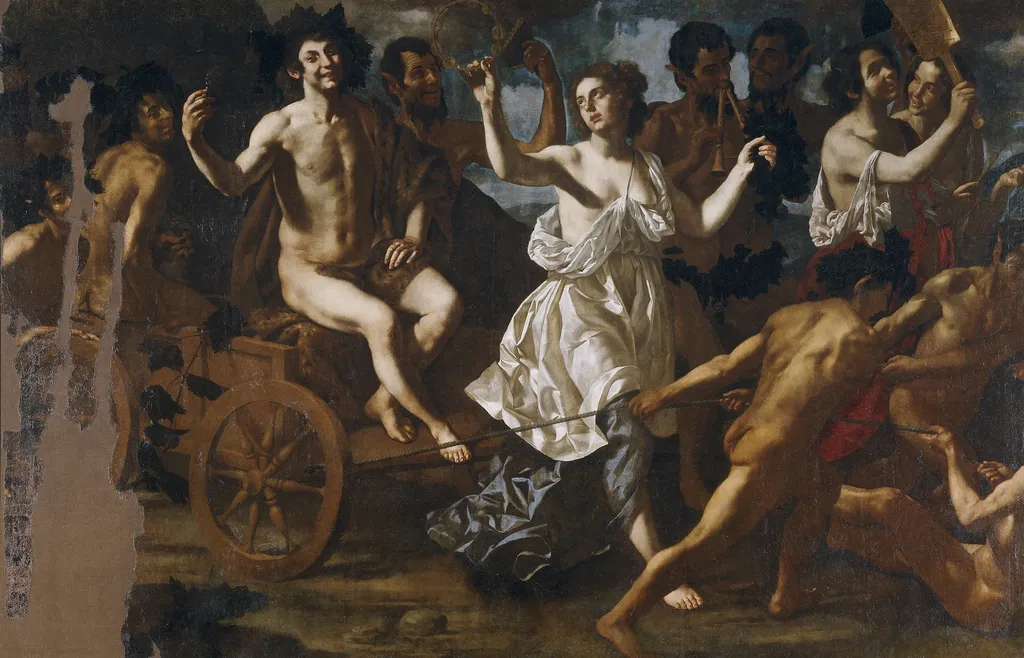
The Triumph of Bacchus is an oil painting by the Early Baroque Italian artist Paolo Domenico Finoglia. It dates from 1635 and is held in the collection of the Museo del Prado.
About this work
Overview
Created in 1635 by the southern‑Italian Baroque painter Paolo Domenico Finoglia, this oil on canvas presents a festive procession centered on the Roman deity of wine. The composition captures a moment of revelry, with a chariot drawn by two attendants and a group of exuberant figures surrounding the central god. The work is part of the Prado Museum’s collection.
Subject & Meaning
The scene illustrates Bacchus, the god of viticulture, presiding over a celebratory march. A woman, likely a personification of Victory or a maenad, stands in a flowing white garment, clutching a staff and crowned with foliage, while nude musicians and dancers brandish cups and instruments, emphasizing the themes of abundance, intoxication and communal joy associated with the deity.
Technique & Style
Finoglia employs a dramatic chiaroscuro, contrasting illuminated flesh tones with a deep, shadowy landscape that recedes into rocky terrain. The strong light source highlights the central figures, giving them a three‑dimensional presence. Loose brushwork and dynamic poses convey movement, while the rich coloration and careful rendering of textures reflect early Baroque sensibilities.
History & Provenance
The painting was executed during Finoglia’s mature period, when he was active in the Kingdom of Naples. After remaining in private hands for centuries, it entered the Museo del Prado’s holdings, where it has been displayed as part of the museum’s Italian Baroque collection, offering insight into the regional variations of the style.
Own this work as a print
Artist & collection
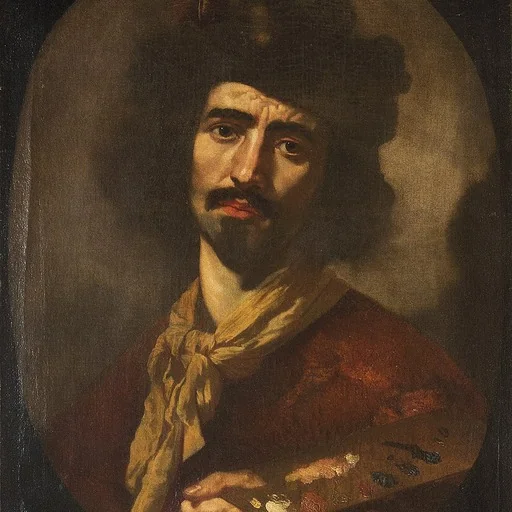
Artist
Paolo Domenico Finoglia, or Finoglio (c. 1590 – 1645), was an Italian painter of the early-Baroque period, active mainly in South Italy, including Naples and towns in Apulia.