Artwork
Mutual love (Golden Age)
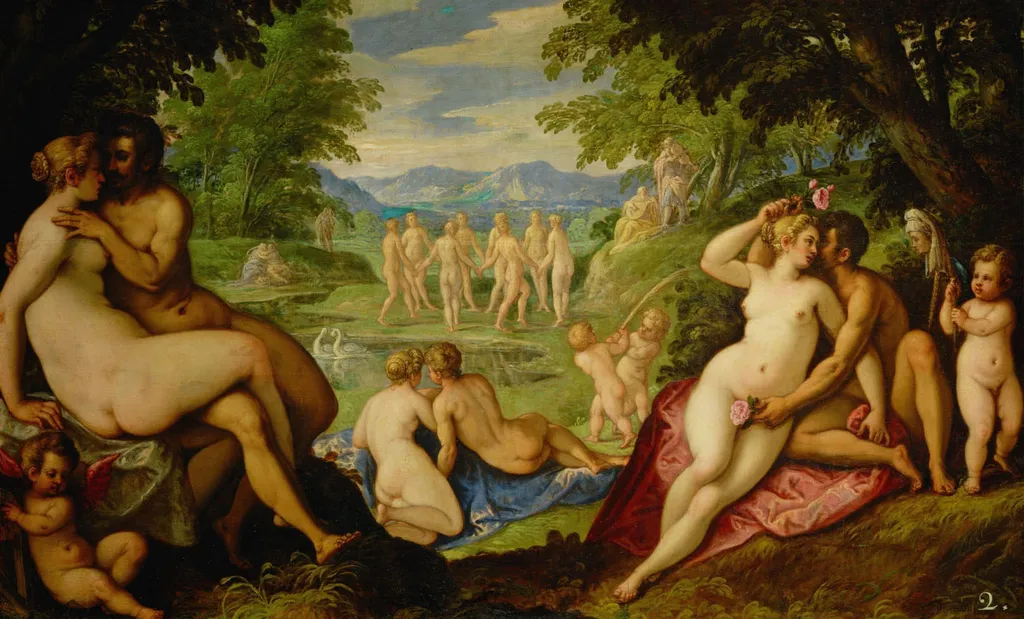
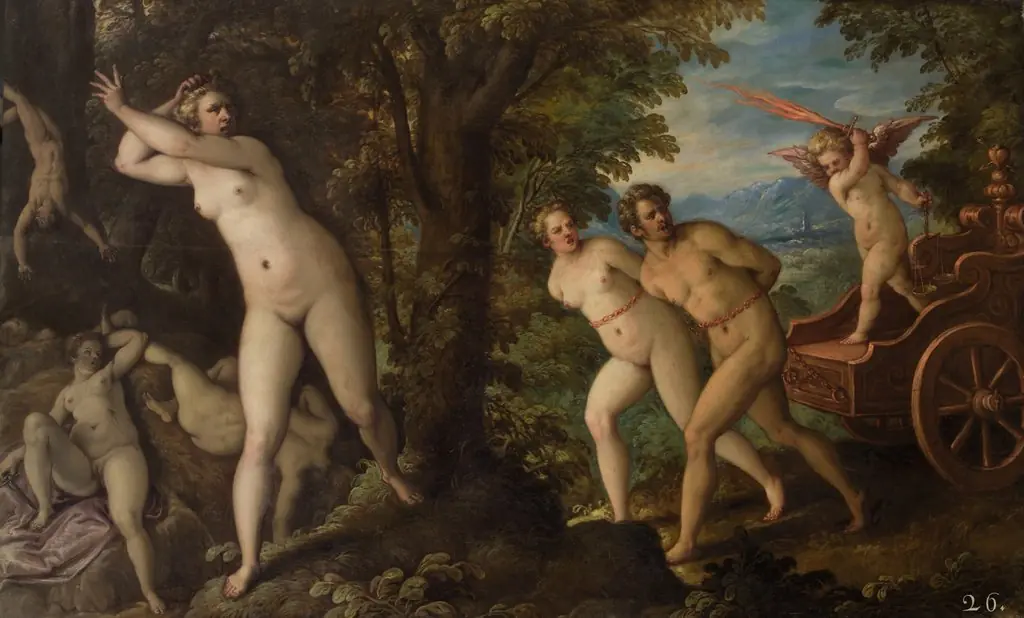
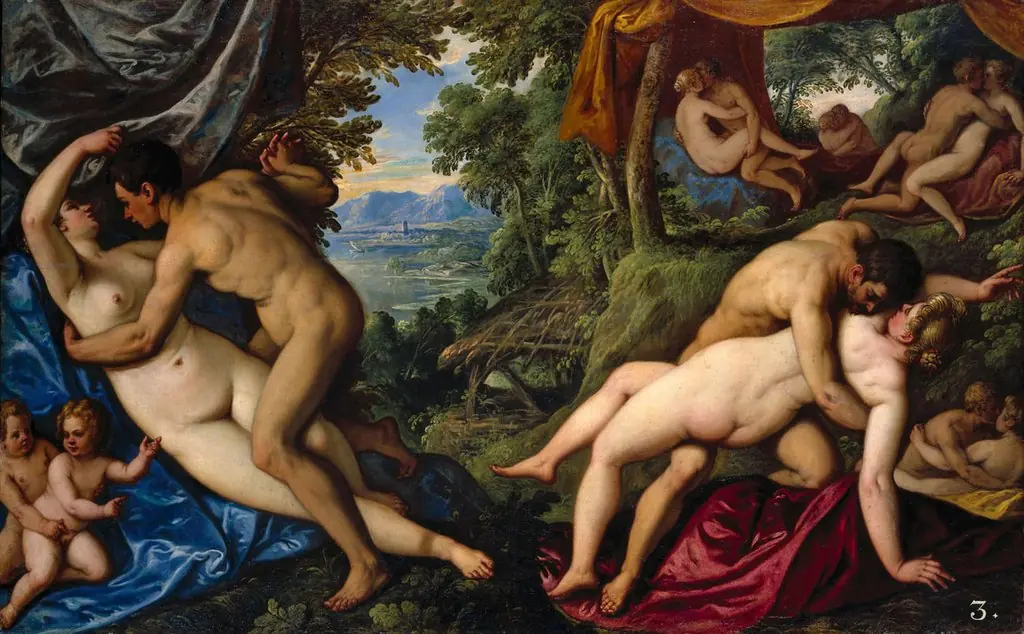
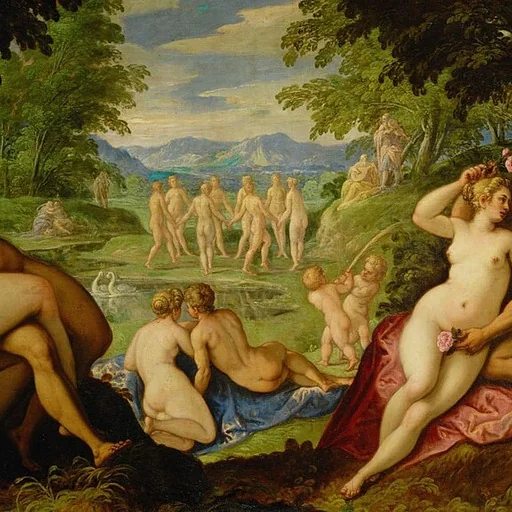
Mutual love (Golden Age) is an oil painting by the Early Baroque Italian artist Paolo Fiammingo. It dates from 1593 and is held in the collection of the Kunsthistorisches Museum.
About this work
Overview
Painted in 1593 by the Flemish artist Paolo Fiammingo, this oil-on-canvas work reflects the synthesis of Northern European technique and Venetian colorism.
Painted in 1593 by the Flemish artist Paolo Fiammingo, this oil-on-canvas work reflects the synthesis of Northern European technique and Venetian colorism. Active in Venice under the names Pauwels Franck or Paolo Franceschi, Fiammingo adapted Italian Mannerist conventions to create a harmonious, lyrical scene. The painting is held in the Kunsthistorisches Museum, Vienna, as part of its Renaissance and early Baroque collection.
Subject & Meaning
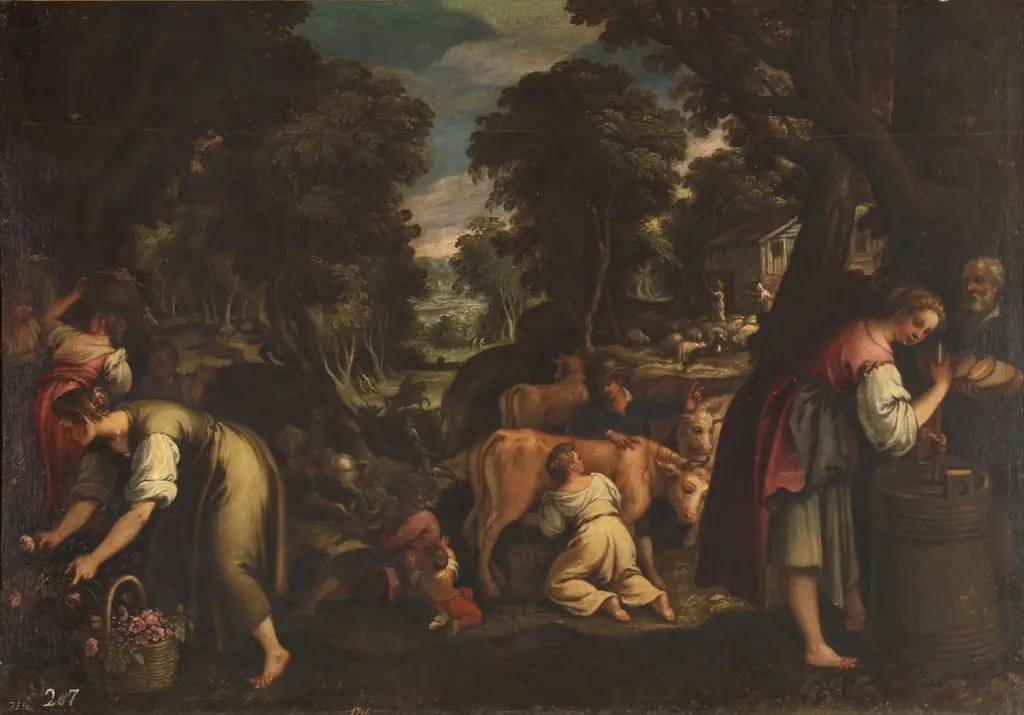
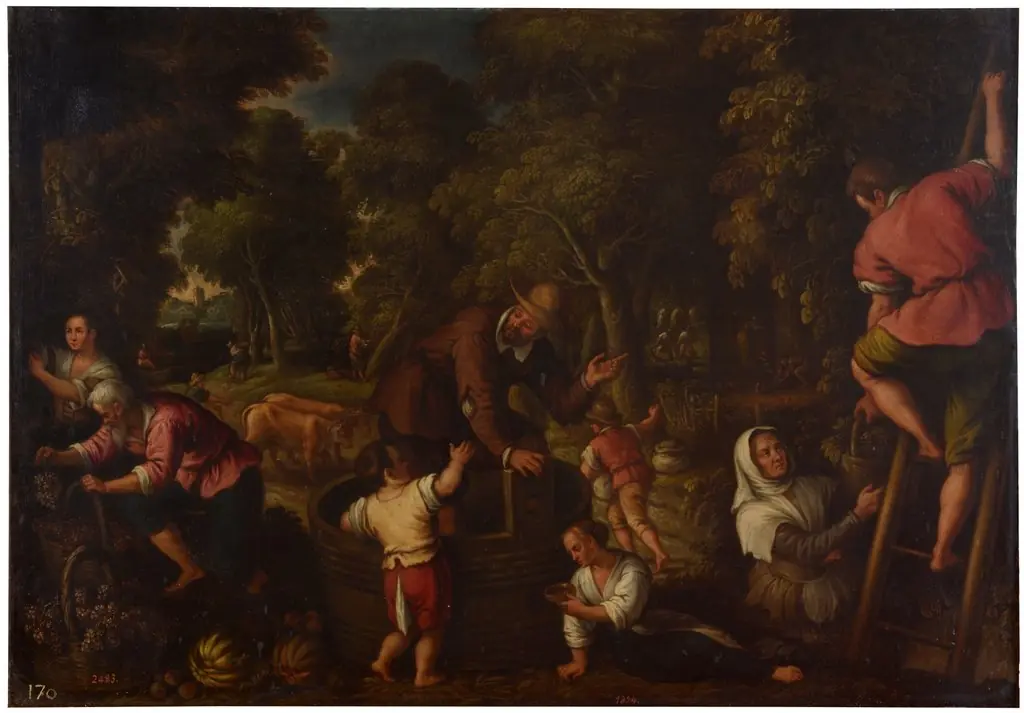
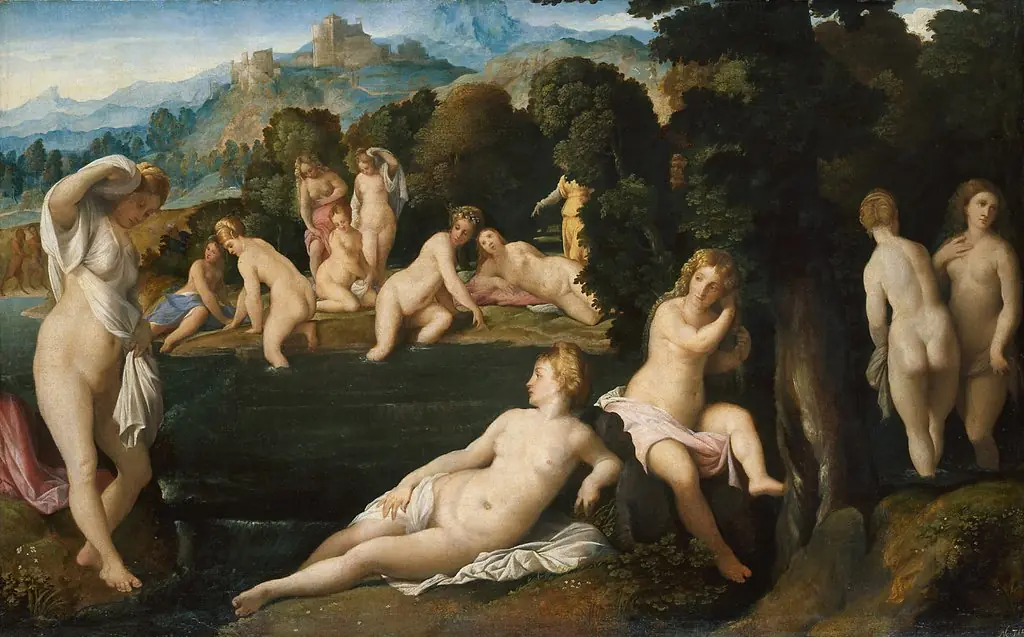
The scene presents an allegory of harmony and innocence, evoking the mythological Golden Age. A central couple embraces amid a tranquil landscape, while children play nearby and figures in varying states of dress interact gently. The pink flower held by the woman suggests fertility or affection, reinforcing themes of natural love and peace. The composition avoids overt narrative, favoring a serene, idealized vision of human coexistence.
Technique & Style
Fiammingo employed oil paint with subtle gradations to render soft atmospheric effects, drawing from Venetian masters like Veronese and Tintoretto. The brushwork is refined yet fluid, with delicate modeling of flesh and fabric. The landscape is rendered in muted greens, blues, and earth tones, creating a cohesive, dreamlike space. Figures are arranged in a balanced, rhythmic composition, characteristic of Mannerist elegance without excessive distortion.
History & Provenance
Commissioned during Fiammingo’s time in Venice, the painting entered the Habsburg collections by the late 16th or early 17th century. It has remained in imperial holdings since, eventually finding a permanent home in the Kunsthistorisches Museum. Its continuous presence in royal collections suggests early recognition of its aesthetic quality, though it was never widely reproduced or publicly exhibited until modern times.
Context
Created during the transition from Mannerism to early Baroque, the work reflects Venice’s role as a cultural crossroads. Flemish artists like Fiammingo brought northern attention to detail into Italianate compositions, blending mythological themes with naturalistic landscapes. This piece aligns with contemporary Venetian interest in pastoral allegories, yet retains a quiet, intimate tone distinct from the grandeur of contemporaries like Titian or Tintoretto.
Legacy
Though not widely influential in shaping major artistic movements, the painting exemplifies the quiet sophistication of Northern artists working in Italy. It remains a representative example of how Flemish sensibilities adapted to Venetian color and composition. Today, it is studied for its nuanced portrayal of human interaction and its role in the broader dialogue between Northern and Southern European traditions.
Own this work as a print
Artist & collection
Artist
Pauwels Franck, known in Italy as Paolo Fiammingo and Paolo Franceschi (c. 1540–1596), was a Flemish painter, who, after training in Antwerp, was active in Venice for most of his life. He is mainly known for his…