Artwork
The Crucifixion
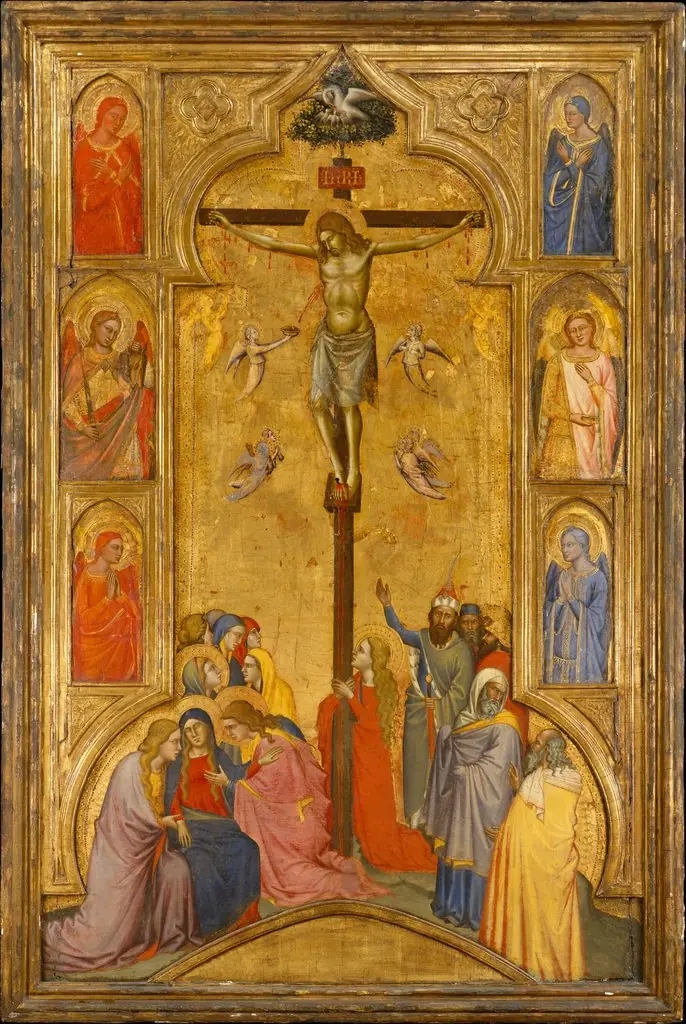
The Crucifixion is a tempera painting by the Early Renaissance artist Paolo Uccello. It dates from 1455 and is held in the collection of the Metropolitan Museum of Art.
About this work
Overview
Paolo Uccello's The Crucifixion, painted in tempera in 1455, is an Early Renaissance work depicting the central Christian narrative. This Florentine artist, recognized for his mathematical approach to visual perspective, created this piece which now resides in The Metropolitan Museum of Art. It exemplifies his broader interest in rendering spatial depth within religious subjects.
Subject & Meaning
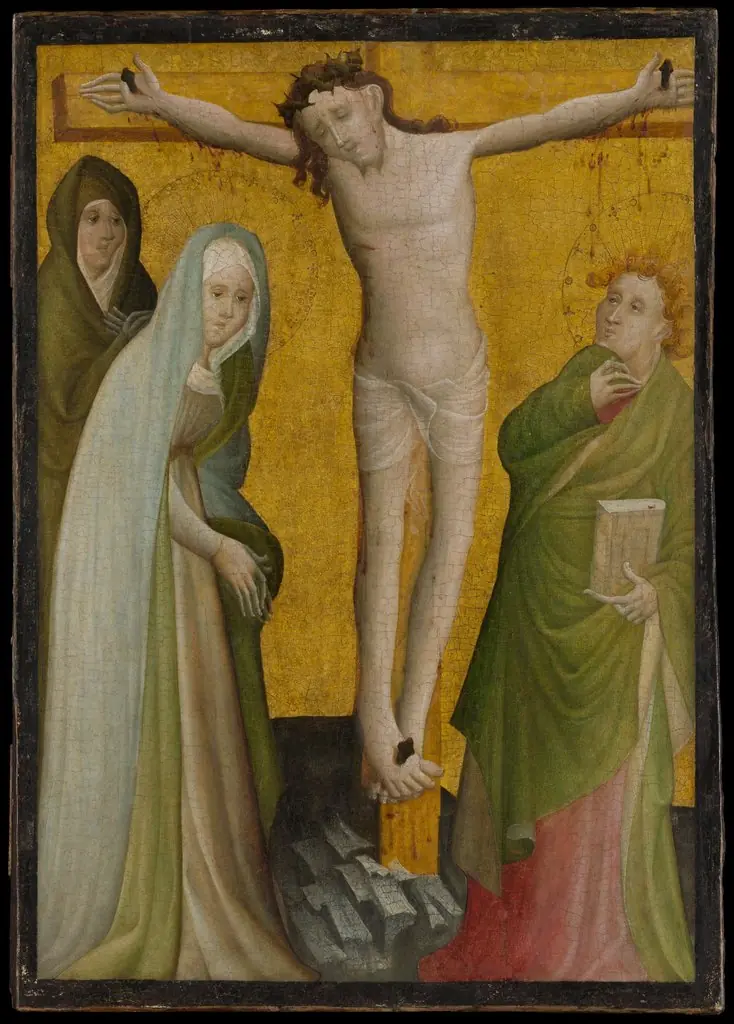
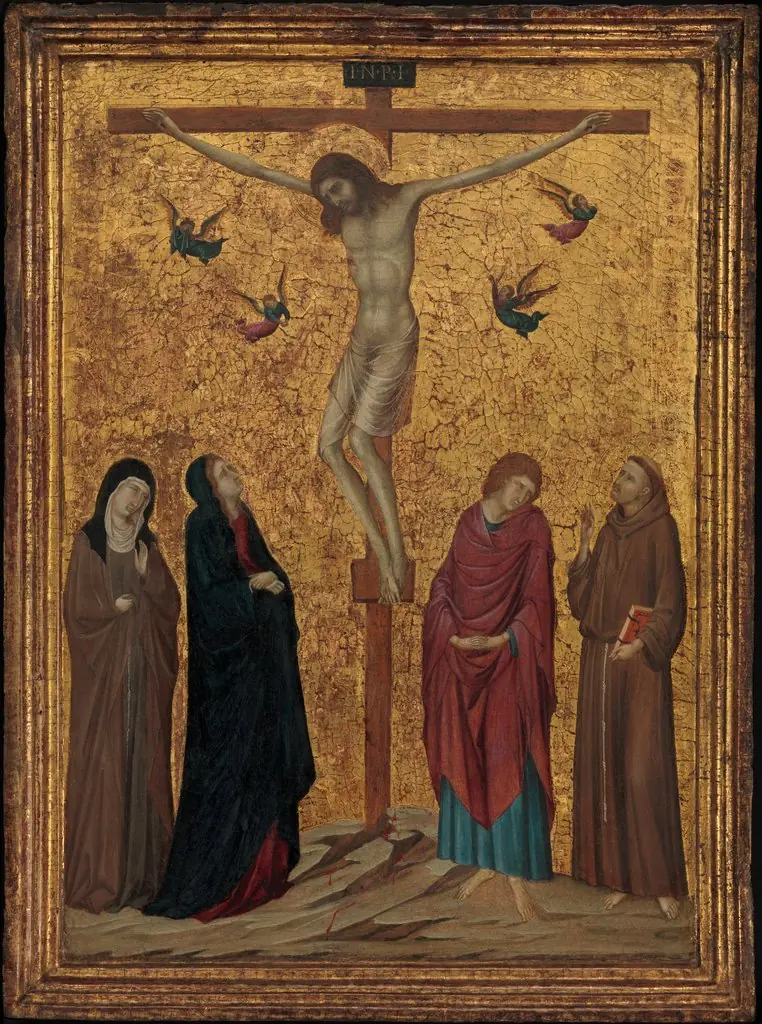
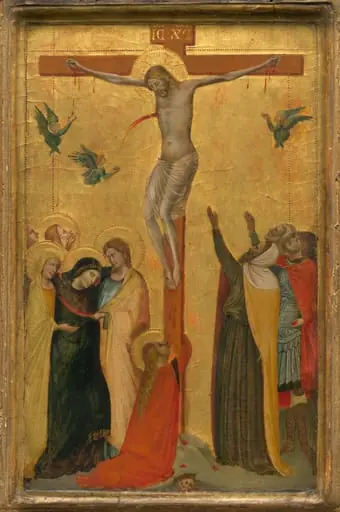
The painting centers on the figure of Christ, depicted with outstretched arms on the cross, his expression serene despite his strained posture.
The painting centers on the figure of Christ, depicted with outstretched arms on the cross, his expression serene despite his strained posture. Surrounding him are six robed individuals, some kneeling or standing, engaged in gestures of grief or contemplation. Smaller, ethereal figures appear near the cross. The pervasive gold-leaf background imbues the scene with a sense of the divine and timeless, emphasizing its sacred narrative.
Technique & Style
Uccello executed The Crucifixion using tempera, a durable medium that allowed for precise detail and vibrant, lasting colors such as deep reds, blues, and golds. The artist's renowned interest in visual perspective is evident in the composition's attempt to create an illusion of depth, a characteristic that the biographer Giorgio Vasari specifically highlighted in his writings on Uccello's work.
Context
Created during the Early Renaissance, this painting reflects the intellectual currents of 15th-century Florence. Uccello, a painter deeply engaged with mathematics, applied his rigorous studies of visual perspective to his art. This commitment to spatial rendering was a defining feature of the period and a particular focus for Uccello, influencing how he structured his religious compositions.
Artist & collection
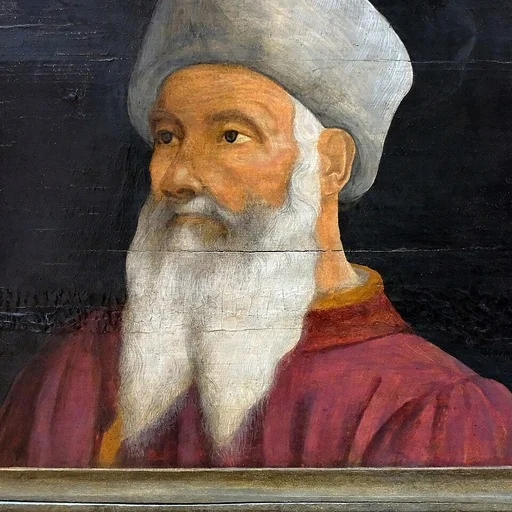
Artist
Paolo Uccello ( oo-CHEL-oh, Italian: ; 1397 – 10 December 1475), born Paolo di Dono, was an Italian Renaissance painter and mathematician from Florence who was notable for his pioneering work on visual perspective in art.