Artwork
Adoración de los Reyes Magos
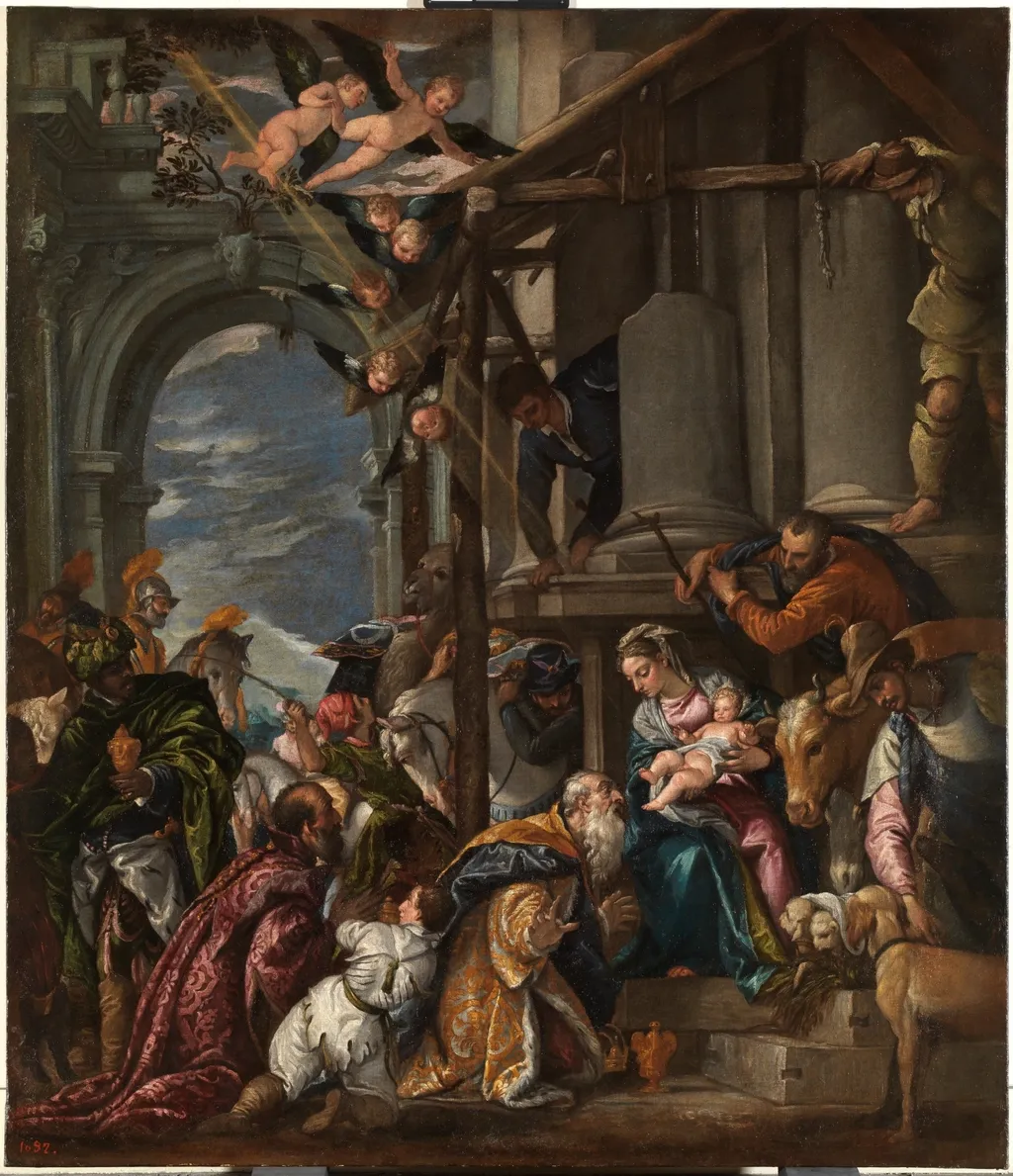
Adoración de los Reyes Magos is an oil painting by the Early Baroque Italian artist Paolo Veronese. It is held in the collection of the Museo del Prado.
About this work
Overview
Paolo Veronese’s *Adoración de los Reyes Magos*, executed in oil in 1601, presents a crowded interior scene of the biblical adoration. The composition fills a dimly lit space with figures, animals and floating cherubs, rendered in a palette of muted golds, reds and deep shadows. The work is part of the Museo del Prado’s collection.
Subject & Meaning
The painting illustrates the traditional episode of the Magi presenting their gifts to the infant Christ. Veronese arranges a diverse group—nobles in elaborate robes, humble attendants, a woman cradling a child, and an elderly kneeler—around the central act, emphasizing the universal acknowledgment of the newborn’s significance.
Technique & Style
Veronese employs a chiaroscuro effect that models faces with a subtle glow against surrounding darkness, creating a sense of movement and depth. The handling of oil paint showcases his renowned color mastery, with rich yet restrained tones that unify the bustling crowd while maintaining clarity of individual gestures.
History & Provenance
Created during the early Baroque period in Italy, the canvas reflects Veronese’s mature style after his collaborations with contemporaries such as Titian and Tintoretto. The painting entered the Museo del Prado’s holdings in the 19th century, where it remains on public display.
Context
The work belongs to a series of large‑scale religious compositions that Veronese produced for Venetian patrons. Its subject, the adoration of the Magi, was a popular motif in Counter‑Reformation art, allowing the artist to combine devotional narrative with opulent visual splendor.
Own this work as a print
Artist & collection
Artist
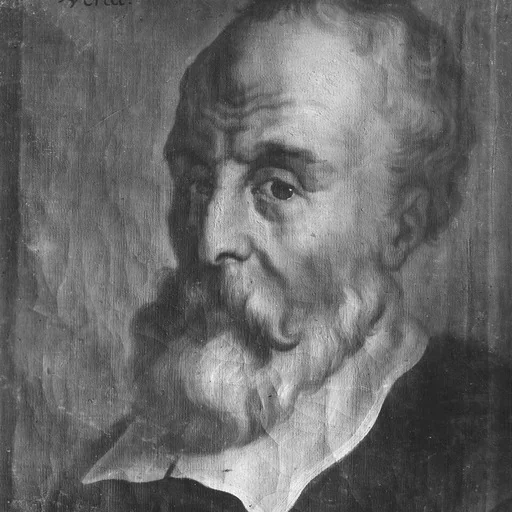
Paolo Caliari (1528 – 19 April 1588), known as Paolo Veronese ( VERR-ə-NAY-zay, -zee, US also -see; Italian: ), was an Italian Renaissance painter based in Venice, known for extremely large history paintings of…