Artwork
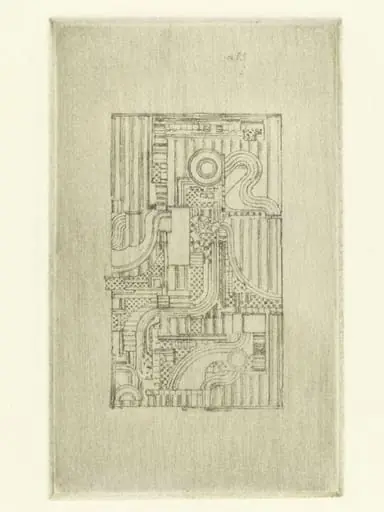
Untitled study
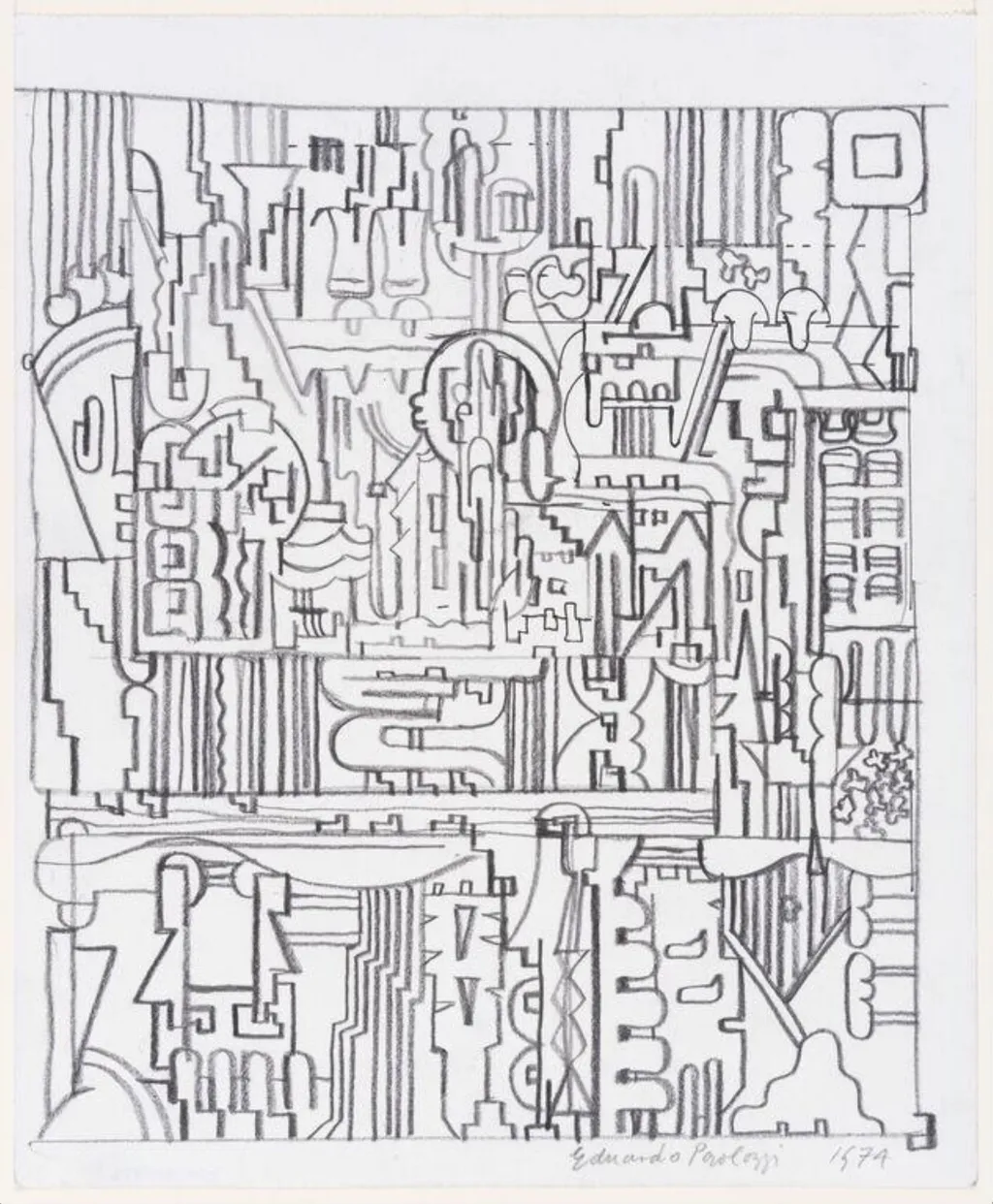
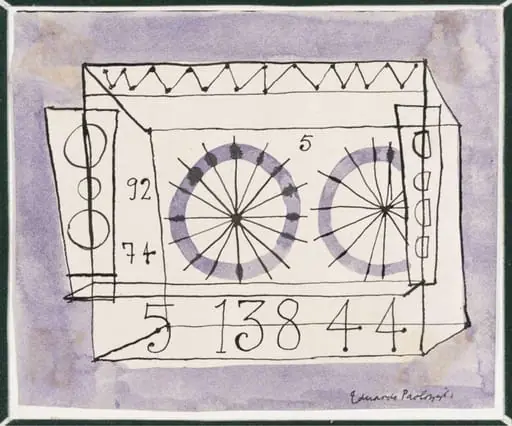
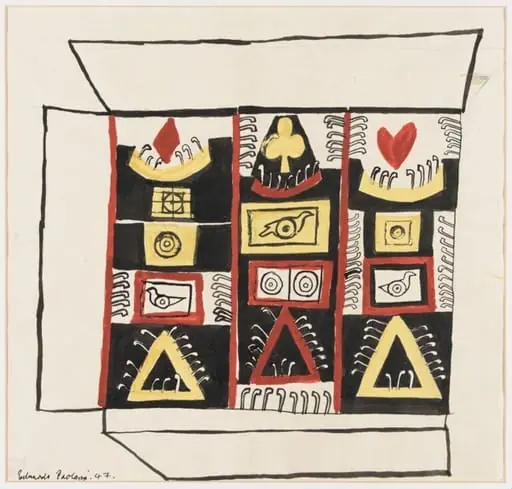
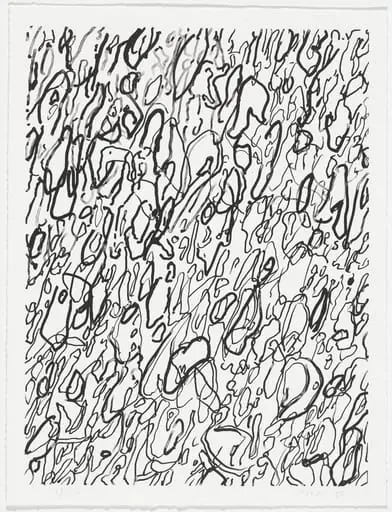
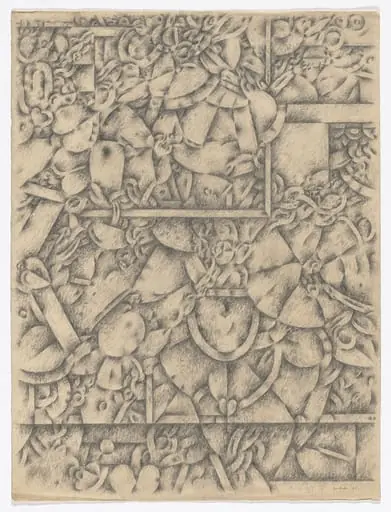
Untitled study is a drawing by Eduardo Paolozzi. It dates from 1974 and is held in the collection of the Victoria and Albert Museum. Created in 1974, this untitled drawing is one of many preparatory studies for ceiling panels commissioned for Cleish Castle.
About this work
Paolozzi drew this untitled study in 1974. It’s a drawing, not a painting. The Victoria and Albert Museum holds it.
This was a step for Paolozzi. He’d never done low relief before. But his love for machines and comics shows up here. Some shapes look like circuit boards. Others hint at tiny figures or buildings seen from above.
Check out another Paolozzi drawing to see how his style evolves.
Overview
Executed in pencil or ink on paper, it reflects Eduardo Paolozzi’s process of translating three-dimensional forms into two-dimensional sketches.
Created in 1974, this untitled drawing is one of many preparatory studies for ceiling panels commissioned for Cleish Castle. Executed in pencil or ink on paper, it reflects Eduardo Paolozzi’s process of translating three-dimensional forms into two-dimensional sketches. The work belongs to a series that preceded the final installation in metallized GRP, serving as a critical stage in the evolution of his approach to relief sculpture.
Subject & Meaning
The drawing combines mechanical and anthropomorphic elements, suggesting circuitry, architectural fragments, and stylized figures. These motifs reflect Paolozzi’s enduring interest in industrial aesthetics and popular culture, particularly comic imagery. The forms appear both abstract and suggestive, evoking a top-down view of engineered environments, as if observing a miniature city or machine from beneath.
Technique & Style
Paolozzi employed precise, layered linework to build complex compositions, blending technical precision with playful distortion. The drawing’s dense patterning and overlapping shapes reveal his method of iterative refinement. Unlike his later relief panels, this study is flat and monochromatic, yet it retains the same sense of mechanical rhythm and fragmented narrative that defines his sculptural work.
History & Provenance
The drawing was produced during the development of ceiling panels commissioned by architect Michael Spens in 1971. Though the final panels were installed at Cleish Castle and later moved to The Dean Gallery in Edinburgh, this study remained in Paolozzi’s personal archive before entering the collection of the Victoria and Albert Museum, where it is preserved as part of his working process.
Context
This work emerged during a period when Paolozzi was expanding beyond sculpture and printmaking into architectural commissions. His engagement with industrial design and postwar technology aligned with broader cultural interests in the relationship between humans and machines. The ceiling project marked his first significant foray into relief, making these drawings essential records of his transition.
Legacy
The study exemplifies how Paolozzi used drawing not merely as preparation but as an independent mode of exploration. These sketches influenced later works and demonstrated the continuity between his two-dimensional and three-dimensional practices. They remain vital to understanding his synthesis of technology, pop culture, and architectural form in postwar British art.
Artist & collection
Artist
This Glaswegian ran a junk shop in London’s East End and turned scrap metal into art.