Artwork
Από την οδό Αριστοτέλους
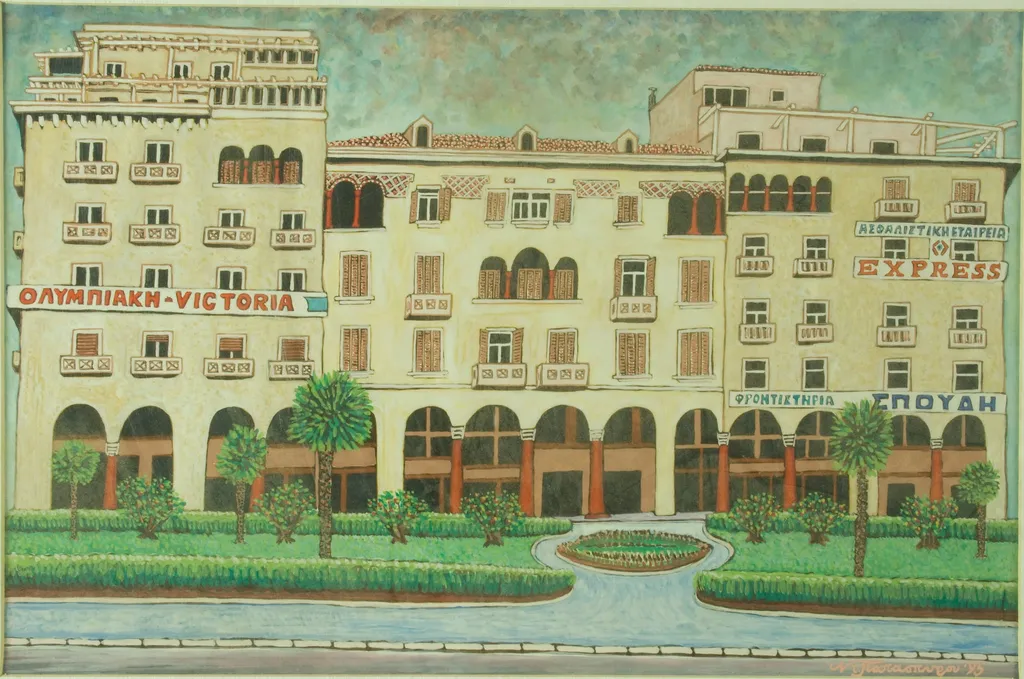
Από την οδό Αριστοτέλους is an unspecified painting by Konstantinos Papaspyrou. It dates from 1995 and is held in the collection of the Metropolitan Organisation of Museums of Visual Arts of Thessaloniki – MOMus.
About this work
Overview
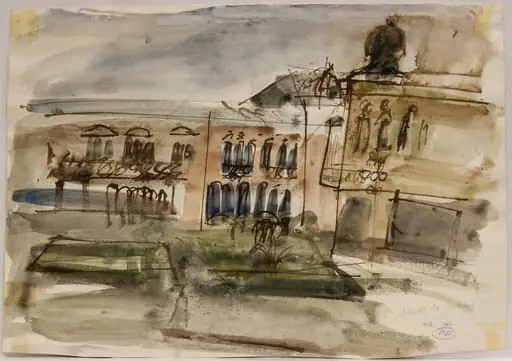
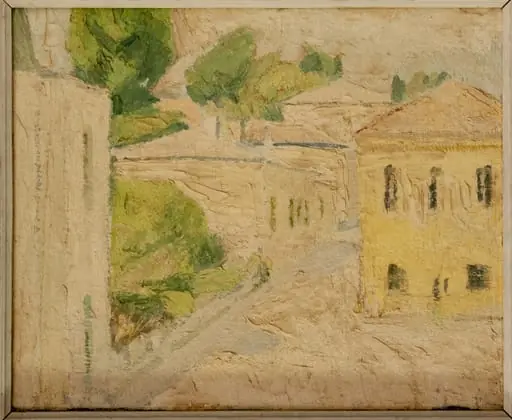
Konstantinos Papaspyrou’s 1995 work Από την οδό Αριστοτέλους depicts a sizable, pale‑yellow structure dominated by rows of windows and balconies. A series of arches runs along the lower façade, while a cultivated garden with palm trees, shrubs and a winding path leads up to the entrance. Greek lettering appears on signage attached to the building, suggesting commercial or residential use.
Subject & Meaning
The composition presents an urban edifice that appears to function as a hotel or apartment block, its orderly balconies and extensive glazing evoking a sense of communal living. The presence of palm trees and well‑tended greenery introduces a contrast between built environment and nature, hinting at the coexistence of modernity and leisure within a Greek cityscape.
Technique & Style
Executed in a realistic visual language, Papaspyrou employs a muted palette of yellows and earth tones to render the façade, while the crisp delineation of windows and arches conveys architectural precision. The treatment of light on the building’s surface and the subtle shading of the garden suggest a careful observation of atmospheric conditions.
History & Provenance
Created in 1995, the painting entered the collection of the Museum of Ethnography, where it remains on display. Its acquisition reflects the institution’s interest in documenting contemporary Greek visual culture and the everyday urban environment of the late twentieth century.
Context
The work belongs to a period in which Papaspyrou explored the relationship between architecture and public space in Greece. By focusing on a recognizable street scene, the artist situates the piece within broader discussions of post‑military‑rule urban development and the evolving identity of Greek cities during the 1990s.
Artist & collection
Artist
Museum
Metropolitan Organisation of Museums of Visual Arts of Thessaloniki – MOMus
Continue through works from the same source collection.