Artwork
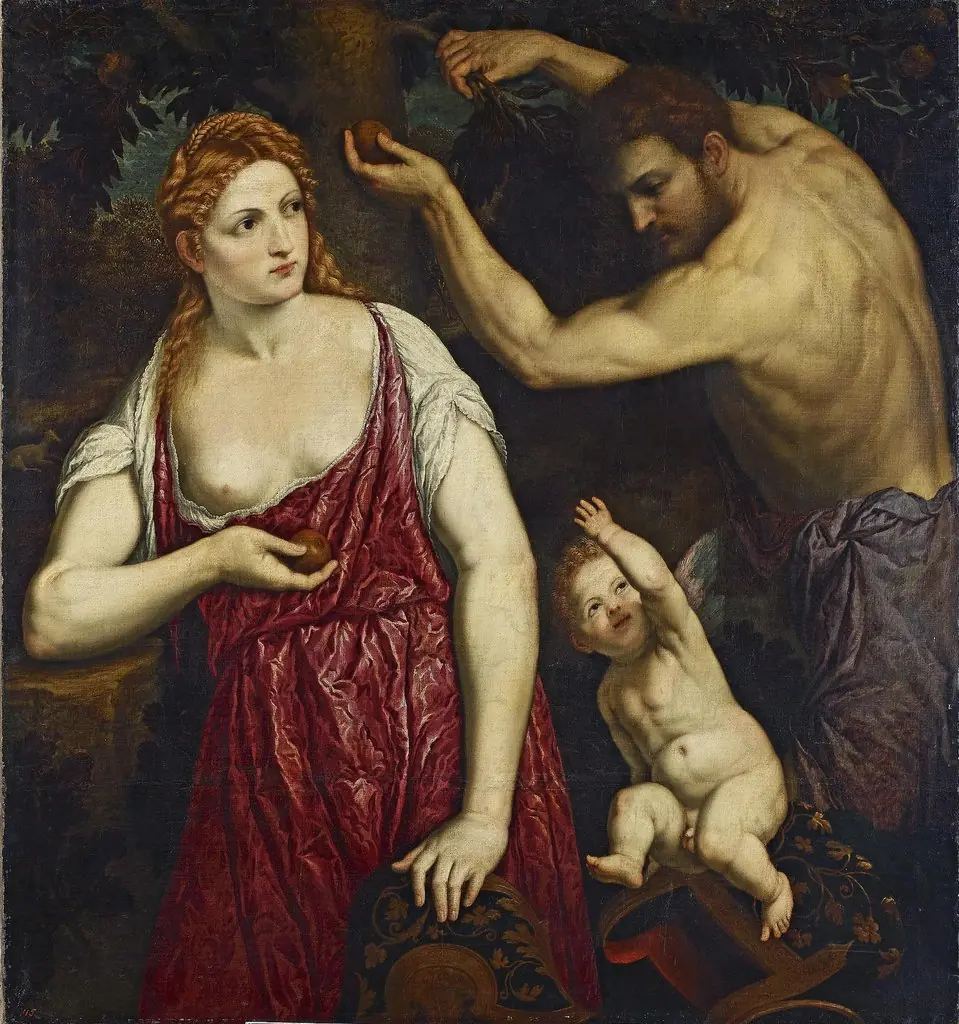
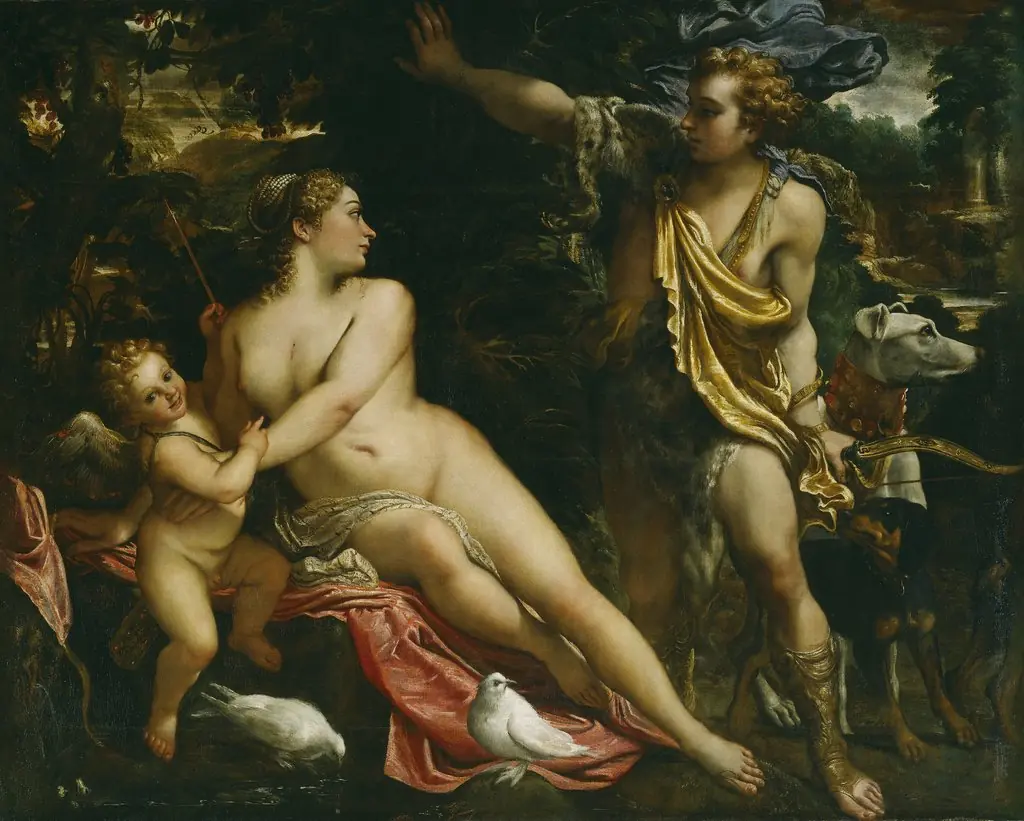
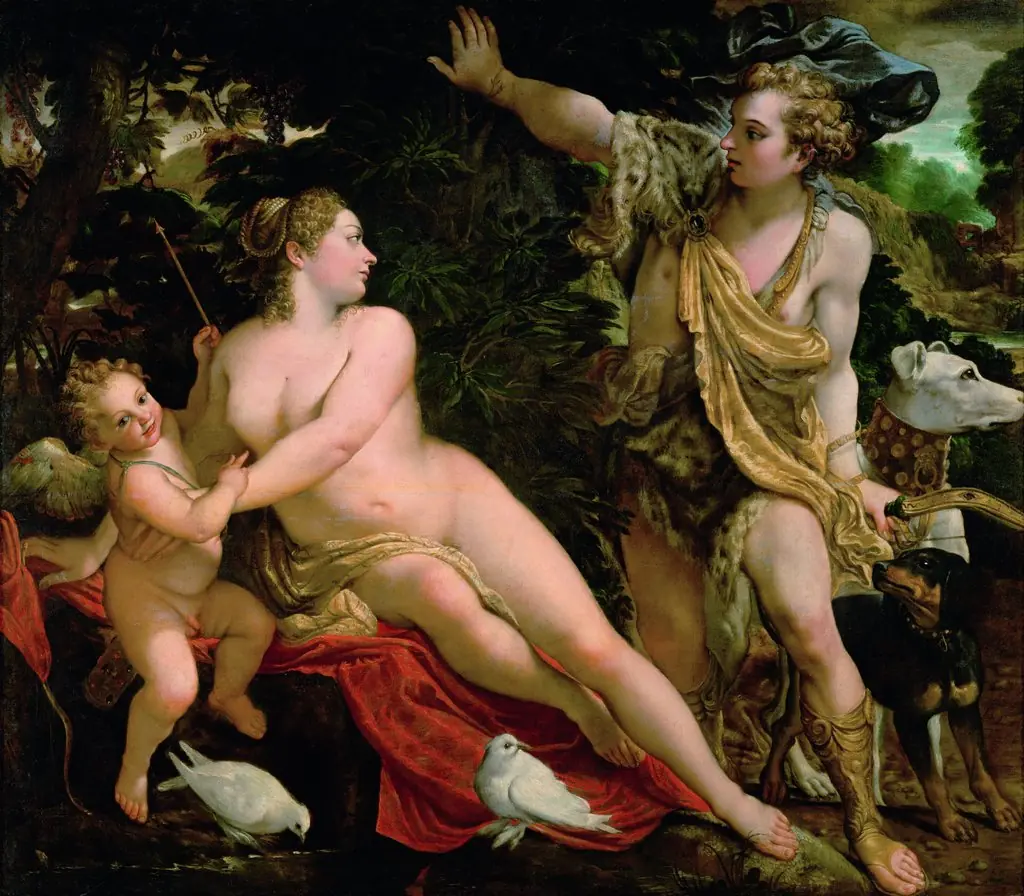
Venus and Adonis
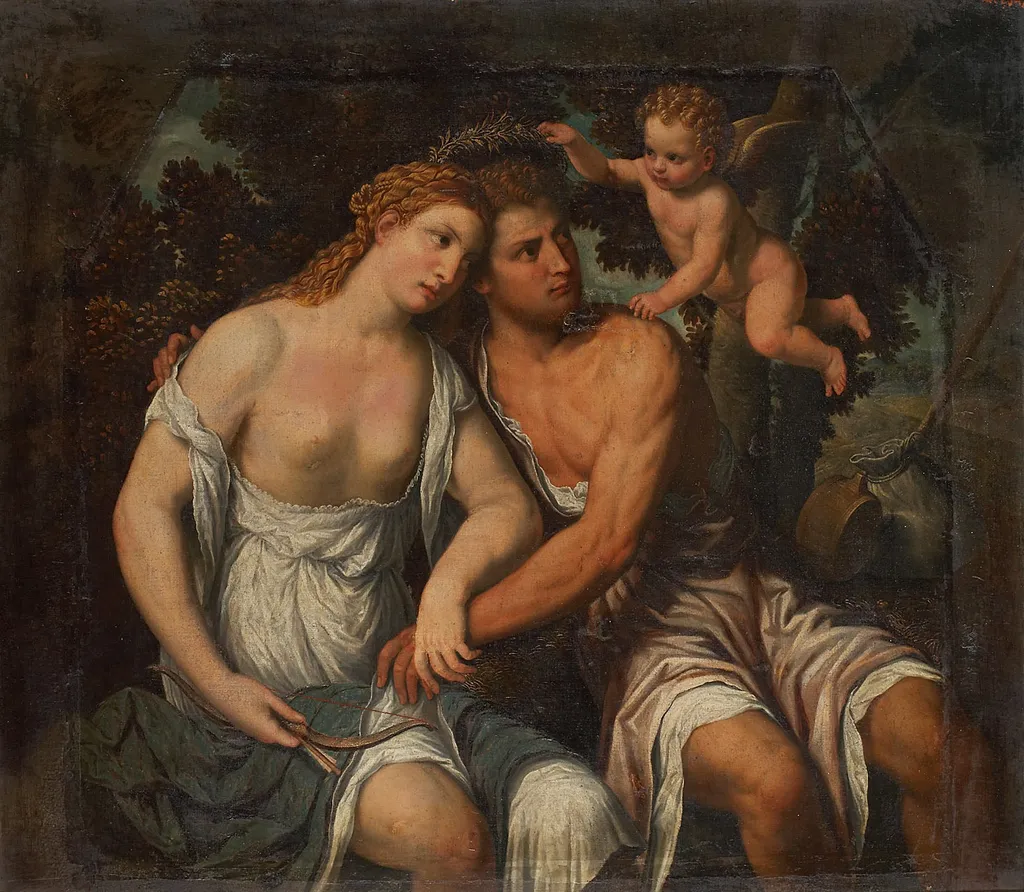
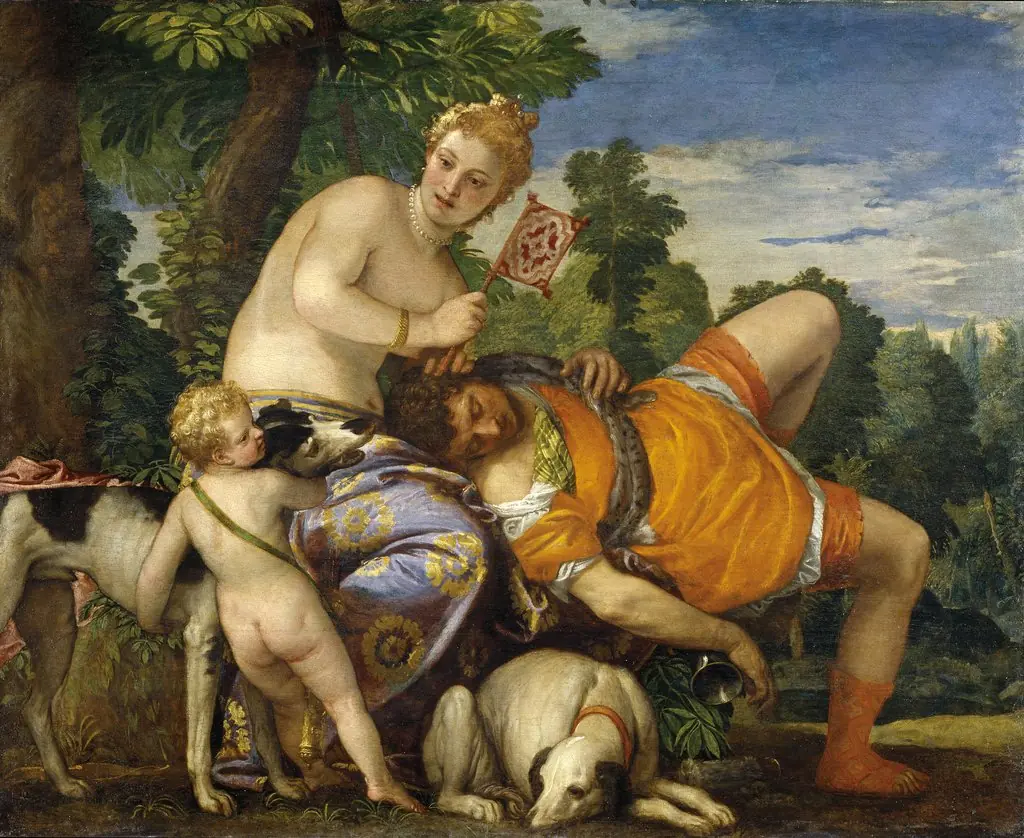
Venus and Adonis is an oil painting by the Early Baroque Italian artist Paris Bordone. It dates from 1560 and is held in the collection of the Kunsthistorisches Museum.
About this work
Overview
Venus and Adonis is a 1560 oil painting by Paris Bordone, a Venetian artist trained under Titian, dating to the early Baroque period in Italy. The work is part of the Kunsthistorisches Museum's collection.
Subject & Meaning
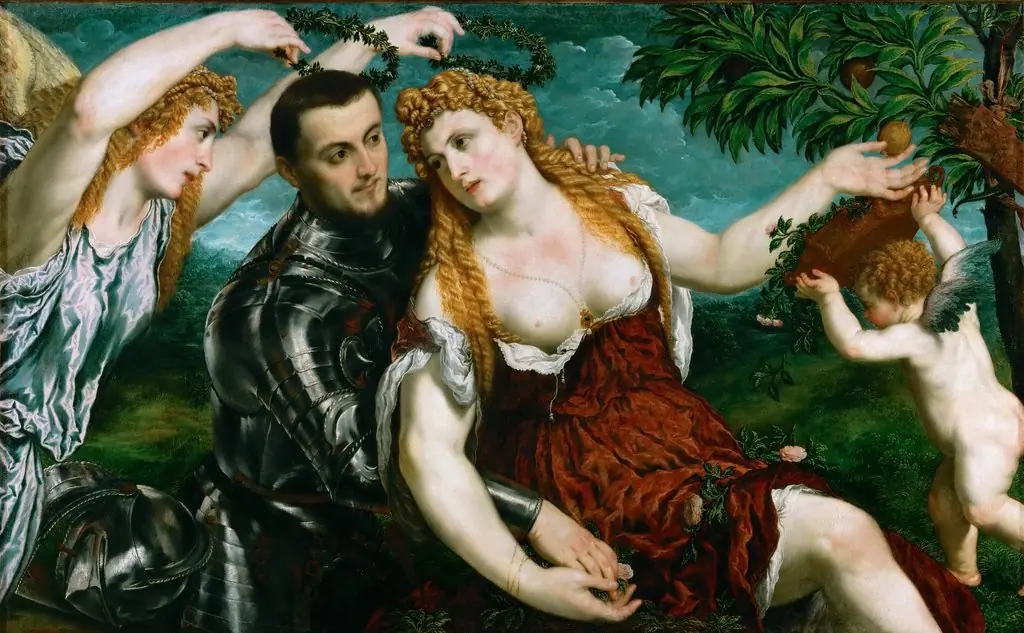
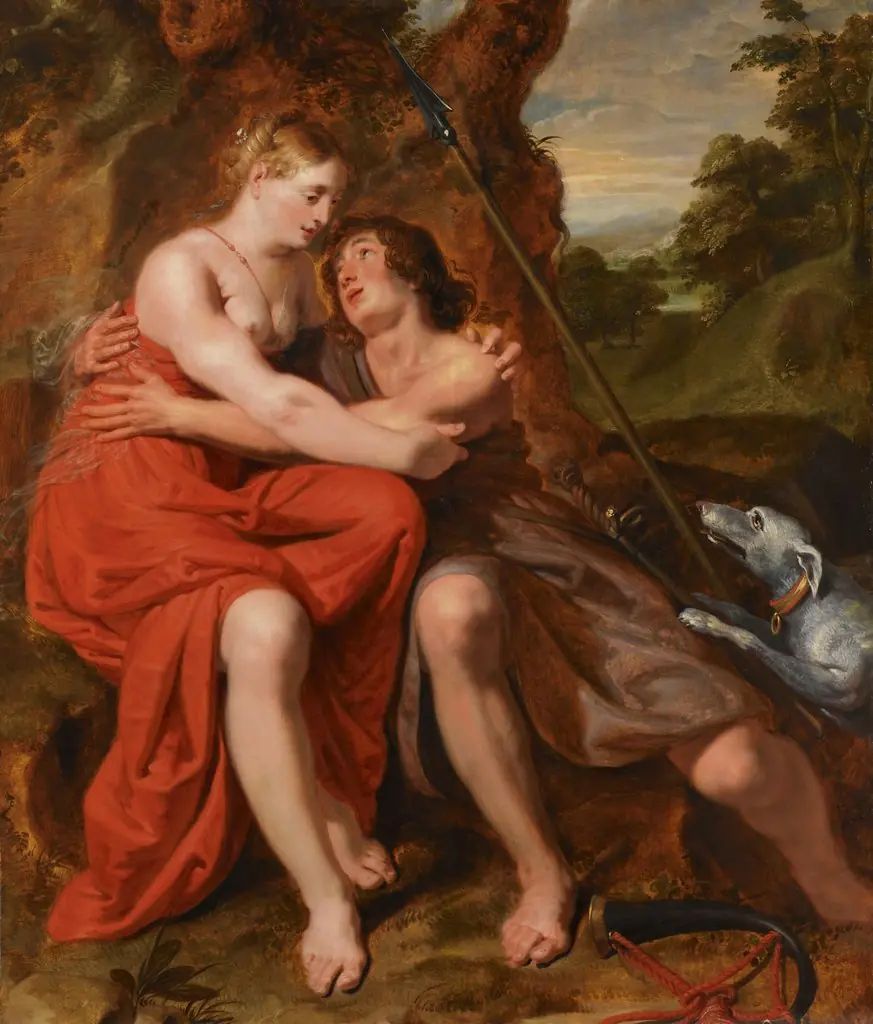
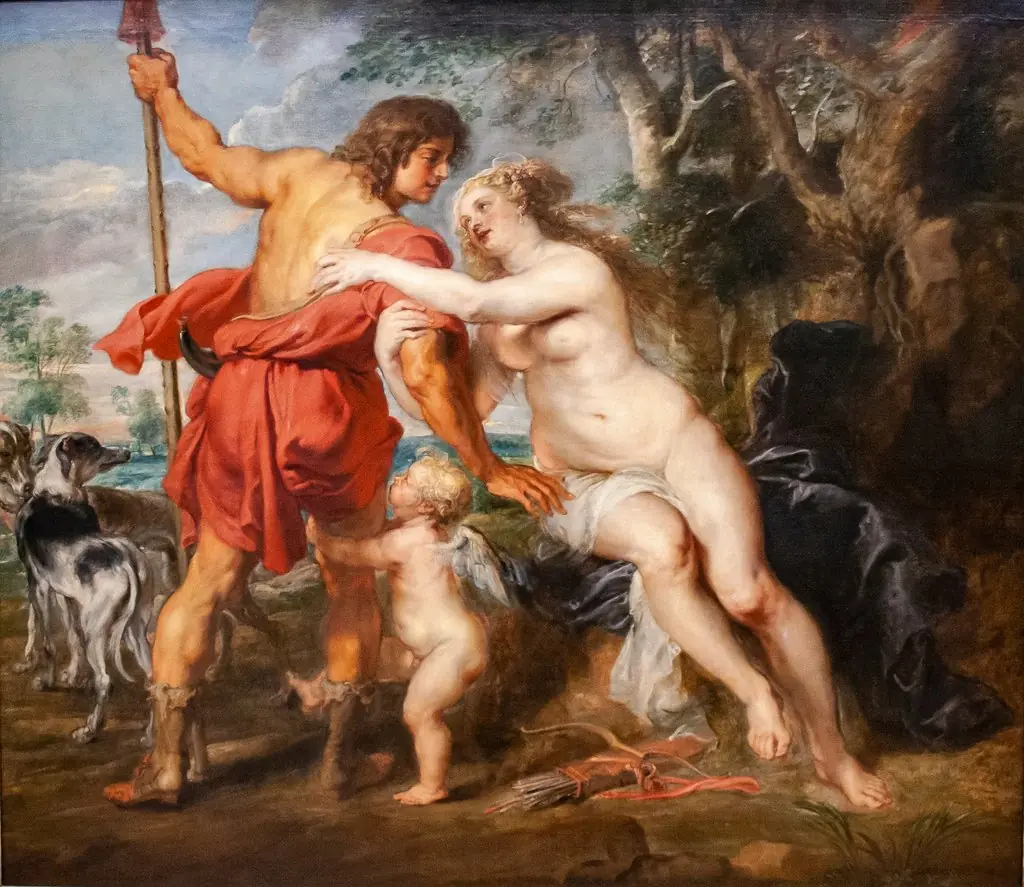
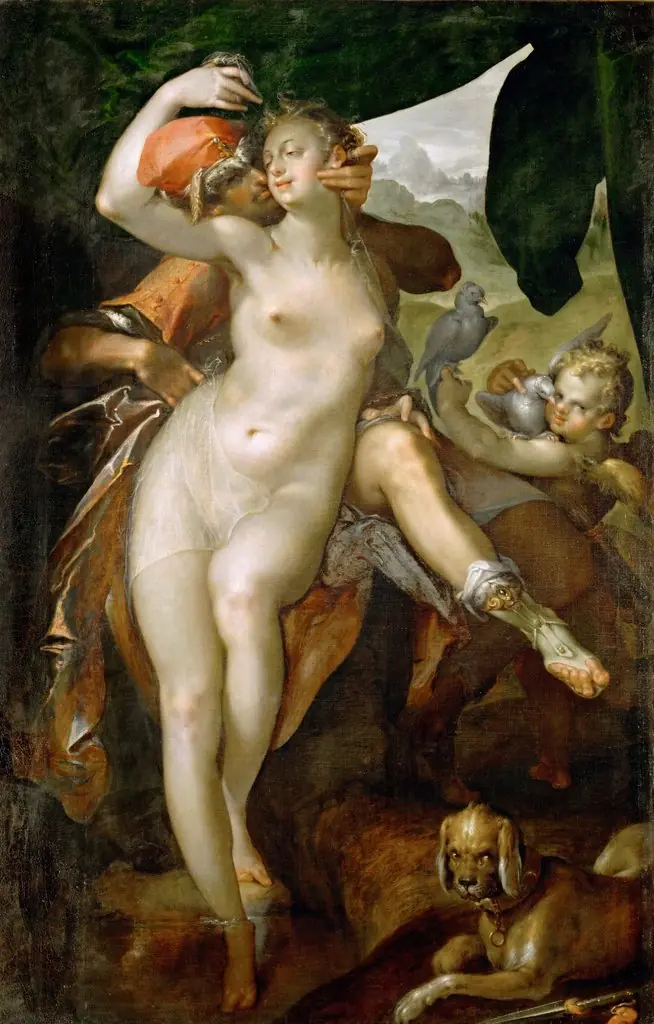
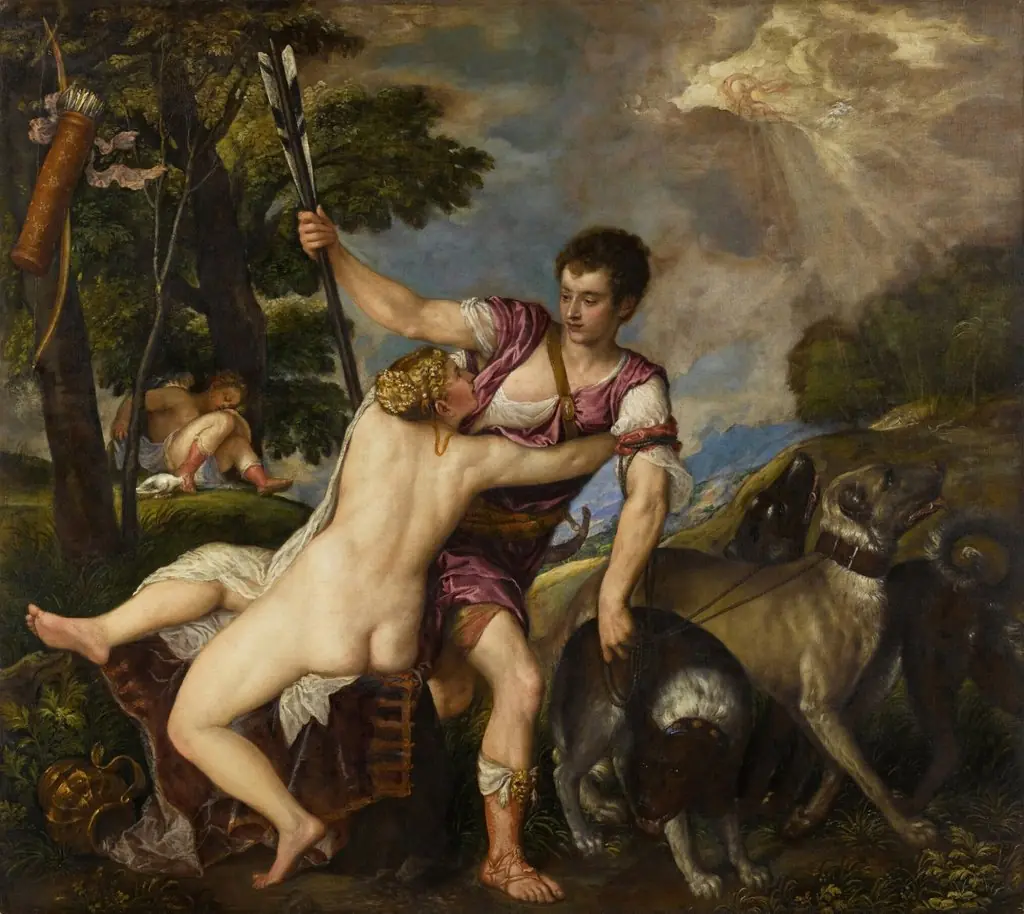
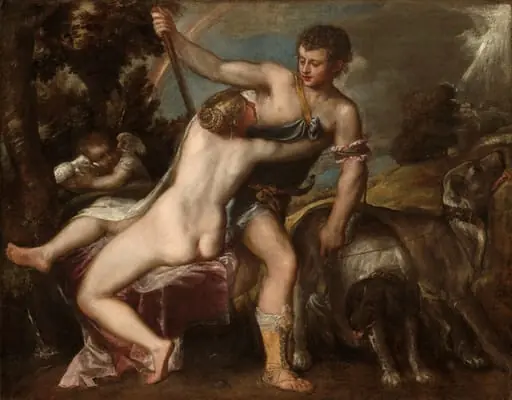
The painting depicts a serene outdoor scene of the mythological figures Venus and Adonis in intimate proximity. Venus, draped in a light cloth over one shoulder, and mostly bare-chested Adonis, with a waist cloth, embody a tranquil moment. A small winged child (likely Cupid) gently places a wreath above Venus, enhancing the peaceful ambiance.
Technique & Style
Bordone's style in this work blends Mannerist intricacy with a vigorous, regional flair. Notably, the composition employs strong chiaroscuro, where pronounced light and shadow contrasts heighten the visual depth, set against a dark, leafy green and rocky backdrop that accentuates the figures.
History & Provenance
Created in 1560, the painting's provenance is traced to its current holding in the Kunsthistorisches Museum, though specific ownership history prior to its museum acquisition is not detailed here.
Context
Emerging from the early Baroque period in Italy, this work reflects the transitional artistic currents of the time, with Bordone's training under Titian influencing his approach to mythological themes and compositional techniques.
Legacy
While specific lasting impacts or direct influences of *Venus and Adonis* on subsequent art movements are not highlighted in available information, the work contributes to the broader understanding of 16th-century Venetian painting's evolution, particularly in its blend of Mannerist and emerging Baroque elements.
Artist & collection
Artist
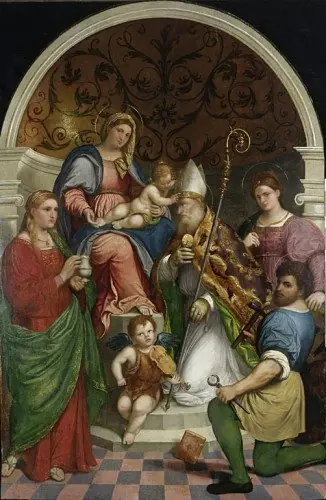
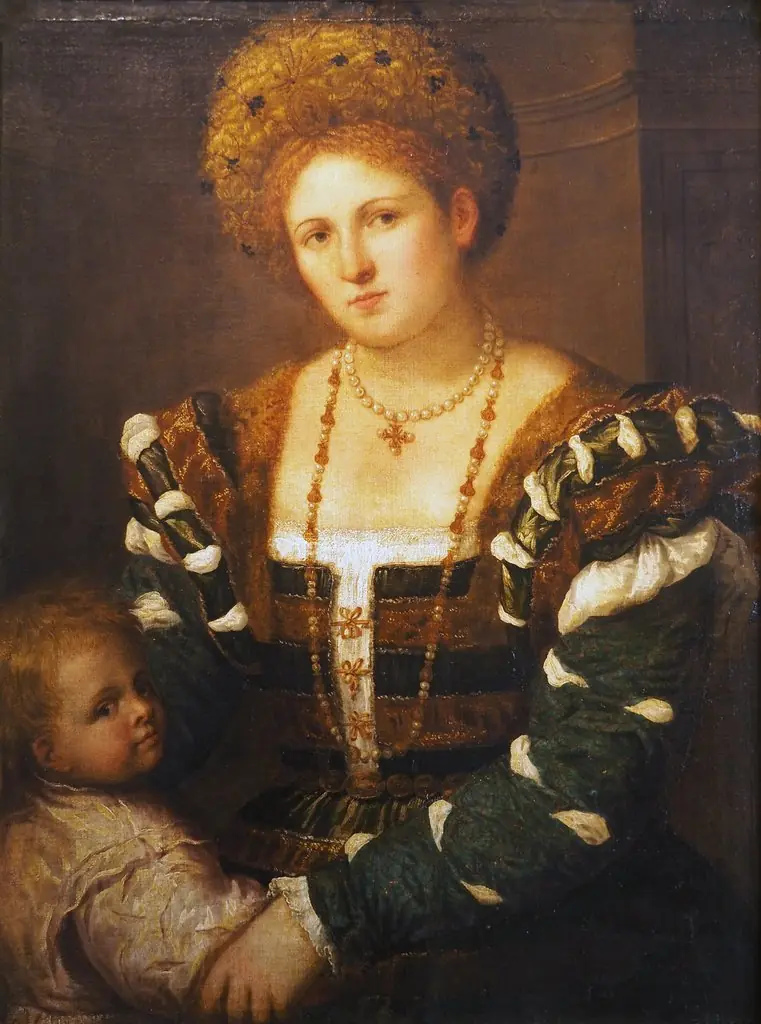
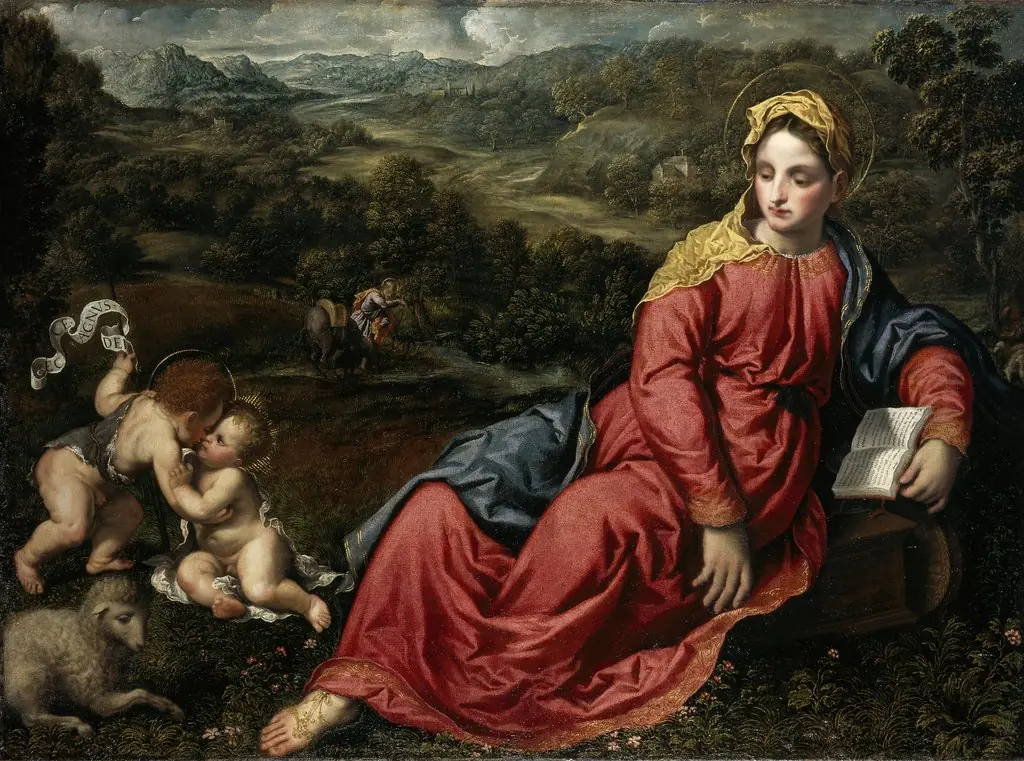
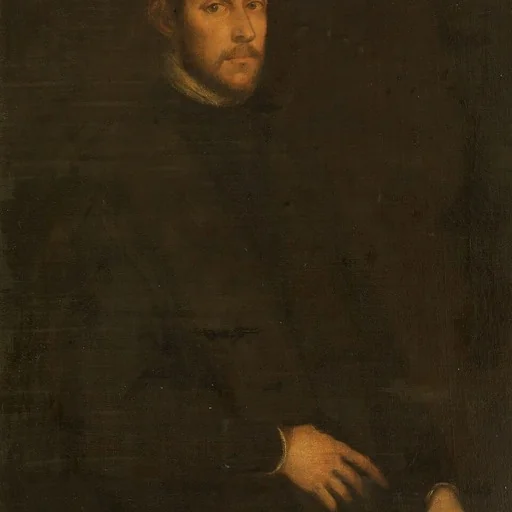
Paris Bordone (Paris Paschalinus Bordone; 5 July 1500 – 19 January 1571) was an Italian painter of the Venetian Renaissance who, despite training with Titian, maintained a strand of Mannerist complexity and provincial vigor.