Artwork
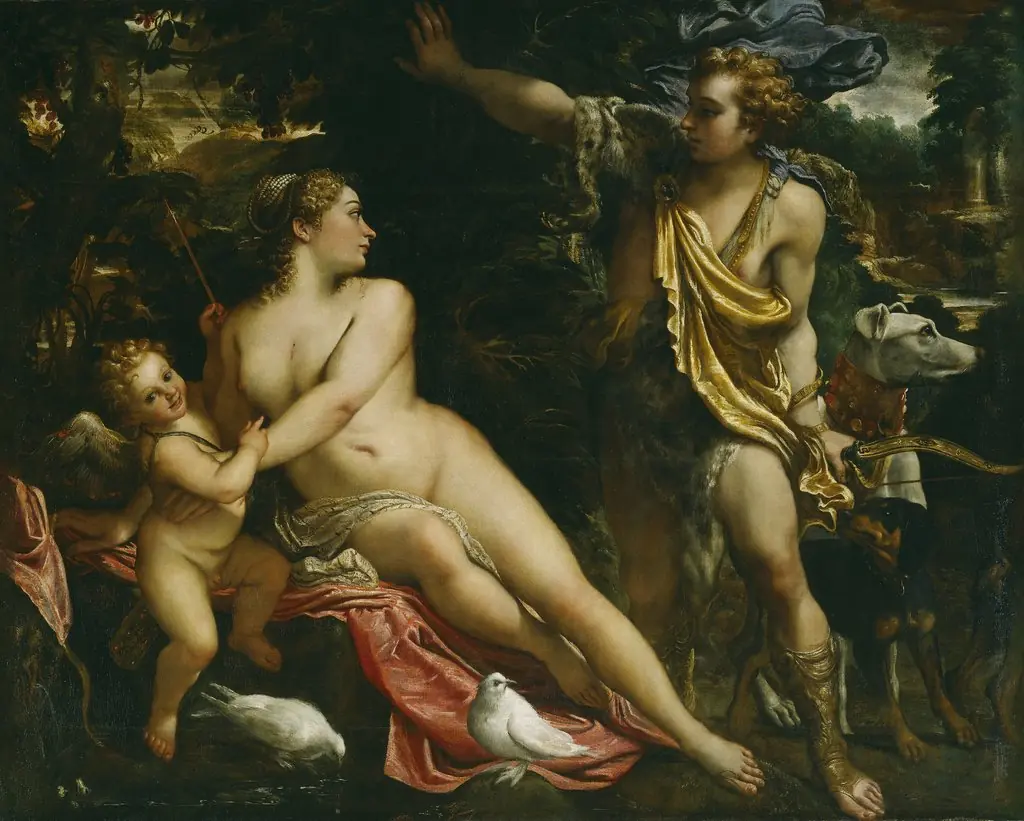
Mars, Venus and Cupid
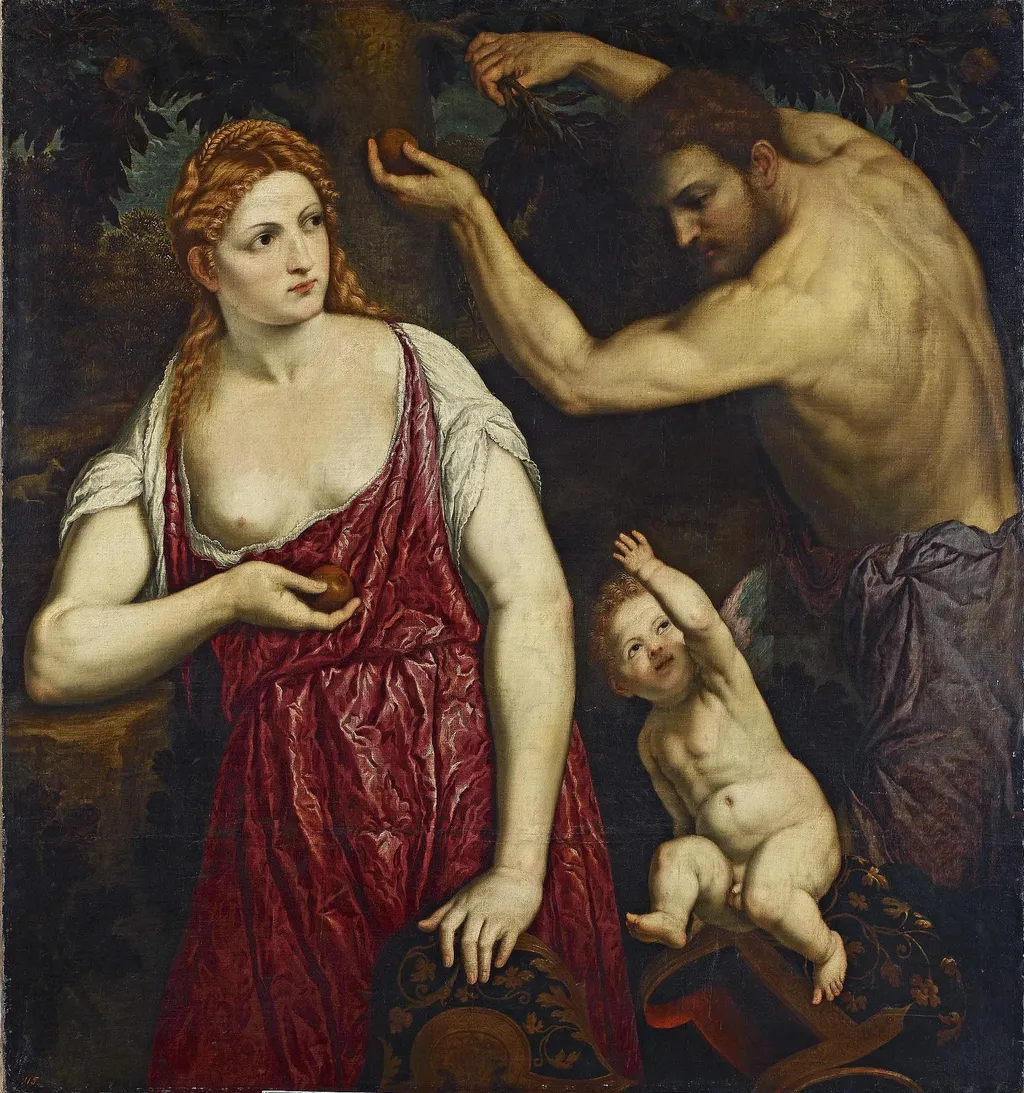
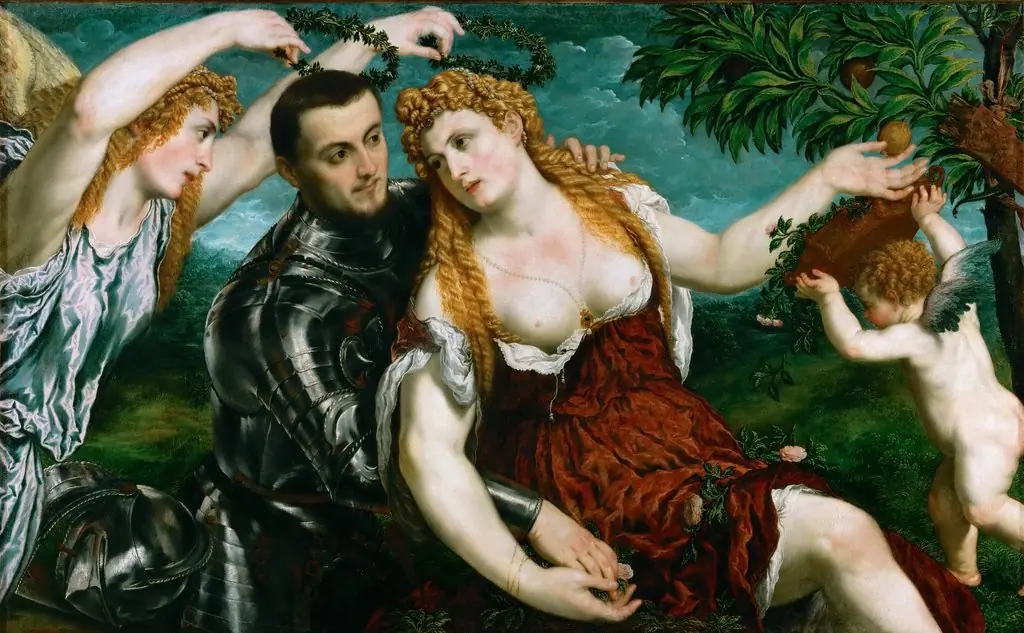
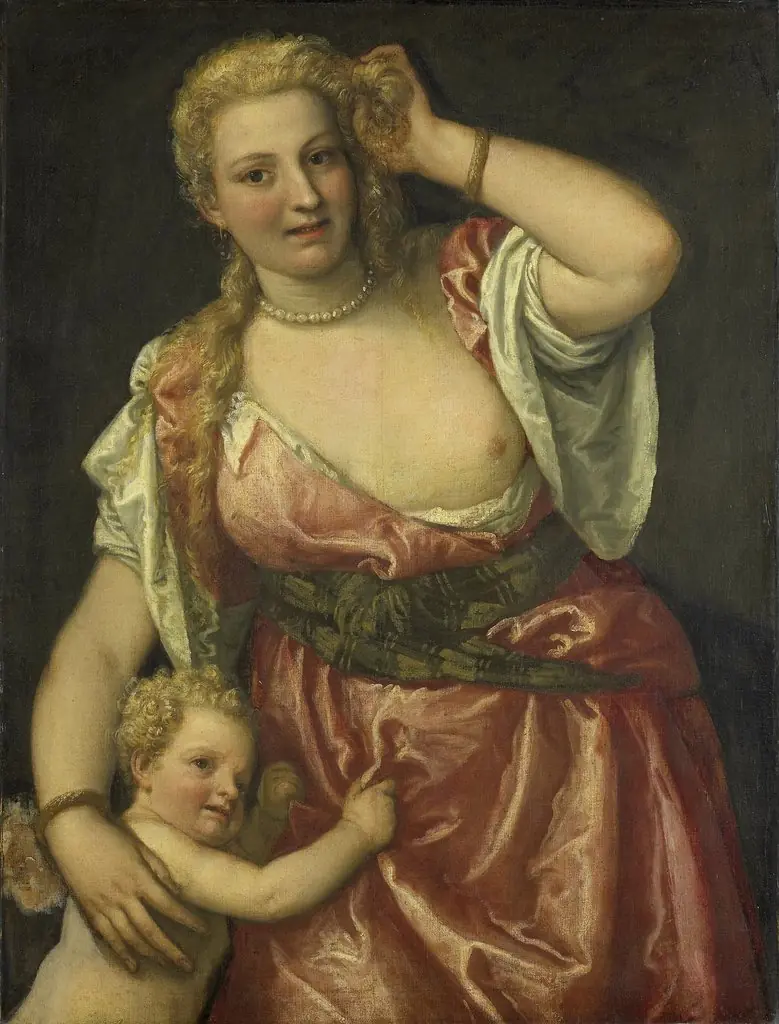
Mars, Venus and Cupid is an oil painting by the Mannerist artist Paris Bordone. It dates from 1550 and is held in the collection of the Hermitage Museum. Created around 1550, this oil-on-panel painting presents the Roman deities Mars and Venus together with their son Cupid.
About this work
Overview
Created around 1550, this oil-on-panel painting presents the Roman deities Mars and Venus together with their son Cupid. Executed by Paris Bordone, a pupil of Titian, the work exemplifies his mature period, marked by intricate, decorative groupings. The composition is now part of the collection of the State Hermitage Museum in St. Petersburg.
Subject & Meaning
The central figures are the goddess of love, Venus, shown in a flowing red garment, and the god of war, Mars, whose muscular form leans protectively over her. Their infant son, Cupid, gazes upward with a serene expression. The trio evokes the mythological theme of love’s triumph over conflict, a popular narrative in Renaissance art.
Technique & Style
Bordone combines the rich, luminous palette characteristic of Venetian painting with the elongated proportions and complex poses typical of Mannerism.
Bordone combines the rich, luminous palette characteristic of Venetian painting with the elongated proportions and complex poses typical of Mannerism. Subtle chiaroscuro models the bodies, casting them against a dark backdrop that heightens their three‑dimensional presence. The delicate rendering of fabric and the decorative arrangement reflect the artist’s skill in creating ornamental yet coherent scenes.
History & Provenance
After its completion, the painting entered private collections before being acquired by the State Hermitage Museum, where it remains on display. Its attribution to Bordone rests on stylistic analysis linking it to his later oeuvre, a period when he was recognized for elaborate, courtly compositions.
Own this work as a print
Artist & collection
Artist
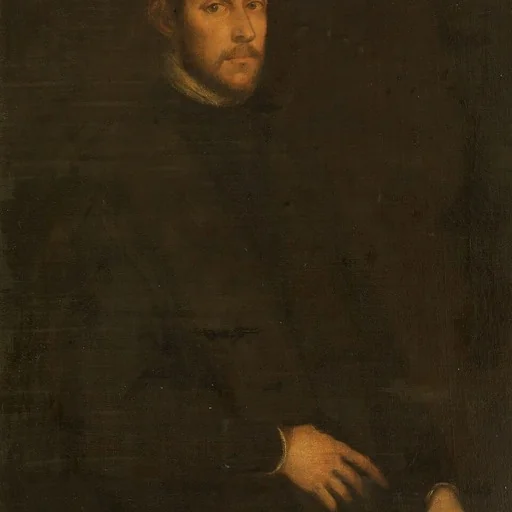
Paris Bordone (Paris Paschalinus Bordone; 5 July 1500 – 19 January 1571) was an Italian painter of the Venetian Renaissance who, despite training with Titian, maintained a strand of Mannerist complexity and provincial vigor.