Artwork
The Great Blizzard of 1899
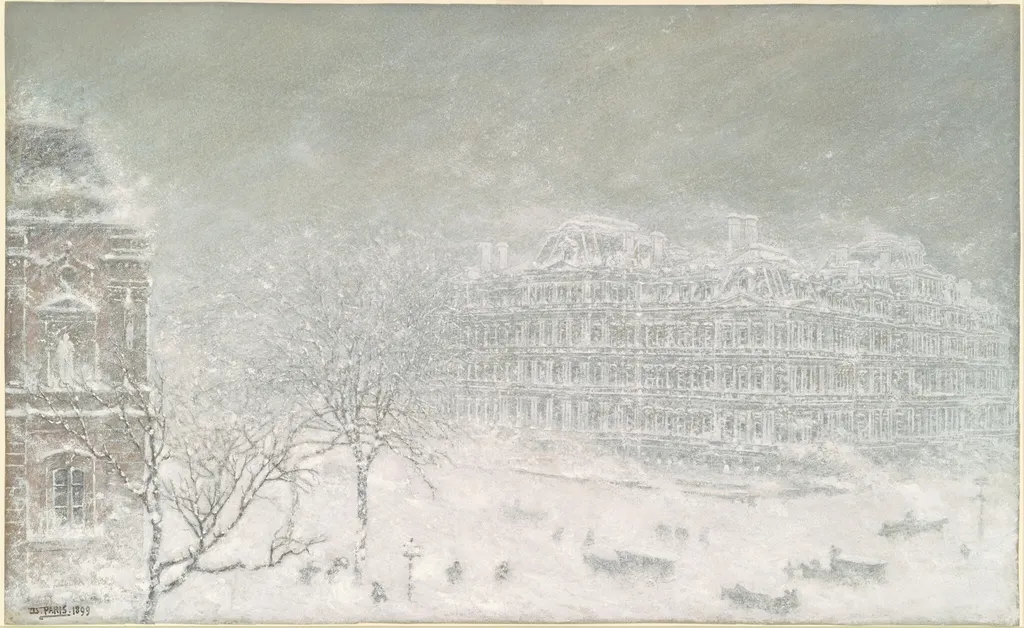
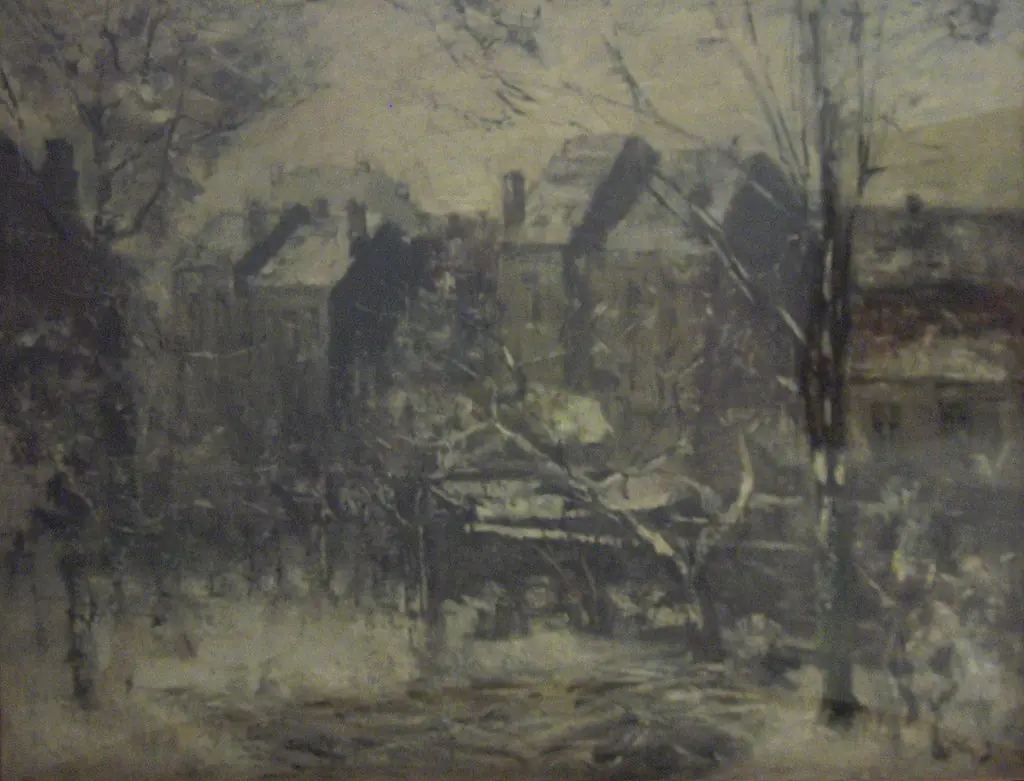
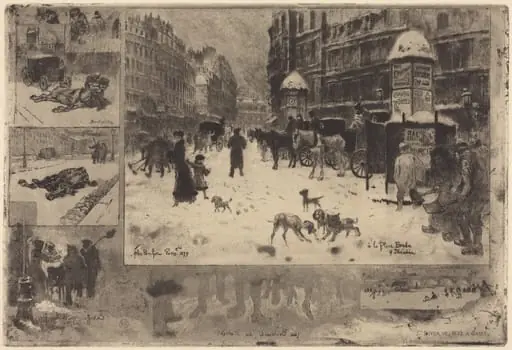
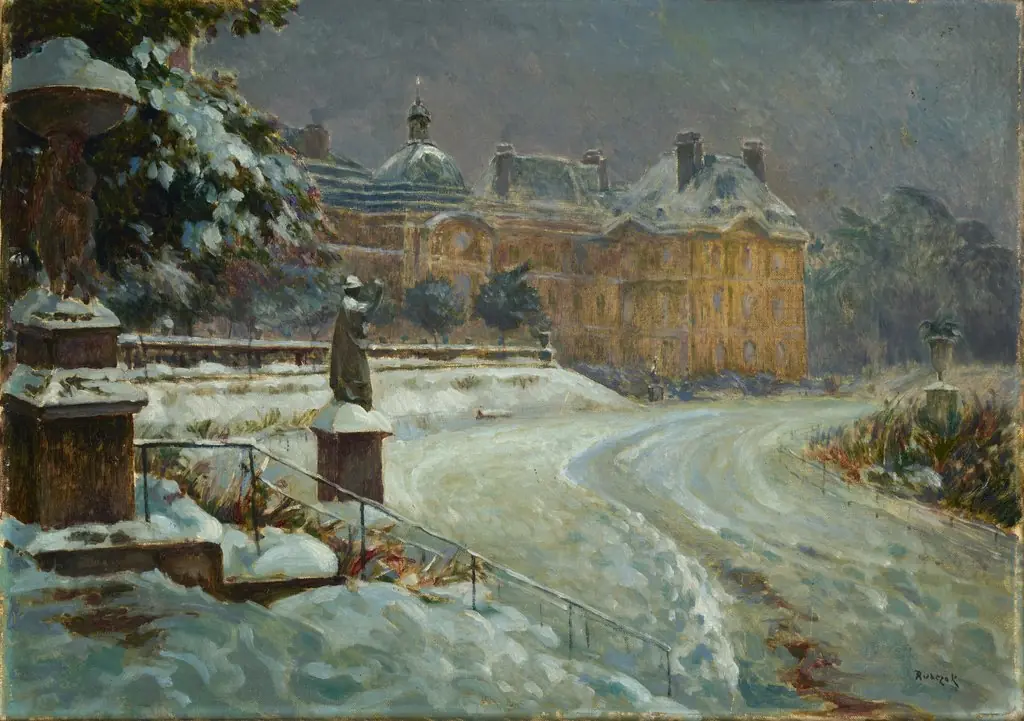
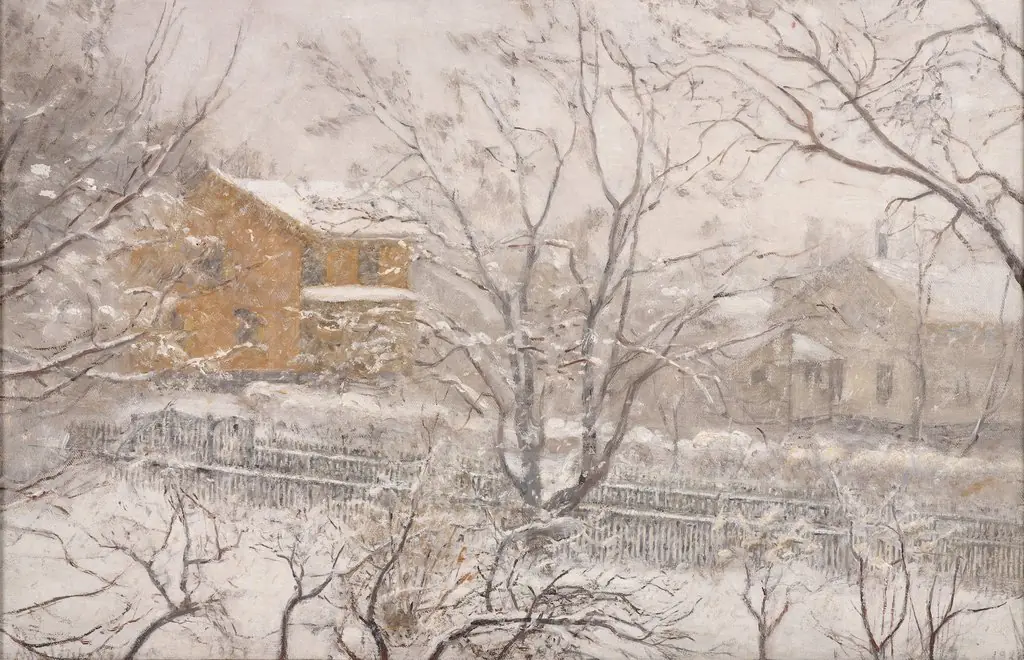
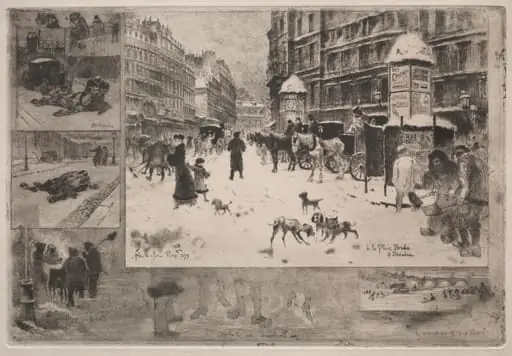
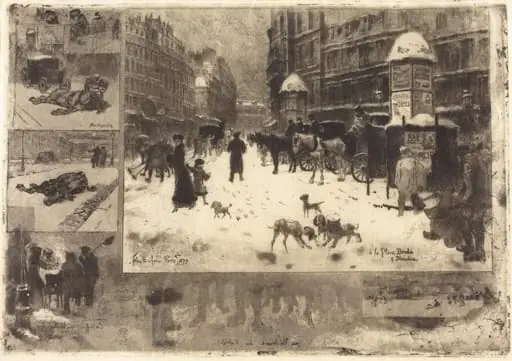
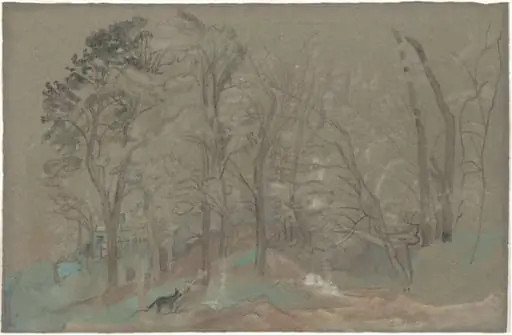
The Great Blizzard of 1899 is a gouache drawing by the Impressionist artist Walter Paris. It dates from 1899 and is held in the collection of the National Gallery of Art.
About this work
Overview
Created in 1899 by Walter Paris, this drawing captures the intensity of a severe winter storm that swept across the eastern United States. Executed in gouache, watercolor, and charcoal on gray wove paper, the work blends opaque and translucent pigments with expressive linear marks to convey the chaos of snow-laden winds and struggling figures caught in the storm.
Subject & Meaning
The scene depicts travelers and draft animals immobilized by heavy snowfall, their forms partially obscured by swirling drifts.
The scene depicts travelers and draft animals immobilized by heavy snowfall, their forms partially obscured by swirling drifts. Rather than idealizing the landscape, Paris emphasizes human vulnerability against nature’s force. The composition suggests urgency and isolation, reflecting the real-life disruptions caused by the blizzard, which paralyzed transportation and communication across multiple states.
Technique & Style
Paris layered gouache for opaque snowdrifts and watercolor for translucent atmospheric haze, allowing the gray paper to function as mid-tone ground. Charcoal lines define structural elements—harnesses, limbs, and fence posts—adding texture and contrast. The combination of media enables both broad tonal washes and precise detail, enhancing the sense of depth and motion within the confined space of the paper.
History & Provenance
The drawing was made shortly after the storm, likely as a direct response to contemporary reports and personal observation. It remained in private collections until acquired by a public institution in the mid-20th century. Its survival is notable, as many works from this period documenting weather events were lost or discarded due to their perceived documentary rather than artistic value.
Context
The 1899 blizzard was one of the most severe winter storms in U.S. history, with temperatures plunging below zero and snowfalls exceeding three feet in some regions. Artists and journalists documented its impact, but few visual records survive in such intimate, immediate form. Paris’s work stands as a rare firsthand visual account from an era before widespread photography.
Legacy
Though not widely exhibited during Paris’s lifetime, the drawing has since been recognized for its technical resourcefulness and historical specificity. It contributes to a small but significant body of American drawings that record natural disasters with observational clarity, offering insight into how artists responded to environmental crises before the age of mass media.
Artist & collection