Artwork
David Burns's Cottage and the Washington Monument
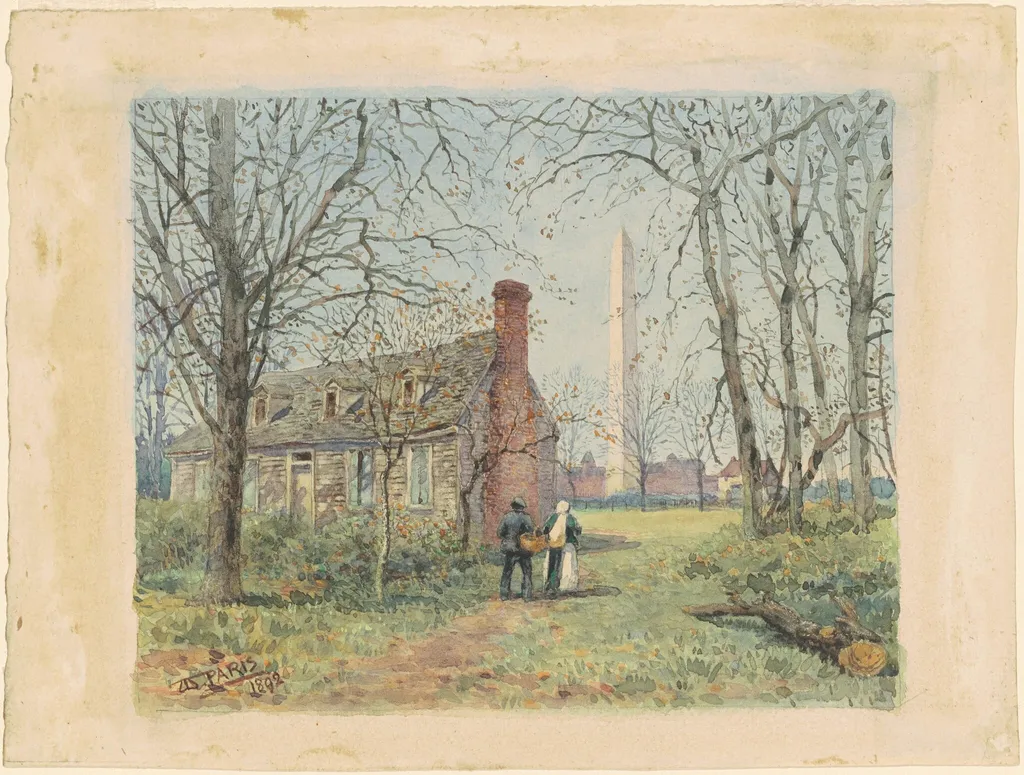
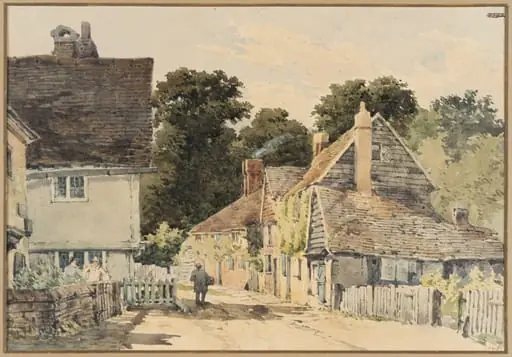
David Burns's Cottage and the Washington Monument is a graphite drawing by the Impressionist artist Walter Paris. It dates from 1892 and is held in the collection of the National Gallery of Art.
About this work
Overview
Created in 1892, this drawing by Walter Paris depicts David Burns's Cottage alongside the Washington Monument. Executed in watercolor over graphite on wove paper, the work belongs to the category of architectural sketches, capturing a moment of urban transition in late 19th-century Washington, D.C.
Subject & Meaning
The composition juxtaposes a modest domestic structure with the towering monument, suggesting a contrast between private life and national symbolism. The cottage, likely a working-class residence, stands in quiet proximity to the monument’s grandeur, reflecting the layered social fabric of the capital during its period of civic expansion.
Technique & Style
Paris employed delicate watercolor washes over precise graphite underdrawing to render texture and light. The brushwork is restrained, favoring clarity over flourish, with soft tonal gradations defining architectural forms. The paper’s smooth surface enhances the transparency of the pigments, lending the scene a quiet, atmospheric quality.
History & Provenance
The drawing was produced during Paris’s time in Washington, D.C., where he documented local architecture. It entered a public collection in the early 20th century, likely through acquisition or donation, and has since been preserved as part of the city’s visual record. No significant alterations or restorations are documented.
Context
In 1892, the Washington Monument was nearing completion after decades of intermittent construction. Nearby residential areas like the one housing Burns’s Cottage were evolving as the city expanded. Paris’s work captures this transitional phase, when new national symbols coexisted with older, more intimate urban textures.
Legacy
Though not widely exhibited, the drawing remains a quiet testament to the everyday landscape surrounding national monuments. It contributes to a broader archive of architectural documentation from the period, offering insight into how ordinary spaces were perceived in relation to monumental ideals.
Artist & collection


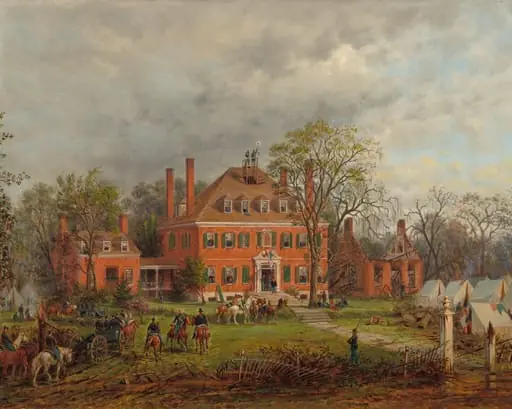 The Old Westover House
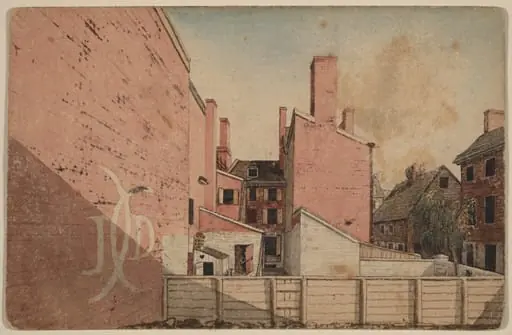 A View from an East Window in the Old Sugar House, No.3 Norris' Alley, Philadelphia
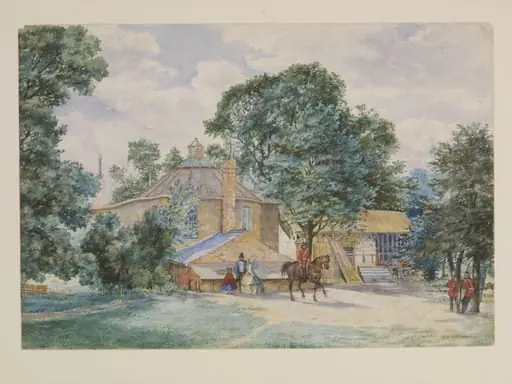 The first lecture theatre at the South Kensington Museum, later the Victoria and Albert Museum
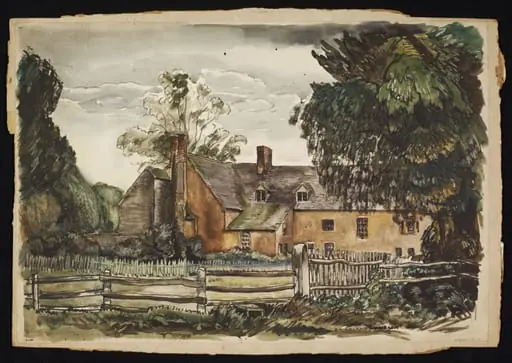 Wilcote Manor
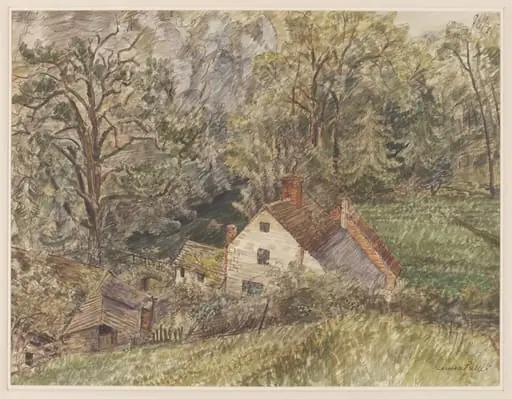 Haymill, Downton Gorge
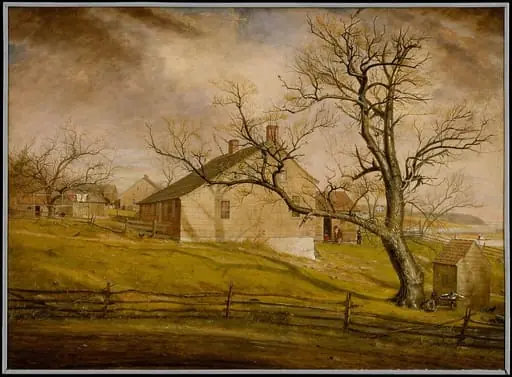 Long Island Farmhouses
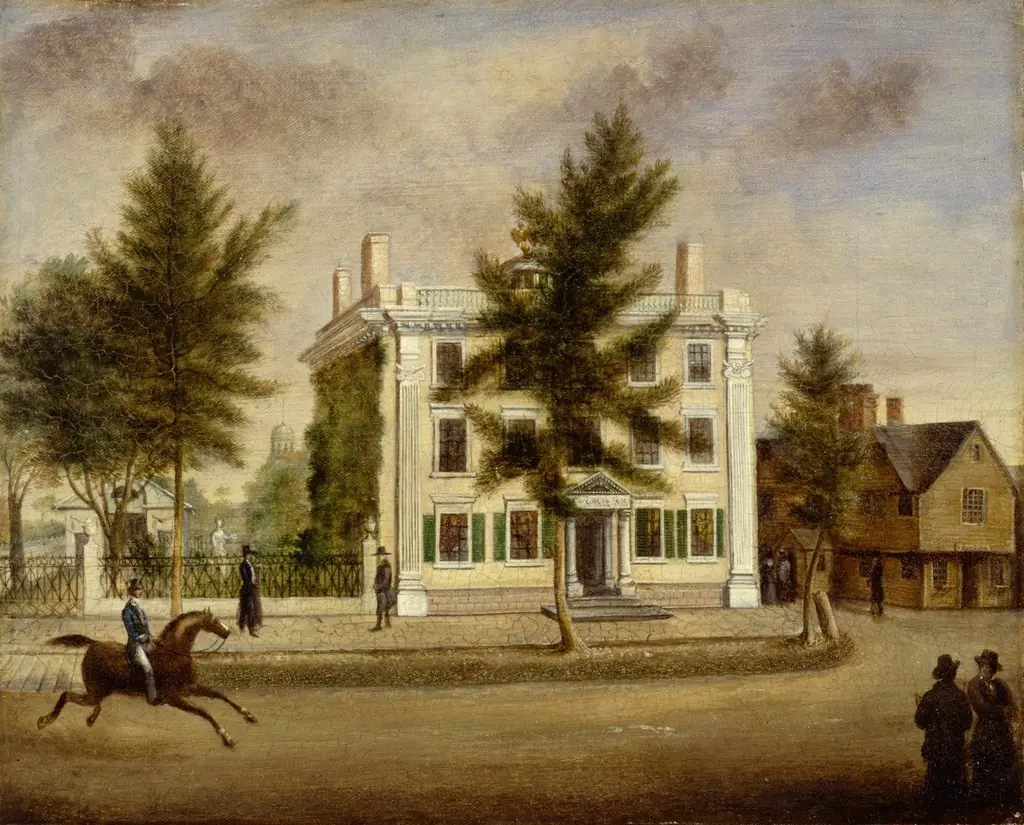 Pickman-Derby House, 70 Washington Street, Salem, Massachusetts
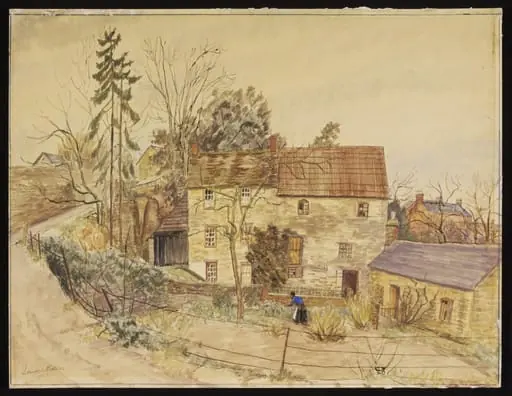 Mill and Millhouse, Malmesbury
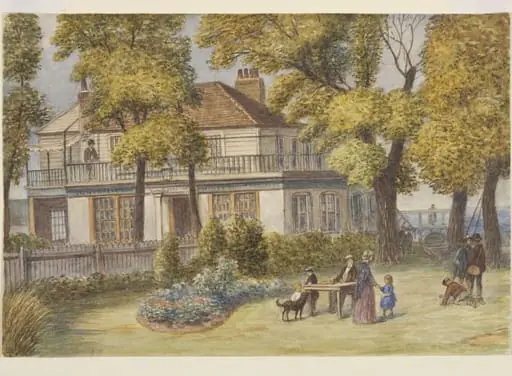 The Horse and Groom by the River Lea
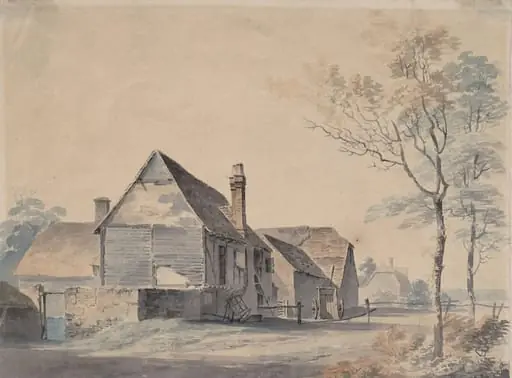 Landscape with Barn
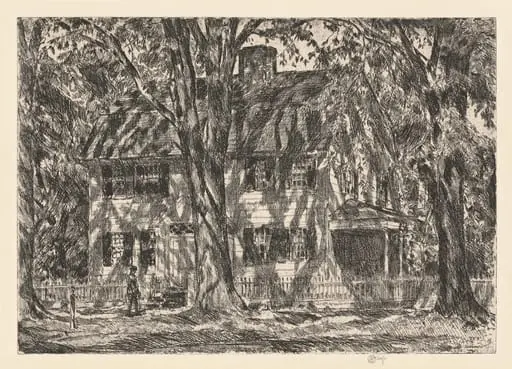 The Lion Gardiner House, Easthampton
 Cottages and Road