Artwork
Allegory of the Birth of the Infante Don Fernando
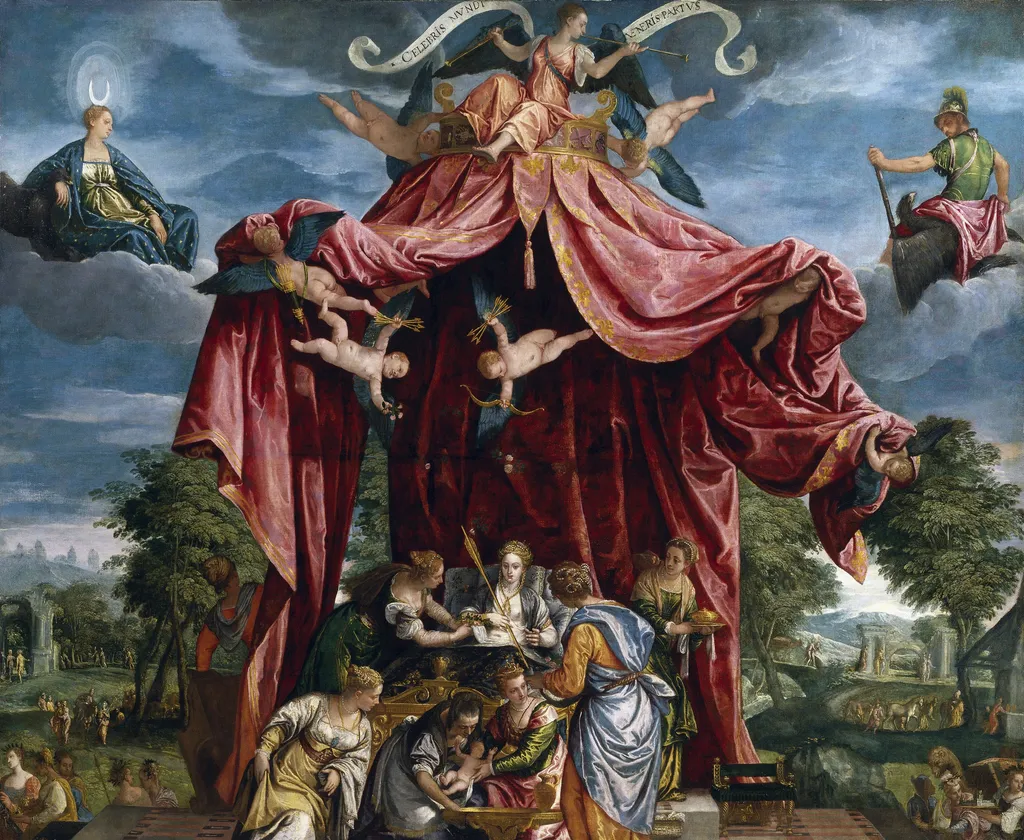
Allegory of the Birth of the Infante Don Fernando is an oil painting by the Mannerist artist Parrasio Micheli. It dates from 1575 and is held in the collection of the Museo del Prado.
About this work
Overview
Created in 1575, the oil painting titled *Allegory of the Birth of the Infante Don Fernando* is attributed to the Italian‑Spanish court painter Parrasio Micheli. The work is part of the collection of the Museo del Prado, where it hangs among other examples of late‑Renaissance allegorical art.
Subject & Meaning
The composition centers on a towering female figure dressed in a voluminous red garment, hovering above a gathering of onlookers.
The composition centers on a towering female figure dressed in a voluminous red garment, hovering above a gathering of onlookers. She is flanked by cherubic angels bearing banners, while a trumpet—an emblem of proclamation—features prominently, suggesting a celebratory announcement of the infant prince’s arrival. The celestial sky, moonlit clouds, and a cultivated garden reinforce the theme of divine favor and royal legitimacy.
Technique & Style
Micheli employs a pronounced impasto on the woman's drapery, building up the paint to give the fabric a tactile, almost sculptural presence. Light catches the folds of the red dress and the delicate feathers of the angels’ wings, creating a contrast that heightens the sense of three‑dimensionality. The overall palette balances rich reds with muted earth tones, typical of the late sixteenth‑century Spanish court aesthetic.
History & Provenance
The painting was likely commissioned to commemorate the birth of Infante Don Fernando, a member of the Spanish royal family, and to underscore the dynastic continuity of the Habsburg line. After remaining in royal possession for several centuries, it entered the national collection in the early twentieth century and has been displayed at the Prado since that time.
Context
In the latter half of the sixteenth century, allegorical representations of royal births were common in Iberian courts, serving both propagandistic and devotional purposes. Micheli, trained in the Italian manner but active in Spain, blended the dramatic chiaroscuro of the Venetian school with the formal solemnity favored by the Spanish monarchy, situating the work within a cross‑cultural artistic dialogue.
Own this work as a print
Artist & collection

 Birth of the Virgin
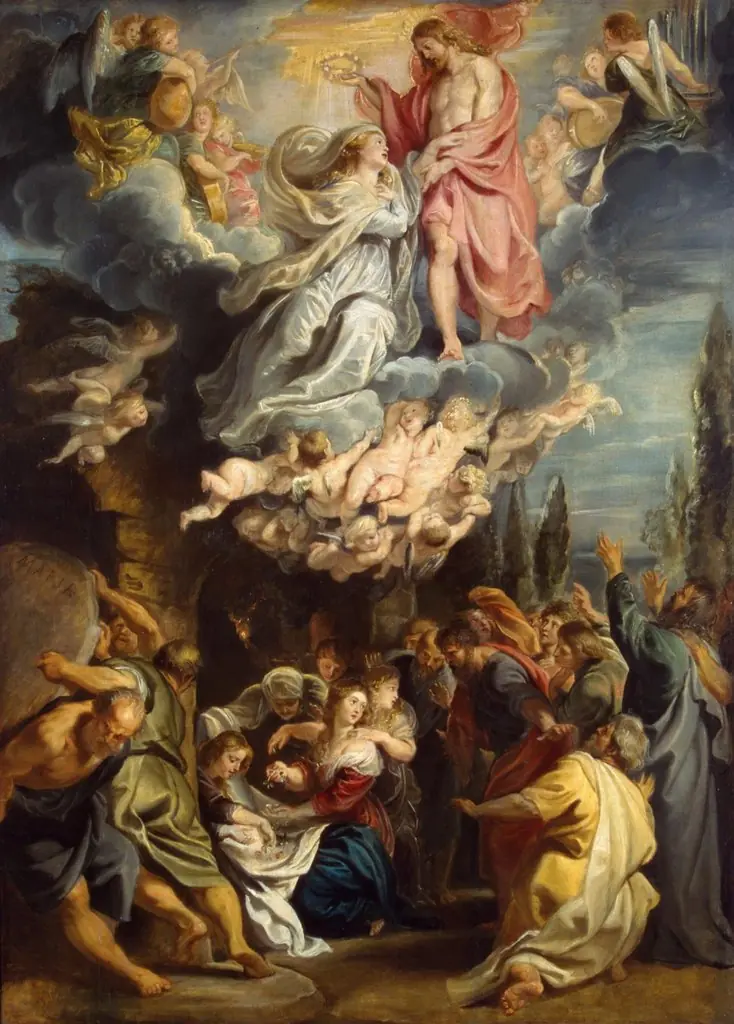 Coronation and Assumption of the Virgin
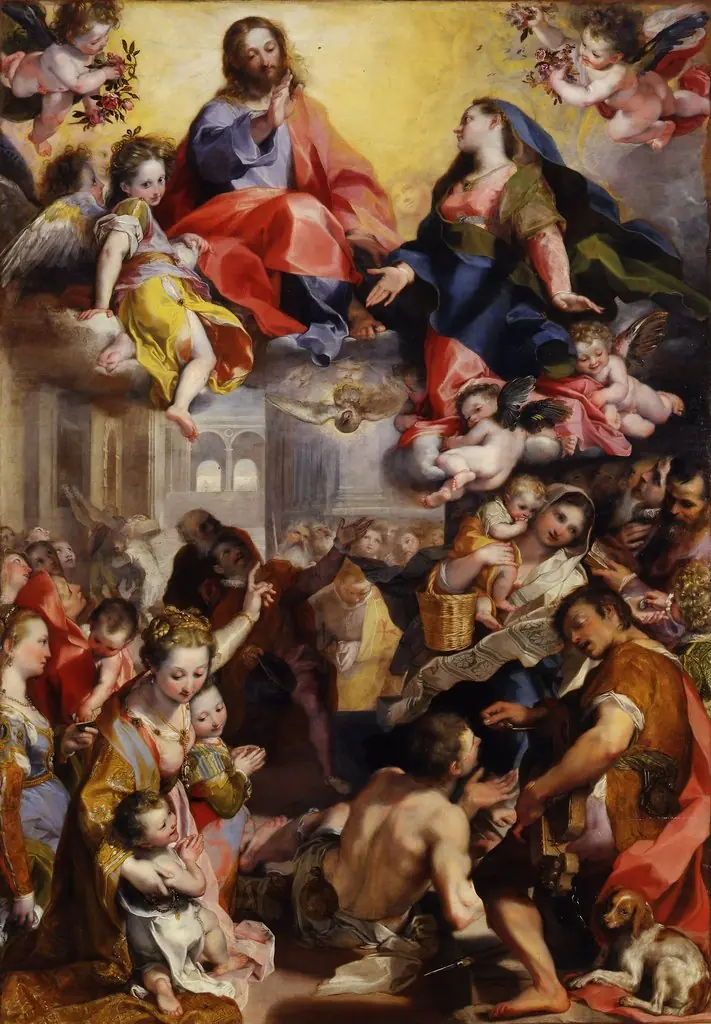 Madonna of the people
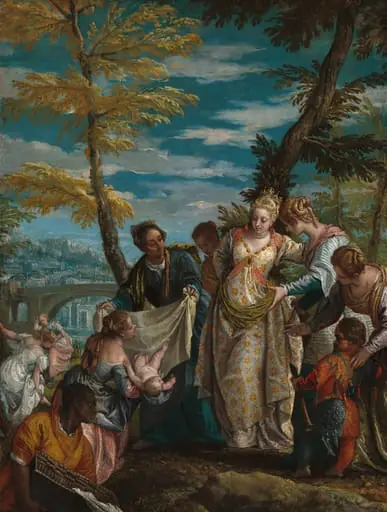 The Finding of Moses
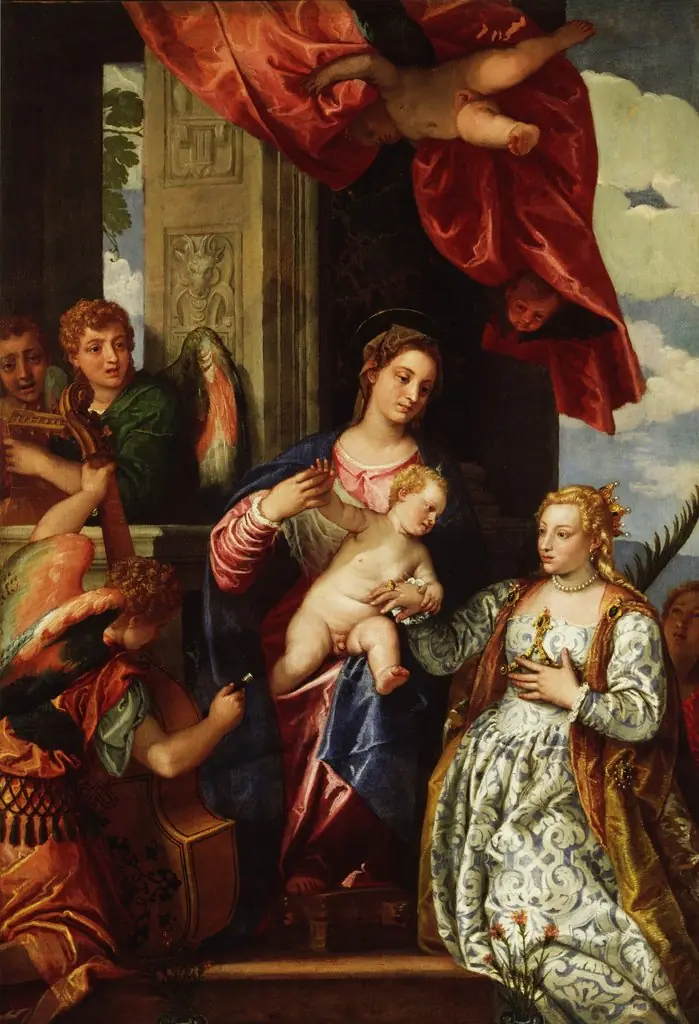 The Mystic Marriage of St. Catherine
 The Assumption of Mary
 The Virgin and Child adored by Saint Louis, King of France
 Virgin and Child with young John the Baptist and Saint Catherine
 Mystic Marriage of St Catherine