Artwork
A view of the Douglas Bridge near Inverary, Argyllshire
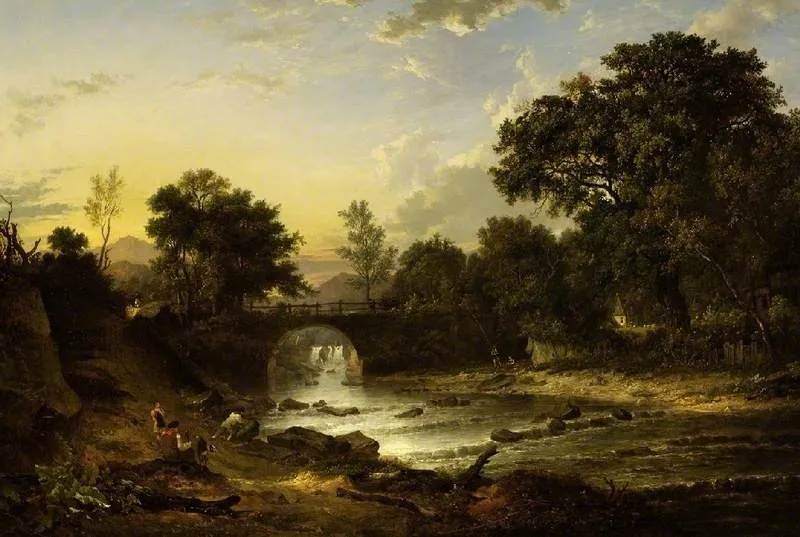
A view of the Douglas Bridge near Inverary, Argyllshire is an oil painting by Patrick Nasmyth. It dates from 1818 and is held in the collection of the Fitzwilliam Museum.
About this work
Overview
Painted in 1818, this oil work by Patrick Nasmyth captures a quiet stretch of the Scottish countryside near Inverary. As the eldest son of landscape painter Alexander Nasmyth, Patrick inherited a tradition of topographical precision and naturalistic observation. The painting focuses on the Douglas Bridge, a modest structure spanning a winding river, framed by dense foliage and uneven terrain.
Subject & Meaning
The bridge, neither grand nor ruined, functions as a quiet connector—symbolizing passage through an unaltered landscape rather than conquest over it.
The scene presents no dramatic narrative, instead emphasizing stillness and rural solitude. A solitary figure or animal near the left edge suggests human presence without intrusion, reinforcing the quiet harmony between nature and the built environment. The bridge, neither grand nor ruined, functions as a quiet connector—symbolizing passage through an unaltered landscape rather than conquest over it.
Technique & Style
Nasmyth employs soft, blended brushwork to render foliage and water, avoiding sharp definition in favor of atmospheric cohesion. Light falls evenly across the scene, with subtle tonal shifts suggesting diffuse daylight rather than strong chiaroscuro. The palette is restrained, dominated by muted greens and earth tones, enhancing the painting’s tranquil mood without theatrical contrast.
History & Provenance
Created during Nasmyth’s early career, the painting reflects his commitment to documenting Scottish scenery with fidelity. It likely originated as a private commission or personal study, common among artists of his circle. No record of public exhibition exists at the time, and its early ownership remains undocumented, though it stayed within Scottish artistic networks.
Context
In early 19th-century Scotland, landscape painting gained traction as national identity formed around natural heritage. Artists like Nasmyth contributed to this movement by recording lesser-known sites, countering the romanticized Highlands favored by contemporaries. This work belongs to a quieter tradition—focused on local, everyday topography rather than dramatic vistas.
Legacy
Though not widely exhibited in his lifetime, Nasmyth’s works, including this one, are now recognized for their understated accuracy and sensitivity to regional character. The painting contributes to a broader archive of Scottish landscape art that values observation over embellishment, influencing later topographical painters who sought authenticity over spectacle.
Artist & collection
Artist
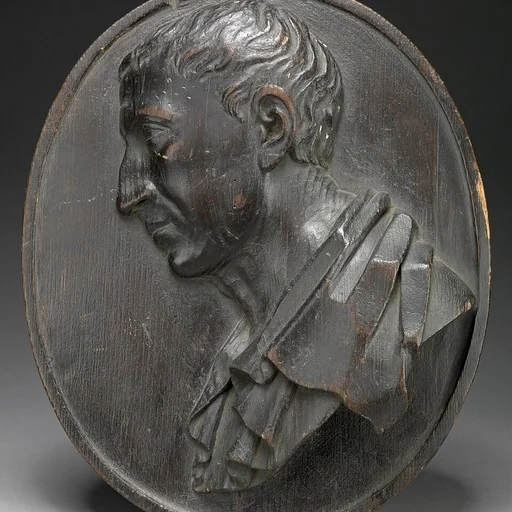
Patrick Nasmyth, (7 January 1787 – 17 August 1831), was a Scottish landscape painter. He was the eldest son of the artist Alexander Nasmyth.

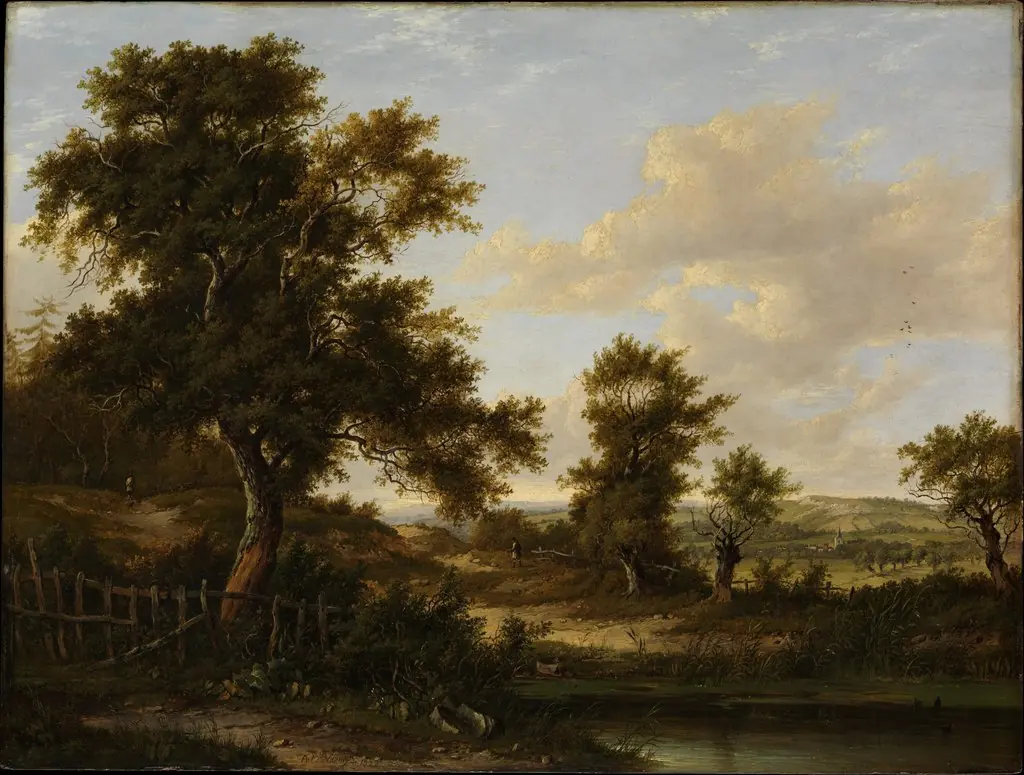
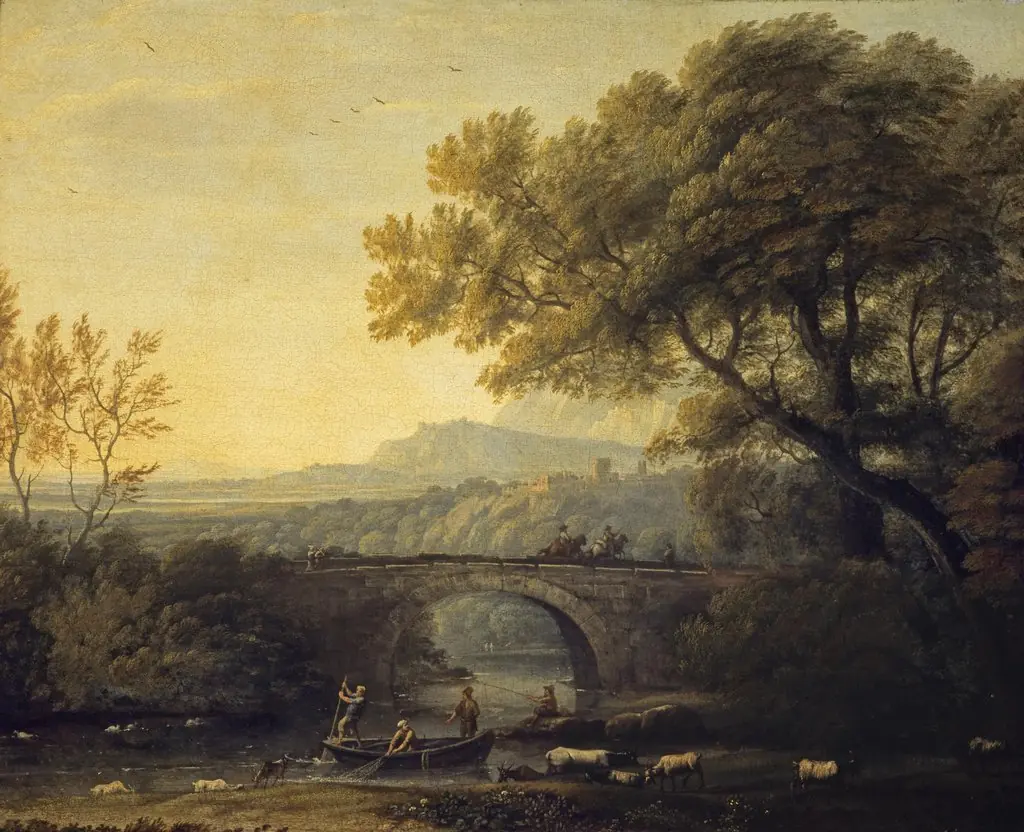 Landscape with a Bridge
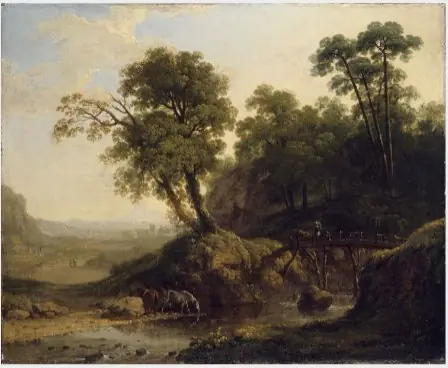 Landscape with a River and Horses by a Wooden Bridge
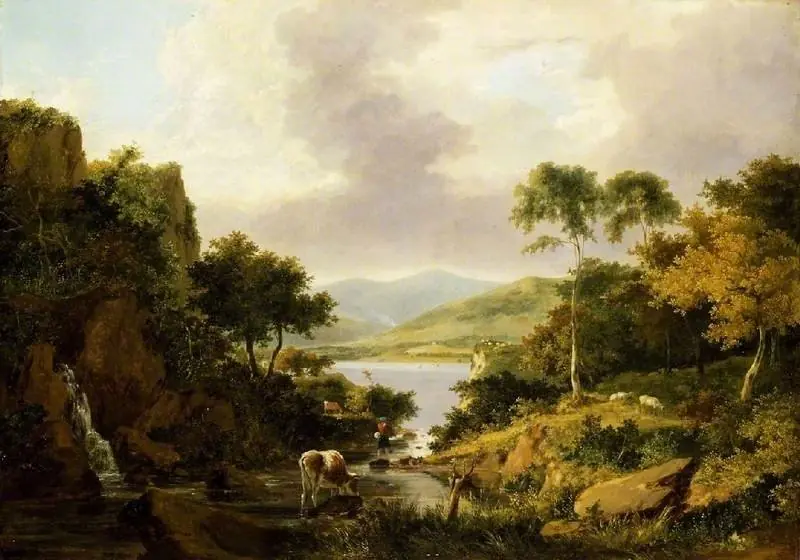 Loch Etive, Argyllshire
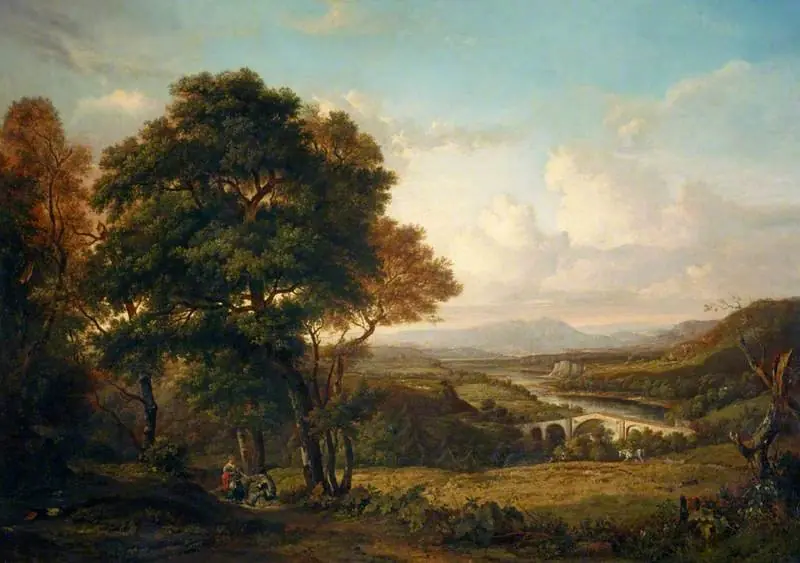 The Valley of the Tweed
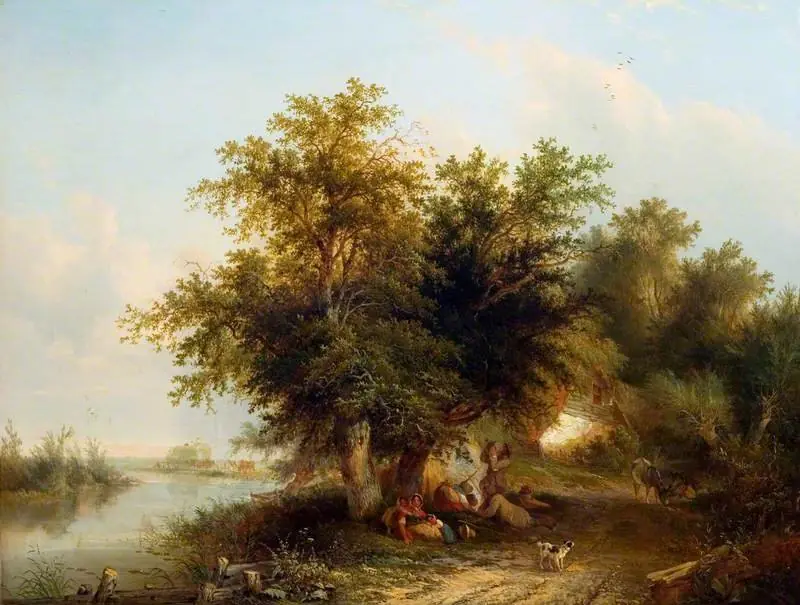 Landscape with Gypsies and Haymakers
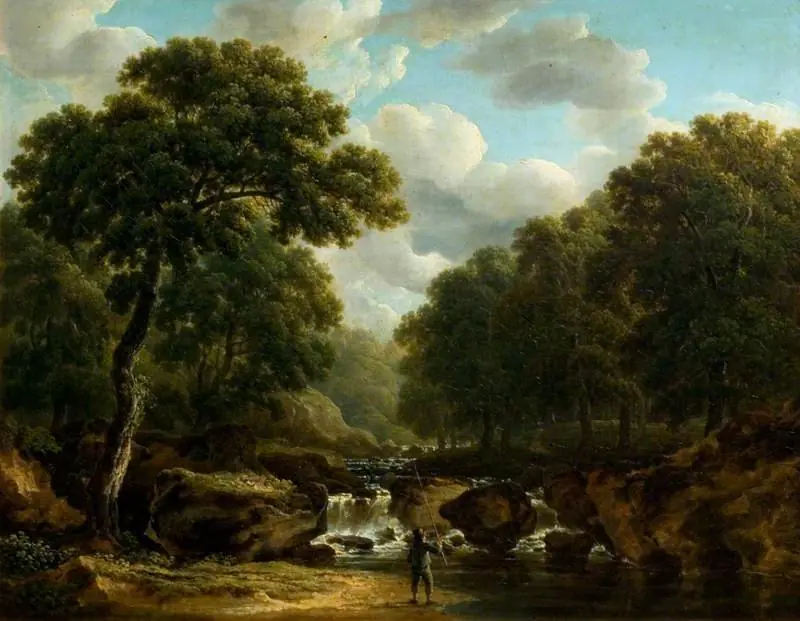 The Devil's Glen, County Wicklow
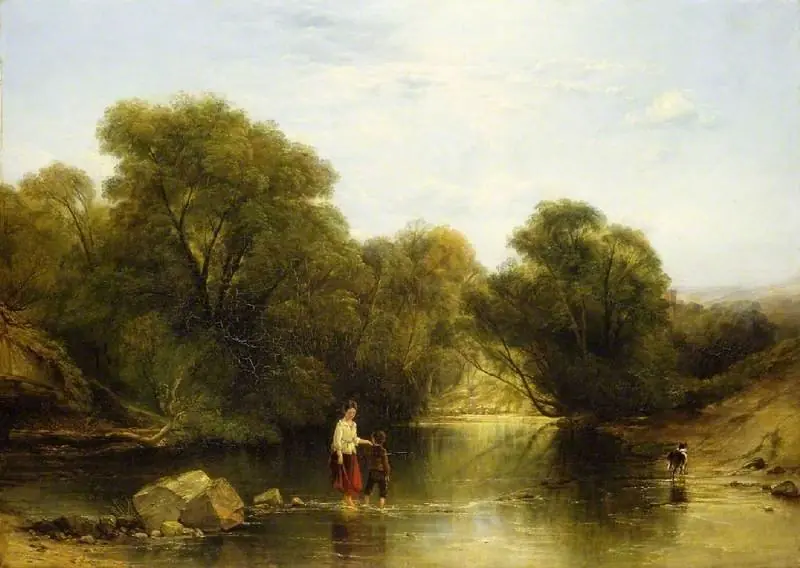 Crossing the stream (1849)
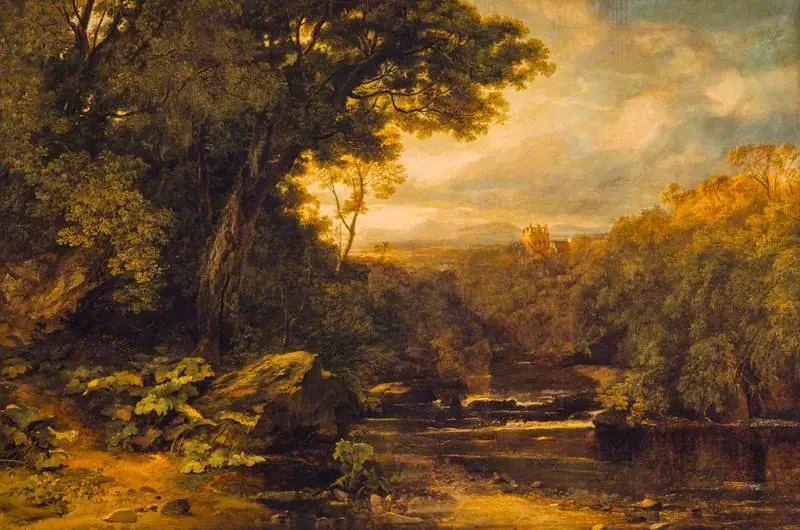 A Lowland River
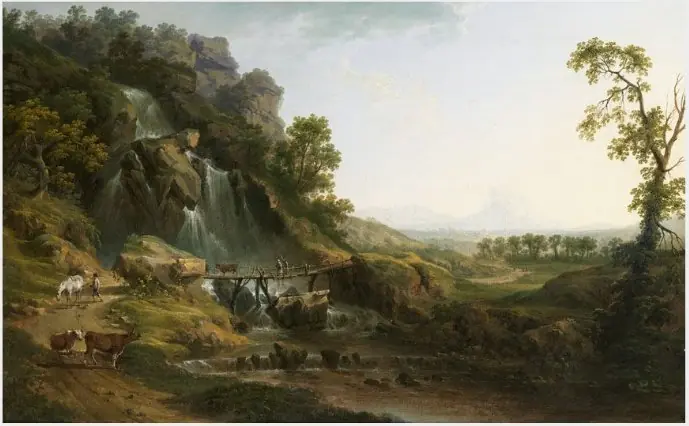 A Landscape with Travellers and Cattle Crossing a Bridge by a Waterfall
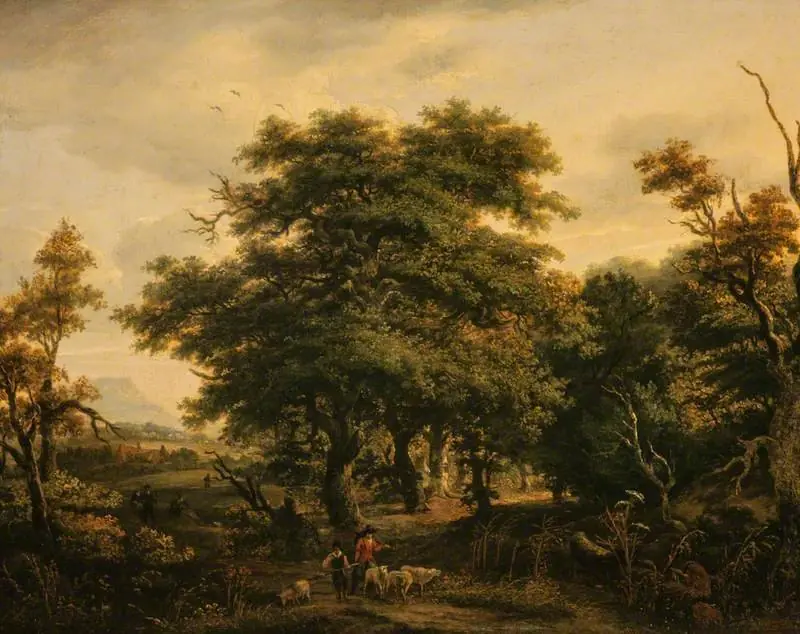 Woody Landscape with Figures and Sheep
 Landscape, a brook and farm-house among trees
 View of Banff with the Bridge over the River Deveron