Artwork
Roman Ruins Landscape
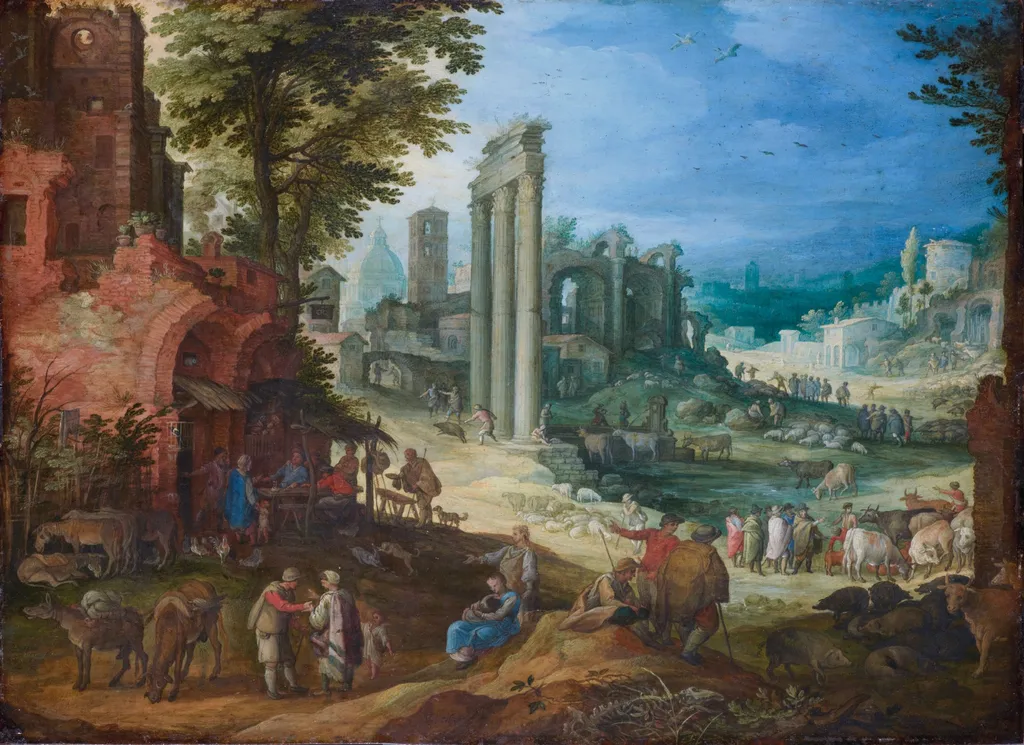
Roman Ruins Landscape is an oil painting by the Flemish Baroque painting artist Paul Bril. It dates from 1600 and is held in the collection of the Staatliche Kunstsammlungen Dresden.
About this work
Overview
The composition centers on the ruins of the Temple of Castor and Pollux within the Roman Forum, rendered with careful attention to architectural detail.
Painted around 1600 on copper, this landscape by Paul Bril presents an idealized view of ancient Roman architecture nestled within a pastoral setting. The composition centers on the ruins of the Temple of Castor and Pollux within the Roman Forum, rendered with careful attention to architectural detail. The scene is alive with human and animal activity, yet maintains a quiet, contemplative mood through its balanced structure and subdued lighting.
Subject & Meaning
The painting merges the grandeur of antiquity with everyday rural life. Figures tend to livestock, gather near a fire, and stroll among the ruins, suggesting a continuity between Rome’s past and the present. Rather than portraying decay, Bril frames the ruins as integrated into a living landscape, evoking a sense of timelessness and quiet reverence for historical remnants rather than their decline.
Technique & Style
Bril employed copper as a support for its smooth, durable surface, allowing fine brushwork and luminous color transitions. The palette favors earthy browns, muted greens, and cool blues, with the sky’s deep hue anchoring the composition. Atmospheric perspective softens distant elements, while foreground details—textured stone, grazing animals, and scattered figures—add narrative depth without clutter, reflecting Flemish landscape traditions adapted to Italianate subjects.
History & Provenance
The work entered the collection of the Gemäldegalerie Alte Meister in Dresden, where it remains today. Likely acquired during the 17th or 18th century as part of broader European interest in Italianate landscapes, it reflects the taste for classical ruins among collectors of the time. Its preservation on copper has contributed to its relative state of conservation, preserving fine details otherwise vulnerable to deterioration.
Context
In early 17th-century Rome, artists like Bril catered to northern European patrons seeking idealized visions of antiquity. His work bridged Flemish landscape conventions with Italian topography, offering a romanticized yet plausible depiction of Rome’s ruins. This genre, known as capriccio, blended real monuments with imagined settings, serving both aesthetic and intellectual interests in classical heritage.
Legacy
Bril’s approach influenced later landscape painters who sought to harmonize nature and antiquity. His use of copper and subtle tonal gradations became a model for artists exploring the emotional resonance of ruins. Though not widely celebrated in his lifetime, his integration of daily life within classical settings helped shape the development of topographical and historical landscape painting in Europe.
Own this work as a print
Artist & collection

Artist
Paul Bril was a Flemish painter and printmaker principally known for his landscapes. He spent most of his active career in Rome. His Italianate landscapes had a major influence on landscape painting in Italy and Northern Europe.

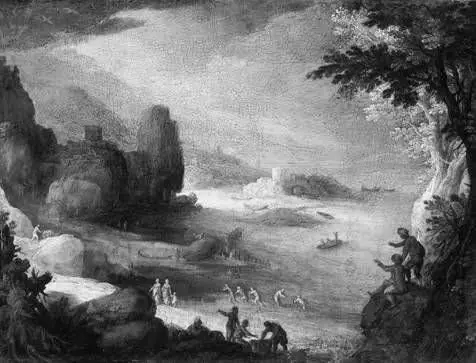
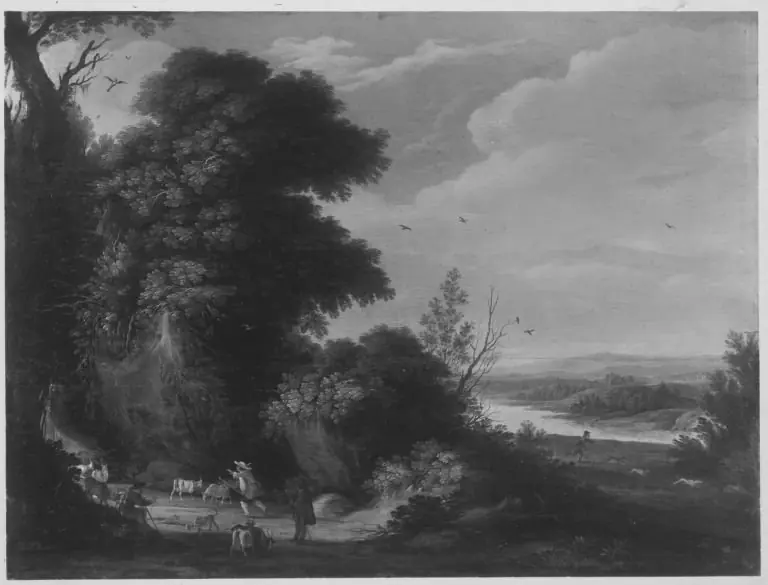
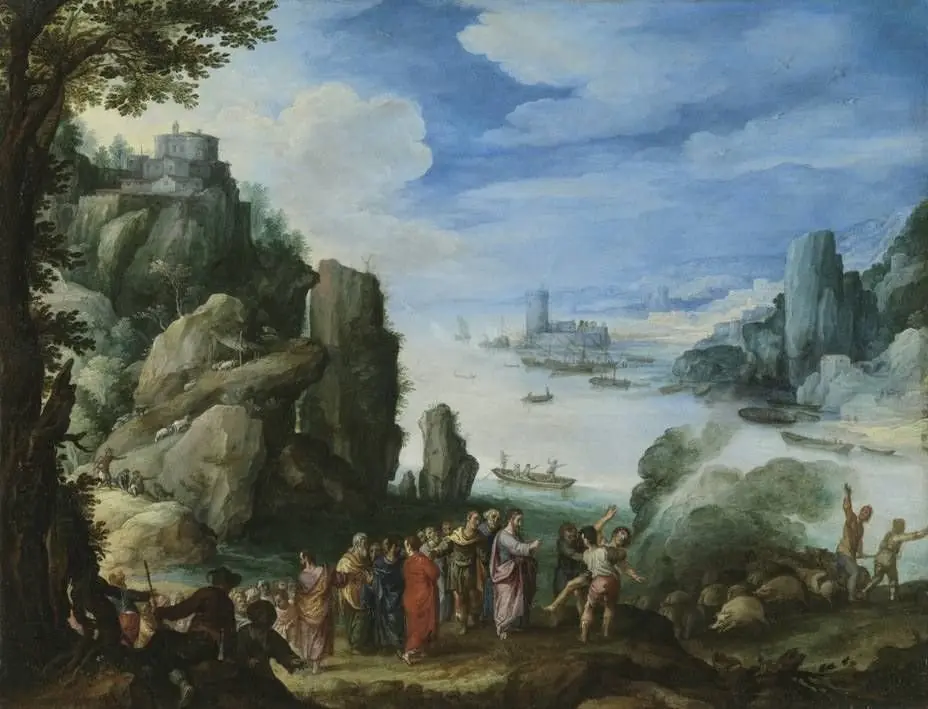
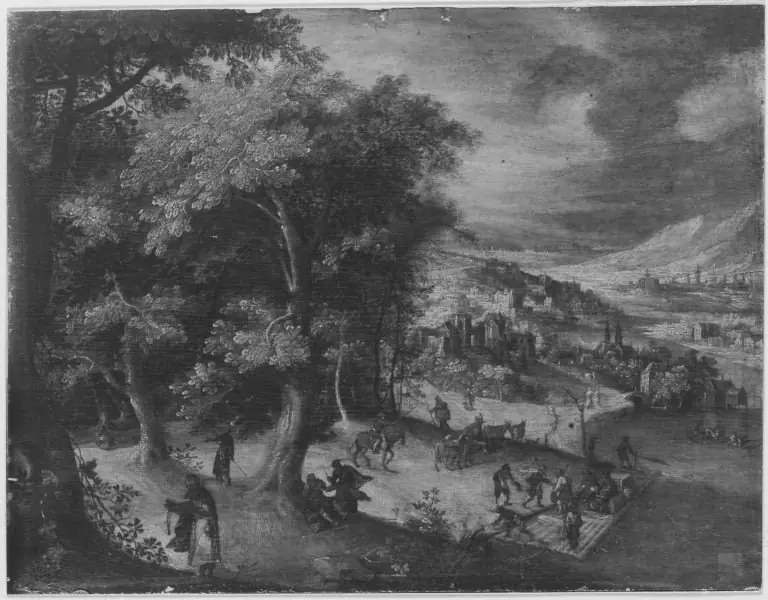
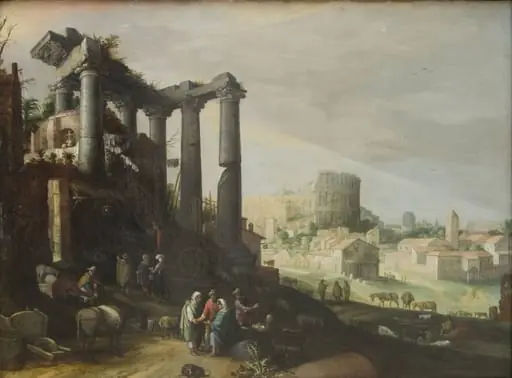 Landscape with a View of Campo Vaccino in Rome
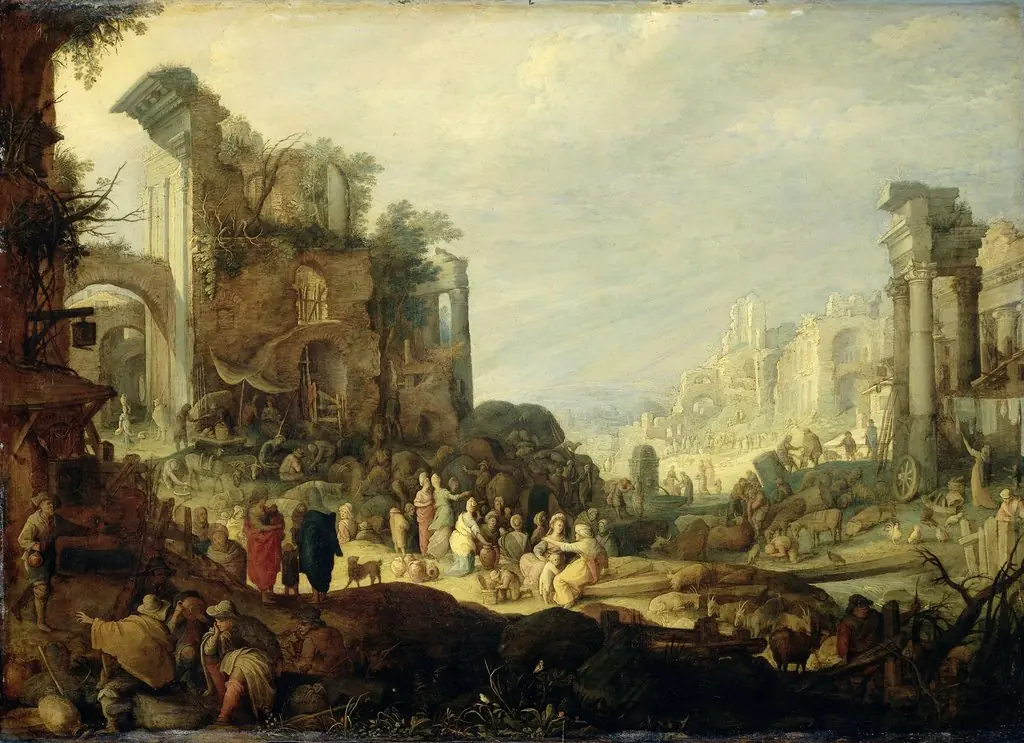 Landscape with Roman Ruins and the Meeting of Rebecca and Eliezer
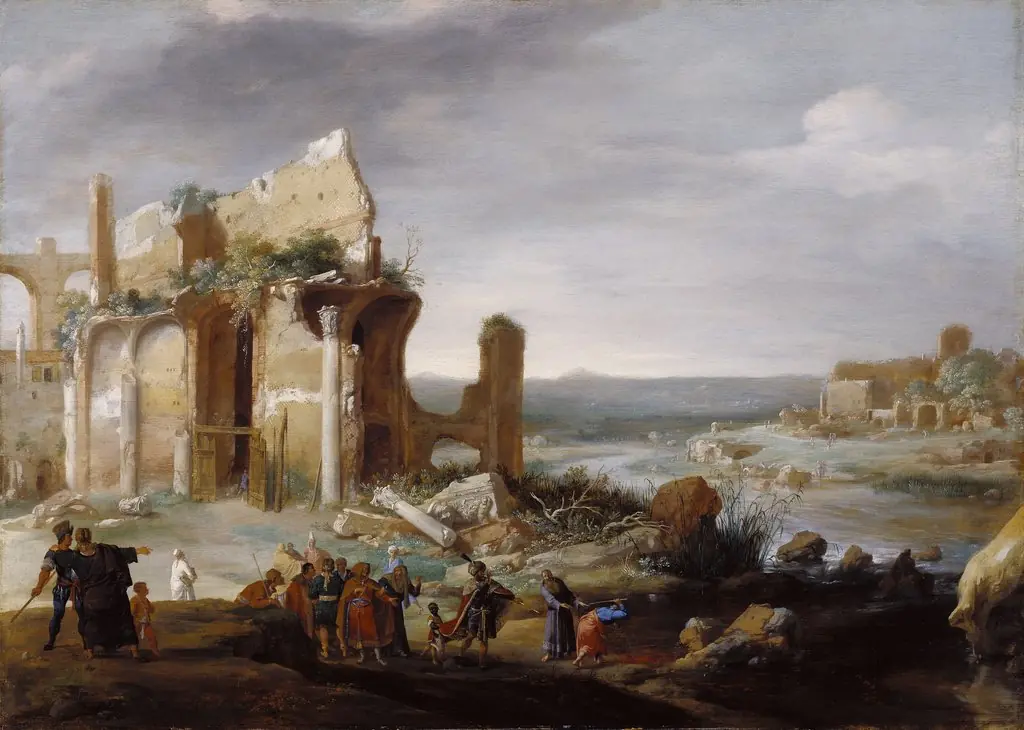 Moses and Aaron Changing the Rivers of Egypt to Blood
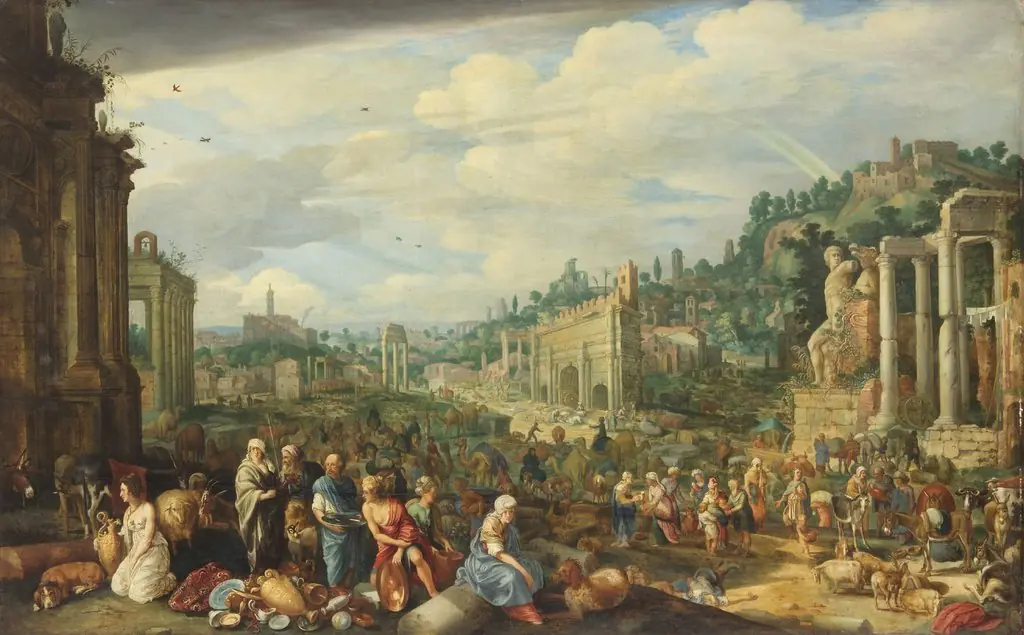 Ansicht des Campo Vaccino in Rom (Aufbruch der Israeliten aus Ägypten)
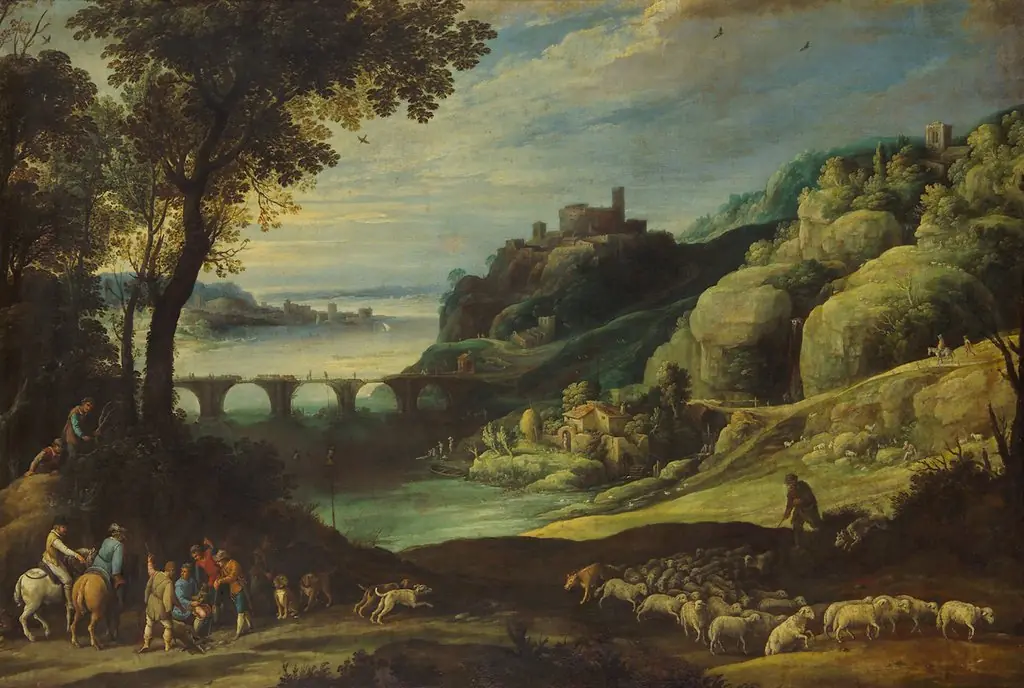 Landschaft mit Brücke
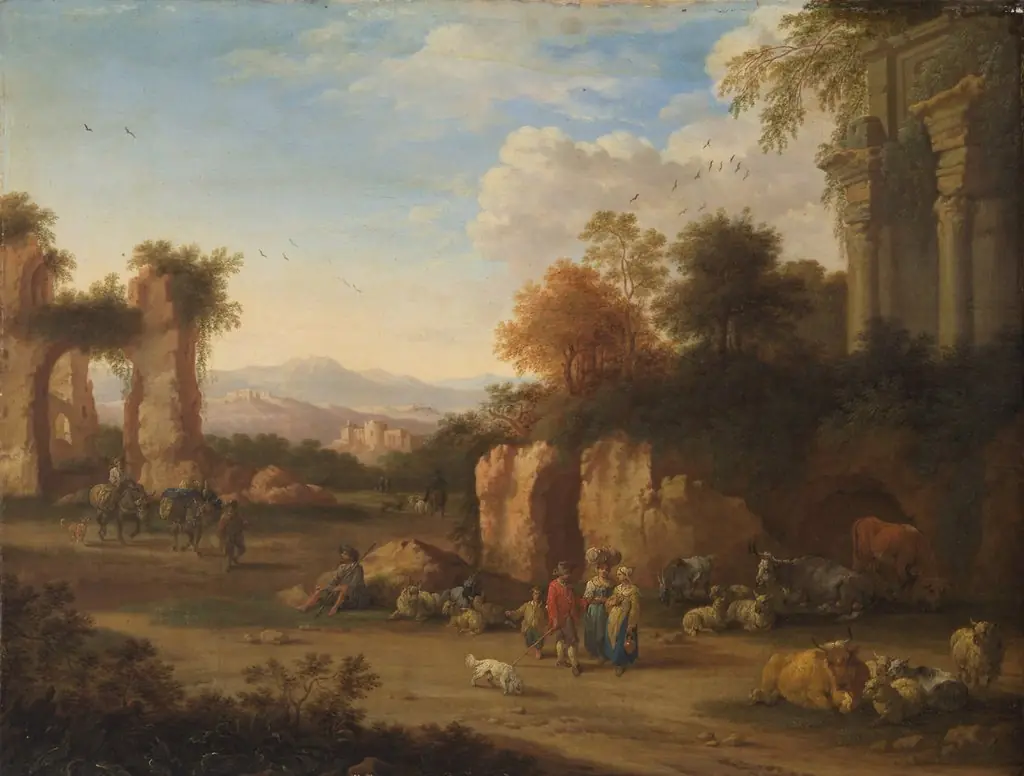 Italian landscape with ancient ruins and peasants
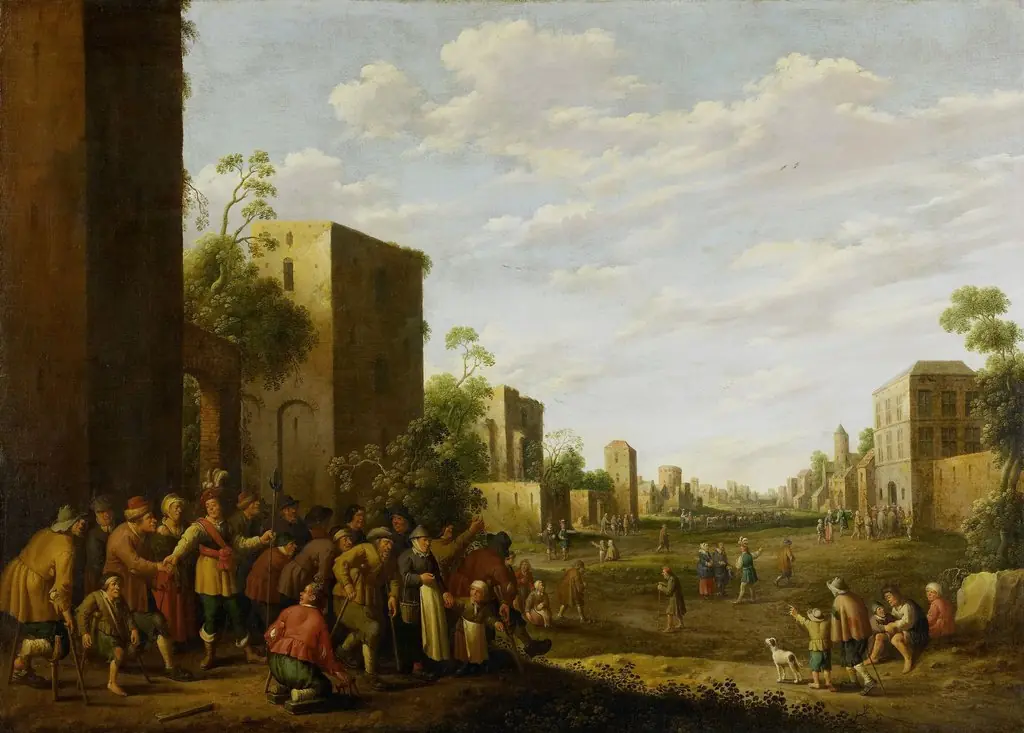 Housing the poor
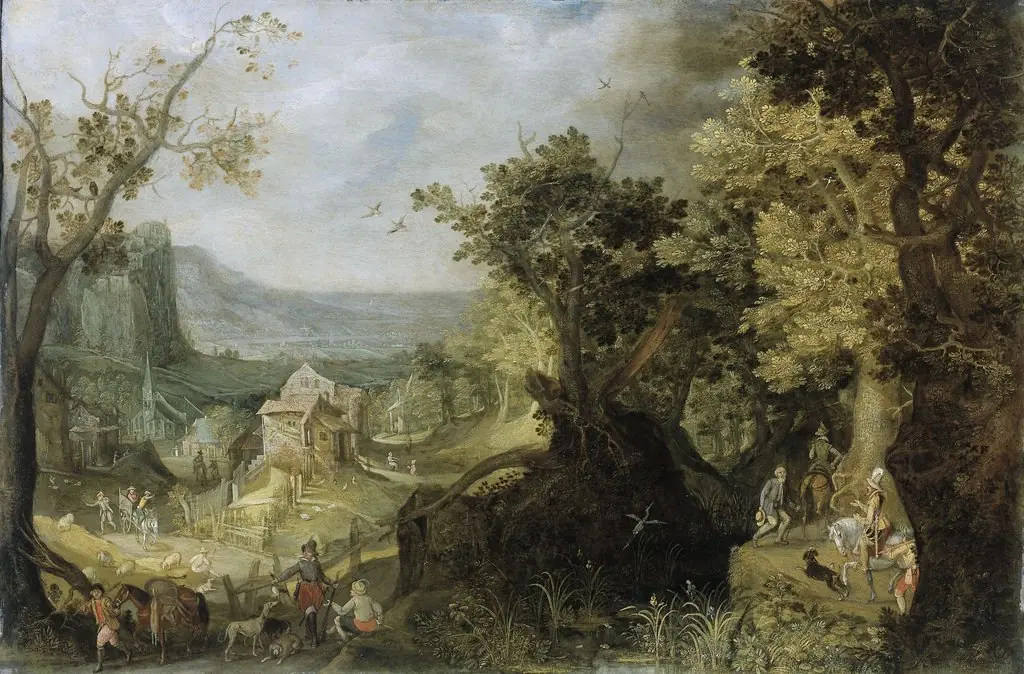 Wooded Landscape