Artwork
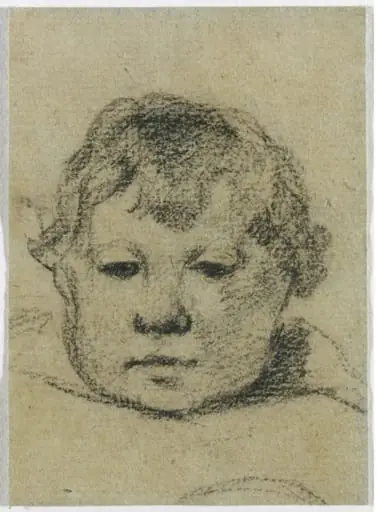
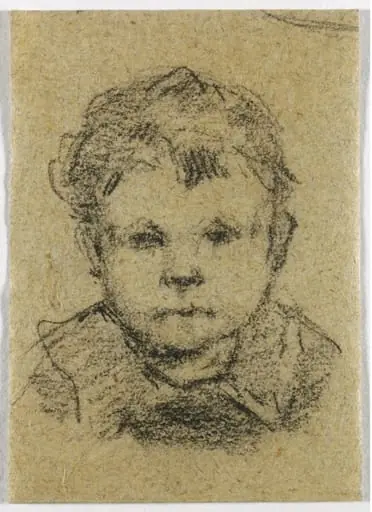
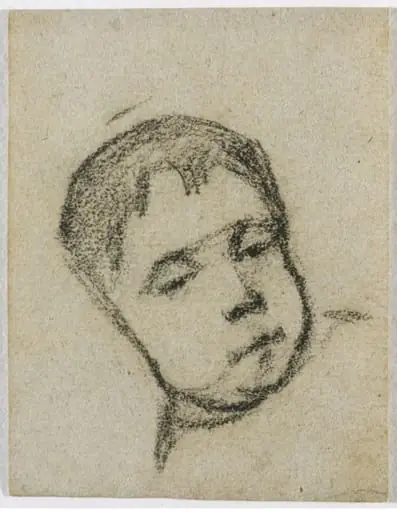
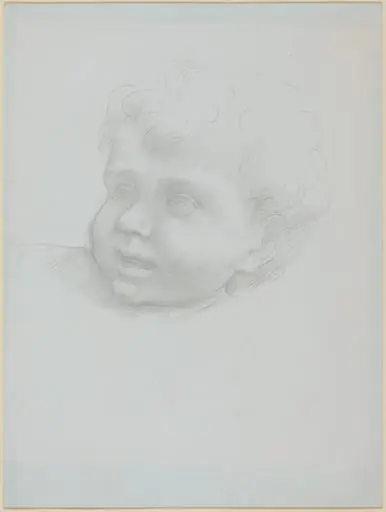
Emil Gauguin as a Child, Right Hand Forward
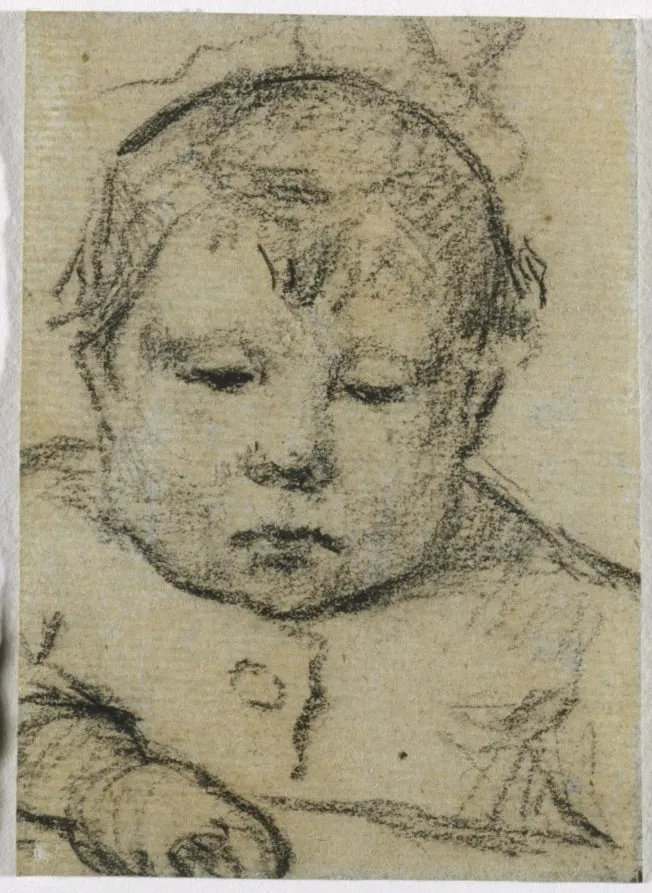
Emil Gauguin as a Child, Right Hand Forward is a drawing by the Impressionist artist Paul Gauguin. It dates from 1876 and is held in the collection of the Cleveland Museum of Art.
About this work
The boy stands on a wooden floor, right hand forward like he’s shaking yours.
Paul Gauguin painted his uncle Emil as a boy, about eight years old. The boy stands on a wooden floor, right hand forward like he’s shaking yours. His dark suit and white shirt fill the frame—no background, no extra details.
The plain background makes the boy stand out. His serious face and stiff pose feel older than his years. Gauguin painted this early in his career, before his bright Tahitian colors.
Look up the boy’s right hand. Search “Paul Gauguin (French, 1848–1903)” to see more portraits by him.
Overview
Emil Gauguin as a Child, Right Hand Forward is a drawing by Paul Gauguin, created circa 1876. It is an early work by the artist, who would later become associated with Post-Impressionism and Symbolism.
Subject & Meaning
The drawing depicts Emil Gauguin, the artist's son, as a child. Emil is shown standing on a wooden floor with his right hand extended, wearing a dark suit and white shirt. The plain background emphasizes the subject, conveying a sense of seriousness and formality.
Technique & Style
The work is characterized by a straightforward representation of its subject, with a focus on the figure and a plain background. Gauguin's style at this stage is marked by restraint, differing from the more expressive and colorful works he would later produce.
Artist & collection
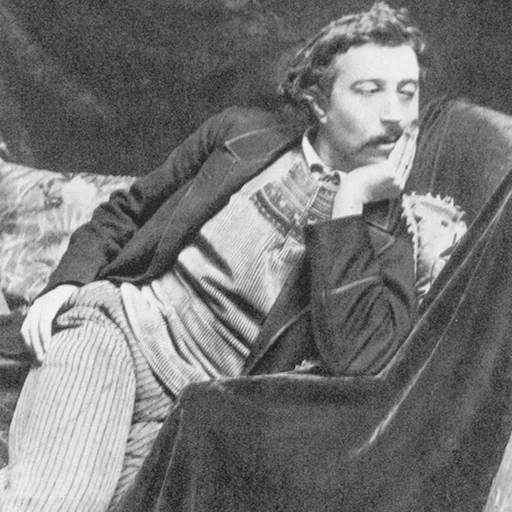
Artist
Eugène Henri Paul Gauguin (; French: ; 7 June 1848 – 8 May 1903) was a French painter, sculptor, printmaker, ceramist, and writer, whose work has been primarily associated with the Post-Impressionist and Symbolist movements.