Artwork
Tahitian Series: Offerings to a God
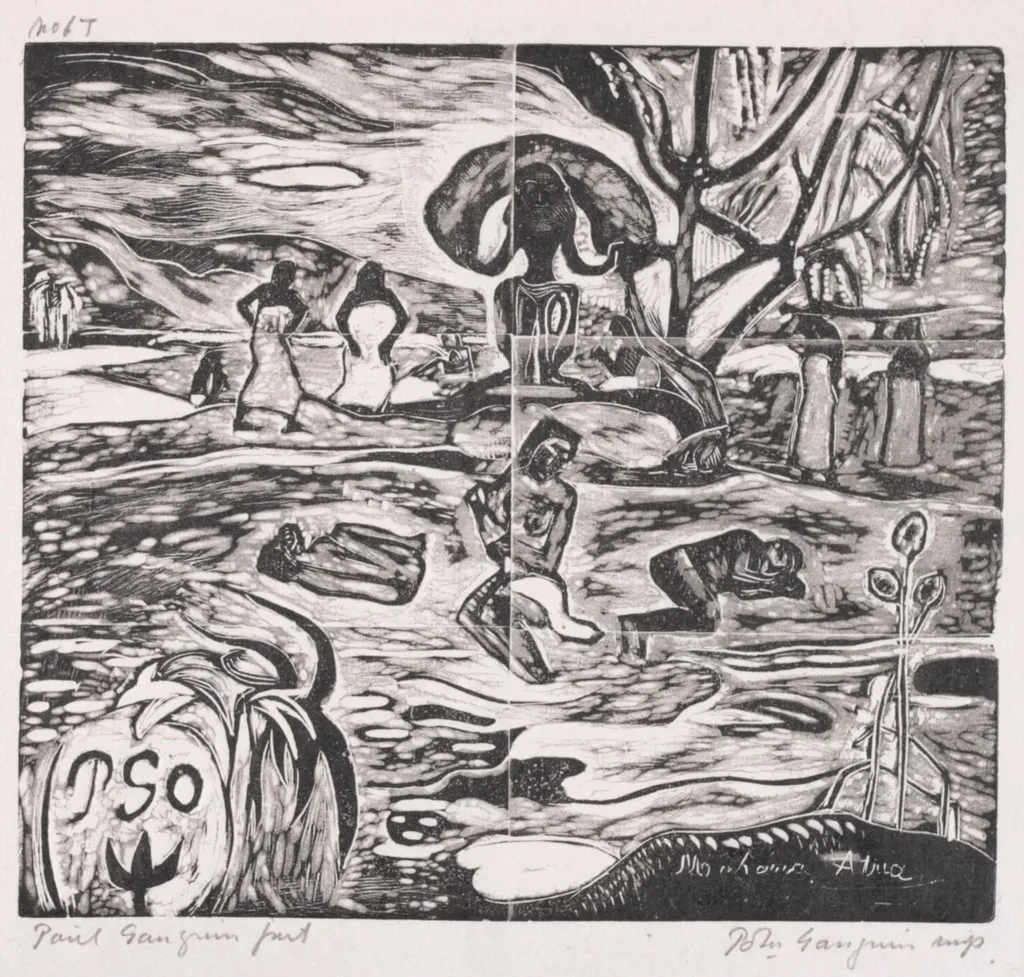
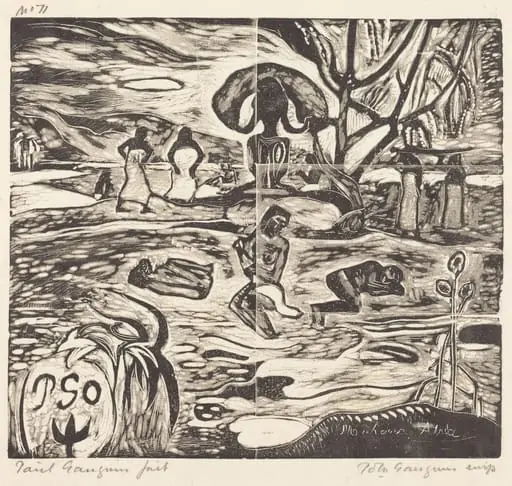
Tahitian Series: Offerings to a God is a print by the Impressionist artist Paul Gauguin. It dates from 1894 and is held in the collection of the Cleveland Museum of Art.
About this work
Overview
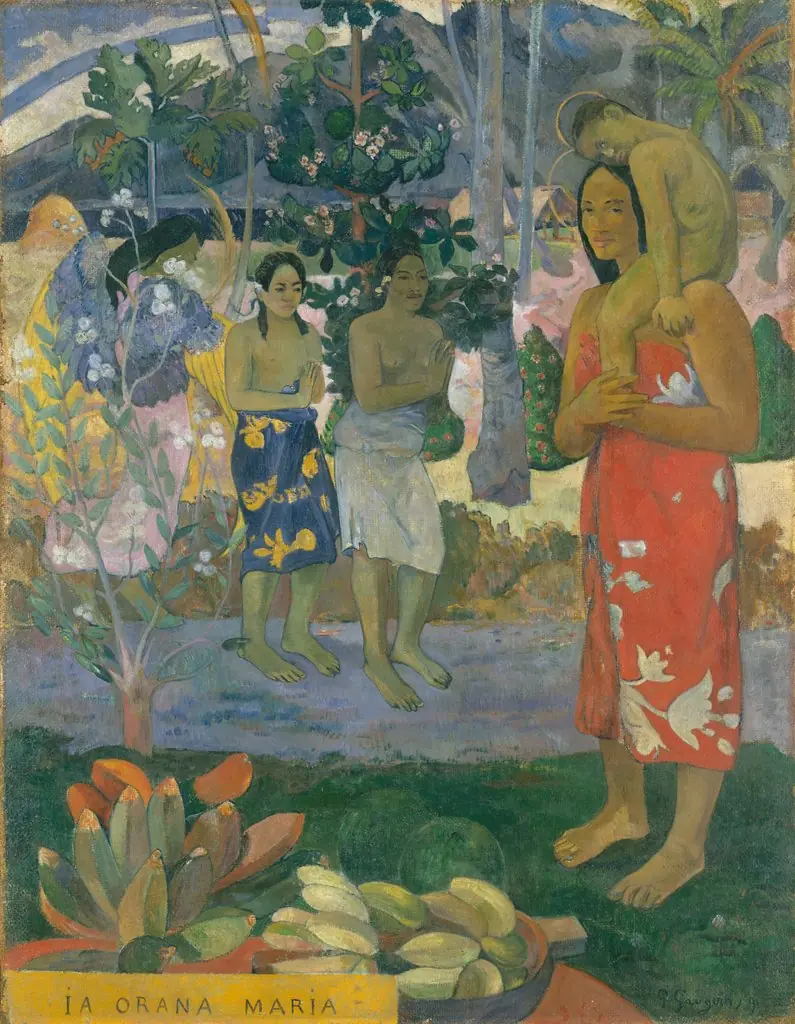
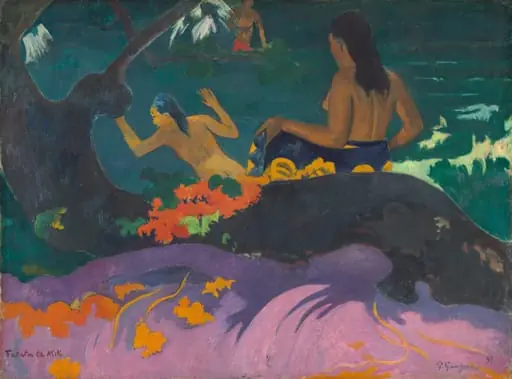
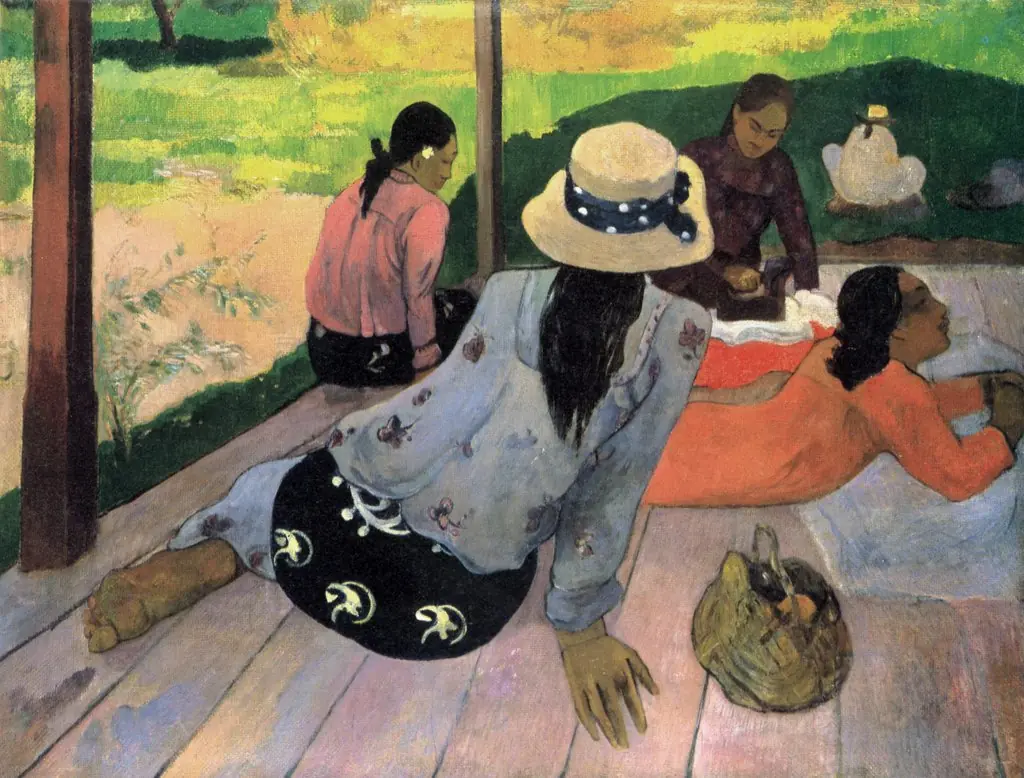
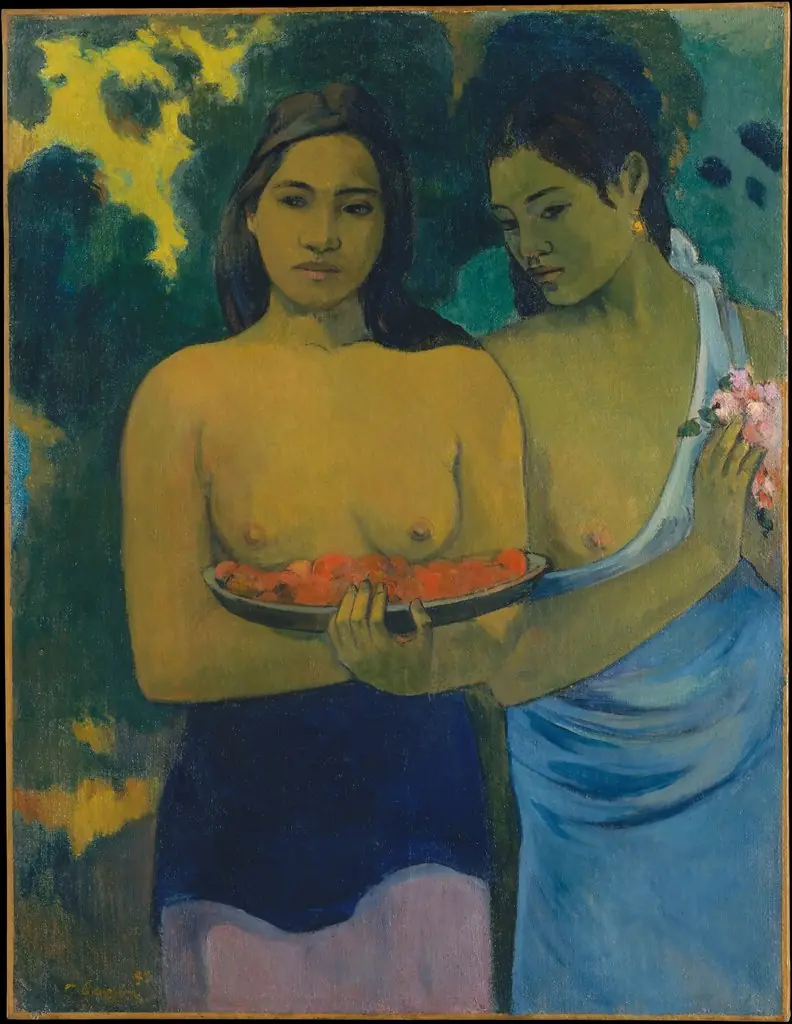
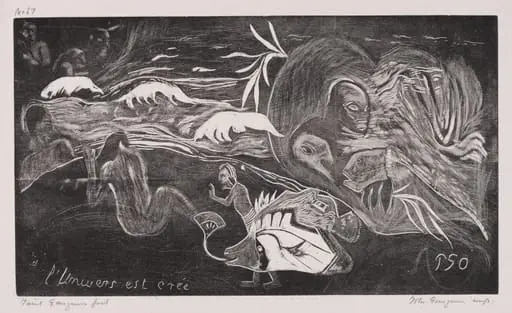
Tahitian Series: Offerings to a God is a 1894 print by Paul Gauguin, characteristic of his experimental approach to art. Created during his time in Tahiti, it marks a departure from European artistic conventions.
Subject & Meaning
The print depicts a chaotic ritual offering scene in a tropical setting, reflecting Gauguin's fascination with non-Western spirituality and symbolic imagery.
Technique & Style
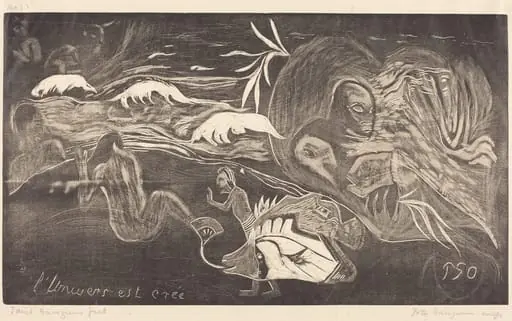
The work features simplified, stylized figures with jagged lines, rough shading, and bold, uneven lines, conveying movement and energy. The Synthetist style is evident in the dreamlike, non-realistic portrayal of faces and bodies.
History & Provenance
Created in 1894, during Gauguin's later period in Tahiti, the print's provenance details are not specified in available information.
Context
Part of Gauguin's broader exploration of Tahitian themes, this work sits within his Post-Impressionist and Symbolist oeuvre, characterized by a mix of printmaking, painting, sculpture, and ceramics.
Legacy
Tahitian Series: Offerings to a God contributes to Gauguin's legacy of pushing color and form boundaries, influencing subsequent artistic movements with its expressive, stylized approach.
Artist & collection
Artist
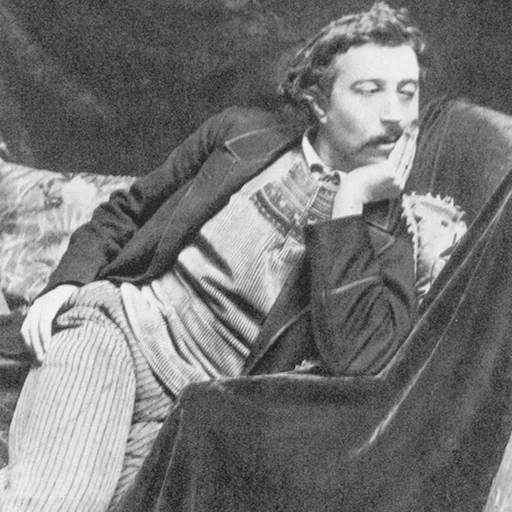
Eugène Henri Paul Gauguin (; French: ; 7 June 1848 – 8 May 1903) was a French painter, sculptor, printmaker, ceramist, and writer, whose work has been primarily associated with the Post-Impressionist and Symbolist movements.