Artwork
Tahitian Series: The Smile
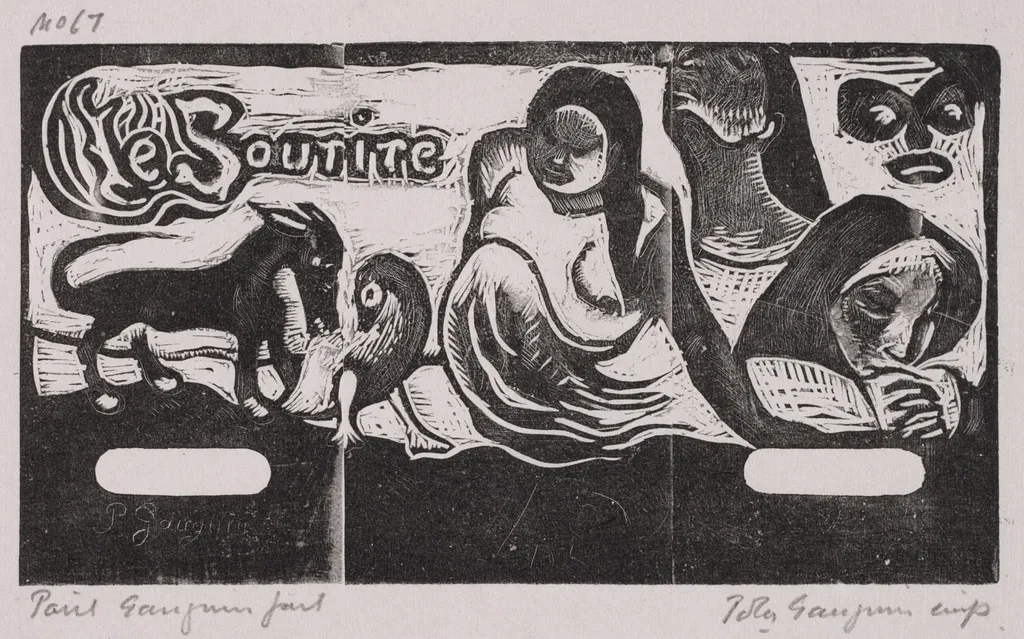
Tahitian Series: The Smile is a print by the Impressionist artist Paul Gauguin. It dates from 1894 and is held in the collection of the Cleveland Museum of Art.
About this work
Overview
This woodcut reflects his move away from European naturalism toward a more symbolic approach, combining simplified forms with intense contrasts.
Paul Gauguin produced *Tahitian Series: The Smile* in 1894 as part of a group of prints made during his stay in Tahiti. This woodcut reflects his move away from European naturalism toward a more symbolic approach, combining simplified forms with intense contrasts. The work is one of several in which he explored Polynesian life through a lens shaped by personal longing and cultural reinterpretation, rather than ethnographic accuracy.
Subject & Meaning
The print depicts three Tahitian women in a quiet, enclosed space, their postures suggesting introspection or stillness. The central figure, turned away with a curved spine, and the two others, heads bowed and hands folded, convey a sense of inwardness rather than narrative action. The inclusion of the French word 'Le Sourire' at the top introduces ambiguity—whether it refers to a hidden expression, a cultural ideal, or the artist’s own projection of serenity.
Technique & Style
Gauguin employed woodcut printing to achieve stark contrasts between deep black and unprinted paper, emphasizing silhouette over detail. Forms are flattened and stylized, with smooth contours that avoid anatomical precision. The background is nearly void of texture, isolating the figures and heightening their symbolic presence. The crude, hand-drawn inscription at the top reinforces the work’s handmade, non-industrial character, aligning with his rejection of academic conventions.
History & Provenance
Created during Gauguin’s second stay in Tahiti, this print emerged from a period of intense artistic experimentation following his disillusionment with European society. He produced multiple prints in this series using locally sourced materials and rudimentary tools. While the original print’s early ownership is undocumented, it entered institutional collections in the 20th century as interest grew in his non-Western-inspired works.
Context
Gauguin’s time in Tahiti coincided with colonial expansion and the erosion of indigenous traditions. Rather than document daily life, he constructed idealized visions of Polynesian culture, blending observation with fantasy. His Synthetist approach—reducing forms to essential shapes and using non-naturalistic color—was influenced by Japanese prints, medieval art, and his own spiritual aspirations, distancing his work from both Impressionism and realism.
Legacy
This print contributed to broader shifts in modern art by prioritizing emotional resonance over visual fidelity. Gauguin’s stylized figures and symbolic use of space influenced Expressionist and Primitivist movements, though his romanticized depictions of non-European cultures have since been critically reassessed. The work remains a key example of how artists in the late 19th century reimagined identity, place, and meaning beyond Western frameworks.
Artist & collection
Artist
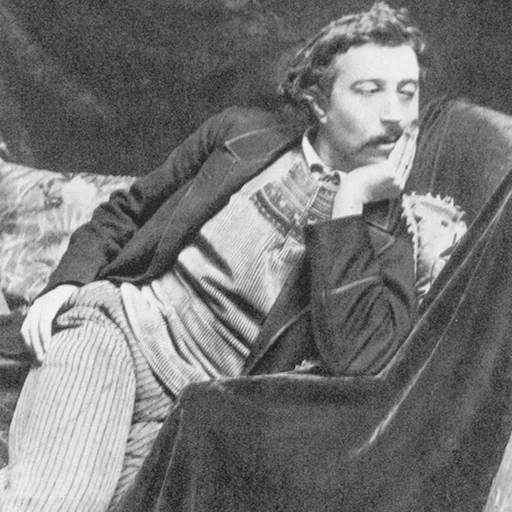
Eugène Henri Paul Gauguin (; French: ; 7 June 1848 – 8 May 1903) was a French painter, sculptor, printmaker, ceramist, and writer, whose work has been primarily associated with the Post-Impressionist and Symbolist movements.

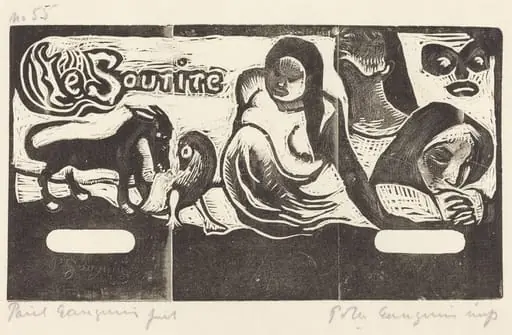 Title Page for "Le Sourire" (Titre du Sourire)
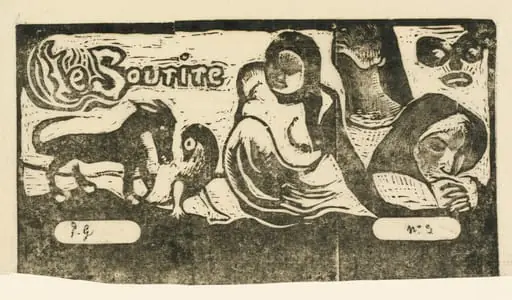 Title Page for "Le Sourire" (Titre du Sourire)
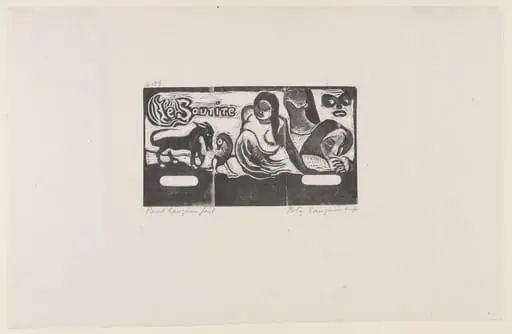 Untitled
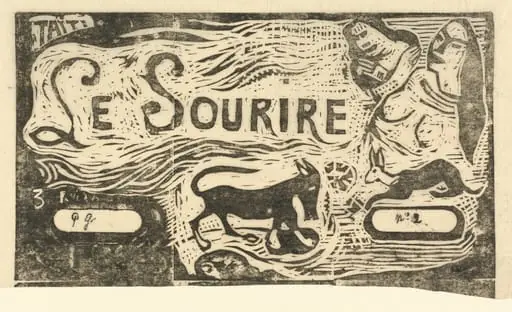 Title Page for "Le Sourire" (Titre du Sourire)
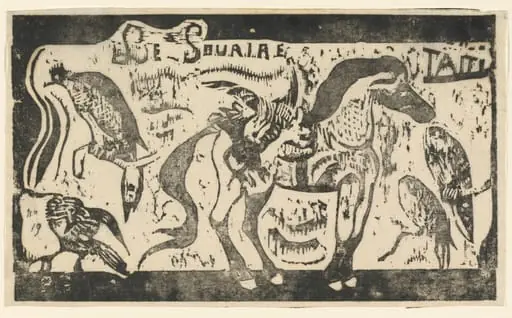 Title Page for "Le Sourire" (Titre du Sourire)
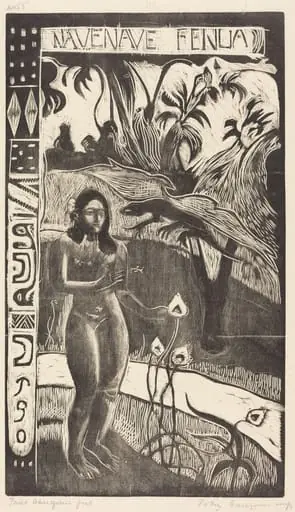 Nave Nave Fenua (Delightful Land)
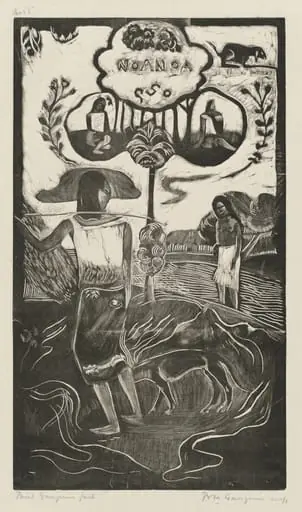 Noa Noa (Fragrant, Fragrant)
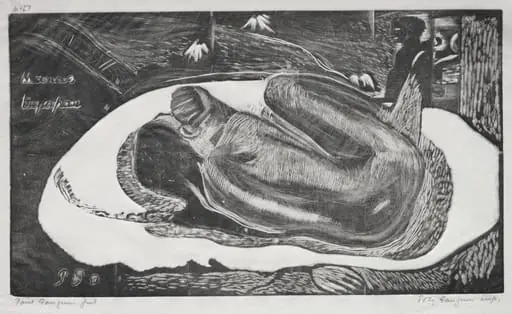 Noa Noa: Manao Yupapau ( Watched by the Spirts of the Dead)
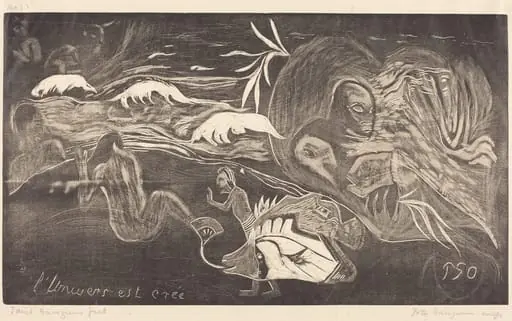 L'Univers est crée (The Creation of the Universe)
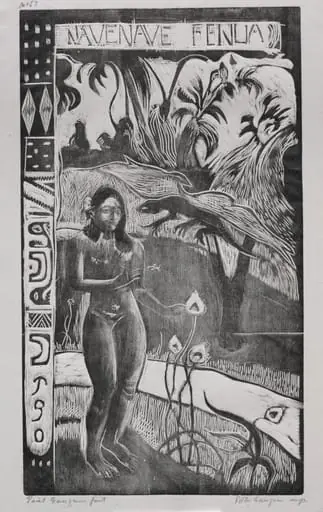 Tahitian Series: Land of Delights