Artwork
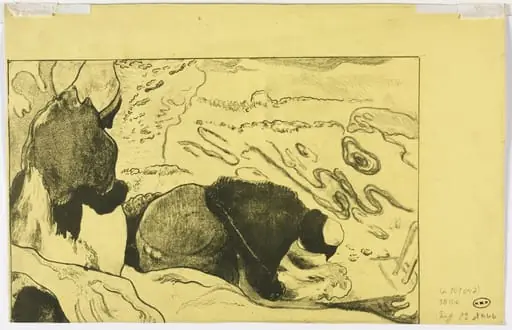
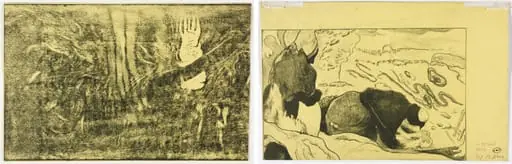
Volpini Suite: Laundresses (Les Laveuses)
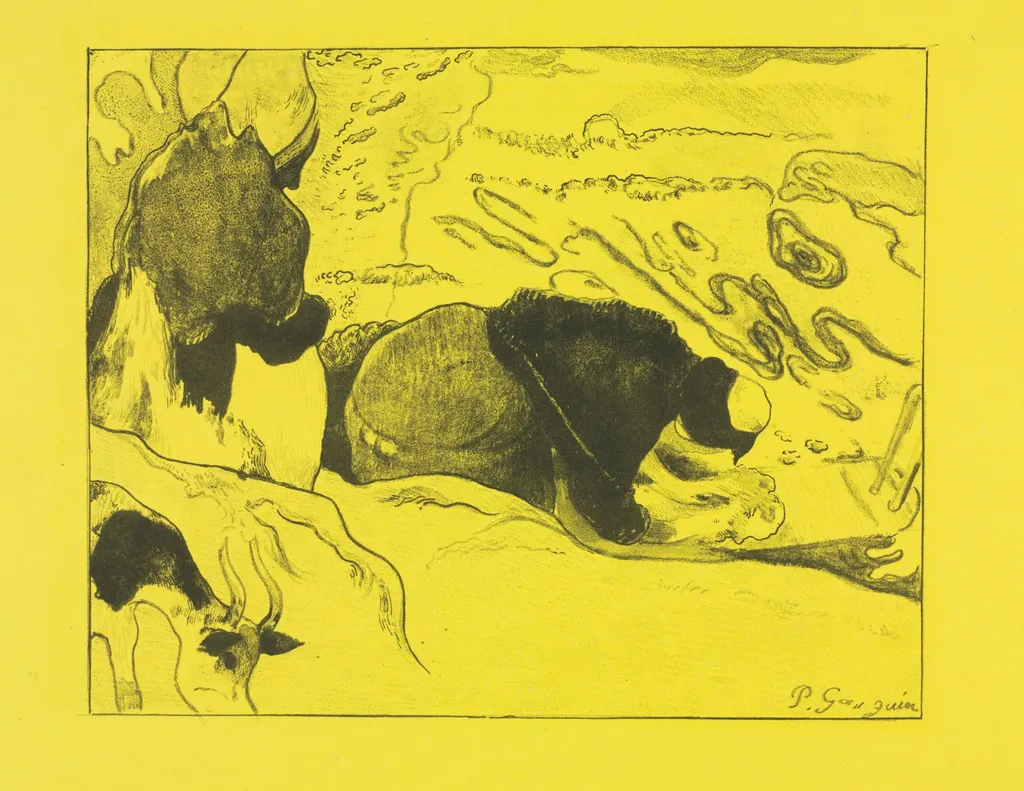
Volpini Suite: Laundresses (Les Laveuses) is a print by the Impressionist artist Paul Gauguin. It dates from 1889 and is held in the collection of the Cleveland Museum of Art.
About this work
Overview
The series captures rural laborers in Brittany, reflecting his interest in regional traditions and his departure from academic norms.
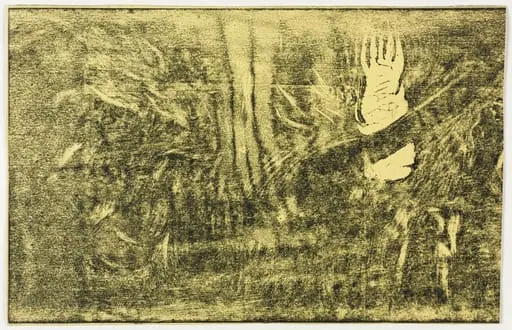
The Volpini Suite: Laundresses is a set of twelve lithographs created by Paul Gauguin in 1889. Printed on large sheets of yellow paper, these works mark his first serious engagement with printmaking. Rather than using traditional stone lithography, Gauguin employed zinc plates, experimenting with texture and tone. The series captures rural laborers in Brittany, reflecting his interest in regional traditions and his departure from academic norms.
Subject & Meaning
The prints depict Breton women engaged in the daily task of washing clothes by a river. Their traditional attire and rhythmic movements emphasize the quiet dignity of labor. Gauguin avoided idealization, instead focusing on the physicality and solitude of the work. The scenes suggest a spiritual connection between the women and their environment, aligning with his broader interest in indigenous ways of life and symbolic representation over naturalism.
Technique & Style
Gauguin adopted flattened perspectives and bold outlines, echoing Japanese ukiyo-e prints, which had influenced French artists since the 1860s. Water is rendered as stylized, rhythmic patterns; figures are cropped at the edges, and compositional space is deliberately unbalanced. The use of zinc plates allowed for sharper lines, while the yellow paper enhanced the decorative flatness, reinforcing a non-Western aesthetic that prioritized pattern over illusionistic depth.
History & Provenance
Created in 1889, the twelve lithographs were produced for the Volpini Exhibition in Paris, organized by Gauguin and his circle as an alternative to the official Salon. The prints were not widely distributed at the time and remained relatively obscure until later reassessments of Gauguin’s graphic work. Most surviving impressions are held in museum collections, with few in private hands, reflecting their initial limited circulation and experimental nature.
Context
Gauguin’s time in Brittany followed his rejection of urban modernity and academic painting. He sought authenticity in rural communities, viewing Breton life as spiritually untainted. Simultaneously, Japanese prints were widely collected in Paris, offering new models for composition and abstraction. Gauguin fused these influences to create a visual language that distanced his work from Impressionism and pointed toward Symbolist and modernist directions.
Legacy
The Volpini Suite established Gauguin as a pioneering printmaker who redefined lithography as a vehicle for personal expression. The series influenced later artists exploring non-Western aesthetics and the symbolic potential of everyday subjects. Though not immediately celebrated, the prints are now recognized as critical to understanding his evolution from painter to synthesist, bridging folk tradition and avant-garde innovation.
Artist & collection
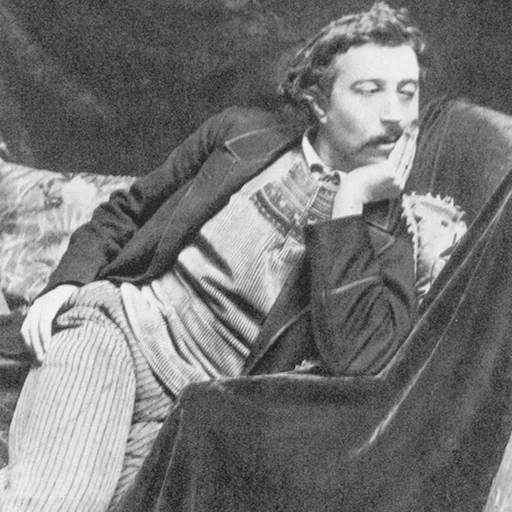
Artist
Eugène Henri Paul Gauguin (; French: ; 7 June 1848 – 8 May 1903) was a French painter, sculptor, printmaker, ceramist, and writer, whose work has been primarily associated with the Post-Impressionist and Symbolist movements.