Artwork
Noa Noa: The Devil Speaks (Mahna No Varua Ino) (recto)
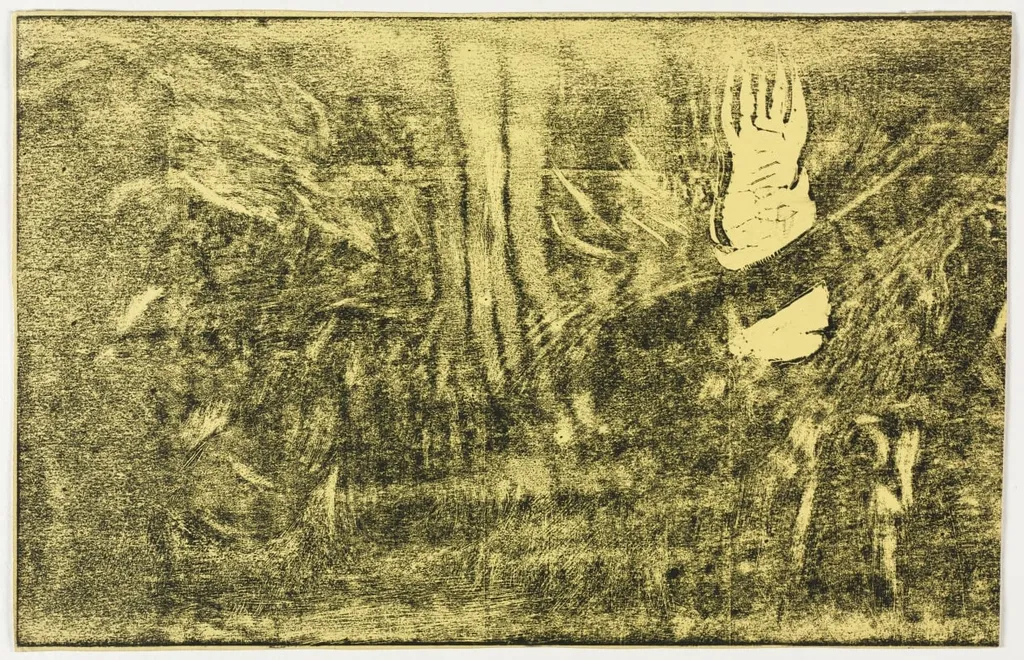
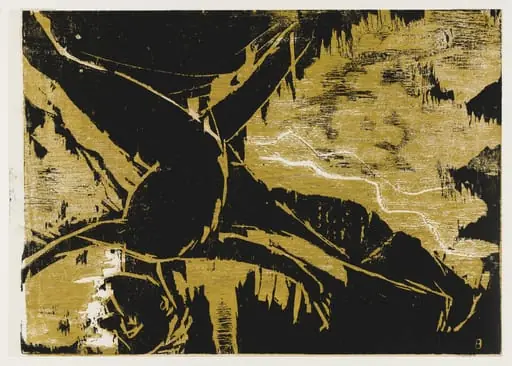
Noa Noa: The Devil Speaks (Mahna No Varua Ino) (recto) is a print by the Impressionist artist Paul Gauguin. It dates from 1894 and is held in the collection of the Cleveland Museum of Art. Created in 1893, this woodcut is one of ten prints Gauguin produced upon returning to Paris from Tahiti.
About this work
The jagged lines feel urgent—like notes from his time in Tahiti, meant to explain his paintings to skeptical Parisians.
You see a rough, dark print of a Tahitian spirit with wild eyes and clawed hands, half-hidden in swirling leaves.
Gauguin carved this image into wood himself, printing it like a page from a diary. The jagged lines feel urgent—like notes from his time in Tahiti, meant to explain his paintings to skeptical Parisians. He never finished the book, but these prints survived as quiet proof of his search for something raw and real.
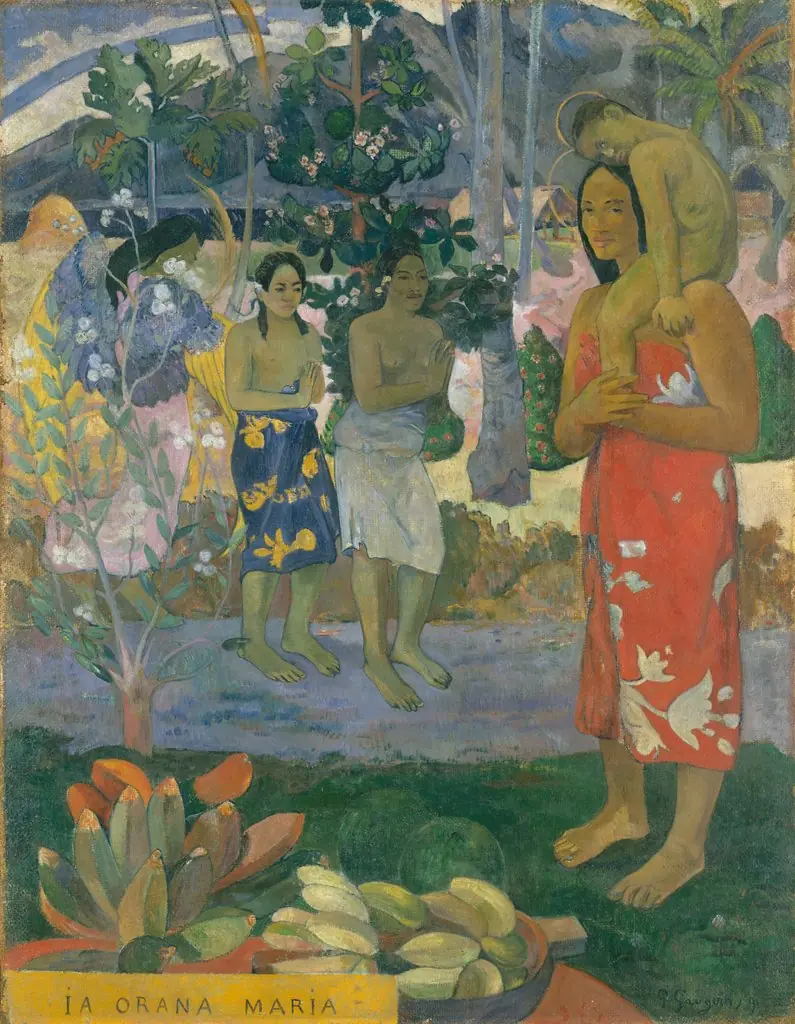
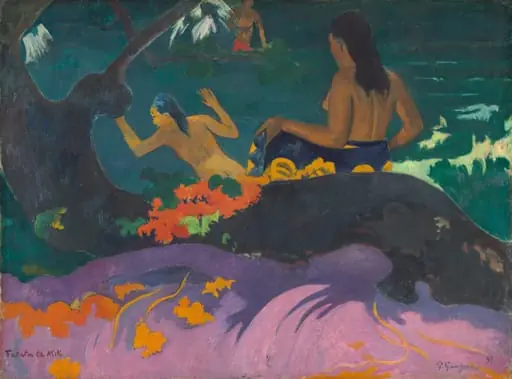
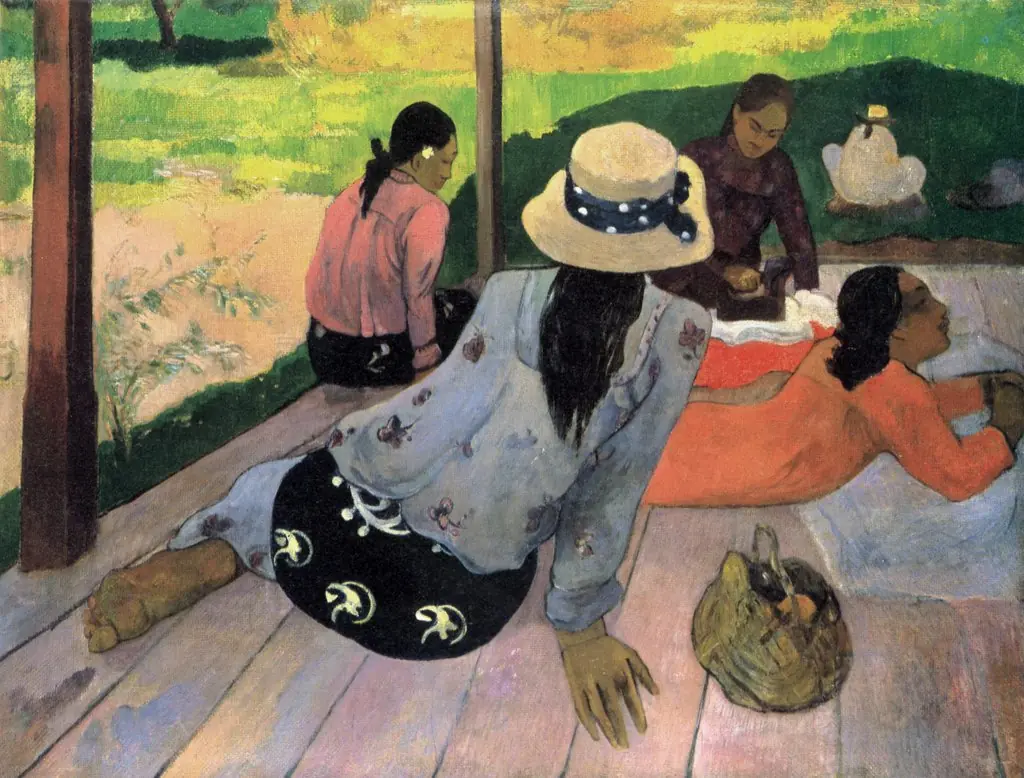
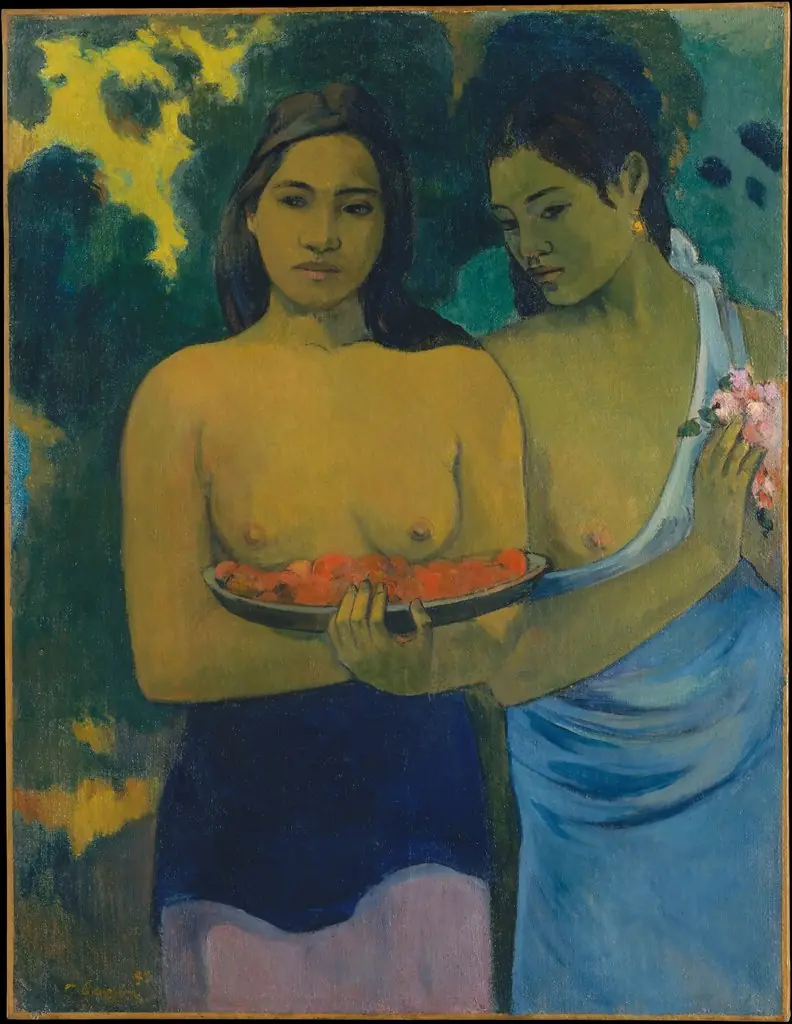
To see how he turned these same ideas into paint, look up Paul Gauguin (French, 1848–1903).
Overview
Created in 1893, this woodcut is one of ten prints Gauguin produced upon returning to Paris from Tahiti. Intended as illustrations for his unpublished book Noa Noa, the image was carved directly into wood by the artist and printed manually. Each impression varies due to inconsistent ink application and paper choices, making every copy distinct. The work reflects Gauguin’s attempt to translate his Tahitian experiences into a visual language that resisted European artistic norms.
Subject & Meaning
The print depicts a Tahitian spirit with exaggerated, almost feral features—wide eyes, clawed hands, and a form dissolving into organic foliage. This figure represents a supernatural presence from Polynesian belief, not merely an exotic motif. Gauguin used it to convey the spiritual atmosphere he encountered in Tahiti, positioning the image as a counterpoint to Western rationalism and a key to understanding his paintings from the region.
Technique & Style
Gauguin carved the design directly into a woodblock with crude, urgent strokes, embracing the medium’s inherent roughness. He printed the image by hand, altering ink density and paper texture across impressions to avoid uniformity. The resulting lines are jagged and uneven, rejecting the precision of academic printmaking. This method mirrored his desire to create art that felt immediate, unpolished, and rooted in personal experience rather than tradition.
History & Provenance
Though Gauguin never completed the book Noa Noa, these ten woodcuts were preserved as standalone works. He produced them during a period of intense self-reflection after his return to Paris, when his Tahitian paintings were met with skepticism. The prints served as both personal documentation and a visual companion to his writings. Their survival offers insight into his creative process beyond canvas, revealing a quieter, more intimate side of his artistic mission.
Context
In late 19th-century Paris, Gauguin positioned himself as an outsider rejecting industrial modernity. His Tahitian imagery was part of a broader search for authenticity in non-Western cultures. The Noa Noa prints emerged alongside his literary efforts to justify his artistic choices to a skeptical audience. They reflect a broader avant-garde interest in primitivism, though Gauguin’s approach was deeply personal, blending memory, myth, and spiritual longing.
Legacy
Though overshadowed by his paintings, these woodcuts influenced later artists seeking to break from conventional printmaking. Their raw aesthetic anticipated Expressionist and modernist experiments with texture and emotional immediacy. As artifacts of Gauguin’s unfulfilled literary project, they remain rare testaments to his attempt to fuse visual art with narrative, and to communicate a world he felt could not be captured by traditional means.
Artist & collection
Artist
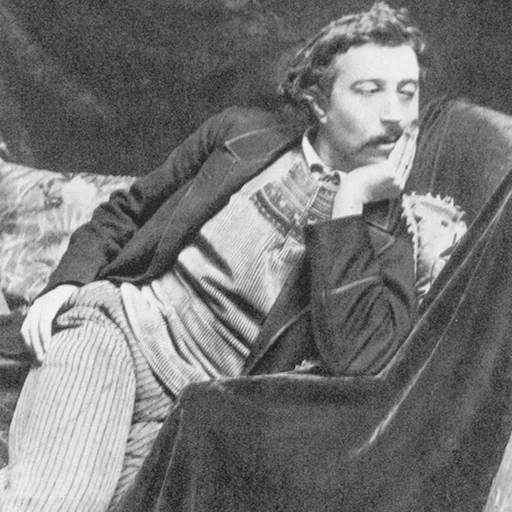
Eugène Henri Paul Gauguin (; French: ; 7 June 1848 – 8 May 1903) was a French painter, sculptor, printmaker, ceramist, and writer, whose work has been primarily associated with the Post-Impressionist and Symbolist movements.